
Where the water polo action meets a betting slip — and what it actually pays
 Available in US
27 October 2026 · Verified against the Gambling Commission’s public register and each operator’s own published terms.
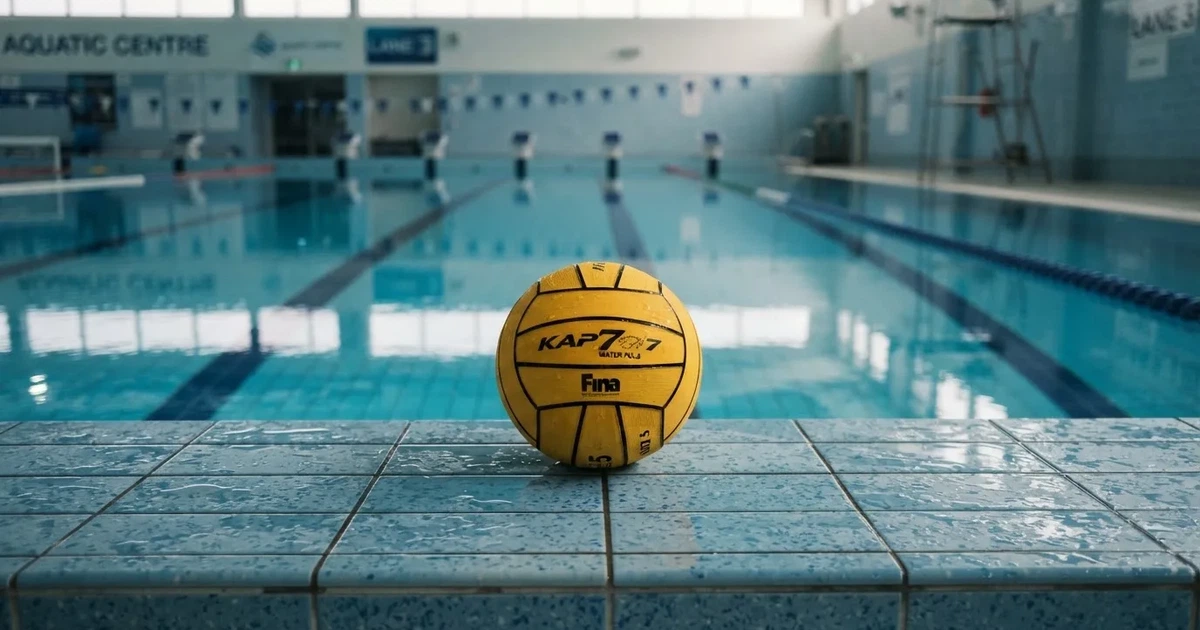
Water polo sits in a strange corner of the British betting market. Major football gets hundreds of markets a match, dedicated live streams and price boosts that fire every fifteen minutes. A water polo fixture, by contrast, can offer a handful of prices — match result, handicap, total goals — and the rest is silence. That silence is not a sign the sport is uninteresting to bookmakers. It is a sign the audience is narrower, the in-house trading teams are smaller, and the margin they keep on every market tends to be wider than the 2–5% you would see on Premier League 1X2.
This page is built for the bettor who has already noticed that and wants to know what to do about it. It walks through the bet types water polo actually attracts, the tournaments that move the sport’s calendar, the ten Gambling Commission-licensed brands that show it, the way a margin hides inside a price, and the rules — credit-card ban, GAMSTOP, identity checks, the 10× bonus wagering cap — that govern how every pound moves. Every figure and every licence number here is drawn from each operator’s own site and from the Commission’s public register as of the date above. Where a brand does not publish a value, that is marked; nothing on this page is invented to fill a gap.
How water polo actually prices up
A water polo match resolves into a small, predictable set of markets because the sport itself is predictable in shape. Seven players a side, four quarters, no offside in the football sense, no stop-the-clock advertising, a deep enough pool that nobody can stand. Goals are scored in bursts, the lead changes hands less often than it does in basketball, and bookmakers price accordingly.

What a winning bet pays
The maths at the heart of every slip is the same, whether the bet is a £5 flutter on a friendly in Budapest or a four-leg accumulator running through the European Championships. A stake multiplied by the decimal odds gives the total return — stake plus winnings — that comes back if the bet wins. A £10 stake at 2.50 returns £25, of which £15 is profit. Decimal odds already contain the stake; the figure you see is the figure you receive, not the figure you receive on top of your stake. Fractional odds say it differently. A price of 5/1 means a £1 stake returns £5 of profit; the same selection in decimals is 6.00, because 5 divided by 1 plus 1 gives 6.00. The conversion the other way: decimal minus 1, then read the result as a fraction, so 3.75 becomes 11/4.
The other figure every punter needs is the profit, not the return. Profit is stake multiplied by (odds minus 1). On the £10 at 2.50, profit is £10 times 1.50, which is £15 — the difference between what came back and what went in. Most British bookmakers show return and profit on the bet slip itself once a stake is typed in, but the formula is the one the slip is using underneath, and it does not change between operators.

Combination bets and the legs that multiply
Combination bets — doubles, trebles, accumulators — work the same way the legs do, except the odds are multiplied. Two selections at 2.00 and 3.00 become 6.00 when combined, and a £5 stake returns £30 if both win. A four-leg accumulator at 1.80, 2.10, 1.95 and 2.25 carries combined odds of roughly 16.9, and a £2 stake pays £33.80. The catch is the multiplication works both ways: each leg is a chance to lose, and the bookmaker’s margin on a combined bet is the margin of each leg added together, not averaged.
The result is that a small-stake accumulator through a narrow-margin market can carry a worse effective margin than a larger single bet on the same selection. A treble on three 1.50 shots is, on paper, around 12% overround; a single on the same match result at the same odds is closer to 4%. The combined price looks juicier because the number is bigger, but more of it is the bookmaker’s.
The margin hiding in the prices
The bookmaker’s margin is the cut the operator keeps from every pound bet on a market. It is not a fee charged on top of a fair price; it is built into the prices themselves. The way to see it is to take a market with all outcomes priced, convert each price into an implied probability, add them up, and subtract the total from 100%. The gap is the margin.
A worked example: a two-way market, drawn as 1.90 versus 1.90 to keep the arithmetic simple. The implied probability of one outcome at 1.90 is 1 divided by 1.90, which is 52.63%. Two outcomes at the same price give a total of 105.26%. The 5.26% excess over 100% is the margin — the slice of every unit bet that the bookmaker keeps on average. In words: for every £100 wagered across the market, the operator expects to return about £94.74 in winnings and keep about £5.26 as gross profit, before any deductions and before the costs of running the trading desk.
The same exercise on a 1X2 football market, where a heavy favourite pulls the prices closer to true probability, often lands between 2% and 5%. Water polo markets, where trading volume is thinner, frequently carry margins in the 7–10% range, sometimes higher on a long-odds outsider line. The price still looks like a price, and the bet still works the same way, but a chunk of the implied probability on each outcome is the operator’s, not the bettor’s.
The settlement rules that decide a winning bet
Most water polo bets settle on the result at the end of the fourth quarter, including any extra time in a knockout match but excluding a penalty shootout, which most operators treat as a separate market. Match-result bets on tournaments sometimes offer a “winner includes shootout” alternative for knockout ties. Handicap markets — typically expressed as plus or minus 1.5 goals — settle on the regular-time result. Total-goals markets usually carry a line around 18.5, 19.5 or 20.5 goals, reflecting the high-scoring nature of the sport compared with football.
Live betting on water polo is offered by some of the larger operators, but coverage is patchy. The bigger the brand, the more likely an in-play price appears during a televised Champions League tie or a World Aquatics fixture. Quarter-by-quarter markets exist on a handful of platforms; the same-game-multi style product is rarer than in football.
The tournaments that move the water polo calendar
Water polo has a smaller calendar than most Olympic team sports, but the events it does have pull concentrated betting interest. World Aquatics runs the show, and the calendar turns around a handful of fixed points every year.
World Aquatics Championships and the Olympic cycle
The men’s World Championship has been held inside the World Aquatics Championships since 1973, on a cycle that has drifted between two and four years; women’s competition was added in 1986. The championships are the sport’s flagship, and the betting interest around them runs deep enough for most licensed bookmakers to price the headline matches. The Summer Olympic tournament carries similar weight — men’s water polo was one of the first team sports at the 1900 Games, and the women’s tournament has been part of the programme since Sydney 2000. Olympic qualifiers are often priced earlier than the tournament itself, because the team sheets matter and bookmakers have time to build a book.
Regional championships and the European club game
Beneath the World and Olympic layer sits a dense European calendar: the European Championships, the Champions League, the LEN Euro Cup, and a clutch of national leagues that attract betting interest mostly at the sharp end of the season. Domestic leagues in Spain, Italy, Hungary, Serbia, Croatia and Montenegro are competitive enough to be priced, though coverage outside the top division is thin. Friendly internationals are usually available as outright-winner markets rather than match markets.
Where the live markets actually appear
In-play water polo coverage is concentrated on the same fixtures the pre-match markets concentrate on. A Champions League knockout tie or a televised World Aquatics match is the most likely setting for a quarter-by-quarter price or a live handicap. A friendly at the start of the season, by contrast, is often match-result only, and sometimes not even that on the smaller brands. The lesson is to check the sport’s marquee calendar for live markets rather than to assume every licensed bookmaker carries live prices on every fixture.
The ten Gambling Commission-licensed brands
The ten brands below all hold a remote general betting licence from the Gambling Commission for real events. The Commission number on the public register is the single piece of evidence that matters; a domain is not, because licensed operators use both .com and .co.uk and several unrelated businesses can share a top-level domain. The set is not a ranking and not a recommendation — the differences between the brands are real, but the place a name holds here is the order of the Commission’s register, not a verdict on its quality.
| Brand | Licence holder and account | What the operator’s own terms state |
|---|---|---|
| Fitzwilliam Sports | SBKI Limited, account 048760 | Dublin-based bookmaker with capped membership; welcome offer a “High Stakes Welcome” subject to compliance criteria; instant deposits, fast withdrawals, timeouts and deposit limits; links to GambleAware, GamStop and Gamblers Anonymous. |
| Spreadex | Spreadex Limited, account 008835 | Combined fixed-odds and spread betting under one app; one-click, auto and partial cash out; Bet Builder across fixed odds or spreads; live streaming of UK and Irish horse racing, greyhounds, tennis, NFL and selected football; financial spread betting regulated by the FCA. |
| Coral | LC International Limited, account 054743 | Sports welcome offer of £40 in free bets on a £20 qualifying bet at minimum odds 2.0; free bets issued within 7 days and expiring 7 days after issue. |
| Betfair | PPB Counterparty Services Limited, account 039439 | In-play betting, Bet Builder, free live streaming of UK and Irish horse racing and football within the app; 90 Minute Payout market on football. |
| BetVictor | BV Gaming Limited, account 039576 | Best Odds Guaranteed on UK and Irish horse racing; enhanced live race streaming; BetFinder racing tool; Smart Stats. |
| QuinnBet | QuinnBet (Gibraltar) Limited, account 061011 | Best Odds Guaranteed on Irish and UK horse racing from 10:00 daily, singles, multiples and system bets, capped at £150 per customer per race. |
| Geoff Banks | GB Sports Advisors Limited, account 054095 | App published by GB Sports Advisors Ltd; live in-play prices and ante-post prices on future events. |
| NetBet | Netbet Enterprises Limited, account 039170 | Daily Boosts, Profit Boosts and free bet offers; Bet Builder with instant dynamic odds; sports stats for major leagues. |
| Kalooki Sportsbook | Kalooki Sportsbook Limited, account 057730 | Welcome offer and full terms on the operator’s site; GAMSTOP member; identity verification before first deposit. |
| BetMGM | LeoVegas Gaming PLC, account 039198 | Sports welcome offer of four £10 free bets (two football accas of 4+ selections and two sports multiples of 2+) on a £10 deposit and qualifying bet within 7 days; free bets valid 7 days, minimum odds and opt-in required. |
The table is built from what each operator publishes. Some figures and conditions sit elsewhere in the site — minimum odds, expiry windows, qualifying bets — and a reader who is about to claim any of them should check the offer page on the day. Several of the brands share a parent company: Coral sits under LC International, QuinnBet under its Gibraltar parent, BetMGM under LeoVegas Gaming. That is normal in this market and does not change the licence each brand runs under.
What “Gambling Commission licensed” actually means
The phrase is everywhere in British betting advertising. It is worth pinning down what it does and does not tell a bettor.
The licence as evidence, not a promise
The Gambling Commission is the regulator of commercial gambling in Great Britain under the Gambling Act 2005. Since the Gambling (Licensing and Advertising) Act 2014 an operator whose remote facilities are used in Great Britain needs a Commission licence wherever the company is based. A Curaçao, Malta or Gibraltar licence alone is not a substitute, though operators from those jurisdictions can and do hold a GB licence on top. The Commission’s public register is the test of who holds one; it can be searched by business name, trading name, domain or account number, and any of the ten brands above will appear on it.
The licence is evidence that the operator has met the Commission’s entry conditions and continues to meet its ongoing conditions: the Licence Conditions and Codes of Practice, the social responsibility code, the technical standards for remote gambling. It is not a promise about how the brand will treat a customer, and it is not a rating. Two licensed brands can differ sharply on customer service, payout speed and the generosity of their welcome offers.
What every licensed operator has to do
The obligations that matter to a bettor are not the licence fees or the technical tests but the player-protection conditions. Identity is verified before a customer can deposit or gamble — name, address and date of birth, since 7 May 2019, including when a free bet or bonus is in play. A financial vulnerability check applies once a customer’s deposits minus withdrawals cross £150 in a rolling 30 days, in force since 28 February 2025; it is a public-record check (bankruptcy, county court judgments) rather than a credit check or an income check. Deposit limits are offered on a fixed time frame, and operators must let a customer set one. A credit card cannot be used to fund a gambling account, directly or through an e-wallet, since 14 April 2020.
The marketing side has tightened too. Wagering requirements on bonuses are capped at 10× under rules in force from 19 January 2026: a £10 bonus at 50× would have required £500 of qualifying bets, and that structure is no longer allowed. Mixed-product promotions — an offer that asks a customer to bet on football in order to claim free spins, for example — are banned. None of these are choices a brand can opt out of; they are licence conditions, and a licensed operator that breaches them risks enforcement action.
What the licence does not cover
A licence is a Great Britain licence. Northern Ireland is outside the Gambling Act 2005 and runs under its own older law, so a brand licensed for GB is not licensed for Northern Ireland in the same way. A licence also does not settle a dispute — a customer who disagrees with a licensed operator about a settled bet has recourse to an approved alternative dispute resolution provider, listed on the Commission’s site, but the underlying complaint is between the customer and the brand, not the customer and the regulator.
The licence does not cover spread betting that is a financial product. That falls under the Financial Conduct Authority. Spreadex, for example, runs financial spread betting under FCA supervision and fixed-odds betting under the Commission’s; the two are governed by different rules, and spread-betting losses can exceed the original deposit. The brand’s own terms are explicit on the point, and a customer using its spread-betting products is on the FCA side, not the Commission side, of the regulatory fence.
Safer gambling at a licensed bookmaker
The safer-gambling toolkit at a licensed British bookmaker is not a marketing layer. It is built into the licence conditions, and the headline pieces are the same across the industry.
GAMSTOP and self-exclusion
GAMSTOP is the national multi-operator self-exclusion scheme and a mandatory licence condition for every online operator since 31 March 2020. A customer who registers with GAMSTOP is blocked from opening new accounts and from logging into existing ones with every participating brand for the period they choose: six months, one year, five years, or five years with auto-renewal. After the minimum period the exclusion runs for a further seven years unless the customer asks GAMSTOP to remove it, which they can. GAMSTOP covers online sites and apps; the high-street betting shops run a separate self-exclusion service, and the two are not interchangeable.
Deposit limits, timeouts and reality checks
Every licensed online operator offers the customer a way to set a deposit limit on a fixed time frame, typically daily, weekly or monthly. The first phase of changes has applied since 31 October 2025, and a second phase was postponed to 30 September 2026; whether the second phase is live is not established. A timeout is a short cooling-off period, from 24 hours up to six weeks, that blocks a customer from logging in. A reality check is a pop-up that fires at a chosen interval during a session to show the customer how long they have been playing and what they have spent. The exact menu differs between brands; a reader who wants the full list for a particular operator should check its safer-gambling page.
Help outside the operator
GamCare runs the National Gambling Helpline. GambleAware funds treatment and research. The NHS runs a small number of gambling clinics across England. Gamblers Anonymous runs peer-support meetings. The links to those services sit on every licensed operator’s safer-gambling page, and the Commission’s register confirms a brand is part of GAMSTOP, which is the test that the operator has at least the national layer of self-exclusion in place.
The customer who plays on an unlicensed site
No offence aimed at a customer who simply bets on an unlicensed site was found in the relevant law. What is lost is the protection: no GAMSTOP coverage, no Commission complaints route, no approved alternative dispute resolution, no British consumer redress if funds are withheld, no obligation on the operator to apply the 10× bonus cap or the £150 vulnerability check. Enforcement against the unlicensed operator is disruption rather than blocking — cease-and-desist notices, search-engine referrals, registrar and payment-provider work, and court-order DNS blocking powers that have been given or are about to be. None of that gets a bettor’s money back if the offshore brand simply declines to pay out.
Bonuses and free bets on water polo markets
A bonus on a water polo bet is a bonus on a water polo bet. The wagering requirement, the minimum odds, the expiry, the cap on free-bet winnings and the market restrictions all apply the same way they would on a football or a tennis promotion, and the same arithmetic decides what the offer is actually worth.
The structure of a free bet
A free bet is a credit the operator credits to a customer’s account after a qualifying bet has settled. The stake is not returned with a winning free bet: a £10 free bet at 3.00 returns £20 of profit, not £30, because the £10 was never the customer’s money to begin with. A cap on free-bet winnings is common — some promotions stop the payout at a multiple of the free bet, others cap it at a fixed figure. The cap matters because it is the difference between a free bet that is genuinely useful at longer prices and one that only makes sense at short odds where the cap does not bite.
The arithmetic of a welcome offer
A welcome offer of the form “£40 in free bets when you bet £20” looks like a 200% headline. It is, more precisely, a structure that costs the customer a £20 qualifying bet at minimum odds 2.0, then credits £40 of free bets that expire in 7 days and whose stake is not returned. The qualifying bet itself is a bet at the operator’s prices in a real market, with the bookmaker’s margin built in. A bettor who has no other reason to place a qualifying bet is paying the margin on £20 in exchange for the chance to use £40 of free bets on whatever the operator’s terms allow.
The 10× wagering cap and what it changed
Before 19 January 2026 a welcome bonus could carry a 50× wagering requirement, which on a £10 bonus meant £500 of qualifying bets. Under the current rules, no bonus can carry a wagering requirement higher than 10×. A £10 bonus at the cap needs £100 of qualifying bets; a £20 bonus needs £200. Mixed-product promotions — an offer that asks a customer to bet on football in order to claim free spins, for example — are banned outright. The change is recent enough that older guides still describe the old ceiling, and a reader who sees a 50× figure in a review published before January 2026 is looking at a structure that no licensed operator can offer today.
Where the offer is most useful
A free bet is most useful on a market with a wide price where the cap on free-bet winnings does not bite, and where the bettor has some reason to think the price is wrong. A long-odds accumulator leg, a price boost the operator has mispriced, or a handicap line on a fixture the trader has underweighted are the conventional uses. The worst use is a short-priced single on a heavy favourite, where the cap on winnings and the bookmaker’s margin on the favourite both eat into the value at the same time.
The ten operators in detail
The reviews below cover each of the ten licensed brands in the order the Commission’s register sets. The same three pieces appear under every brand — licence holder, account number, what the operator’s own terms state — because those are the three things the operator’s own site and the Commission’s public register make verifiable. What changes between reviews is the verdict: a brand’s welcome offer is worth different things to a sharp bettor and a casual one, and the closing line of each block is the page’s own judgement of where the brand sits.
Fitzwilliam Sports
Fitzwilliam Sports is a Dublin-based bookmaker with capped membership and a welcome offer the site describes as a “High Stakes Welcome” subject to compliance criteria. The licence sits with SBKI Limited under Commission account 048760, and the categories on the register are remote general betting standard for real events. The site links to GambleAware, GamStop and Gamblers Anonymous, and the platform offers instant deposits, fast withdrawals, timeouts and deposit limits.
Capped membership is the unusual feature. A bookmaker that limits how many customers it takes on is not aiming at the volume end of the market, and the welcome offer’s “high stakes” framing reads the same way. The verdict is straightforward: a brand worth a look for a bettor who wants a smaller, more curated book, less so for a casual punter who wants the broadest market coverage in the app.
Spreadex
Spreadex runs fixed-odds betting and spread betting in the same app, which is unusual in the British market. The fixed-odds side sits under Commission account 008835; the financial spread-betting side sits under the FCA. Cash-out features are one-click, auto and partial; a Bet Builder works across fixed odds or spreads; live streaming covers UK and Irish horse racing, greyhounds, tennis, NFL and selected football.
The split personality is the brand’s defining feature and the reason to read the terms carefully. Fixed-odds losses stop at the stake, the way a punt on a football match does. Spread-betting losses can exceed the deposit, because the bet is on a range, not a single price. A customer who treats the two as the same product is not using the brand the way the brand is meant to be used.
Coral
Coral is one of the larger high-street names in British betting and sits under LC International Limited, Commission account 54743, with both remote general betting and remote betting intermediary categories on the register. The current sports welcome offer is £40 in free bets when a customer wagers £20 or more at minimum odds 2.0, with the free bets issued within 7 days of the qualifying bet settling and expiring 7 days after they are issued. The figure of “£40 in free bets on a £20 bet” is the headline; the 2.0 minimum and the 7-day windows are the cost.
A £20 qualifying bet at 2.0 is a bet at the bookmaker’s prices in a real market, with the bookmaker’s margin built in. A bettor who places the qualifying bet on a market they would have played anyway is in front; a bettor who places it on a market they would not otherwise have touched is paying the margin on £20 for the chance to use £40 of free bets. The brand’s size means the rest of the product — markets, live streaming, in-play coverage — is broader than most of the other names on this list.
Betfair
Betfair runs a sportsbook and a betting exchange. The sportsbook sits under PPB Counterparty Services Limited, Commission account 39439, in the remote general betting standard category. The exchange is a separate product, and its rates and rules are stated only from its own terms. The sportsbook offers in-play betting, a Bet Builder, free live streaming of events such as UK and Irish horse racing and football within the app, and a 90 Minute Payout market on football.
The exchange is the differentiator for a bettor who thinks in probabilities rather than prices. A back-and-lay book can be built around an event, with the punter taking the role of the bookmaker on one side. A bettor who has never used an exchange will find the sportsbook familiar; a bettor who has will want to know which side of the brand the bet is on before they place it.
BetVictor
BetVictor sits under BV Gaming Limited, Commission account 39576, in the remote general betting standard category. The brand offers Best Odds Guaranteed on UK and Irish horse racing, enhanced live race streaming, a BetFinder tool for racing bets and Smart Stats. The horse-racing product is the centre of gravity; the rest of the menu is solid but not the differentiator.
A reader whose interest in this list is water polo rather than horse racing will find the brand’s racing tools beside the point, and the right test is whether the rest of the menu — the football, the in-play, the live streaming — is competitive with the other names. On the Commission’s register the brand is in good standing, and the licence holder is the operator the regulator holds to account.
QuinnBet
QuinnBet sits under QuinnBet (Gibraltar) Limited, Commission account 61011, in the remote general betting standard category. The headline offer is Best Odds Guaranteed on Irish and UK horse racing from 10:00am daily, on singles, multiples and system bets, capped at £150 per customer per race. Like BetVictor, the racing product is where the brand spends its effort; the cap is the part a reader needs to read.
A £150 cap on the Best Odds Guaranteed benefit is generous by industry standards and stingy relative to no cap at all. A bettor who would otherwise stake more than £150 on a single race finds the cap on this brand specifically. The cap is the kind of detail that gets missed in a marketing paragraph and is the difference between the offer as advertised and the offer as it pays out.
Geoff Banks
Geoff Banks’ app is published by GB Sports Advisors Ltd and the licence sits with that company, Commission account 54095, in the remote general betting standard category. The app’s two product lines are live in-play prices and ante-post prices on future events, which is a narrower product than most of the other names on this list.
A smaller product is not a worse product. A brand that focuses on ante-post and in-play on a curated set of events can carry sharper prices on those events than a brand that spreads its trading across a long tail. The Geoff Banks verdict is much the same shape as the Fitzwilliam one: a brand worth a look for a bettor who wants a more focused book, less so for a casual punter who wants the broadest menu.
NetBet
NetBet sits under Netbet Enterprises Limited, Commission account 39170, in the remote general betting standard category. The product page lists Daily Boosts, Profit Boosts and free bet offers, a Bet Builder with instant dynamic odds, and sports stats for major leagues. The boosts and the Bet Builder are the differentiators; the rest of the menu is competitive with the other names on this list.
A Profit Boost is a token that multiplies the winnings on a chosen selection, and the boost’s terms — minimum odds, the events it covers, the maximum stake it applies to — are the part a reader has to read. A Daily Boost is a price on a specific selection that the operator has chosen to mark up for a window of hours. Both are real value only if the boosted price is genuinely better than the market elsewhere, and a reader who compares the boosted price against the same selection on another brand before placing the bet is the one who actually benefits from the promotion.
Kalooki Sportsbook
Kalooki Sportsbook sits under Kalooki Sportsbook Limited, Commission account 57730, in the remote general betting standard category. The company number on the operator’s site is 12938274, the licence is the Commission’s account 57730, and the brand is a GAMSTOP member. Identity is verified before a customer can deposit, in line with the Commission’s wider rules.
A smaller brand with a clean licence record is the right description. The product line is built around the same major sports the other names cover, and the welcome offer and full terms sit on the operator’s site. A reader who wants a brand that is straightforward to deal with and that is not pushing a dozen cross-sell promotions on every visit will recognise the shape; a reader who wants the broadest live-streaming catalogue will look elsewhere.
BetMGM
BetMGM sits under LeoVegas Gaming PLC, Commission account 39198, in the remote general betting standard category. The current sports welcome offer for new UK customers is four £10 free bets — two football accumulators of 4+ selections and two sports multiples of 2+ — after a £10 deposit and a qualifying bet within 7 days, with the free bets valid for 7 days and minimum odds and opt-in required.
The structure is more involved than Coral’s single £40-in-free-bets line. Four free bets, each with a specific shape (football acca of 4+ legs, sports multiple of 2+ legs), is a structure that asks the customer to bet on a more constrained set of events than a generic free bet. A bettor whose interest in this list is water polo will be looking for a structure that allows the free bets to be used on water polo markets; the offer’s small print is the place to confirm that, since a free bet restricted to football accumulators does not move the needle for a water polo punter.
The final word on choice
Ten licensed brands sit on this list, and the differences between them are mostly the differences in where each one spends its effort. Coral and Betfair carry the broadest menu; Spreadex is the one that lets a customer combine fixed-odds and spread betting in a single app; BetVictor and QuinnBet are the racing-first brands; Fitzwilliam Sports and Geoff Banks are the smaller, more curated names; NetBet and BetMGM are the ones with the most active boosts and free-bet structures; Kalooki Sportsbook is the brand that sits most clearly in the straightforward-licence-and-clean-terms corner of the market.
None of that makes any of them “the only” licensed brand. There are several hundred names on the Commission’s public register. The ten on this list are a shortlist built from the brands whose sites and apps carry a recognisable water polo offering; a bettor who wants a fuller view should search the Commission’s register directly, by name, domain or account number, and treat the search as the test of whether a brand is licensed. The brand a bettor ends up using depends on what they want from the product: the broadest menu, the sharpest prices, the cleanest licence, the most useful welcome offer, or the racing product that pays out the most on a busy Saturday. Each of those priorities lands on a different brand, and a single shortlist cannot pick between them. The shortlist is the menu, and the choice is the bettor’s.
Frequently asked questions
How can it be checked that a bookmaker holds a Gambling Commission licence?
The Commission’s public register can be searched by business name, trading name, domain or account number. The result confirms the licence categories, the licence holder, the trading names the licence covers, and any conditions in force on the day. A brand appearing on the register is licensed for the categories listed; a brand not appearing is not, regardless of what its own website says.
How is the return on a bet worked out from the stake and the odds?
In decimal odds the return is the stake multiplied by the odds. A £10 stake at 2.50 returns £25, of which £15 is profit. Profit alone is stake multiplied by (odds minus 1), so on the same bet profit is £10 × 1.50 = £15. Fractional odds of 5/1 mean a £1 stake returns £5 of profit; the same selection in decimals is 6.00.
What is the bookmaker’s margin and how can it be seen in the odds?
The margin is the share of every pound bet that the bookmaker keeps on average. To see it in the odds, convert each decimal price to its implied probability (1 divided by the odds), add the implied probabilities across all outcomes of the market, and subtract the total from 100%. The gap is the margin. On a market priced 1.90 / 1.90, the implied probabilities add to 105.26%, an overround of 5.26% and a margin of about 5.0% once divided by that total.
How do fractional odds such as 5/1 convert to decimal odds such as 6.00?
Divide the first number by the second, then add 1. So 5/1 becomes 5 ÷ 1 + 1 = 6.00. 11/4 becomes 11 ÷ 4 + 1 = 2.75 + 1 = 3.75. The other way, take the decimal, subtract 1, and read the result as a fraction: 3.75 minus 1 is 2.75, which is 11/4.
Which tools for controlling play does a licensed bookmaker have to offer?
Identity verification before the first deposit, deposit limits on a fixed time frame, timeouts, reality checks, GAMSTOP self-exclusion, and links to GamCare, GambleAware, the NHS gambling clinics and Gamblers Anonymous. A financial vulnerability check applies once a customer’s deposits minus withdrawals cross £150 in a rolling 30 days. Credit cards are not accepted for gambling, directly or through an e-wallet.
Are betting winnings taxed in Great Britain, and who pays General Betting Duty?
No, the player pays no tax on betting winnings in Great Britain. General Betting Duty is the operator’s tax on gross profits, currently 15% on most bets, with a 25% rate on remote bets other than UK horse racing from 1 April 2027. Spread betting has its own rates of 3% on financial bets and 10% on other spread bets. Operators set their own maximum stakes; the duty is the operator’s, not the player’s.
US & other team sports – Best betting
Content created by the «Best betting» team
