
Cycling betting odds in Great Britain — a guide for 2026
 Available in US
Cycling sits awkwardly in British sportsbooks. The Tour de France rolls past every July and the Giro and Vuelta command three weeks each, but outside those weeks the calendar thins to one-day races and stage events most punters barely know. Bookmakers cover it, the Gambling Commission licences them to do so, and there is no statutory list of permitted sports to argue with. The prices that turn up on the slip are built the same way any other sport’s prices are: a margin hidden inside the decimal, a margin the reader can pull out with the arithmetic set out below. This page walks through what that margin means, which races move the betting volume, where the licensed British operators sit on cycling, and what the numbers actually cost a punter who takes one of the welcome offers the marketing promises.
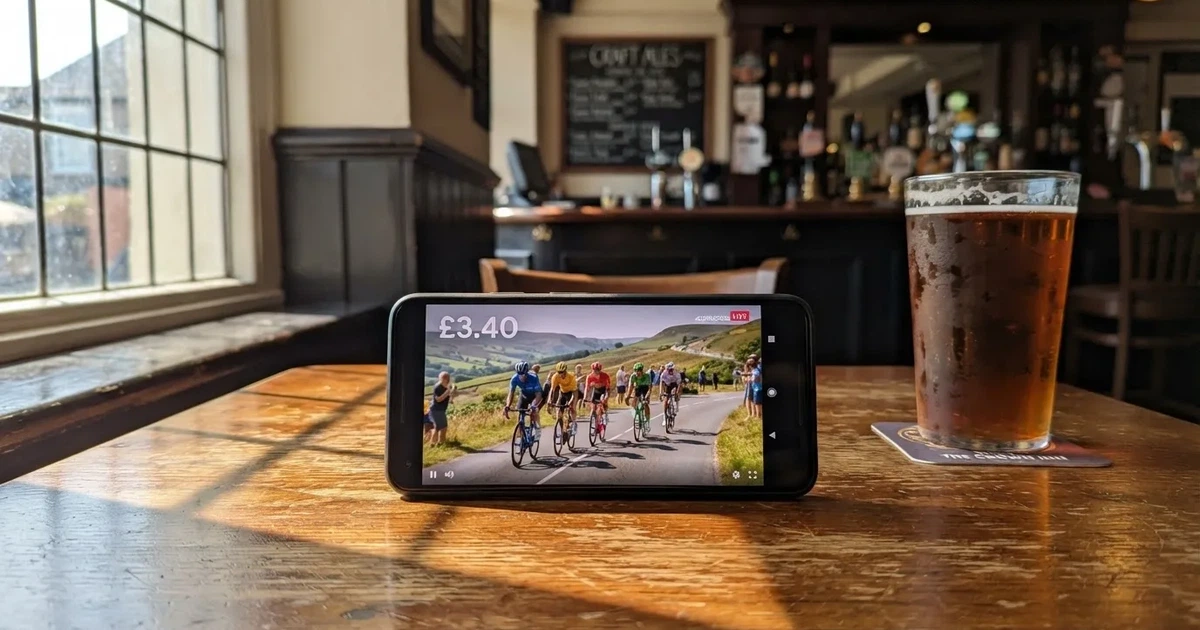
Currency and odds conventions follow British usage throughout. Prices appear in decimal (2.50, 1.90) with the fractional form (3/2, 9/10) where British punters still meet it on the slip. Currency is written as £10, £25, never as GBP. Dates run 9 April 2026, not 04/09/2026.
Verified against the Gambling Commission’s public register on 27 October 2026.
The licence you can check before you deposit
In Great Britain the only test of whether an operator may take your bet remotely is the Gambling Commission’s public register. A Curaçao, Malta or Gibraltar licence is not a substitute — since the Gambling (Licensing and Advertising) Act 2014, an operator whose remote facilities are used in Great Britain needs a Commission licence wherever it is based, under sections 33 and 36 of the Gambling Act 2005 as amended. A single search by business name, trading name, domain or account number settles the question. A registered .com domain proves nothing in itself, because licensed British operators use .com as well as .co.uk; a Curaçao-only site can equally use .co.uk. The register is the whole answer.
The ten operators on this page all hold a remote general betting standard (real events) licence, with Matchbook additionally holding a remote betting intermediary licence that permits its exchange format. Their entries below carry the Gambling Commission account number and the registered licence-holder name as they appear on the register, so a reader can search the same entry themselves before opening an account. Several licensed groups run more than one of these brands through separate trading names under the same parent — they are not the same bookmaker in different clothes, but they share ownership and that should be checked if it matters.
Northern Ireland sits outside the Gambling Act 2005, so the terms “GB-licensed” or “Great Britain licence” are used throughout, never the shorthand “UK” which would overstate the regime’s reach.
Minimum age for any bet — sport, racing, exchange or spread — is 18. Since 7 May 2019, name, address and date of birth are verified before a customer can deposit or gamble at a licensed site, including with a free bet or bonus. There is no anonymous play in the licensed British market.
What the licence category lets the bookmaker offer
A remote general betting standard (real events) licence covers fixed-odds sports betting and exchange betting where the licence-holder is also registered as a betting intermediary. It does not cover spread betting on financial markets, which falls under the Financial Conduct Authority rather than the Commission. Spreadex’s spread-betting line is therefore a Financial Conduct Authority product inside a Commission-licensed app, and the warnings around it — that losses can exceed the original deposit — come from that regime, not from the Gambling Commission.

There is no statutory list of permitted events or markets. Cycling, esports, virtual cycling, novelty markets and political betting are all offered by licensed operators under their own conditions and the Commission’s Licence Conditions and Codes of Practice. In-play cycling is offered, the controls are the operator’s own conditions, and no rule permits or prohibits it.
What the bookmaker’s licence costs the punter
Three rules from the LCCP change what a punter actually meets at the till, and they belong to the licensed market alone.
The first is the cap on wagering requirements on bonuses, in force since 19 January 2026. The wagering requirement attached to any bonus is capped at 10x, meaning a £10 bonus at 50x — which would need £500 of bets — is no longer permitted; under the cap no bonus carries more than £100 of wagering. Mixed-product promotions, in which a customer has to bet across two or more product types (say football betting plus casino spins) for one offer, are banned outright. The cap concerns bonuses and not free bets with no wagering condition; whether such free bets fall inside the rule is not established, and the wording here tracks the Commission’s published text rather than a wider reading.
The second is the financial vulnerability check under LCCP condition 3.4.4, in force since 30 August 2024. It applies to a licensed remote bookmaker when a customer’s deposits minus withdrawals cross £150 in any rolling 30 days, since 28 February 2025. The check is a public-record check — bankruptcy registers, county court judgments — not an income check and not a credit reference check. It triggers once, not on every deposit.
The third is the staged deposit-limit framework under RTS 12. The first changes have applied since 31 October 2025 and a second phase was postponed to 30 September 2026, with no settled answer in the public record whether it is live at the time of writing. Limits are set by the customer; no state-set ceiling applies to betting, and the headline limit a punter agrees to is theirs to choose.
What protection is lost on an unlicensed site
Providing gambling facilities in Great Britain without the licence the Act requires is an offence under section 33 of the Gambling Act 2005, punishable on summary conviction by up to 51 weeks’ imprisonment, a fine up to level 5, or both (six months in Scotland). The offence is aimed at the operator, not the customer. No offence aimed at a customer who merely bets on an unlicensed site was found in the published framework, but the practical losses are real: no GAMSTOP coverage, no Commission complaints route, no approved alternative-dispute-resolution body, no British consumer redress if funds are withheld, no application of the 10x bonus cap, and no application of the £150 vulnerability check. Enforcement is disruption rather than blocking — cease-and-desist notices, search-engine referrals, registrar and payment-provider work — and the Commission has been given, or is about to receive, court-order DNS blocking powers; ISP blocking is not in operation. Honest framing: licensed means verification, limits, GAMSTOP and a complaints route; unlicensed means none of those, and no guaranteed way to recover the stake if the operator decides not to pay.
Where to find help if a bet becomes a problem
GAMSTOP is the national multi-operator online self-exclusion scheme. Every GB-licensed remote operator takes part, and joining GAMSTOP is a condition of holding a remote licence since 31 March 2020. Self-exclusion runs for six months, one year, five years, or five years with auto-renewal. After the minimum period the exclusion stays in place for a further seven years unless the customer asks GAMSTOP to remove it. GAMSTOP covers online sites and apps; betting shops run a separate scheme.
For day-by-day support, GamCare runs the National Gambling Helpline, and GambleAware publishes the framework of treatment and counselling services. Gamblers Anonymous runs peer-support meetings across Great Britain. NHS gambling clinics sit alongside these in several regions. Licensed operators link to GamCare, GambleAware and Gamblers Anonymous from their safer-gambling pages; the page above carries an account-by-account note of which operator links where.
The financial vulnerability check above is the regulator’s safety net for higher spend. It is a check of public records, not a credit check, and it does not collect or store a customer’s bank balance.
What the cycling calendar actually offers a punter
Cycling’s professional road calendar is set by the UCI (Union Cycliste Internationale), based in Switzerland, which has governed the sport since 1900 and runs the annual men’s and women’s road world championships. The top tier of the men’s calendar is the UCI WorldTour, created in 2005 as the ProTour and renamed the WorldTour in 2011; it includes the three Grand Tours and a selection of one-day classics and shorter stage races.
The three Grand Tours
The Grand Tours are the Giro d’Italia (first held 1909), the Tour de France (1903) and the Vuelta a España (1935). UCI rules allow Grand Tours to last 15 to 23 days. The leader’s jersey is pink in the Giro, yellow in the Tour and red in the Vuelta, and each race usually includes two rest days. The Tour de France is the headline betting event of the year: the 2026 edition ran from 4 to 26 July 2026, starting with a team time trial in Barcelona and finishing on the Champs-Élysées in Paris, over 21 stages and 3,245 km with 23 teams. Tadej Pogačar (UAE Team Emirates, Slovenia) won the 2026 Tour, his fifth Tour victory. The Giro usually opens in May and the Vuelta in late August into September, with a fortnight’s gap between the Tour and the Vuelta for the bulk of the peloton to recover.
The rest of the WorldTour
The WorldTour calendar adds the spring classics (Milan–San Remo, the Tour of Flanders, Paris–Roubaix, Liège–Bastogne–Liège, Il Lombardia) and stage races outside the Grand Tours (Paris–Nice, Tirreno–Adriatico, the Dauphiné, the Tour de Suisse, the Tour Down Under, the Critérium du Dauphiné). These races attract outright winner, podium and stage markets at most licensed British bookmakers, with the classics carrying the heaviest in-play volume. One-day races are harder work for the punter: a field of 150 riders priced in three-digit odds means a long tail of bets the bookmaker would rather the customer did not concentrate on a single name.
Other events covered
The Vuelta a España is run as a Grand Tour; the women’s calendar is shorter and runs through the UCI Women’s World Tour, with its own Grand Tours in development. Track, mountain bike, BMX and cyclo-cross have their own world championships and World Cups but generate thin British betting volume, and most licensed operators cover only the headline road events. A reader looking for in-play mountain bike markets at a British bookmaker will find the offering thin and should check the operator’s cycling menu before staking.
The fixtures on which the betting volume concentrates
Three periods move the bulk of British cycling betting volume: the Giro in May, the Tour in July, and the Vuelta in late August into September. Each lasts roughly three weeks and offers stage, jersey and outright markets. Outside these windows the major WorldTour one-day races and the Classics draw enough liquidity for outright and each-way betting at licensed British bookmakers, but in-play markets thin out between the Classics and the next Grand Tour.
How the price on a cycling slip is built
Every decimal price carries two things: what the market thinks the outcome is worth, and what the bookmaker keeps for itself. The second is the margin, and it is the only number on the slip the punter can calculate without knowing the outcome.
For a two-way market, the payout share at the given prices is
payout share = 1 ÷ (1/odds₁ + 1/odds₂)
and the margin is 1 − payout share. Take an illustrative two-way market priced 1.90 / 1.90 — fractional 9/10 on each side — which is the kind of line a bookmaker offers on a coin-tossy sprint finish. The payout share is 1 ÷ (1/1.90 + 1/1.90) = 1 ÷ 1.0526 ≈ 0.9500. The margin is 1 − 0.95 = 0.05, or 5 % of every pound bet on this market.
That 5 % is the price of doing business with the bookmaker. Over many bets, it is what the bookmaker keeps on average from the volume placed on that market. A three-way market (outright winner with three named riders) carries a larger margin by construction: a 1.90 / 1.90 / 1.90 outright has a payout share of about 0.9474 and a margin of about 5.3 %. A 24-rider Classics field priced across the board will run higher still. The only figure a punter needs to remember is the inverse: the lower the margin, the more of every pound bet that returns to bettors on average.
The same arithmetic works on any decimal price the licensed British bookmakers publish, including cycling. The market margin is the same number written from the other end. A “payout share of 95 %” and a “margin of 5 %” describe the same market at the same snapshot. The price on the slip is the punter’s only handle on the figure — there is no separate “juice” line.
What the margin tells the punter
A 5 % margin on a stage-winner market is competitive for a sport with thin liquidity. A 7–8 % margin is the kind of line a bookmaker posts on a Grand Tour outright in the week before the race, when the field is still long and the favourite has not shortened. Margins widen into the closing stages of a race as the field thins and the bookmaker’s exposure on a particular rider grows. A punter who takes the price early accepts a wider margin; a punter who waits accepts a thinner one, but on a smaller field where the value may already be gone.
The most useful single number for comparing two bookmakers on the same market is the margin, not the price on a single outcome. A bookmaker quoting 2.50 on the favourite and 4.00 on the second-favourite can carry a different margin from a competitor quoting 2.40 and 4.20, and the punter only sees this by doing the arithmetic. The market-mover move the favourite makes on the morning of the race is the bookmaker reacting to weight of money; it is not, in itself, a margin change.
What welcome offers actually cost a cycling punter
Welcome offers on the British licensed market are the marketing door. Each carries a set of conditions that determine what it really costs the punter, and the conditions vary widely. The pages below name what each operator’s own terms require for its welcome package; the arithmetic below shows what one example looks like under the cap on wagering requirements.
Worked example under the 10x cap
The wagering cap, in force since 19 January 2026, sets the maximum turnover a bonus can require at 10x its bonus value. The bonus itself is capped at £100 in this calculation, because the cap concerns the bonus base, not the stake size. Suppose a punter takes a £25 cash bonus at the new 10x ceiling. The required turnover is £25 × 10 = £250. At an average stake of £5 per bet on Premier League football outright markets, this is £250 ÷ £5 = 50 qualifying bets. Only bets priced at or above the operator’s minimum qualifying price count, and the average cost of those 50 bets depends on the market margin research names. A 5 % margin on a market of choice gives an expected cost of £250 × 0.05 = £12.50 over the clearing period. That £12.50 is the expected cost, not the worst case: a sequence of losing bets costs more, a sequence of winning bets costs less. The £25 bonus is therefore worth £25 − £12.50 = £12.50 on average under these assumptions, before considering any cap on bonus winnings or the operator’s own deadline.
The arithmetic is statistical: an average over many bets under the stated assumptions, not a guaranteed outcome. The same scenario at any other bookmaker with a similar bonus and similar terms must give the same result, because both are working from the same inputs.
A free bet, where the stake is not paid back with a win, is worth less than the headline amount. A £10 free bet at decimal odds 3.00 on a market with a 95 % payout share is worth £10 × (3.00 − 1) ÷ 3.00 × 0.95 ≈ £6.33 on average — the stake is gone, the profit only is paid, and the market margin takes its share. A punter who treats the £10 as a £10 stake underestimates the offer by a third.
The rules that change the cost
Four rules bite most often. A minimum price on qualifying bets — typically 1.50, 1.60 or 1.80 — cuts the markets the punter can use to clear the offer. A deadline, often seven days from the offer, sets the cadence. A cap on bonus winnings, often 5x the bonus or a fixed ceiling, prevents the offer from becoming genuinely large. The 10x cap, applied at the industry level, caps the headline wagering requirement itself. Each operator’s terms state each rule, and each is described for the brand in question below.
A “risk-free” bet advertised by a bookmaker is rarely a money refund. Most are paid as a free bet, and a free bet whose stake is not paid back with a win is worth less than the original stake. The marketing word “risk-free” sits in quotes because the cost of the offer is the wagering requirement on the bonus that replaces the stake, not the size of the original stake. The same applies to a “free” bet: the punter pays for it through the market margin on the qualifying bet or the wagering on the bonus, both of which are deductible from the headline.
The punters who clean up on welcome offers are the ones who read the small print before staking. The punters who lose money on them are the ones who stake on markets that do not count, miss the deadline, or take the bonus as cash.
The licensed British bookmakers for cycling
The ten operators below are the brands research places on the page in this order. Each carries the Gambling Commission account number, the registered licence-holder name, and the headline of what the operator’s own terms state on cycling or on the broader offer attached to it. The verdict at the foot of each entry is the page’s own judgement, written to the question the entry above it actually established. None of the entries is named “the only” licensed operator; the register lists more brands than this page.
DragonBet
- Licence: Gambling Commission remote licence 064908-R-339041-003, account 64908; licence holder DragonBet Ltd. Licensed for remote general betting standard (real events) at dragonbet.co.uk.
- Cycling coverage and the app: the app is published by DragonBet Ltd and features Welsh football and rugby markets, racing, American football, in-play betting and bet builder markets. Cycling is provided as part of the wider sports menu; outright and stage markets on the Grand Tours and a number of WorldTour one-day races are typical. A reader who bets primarily on cycling should check the cycling-specific menu before staking, because Welsh football and rugby are the brand’s named focus.
- Verdict: best for a punter whose interest in cycling sits inside a wider betting book anchored on British and Irish sport; less of a fit for a cycling-only punter who wants the deepest in-play offering.
Fafabet
- Licence: Gambling Commission remote licence 057385-R-333191-006, account 57385; licence holder Taichi Tech Limited. Holds a remote general betting standard (real events) licence; site fafabet.co.uk.
- Best Odds Guaranteed on UK and Irish racing: Fafabet pays Best Odds Guaranteed on UK and Irish horse racing win and each-way bets from 9am on race days; if the starting price is bigger than the original price taken, the bigger odds are paid. This is a racing feature and does not extend to cycling outright markets. The BOG rule is the kind a British punter is used to on horse racing and is rare on other sports at licensed operators.
- Cycling: available in the main sports section with outright, podium and stage markets on the Grand Tours and selected WorldTour one-day races. The cycling offering is solid rather than headline-leading.
- Verdict: useful for a punter who bets across racing and cycling and wants Best Odds Guaranteed on the racing side; less of a fit for a cycling-only account.
Betboro
- Licence: Gambling Commission remote licence 044181-R-324363-007, account 44181; licence holder Webmedia Development N.V. Permitted to offer remote general betting standard (real events) via Betboro.com.
- Sports welcome offer in plain terms: the offer is a 100 % matched free bet of up to £25 on the first qualifying wager, requiring a debit card deposit of at least £10 and a first bet of £5 to £25 with at least three selections each priced at 3/5 (1.60) decimal or higher. The free bet is matched on the first qualifying wager and is paid as a free bet whose stake is not returned with a win.
- Cycling: accessible within the main betting list. The 1.60 minimum qualifying price rules out short-priced favourites and heavy favourites, which is the standard constraint on the bet type.
- Verdict: a reasonable first-deposit package for a multi-sport punter willing to assemble a small accumulator; the 1.60 floor on each leg makes single-bet cycling outrights an awkward fit.
Matchbook
- Licence: Gambling Commission remote licence 039504-R-319407-024, account 39504; licence holder Triplebet Limited. The operator holds a remote general betting standard (real events) licence and a remote betting intermediary licence; site Matchbook.com.
- Exchange format: Matchbook is a betting exchange where customers back and lay against other users rather than against the bookmaker. Rates and rules specific to exchanges are stated from the platform’s own terms: Bet Builder, multiples, in-play betting and live streaming of horse racing and greyhounds are available.
- Cycling: listed on the exchange with back and lay markets on the Grand Tours and selected WorldTour races. The exchange margin is structurally different from a bookmaker’s margin — it is the commission the platform takes on net winnings — and a punter used to fixed-odds slips needs to recalibrate.
- Verdict: the only exchange on this page and the best fit for a punter who wants to lay a cycling selection rather than back it; less suitable for a punter who wants the marketing-led fixed-odds bookmakers’ welcome packages.
Spreadex
- Licence: Gambling Commission remote licence 008835-R-104580-022, account 8835; licence holder Spreadex Limited. Licensed for remote general betting standard (real events) at Spreadex.com.
- Two formats in one app: Spreadex combines fixed-odds and spread betting in one app. The fixed-odds side runs under the Gambling Commission licence; the spread-betting side on financial markets is regulated by the Financial Conduct Authority. The home page makes clear that spread-betting losses can exceed the deposit.
- Features on the fixed-odds side: one-click, auto and partial cash out; Bet Builder across fixed odds or spreads; live streaming of UK and Irish horse racing, greyhounds, tennis, NFL and selected football.
- Cycling: included on the fixed-odds side within the main sports categories with outright, podium and stage markets on the Grand Tours and selected WorldTour races. Live cycling streaming is not on the named list.
- Verdict: the best fit on this page for a punter who wants fixed-odds and spread betting on one login; the FCA-regulated spread book is a separate proposition from the cycling fixed-odds menu and should not be confused with it.
DAZN Bet
- Licence: Gambling Commission remote licence 048756-R-327274-019, account 48756; licence holder DZBT Limited. Authorized to provide remote general betting standard (real events) at DAZN Bet.
- Deposits and payment mix: deposits start at £5 by debit card, Apple Pay, Paysafecard, Trustly and Skrill, and at £20 by PayPal, with no processing fees. The £5 floor is at the lower end of the licensed British market. Credit cards are not on the list, in line with the LCCP ban on credit-card gambling.
- Cycling: provided within the general sportsbook menu. The deposit ceiling and payment mix is the kind of detail a low-stakes punter checks before opening an account, because deposit limits and payment-method rules vary across operators.
- Verdict: a sensible low-stakes fit for a punter with a small bankroll and a preference for the listed e-wallets; less of a headline fit for a cycling-only punter.
Bet Ahoy
- Licence: Gambling Commission remote licence 100094-R-341742-003, account 100094; licence holder Bet Ahoy Ltd. Holds a remote general betting standard (real events) licence; site betahoy.co.uk.
- Welcome offer in plain terms: “Bet £10 & Get £10 in Free Bets”, made up of a £5 sports free bet and a £5 accumulator free bet. The stake is not returned with a win on the free bet.
- Cycling: available in the main sports list. The two-part free bet structure is the kind of detail that requires a punter to use both free bets inside the operator’s deadline or lose one.
- Verdict: a small-stake welcome package for a punter who wants to try the brand at low cost; the value of the £10 headline depends on the markets the punter uses the free bets on and the deadlines attached.
London Bet
- Licence: Gambling Commission remote licence 066162-R-340278-004, account 66162; licence holder Thistle Bet Limited. Licensed to operate remote general betting standard (real events) via London.bet.
- Sports and casino in one app: the app combines sports betting on football, tennis, horse racing, greyhounds, darts, golf, cricket, NFL, NBA, MLB and snooker with Pragmatic Play casino slots and live in-play betting. The brand runs sports and casino together, which the Commission’s mixed-product promotion rule has restricted since 19 January 2026 for offers that bridge the two.
- Cycling: included in the main sports menu. The casino side is a separate product under a separate licence category, and the bonus rules on each are governed by their own terms.
- Verdict: a fit for a punter who bets across sports and casino under one login; the mixed-product promotion rule means any welcome package that requires a casino turnover for a sports bonus is no longer permitted under the new framework, and a punter should check the terms of any current package.
10bet
- Licence: Gambling Commission remote licence 043173-R-322899-023, account 43173; licence holder Blue Star Planet Limited. Permitted to offer remote general betting standard (real events) at 10bet.co.uk.
- Sportsbook and features: the sportsbook covers football, tennis and horse racing, with Cash Out, Bet Builder and Live Streaming named on the App Store listing. The cycling offering is provided inside the general betting menu, and the headline sports on the listing are the sports the brand markets most strongly.
- Verdict: a fit for a multi-sport punter who uses Cash Out and Bet Builder across sports and wants cycling as part of the menu; the cycling-specific depth is thinner than the brand’s headline sports.
Hollywoodbets
- Licence: Gambling Commission remote licence 053028-R-330019-013, account 53028; licence holder Hollywoodbets International UK Limited. Licensed for remote general betting standard (real events) at hollywoodbets.co.uk.
- Sports welcome offer in plain terms: new players who deposit £10 or more by card get their stake back as a free bet of up to £30 on their first qualifying losing accumulator. Qualifying accumulators need at least three legs, odds of 4/1 (5.00 decimal) or greater, and must be settled within seven days of the first qualifying bet. One free bet per customer. The free bet is paid as a free bet whose stake is not returned with a win.
- Cycling: available in the main sports section. The 4/1 floor on the qualifying accumulator is a high bar and rules out the kinds of short-priced favourites a punter might use on a stage-winner market.
- Verdict: a fit for a punter who assembles small cycling accumulators and wants a stake-back on the first losing one; the 4/1 floor and seven-day deadline rule out slower-staked approaches.
What a punt on cycling looks like in practice
A Grand Tour generates outright, podium, stage and jersey markets at most licensed British bookmakers. Outright on the Tour winner before the race begins sits in a wide-priced field; the favourite takes 3/1 (4.00) to 5/1 (6.00) on a typical pre-race book; the field runs down to 500/1 (501.00) and beyond. Stage markets price a smaller field, typically the twenty or thirty riders expected to contest the day’s finish. Each-way terms on outright cycling markets vary; place terms are usually 1/4 of the odds for the first three places, occasionally 1/4 for four on the Grand Tours.
A punter who backs the favourite on the pre-race outright pays a price built on the bookmaker’s projection of the field’s chance; a punter who backs a 50/1 outsider takes a price that reflects the long tail. The market margin sits inside both prices and runs higher on the long tail than on the favourite, because the long tail of a large field prices the bookmaker less exposed to a single result. The only figure a punter needs to compare across bookmakers is the margin, which is the same number calculated from the prices on the slip.
Stage markets are where the live volume concentrates. A breakaway rider at 100/1 (101.00) on a flat stage, or a GC favourite at 4/1 (5.00) on a mountain stage, is the kind of line a licensed British bookmaker posts before the day’s racing begins. The price moves during the stage as the bookmaker reacts to weight of money and to the developing race; the punter is welcome to take the price at any point.
What the calendar looks like through a betting lens
The Giro’s three weeks in May, the Tour’s three weeks in July, and the Vuelta’s three weeks from late August through September make up the bulk of the British cycling betting year. Each race opens outright markets weeks before the start, with the price moving as the field assembles and the form picture firms up. In-play markets concentrate on the day’s stage and open early in the day, with the price moving through the stage. Outside the Grand Tours, the spring classics offer outright markets that open in the days before each race and close shortly before the start. The autumn Classics (Il Lombardia and the women’s Il Lombardia) offer a smaller end-of-season book.
A punter who wants to follow the cycling betting year at a licensed British bookmaker should check the cycling menu before the start of each WorldTour event, because not every operator maintains outright markets on every WorldTour one-day race. The deeper bookmakers maintain outright on the Classics and the Grand Tours; the narrower bookmakers concentrate on the Grand Tours and the headline stage markets.
How the licensed British market compares on cycling
The table below lines up the ten operators on the matters that decide whether the brand is worth a cycling account. The licence and licence-holder names are as the Commission’s public register records them; the right-hand column carries what each operator’s own terms state on cycling or on the headline offer attached to it. A blank cell means the page does not carry a verified figure for that combination, and the right-hand column is qualitative rather than numeric where research does not give a price.
| Operator | Gambling Commission licence and holder | Cycling and offer terms |
|---|---|---|
| DragonBet | Remote licence 064908-R-339041-003 (account 64908); DragonBet Ltd | Cycling offered inside the general sports menu; the brand’s named focus is Welsh football and rugby; in-play and bet builder available |
| Fafabet | Remote licence 057385-R-333191-006 (account 57385); Taichi Tech Limited | Cycling inside the general menu; Best Odds Guaranteed on UK and Irish horse racing win and each-way bets from 9am on race days |
| Betboro | Remote licence 044181-R-324363-007 (account 44181); Webmedia Development N.V. | Sports welcome: 100 % matched free bet up to £25 on the first qualifying wager; debit-card deposit ≥ £10, first bet £5–£25, three or more selections each at 1.60 or higher |
| Matchbook | Remote licence 039504-R-319407-024 (account 39504); Triplebet Limited; betting intermediary | Exchange format; back and lay on Grand Tours and selected WorldTour races; live streaming of horse racing and greyhounds |
| Spreadex | Remote licence 008835-R-104580-022 (account 8835); Spreadex Limited | Fixed-odds and spread betting in one app; FCA regulates spread betting; live streaming of UK and Irish racing, greyhounds, tennis, NFL, selected football |
| DAZN Bet | Remote licence 048756-R-327274-019 (account 48756); DZBT Limited | Deposits from £5 by debit card, Apple Pay, Paysafecard, Trustly and Skrill; from £20 by PayPal; no processing fees |
| Bet Ahoy | Remote licence 100094-R-341742-003 (account 100094); Bet Ahoy Ltd | Welcome: “Bet £10 & Get £10 in Free Bets” — a £5 sports free bet and a £5 acca free bet; stake not returned |
| London Bet | Remote licence 066162-R-340278-004 (account 66162); Thistle Bet Limited | Sports and casino in one app; Pragmatic Play casino slots; live in-play; mixed-product promotions restricted under the 2026 framework |
| 10bet | Remote licence 043173-R-322899-023 (account 44173); Blue Star Planet Limited | Football, tennis and horse racing named; Cash Out, Bet Builder, Live Streaming named |
| Hollywoodbets | Remote licence 053028-R-330019-013 (account 53028); Hollywoodbets International UK Limited | Sports welcome: stake back as a free bet up to £30 on the first qualifying losing accumulator (≥ 3 legs, 4/1 or greater, settled within 7 days); one free bet per customer |
The spread of menus is wider than the column shows. Fafabet’s Best Odds Guaranteed is a horse-racing feature that does not reach cycling. Matchbook is an exchange and works on a different economic model. Spreadex carries an FCA-regulated spread book inside a Commission-licensed fixed-odds app. The cycling punter looking for the deepest outright market will tend to gravitate towards the operator with the most prominent headline sports listing; the punter looking for an exchange will land on Matchbook by design.
What the table cannot tell a punter
A licence number and the headline offer are necessary but not sufficient. The cycling punter should check four things at the operator’s own terms page before staking:
- whether the operator carries outright cycling markets on the race the punter wants to bet on;
- the place terms on each-way cycling outrights, which vary by race and operator;
- the in-play cycling menu, because some operators offer outright in-play on the Grand Tours and others thin out to stage markets only;
- the maximum stake on cycling markets, which is set by the operator and may be lower than the headline maximum on Premier League football.
None of these figures is given in a single place; the operator’s terms and the betting slip are the only sources. A punter who finds the cycling market empty at the operator of choice can move to another licensed brand on the same register; a punter who finds a low maximum stake on a particular selection should ask the operator before staking more.
How the cycle of offers and odds plays out for a punter
The cycle that determines what a cycling punter pays for the privilege runs as follows. The bookmaker posts a market with a margin baked into the prices. The margin is the same on each side of the two-way line; it widens on the long tail of an outright field. The punter takes the price on the slip, with the stake, and waits for the result. The bookmaker’s margin is the average cost across many bets; the punter’s actual cost varies by outcome.
A welcome offer sits on top of this. The headline offer — “100 % matched free bet”, “Bet £10 & Get £10”, “stake back as a free bet” — names the marketing form. The operator’s own terms name the wagering requirement, the minimum price on qualifying bets, the deadline, the cap on winnings, and whether the offer is paid as cash or as a free bet. The 10x cap, in force since 19 January 2026, caps the wagering requirement at industry level. Mixed-product promotions are banned.
A punter who takes a welcome offer at face value pays the market margin on the qualifying bets plus the wagering cost on the bonus; a punter who reads the small print pays the same cost knowingly and chooses the offer accordingly. The arithmetic in the section above shows what a £25 cash bonus at the 10x cap costs an average punter under stated assumptions. The expected cost is the average; the actual cost depends on the sequence of bets.
Where the bookmaker’s marketing sits behind the cycle
The marketing on a licensed British bookmaker’s cycling page is built on the same cycle. The “Best Odds” claim is the bookmaker’s own claim about its price relative to the field. The “Boosted Odds” claim is a price boost on a named selection, paid as a free bet or an enhanced price on a stake. The “Acca Insurance” claim refunds a losing accumulator as a free bet when one leg lets the punter down. Each carries conditions, and each is described in the operator’s own terms. The punter who reads the small print knows the cost; the punter who does not, pays it unknowingly.
The bookmaker’s margin is the only figure the punter can compute from the price on the slip. The expected cost of a welcome offer is a calculation the punter can do once the wagering requirement, the bonus base and the market margin are known. The deadline and the cap on winnings are the operator’s terms. None of these figures requires the punter to know the outcome of the race; all of them are settled before the bet is placed.
Where this leaves a cycling punter at a licensed British bookmaker
A cycling punter in Great Britain has a clear set of choices. The bookmakers licensed by the Gambling Commission are the only operators the Act permits to take remote bets from a customer in Great Britain, and the register is the test. The Giro, the Tour and the Vuelta carry the bulk of the betting volume, with the Classics and other WorldTour one-day races making up the rest. The price on the slip carries a margin that can be pulled out by the arithmetic above, and the welcome offer carries a wagering cost that can be calculated before the bet is placed.
The deeper choices sit in the menu. A punt who wants the deepest outright cycling book should check each operator’s cycling menu before staking, because the headline brands do not all carry outright markets on every WorldTour one-day race. A punter who wants an exchange format chooses Matchbook by design. A punter who wants Best Odds Guaranteed on horse racing alongside cycling chooses Fafabet. A punter who wants fixed-odds and spread betting on one login chooses Spreadex and accepts the FCA-regulated spread book as a separate product.
The figures above carry the conditions the operator’s own terms state. The 10x cap, the £150 vulnerability check, the staged deposit-limit framework, the credit-card ban and the verification-before-first-deposit rule are the licensed-market features that change what a punter meets at the till. The unlicensed market offers none of these protections; the licensed market offers all of them at the cost of identity verification, wagering caps and the bonus rules described above.
A punter who treats the cycling slip as a price plus a margin, the welcome offer as a calculation plus a deadline, and the licensed market as a verifiable register, has the tools to choose between these ten brands and to read the rest of the British licensed bookmaking market on the same terms.
Frequently asked questions
How do you bet on cycling at a British bookmaker?
A licensed British bookmaker carries outright, podium and stage markets on the three Grand Tours and a number of WorldTour one-day races. The slip takes a stake in pounds and a selection at the decimal price shown, and the payout is the stake multiplied by the price if the selection wins. Each-way betting doubles the stake to a win bet and a place bet, with place terms set by the operator and usually a quarter of the odds on the first three places. Stage markets are settled on the official UCI classification; outright markets are settled on the final general classification at the end of the race.
Can you bet on cycling at any licensed bookmaker?
Any GB-licensed operator with a remote general betting standard (real events) licence may offer cycling under its own conditions; there is no statutory list of permitted events. In practice, outright cycling markets concentrate on the Grand Tours and the Classics, and in-play markets on the day’s stage. Some licensed operators thin out the cycling menu between Grand Tours, and the punter should check the menu before staking.
How can a punter check that a bookmaker holds a Gambling Commission licence?
The Gambling Commission’s public register lets a punter search by business name, trading name, domain or account number. A search that returns a remote general betting standard (real events) licence for the named operator is the test. The register entry carries the licence-holder name, the categories of licence and the registered site domain. A licensed operator may use a .com domain; an unlicensed operator may use a .co.uk domain. The register is the only test.
How is the return on a bet worked out from the stake and the odds?
For a single bet at decimal odds, the return is the stake multiplied by the odds, and the net profit is the stake multiplied by the odds minus one. A £10 stake at decimal odds 3.00 returns £30, of which £20 is profit and £10 is the original stake. For a combination bet, the odds of the legs multiply into one price, and the return is the stake multiplied by the combined odds. An each-way bet is two bets of equal stake — a win bet and a place bet — and the stake doubles.
What is the bookmaker’s margin and how does it show in the odds?
The margin is the share of every pound bet on a market that the bookmaker keeps on average. For a two-way market at decimal odds a and b, the payout share is 1 ÷ (1/a + 1/b), and the margin is 1 minus that share. A two-way market priced 1.90 / 1.90 has a payout share of about 95 % and a margin of about 5 %. A payout share of 95 % and a margin of 5 % describe the same market seen from two sides. The margin sits inside every price on the slip and is the only figure the punter can compute before the result.
How do fractional odds such as 5/1 convert to decimal odds such as 6.00?
The conversion is decimal odds = a ÷ b + 1 for fractional odds a/b. Fractional odds of 5/1 give 5 ÷ 1 + 1 = 6.00. Fractional odds of 9/10 give 9 ÷ 10 + 1 = 1.90. Evens (1/1) give 1.00 + 1 = 2.00. The British fixed-odds bookmaker publishes fractional odds on the betting slip and the decimal form on the website and the app; the two refer to the same price.
Combat & motorsport – Best betting
Content created by the «Best betting» team
