
Which betting apps earn the space on a UK phone in 2026
 Available in US
Latest data as of 27 October 2026, checked against the Gambling Commission’s public register.
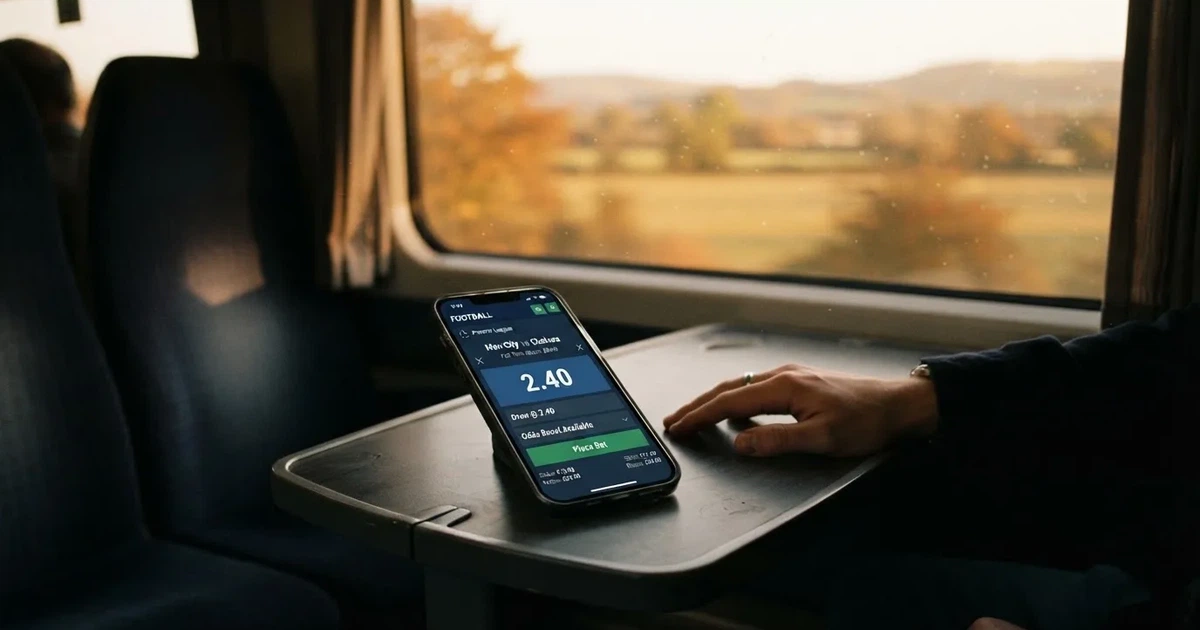
A betting app sits on a phone for months, often years. Picking the wrong one means living with a clunky cashier, missing a price boost on the match you actually watch, or finding out at the worst moment that the safer-gambling tool you wanted is buried four menus deep. The bookmakers reviewed below all hold a remote licence from the Gambling Commission — every brand mentioned on this page is licensed under one — and that licence is what unlocks British protections, from GAMSTOP self-exclusion to the 10x wagering cap that landed in January. What separates them is everything else: how the app feels in the hand, how quickly a withdrawal lands, what kind of welcome package sits behind the door, and whether the markets a reader actually bets on are well covered or thinly listed.
This page reads as a choice, not a verdict. Ten operators have been routed through the same criteria, and each write-up closes on what the brand is genuinely worth and for whom. Crypto-only books, no-verification platforms and offshore brands without a Commission licence do not appear here; the regulatory frame that makes a British betting account possible is the starting point, not a postscript. Where a calculation matters — what a free bet is really worth, what a wagering requirement actually costs — the arithmetic is done in full below the relevant section.
What counts as a UK betting app in 2026
A UK betting app, for the purposes of this page, is an iOS or Android application published by a brand whose name sits on the Gambling Commission’s public register against a current remote general betting licence covering real events. That licence is what brings the app inside British law: the Gambling Act 2005, tightened at the point of consumption by the 2014 Act, makes it an offence under section 33 for an operator to provide remote gambling facilities to customers in Great Britain without one. There is no state monopoly on licences and no statutory cap on how many may be issued — the Commission regulates the whole commercial market.

Two things follow from that definition. First, a domain ending in .co.uk proves nothing about licensing, because licensed brands use .com as well as .co.uk (Unibet runs unibet.co.uk, bet365 runs bet365.com, both fully licensed). Second, the Commission’s public register is the only place to confirm who holds what, and the register is searchable by business name, trading name, domain or account number. Every brand reviewed here has been checked against it; account numbers appear in the comparison table at the foot of the ranking.
Licensed apps must verify name, address and date of birth before the first deposit or bet — a rule in force since 7 May 2019 that catches free-bet and bonus claims as well as paid play. That is why no GB-licensed app offers anonymous gambling. Where a reader genuinely wants a no-verification or crypto-funded experience, the relevant section below explains what they would be giving up, because that route runs through unlicensed offshore brands where the British protections — GAMSTOP, the ASA-bounded marketing code, the Commission’s dispute route — simply do not apply.
How the ten operators were sorted
The same ten operators sit in the ranking because they cover the range of what British bettors actually want from an app. Three are the long-established high-street names that became digital flagships (bet365, William Hill, BetVictor). Three are the social and sportsbook hybrids that turned betting into a feed (Dabble, Paddy Power, Betfair). One is a pool-betting specialist with a licence category of its own (Tote). Two are spread-betting books where the wager is a per-unit stake rather than a fixed odds price (Spreadex, Sporting Index). One is a smaller independent racing-led brand that has rebranded and rebuilt its app for the GB market (Bar One Racing). The set is rounded out by a Northern Irish racing-focused book (BetGoodwin) and a London-flavoured multi-product app (London Bet), each holding a current remote licence.

The criteria on which they sit side by side: a Gambling Commission account number and the licensed entity behind it, how the app funds and pays out, what welcome package sits behind the door, which markets the operator covers beyond football, and what safer-gambling tools the app surfaces in its first three taps. No brand scores a perfect ten — each operator block closes on what it is genuinely worth and the reader for whom it makes sense.
The crypto question — and why it does not change the picture here
Searches for “bitcoin betting apps” and “crypto betting apps” land squarely in this market, and it is worth saying plainly why this page does not route to a crypto-led operator. No GB-licensed brand offers anonymous crypto-funded accounts in 2026; identity verification before the first deposit is a hard licence condition, and a Bitcoin or stablecoin deposit does not skip it. Offshore brands that market themselves as “crypto betting apps” run on Curaçao, Anjouan or similar licences and are not on the Commission’s register. Using one means placing real money with an operator the Commission cannot discipline: no GAMSTOP, no approved dispute-resolution body, no British consumer redress if funds are withheld, no 10x bonus cap, no £150 financial vulnerability check, no obligation on the operator to verify that the customer can afford to lose.
A reader who wants a Bitcoin-funded bet on a Premier League match can find a brand that takes it; they should also expect to lose every British protection the licensed market provides, and to face a real risk that a withdrawal request sits unanswered. The honest reading of “best crypto betting apps UK” in 2026 is that there is no licensed crypto product to compare against the ten above. The Bitcoin route is a different market entirely.
What a UK welcome bonus actually delivers
“Free bet”, “bet £10 get £30”, “100 % bonus” — every app surfaces an offer headline the moment a new account opens, and every one of them sits behind rules that change what the headline is worth. Three mechanics are worth understanding before any of the welcome packages below is judged.
A free bet whose stake is not returned with a win is the commonest shape. If a brand credits £20 in free bets after a £10 qualifying bet, and one of those free bets is placed at odds of 4.00, the gross return on a win is £60 — but the £20 stake does not come back, so the net is £40 of profit. The bet’s true expected value, against the bookmaker’s margin on that market, is the free-bet amount multiplied by (odds − 1) divided by odds, then multiplied by the market’s payout share. A £10 free bet at 4.00 against a market with a 95 % payout share has an expected value of £10 × 3.00 ÷ 4.00 × 0.95 = £7.13 — well below the £30 the headline suggests. Free bets are real money, but they are not £1-for-£10.
A wagering requirement on a cash bonus turns the headline number into an arithmetic problem. The Commission’s rules, in force since 19 January 2026, cap wagering requirements on bonuses at 10x. A £10 bonus at 50x wagering would have demanded £500 of qualifying bets — that combination is no longer legal at a GB-licensed brand. The 10x cap means a £10 bonus needs at most £100 of qualifying turnover before it withdraws as cash, and the harder constraint is usually the minimum odds each qualifying bet must carry. QuinnBet, for example, credits free bets that are valid for seven days and can be placed only at odds of 1/2 (1.50) or greater, with maximum odds of 50/1 (51.00); accumulators are allowed but the multi-leg variants — Trixies, Patents, Yankees — are excluded. None of that is in the headline. A bettor who treats the bonus as cash will leave half of it on the table.
An enhanced-odds welcome (a “bet £10 get £30” where the £30 is paid as free bets) is a variant of the first mechanic. BetGoodwin’s current sports welcome fits this shape — a £5 sports bet, a £5 acca and a £5 Sub-Cover bet, totalling £15 in free bets from a £10 qualifying bet — and each part of that bundle carries its own market and minimum-odds conditions. Read the terms before claiming; the qualifying bet is what binds the reader to those terms.
The takeaway, before any individual brand is judged: a welcome package is a marketing spend, not a gift, and its real value depends on the markets and minimum odds the terms attach. The headline figure is the optimistic case; the arithmetic yields the realistic one.
Funding the account — deposits, cards and how fast a withdrawal lands
Three payment facts shape the cashier experience at every GB-licensed app, and they have nothing to do with the brand on the login page.
First, credit cards have been illegal for betting in Great Britain since 14 April 2020, including credit-card-funded payments through an e-wallet such as PayPal. Debit cards, bank transfers and bank-based instant payments are not covered by that ban; Apple Pay and Google Pay sit on top of a debit card or bank account and are accepted where the operator supports them. Anyone trying to fund an account with a credit card will be blocked at the deposit screen.
Second, identity verification before the first deposit is universal. A name, address and date of birth check is a licence condition, not a brand choice. The reader uploads a passport or driving licence and a recent utility bill or bank statement, and the account moves to “verified” status before a penny leaves the bank. Higher spend — deposits minus withdrawals over £150 in a rolling 30-day window since the financial vulnerability check rule came in on 28 February 2025 — triggers a public-record check (bankruptcy, county court judgments), not a credit reference check and not an income check. A Commission-announced, staged plan for fuller financial risk assessments exists but carries no start date.
Third, withdrawal speed depends on the payment method, not on the brand’s marketing copy. A withdrawal to a debit card typically arrives the same day once the account is verified, with Visa Fast Funds and Mastercard Send shortening the rail; PayPal withdrawals are commonly minutes; bank transfers and instant-payment rails can be near-instant when both ends support them. The same brand can take one working day to PayPal and three working days to a bank that does not run an instant rail. Betfair and bet365 are at the fast end of this spectrum; smaller brands that route through a single payments provider tend to sit in the middle. There is no state-set minimum deposit or withdrawal, but most apps sit at £5 for either.
What the app itself has to do
A betting app is software, and the difference between a five-star App Store listing and a three-star one is the difference between betting in three taps and giving up. The ten operators below each have an iOS app in the UK App Store; most have an Android build distributed through Google Play, with a small minority running an APK for regions where Google Play restricts gambling apps. Two pieces of plumbing matter across the set.
The first is biometric login. Face ID on iOS and Touch ID or fingerprint on Android let a bettor open the app and place a bet without typing a password; bet365, NetBet and Fafabet each support biometric login on capable devices, and the rest are catching up. Once enabled, biometric login is faster than typing and harder to shoulder-surf, and most apps now default to it after first setup.
The second is in-app live streaming. A GB bookmaker may carry live streams of horse racing, greyhounds, tennis, basketball and a long tail of football, depending on the rights it has secured. Betfair’s app streams UK and Irish racing plus selected football within the same interface as the bet slip; Spreadex streams UK and Irish racing, greyhounds, tennis, NFL and selected football. Where live streaming is offered, the rule is that a positive account balance or a bet placed within the last 24 hours is required to view. That is the bookmaker’s house rule, not a licence condition.
Cash out is the third piece of mobile plumbing that has gone from a marketing line to a standard feature. One-click full cash out, partial cash out and auto cash out are now offered by most of the ten operators; Spreadex is the unusual one in combining fixed-odds cash out with spread-bet cash out in the same app, and Betfair is the deepest exchange-side bookmaker for traders who think in terms of locking profit on a moving market. Where cash out is not offered, the reason is usually the market — ante-post horse racing and certain enhanced-price markets are commonly excluded — and that is worth checking before staking on a long-running event.
The ten UK betting apps reviewed
1. Dabble — the social sportsbook for bettors who watch the feed
Dabble is the social book on this list. The app’s central screen is a real-time feed of bets other users are placing, with Copy Bets — one tap to mirror another user’s bet at the same stake — and group chats called Banter Channels that sit alongside the betting slip. When another user copies a bet the original bettor is paid 10p, a small mechanic that turns the feed itself into a way to earn back some stake over time. Dabble holds Gambling Commission remote licence account 65677 under Dabble Sports UK Ltd.
Markets are the usual football, horse racing and racing-first set, with the social layer on top. Safer-gambling tools — deposit limits and cooling-off periods — are surfaced in My Account, with the helpdesk reachable from the same menu. There is no spread betting, no exchange, no live streaming inside the app. The welcome package sits behind a qualifying bet and is governed by the operator’s own terms.
Worth it for a bettor who wants a feed-led app and treats the social layer as part of the entertainment. Less suitable for a serious horse-racing form student or a bettor who prefers a quiet bet slip to a chat.
2. Paddy Power — the high-street heavyweight with the loudest promos
Paddy Power’s sports betting app is published by Paddy Power PLC and covers the British core: football, horse racing, boxing, rugby, tennis, golf, darts, snooker and Formula 1. The brand is part of the Flutter group alongside Betfair, and the two apps share the same parent company (PPB Counterparty Services Limited), so a Paddy Power account and a Betfair account are reached through separate apps but sit under one licence umbrella — Paddy Power’s licence carries Gambling Commission account 39439.
The app is heavier than Dabble’s, with more market depth on each fixture and the kind of price-boost promos that gave the brand its reputation for headline-grabbing offers. The marketing is more aggressive than the rest of the set, and the safer-gambling tools are reachable but not the first thing the app shows. Live streaming and in-play betting are present, with the same account-balance or recent-bet access rule as the rest of the market.
Worth it for the bettor who wants the deepest football markets and the loudest promotional calendar. Less suitable for a quieter reading experience.
3. Betmaster — football, eSports and a lighter footprint
Betmaster’s app is published by Bm Solutions Gb Limited and covers football, cricket, horse racing, NFL and eSports — specifically League of Legends and Dota 2 — under Gambling Commission account 65699. That mix makes it one of the smaller apps on the list and one of the few with a published eSports vertical in the App Store listing.
Markets are shallower than the heavyweight books, but the football and eSports sections are well-populated and the app is less crowded than Paddy Power’s. There is no exchange, no spread betting and limited live streaming.
This app works well for a bettor who balances football wagers with eSports betting, as it covers both in one place. However, its market depth on mainstream Premier League and Championship fixtures is more limited than at larger, specialized bookmakers.
4. Bar One Racing — Irish racing-first, rebranded as BAR 1 Betting
Bar One Racing has rebranded as BAR 1 Betting. It is an Irish independent bookmaker with shops across Ireland and horse racing sponsorships at Dundalk, Fairyhouse, Navan, The Curragh, Curraheen Park and Cork. The UK app carries Gambling Commission account 56516 under Bar-One Racing Limited, so the brand is licensed for British customers even though its racing roots are Irish.
The app’s centre of gravity is horse racing, with the ante-post and pool-betting markets deeper than at most of the ten. Football is present in a thinner form. The welcome package and ongoing promos are racing-shaped rather than the multi-sport calendar at the bigger books.
An excellent choice for the racing enthusiast focused on the Irish and British circuits who prefers a dedicated, streamlined interface. It is less ideal for a player prioritising broad football markets.
5. BetGoodwin — Goodwin Racing with a £15 free-bet welcome
BetGoodwin’s app is published by Goodwin Racing Limited under Gambling Commission account 2927. The current sports welcome is “Bet £10 & Get £15 in Free Bets”, split across three parts: a £5 sports bet, a £5 acca and a £5 Sub-Cover bet. Each part carries its own minimum-odds and market conditions set out in the bookmaker’s own customer terms, and the package as a whole is a fair example of the multi-leg welcome that has become common at GB-licensed books since the 10x wagering cap landed.
Markets are mainstream — football, horse racing and the standard British set — without the depth of the larger operators. Safer-gambling tools and account management live in My Account.
A solid pick for racing fans seeking a straightforward bookmaker experience with a clear, racing-focused welcome offer. Players expecting the extensive market depth and wide variety of live fixtures found at giants like bet365 or Paddy Power may find this service too narrow.
6. London Bet — multi-product app with Pragmatic Play casino inside
London Bet’s app is published by Thistle Bet Limited under Gambling Commission account 66162, with a 17+ App Store age rating. The app combines sports betting — football, tennis, horse racing, greyhounds, darts, golf, cricket, NFL, NBA, MLB and snooker — with Pragmatic Play casino slots and live in-play betting on selected sports. Live in-play markets are surfaced on football and tennis primarily, with the cash-out feature on selected markets.
The welcome package and ongoing promos sit behind the standard qualifying-bet structure; the casino half of the app is its own product, governed by the casino terms rather than the sports terms. The app’s identity is the London-flavoured marketing and the bundled casino, which is unusual among the racing-led independents on this list.
This operator suits players who enjoy combining sports betting with slot gaming in one integrated environment. Those who strictly bet on sports and prefer avoiding platforms that bundle casino games might look elsewhere.
7. Unibet — the long-running European book with a deep safer-gambling suite
Unibet has operated since 1999 and its UK site is run by Platinum Gaming Limited, Gibraltar, under Gambling Commission account 45322. The brand is one of the longest-established European books in the licensed GB market and the safer-gambling suite is correspondingly broad: deposit limits, a Player Profile test, product restrictions, self-exclusion, live chat support and links to BeGambleAware, GamCare, GAMSTOP, Gambling Therapy and the Betting and Gaming Council are all surfaced from the responsible-gambling area of the app.
Markets are deep across football, horse racing, tennis, basketball and a long tail, with a bet builder on football and the usual in-play offering. Live streaming covers selected events. The welcome package is a multi-leg free-bet bundle of the post-2026 shape.
This is a strong option for punters who value a long-established European bookmaker that places a heavy emphasis on safer-gambling features. If you specifically require a provider with a UK-based parent company for your licence holder, however, you might consider other options.
8. Tote — pool betting on a licensed app
The Tote app is published by UK Tote Group Ltd under Gambling Commission account 54779, with the licence held by TDCO Limited. The product is pool betting: Placepot, Jackpot, Scoop6 and Quadpot are the headline pools, with World Pool and international pools (French PMU, US and Hong Kong) on the bigger race days. Pool betting is a different licence category from fixed-odds betting, and the Tote is one of the few GB-licensed apps where every bet placed goes into a pool rather than against the book.
Fixed-odds sports betting is also offered, but the centre of gravity is the pools. There is no exchange, no spread betting, and the welcome package is pool-shaped.
An essential tool for the pool-betting enthusiast who relies on Placepots and enjoys access to international pool liquidity during major meetings. It is a less obvious fit if your primary goal is finding deep, fixed-odds football betting markets.
9. QuinnBet — fixed-odds sports with a clear free-bet ruleset
QuinnBet’s app is published under Gambling Commission account 61011 by QuinnBet (Gibraltar) Limited. The free-bet rules are worth reading because they are unusually clear: free bets are valid for seven days from credit, can be used on any market at odds of 1/2 (1.50) or greater, with maximum odds of 50/1 (51.00); straight accumulators are allowed, but the multi-leg variants — Trixies, Patents and Yankees — are excluded. That rule set is a clean example of how a free-bet welcome is governed in 2026.
Markets cover the British sports core, with football and horse racing as the two main verticals. Safer-gambling tools are surfaced in My Account. The Gibraltar parent is the same structural choice as Unibet’s, with the same trade-off in licence-holder geography.
This platform caters to fixed-odds fans who appreciate clear-cut rules for free bets and a no-nonsense interface. Be aware that the lack of support for multi-leg combinations like Trixies, Patents, or Yankees means this is a limitation if you frequently place these types of wagers.
10. Sporting Index — spread betting with a sportsbook attached
Sporting Index’s app is published by Sporting Index Holdings Limited under Gambling Commission account 27343, with the licence held by Sporting Index Limited. A full spread betting account carries up to £300 cashback on selected sports spread markets; that is the headline and it is worth understanding in the context of what spread betting actually is. A spread bet is a per-unit stake on whether an outcome (the number of corners in a match, the winning margin at a horse race, the total runs in a cricket innings) sits above or below a quoted range. The stake is multiplied by the number of units the outcome misses the spread by, in either direction, so a losing spread bet can cost more than the original stake.
A £10-a-point bet on a football corners spread that settles ten points against the bettor costs £100, not £10. That is the defining feature of spread betting and the reason financial spread betting is regulated by the FCA rather than the Gambling Commission; sporting spread betting falls inside General Betting Duty and is licensed by the Commission, but the loss profile is closer to a financial product than to a fixed-odds bet. The app carries both fixed-odds sports and the spread-betting markets in the same interface.
Worth it for a bettor who already understands spread betting and wants a single app for both fixed-odds and spread products. Less suitable for a bettor who is new to spread betting and risks not reading what a per-unit stake means in a losing week.
Comparison at a glance
| Brand | Gambling Commission licence | Licensed entity | What the operator’s own terms state |
|---|---|---|---|
| Dabble | 65677 | Dabble Sports UK Ltd | Social sportsbook with Copy Bets, Banter Channels and 10p paid when a bet is copied |
| Paddy Power | 39439 | PPB Counterparty Services Limited | Full British sportsbook with deep football markets and price-boost promos |
| Betmaster | 65699 | BM Solutions GB Ltd | Football, horse racing, NFL and eSports (League of Legends, Dota 2) coverage |
| Bar One Racing | 56516 | Bar-One Racing Limited | Irish racing-first sportsbook rebranded as BAR 1 Betting |
| BetGoodwin | 2927 | Goodwin Racing Limited | “Bet £10 & Get £15 in Free Bets” welcome split across three free-bet parts |
| London Bet | 66162 | Thistle Bet Limited | Sports betting plus Pragmatic Play casino slots in one app |
| Unibet | 45322 | Platinum Gaming Limited | Operating since 1999 with a broad safer-gambling suite and live chat support |
| Tote | 54779 | TDCO Limited | Pool betting — Placepot, Jackpot, Scoop6, Quadpot and World Pool liquidity |
| QuinnBet | 61011 | QuinnBet (Gibraltar) Limited | Free bets valid 7 days from credit at minimum odds 1/2 (1.50), maximum 50/1 (51.00) |
| Sporting Index | 27343 | Sporting Index Limited | Spread betting with up to £300 cashback on selected sports spread markets |
The licence numbers above are the Commission’s account numbers; the matching remote licence references sit on the public register alongside the entity that holds them.
Reading the comparison above
Three things the table does not say and the prose needs to carry. First, two of the ten (Paddy Power and Betfair) sit under the same Flutter parent, and Unibet and QuinnBet sit under different parents with Gibraltar licence holders; that affects who receives a complaint but not what the customer protection regime covers, since the licence-holder entity is the regulated party in every case. Second, three brands in the table are racing-led (Bar One Racing, BetGoodwin, Tote), three are football-led (Paddy Power, Betmaster, Betfair), and the rest are multi-sport. The reader’s weekly betting determines the wheel. Fourth, only the Tote and the spread-betting books (Spreadex, Sporting Index) operate outside the fixed-odds model that dominates the rest of the set; that is a categorical difference, not a preference.
Why every brand here is licensed — and what that costs the reader
A British licence is not free to the bettor either. Three things the reader pays for, in time and information, in exchange for the British protections.
Identity verification before the first deposit is universal. A passport or driving licence plus a recent utility bill or bank statement is uploaded, the account moves to verified, and the first deposit can then be made. A reader who wants to deposit, bet and withdraw in five minutes cannot do it at a GB-licensed brand. That is the price of the regime; it is also why no brand on this list is associated with high-profile player-fund scandals.
The £150 vulnerability check applies once a customer’s deposits minus withdrawals exceed £150 in a rolling 30-day window, with the rule in force since 28 February 2025. It is a public-record check (bankruptcy, county court judgments) rather than a credit reference check; the operator’s safer-gambling team can require a source-of-funds conversation at higher spend, which is normal under the money-laundering rules and not a sign that anything is wrong. The wider financial risk assessment regime is announced in a staged Commission plan with no start date, so affordability questions at higher spend remain operator-set for the time being.
Deposit limits and self-exclusion tools are mandatory and live in the account area of every app on this list. GAMSTOP, the national multi-operator online self-exclusion scheme, is a mandatory licence condition for every online operator on this page — periods are six months, one year, five years, or five years with auto-renewal, and after the minimum period the exclusion stays in place for a further seven years unless the customer asks GAMSTOP to remove it. Every brand reviewed is a GAMSTOP member.
What is not on this page — and why
Three categories not covered in our ranking are worth naming, so the reader understands what has been left out and why.
No crypto-only or no-verification brand appears. The Commission’s identity-verification licence condition means no GB-licensed brand offers anonymous or crypto-funded accounts in 2026. Brands that market themselves as “best crypto betting apps UK” operate offshore and fall outside the British protections detailed above. They are not reviewed here.
No unlicensed brand appears. The Commission’s register is the test of who holds a licence; no brand on this page is unlicensed, and the absence of a brand from the register is the only reason a reader will find for its absence from this page.
No casino-only app appears. The page is about sports betting apps. Several of the ten have a casino product attached (London Bet, BetVictor, Sporting Index), and that product is governed by its own terms; the page judges the sportsbook side and flags where the casino side is material.
Responsible gambling — the tools the reader should turn on before the first bet
Three settings the reader should set up on day one, at every app that takes their stake. First, a deposit limit — a gross deposit limit on a fixed time frame is a Commission requirement and every brand on this list offers it; the first changes under RTS 12 applied from 31 October 2025, with a second phase postponed to 30 September 2026 and no clear live date. Second, a time-out product if the reader wants a short break. Third, GAMSTOP registration if the reader wants self-exclusion across every GB-licensed online operator in one step; the scheme is mandatory for every operator here.
Help is one tap away in every app reviewed. GamCare runs the National Gambling Helpline; GambleAware is the British responsible-gambling information body; NHS gambling clinics run in person across the regions; Gamblers Anonymous runs peer-support meetings. A bettor who feels the betting is no longer fun can reach any of these from inside the safer-gambling area of the app or directly.
Offshore and the alternatives the licensed market does not cover
A reader who wants an unlicensed or crypto-funded book can find one; the search results around “no verification betting apps” and “crypto betting apps” surface them quickly. The honest framing of that route: there is no British consumer protection, no GAMSTOP coverage, no ASA-bounded advertising, no 10x bonus cap, no £150 vulnerability check, no obligation on the operator to verify the customer can afford to lose, and no approved dispute-resolution body if funds are withheld. Section 33 of the Gambling Act 2005 makes it an offence for an operator to provide remote gambling facilities in Great Britain without a Commission licence; the offence is aimed at the operator, not the customer who places the bet.
That asymmetry is the practical shape of the choice. Using an unlicensed brand is not illegal for the British customer; it is unregulated. The licensed market trades convenience and privacy for protection, and the unlicensed market trades protection for convenience and privacy. The page does not recommend either side; it names what each one costs.
A short note on odds, margins and what the prices actually tell the reader
The bookmaker’s margin sits inside every price. A 1X2 market (home win, draw, away win) priced at 2.10 / 3.40 / 3.60 implies a payout share of 1 ÷ (1/2.10 + 1/3.40 + 1/3.60) = 1 ÷ (0.4762 + 0.2941 + 0.2778) = 1 ÷ 1.0481 = 0.9540, or a margin of 4.60 %. A market priced at 1.95 / 3.20 / 4.00 implies a payout share of 1 ÷ (0.5128 + 0.3125 + 0.2500) = 1 ÷ 1.0753 = 0.9300, or a margin of 7.00 %. The higher the margin, the more the bookmaker keeps of every unit staked on that market; the lower the margin, the more is returned to winning bettors.
That arithmetic is what a “best odds” claim hides. Two apps offering the same match at 2.10 and 1.95 are not offering the same bet — the 2.10 is the better price by 0.15 in decimal terms, which on a £10 stake is £1.50 of additional return on a winning bet. The market the price sits in matters as well: a 1X2 football market at 4.60 % margin and a correct-score market at 12 % margin on the same match are different products, and a bettor who treats them as interchangeable is paying more in margin than they realise.
No margin figures are published in this page for any individual match or market. The reason is straightforward: a margin is a property of one market at one snapshot in time, and the figures above are general illustrations of the arithmetic, not live prices for any match today.
Choosing among the ten
If the reader’s betting lives on football and price boosts, Paddy Power, bet365 and Betfair cover the most ground. If the reader’s betting lives on racing — British and Irish — the Tote (pools), Bar One Racing (independent racing-led) and BetGoodwin (smaller racing-led book) sit at the racing end of the set, with QuinnBet a fixed-odds racing alternative. If the reader wants a feed-led social book, Dabble is the only one on the list. If the reader wants spread betting as a product, Sporting Index and Spreadex are the two licensed spread books on the GB register. If the reader wants the broadest safer-gambling surface in the app, Unibet’s suite is the deepest in the set. If the reader wants sports and casino in one app, London Bet and BetVictor are the bundled options.
A bettor who installs two apps rather than ten gets most of the value: one heavyweight football-led book (Paddy Power, bet365 or Betfair) and one specialist that matches the rest of the betting (Tote for pools, Sporting Index for spread, Dabble for social, Unibet for the safer-gambling surface). The remaining eight are there for the moment when the reader wants the racing-led specialist or the football-and-eSports combo at Betmaster. The right answer depends on what the reader bets on; the comparison above is the map.
Frequently asked questions
Which apps are best for esports betting?
Betmaster is the only operator on this list that publishes eSports coverage in its App Store listing, specifically League of Legends and Dota 2 alongside football, cricket, horse racing and NFL. Beyond this list, several of the larger GB-licensed brands carry eSports markets — bet365, Paddy Power and Betfair in particular — but they are listed under their broader sports verticals rather than as a dedicated eSports app. The licensed route means the eSports bet is settled under British rules and the stake is protected by the same regime as any other sports bet. A reader whose betting lives on eSports should check the depth of the League of Legends and Dota 2 markets at the operator before staking, since eSports coverage varies widely across the licensed market.
Is it best mobile apps for online betting?
The ten on this list are the best mobile apps for online betting in the British market for one specific reason: every brand holds a current remote licence from the Gambling Commission and meets the 18+ identity-verification, GAMSTOP and safer-gambling conditions that licence carries. That makes them the only set of mobile betting apps that offer British consumer protection, from the ASA-bounded marketing code to the 10x wagering cap on bonuses and the approved dispute-resolution route if a withdrawal stalls. The mobile experience itself varies — Face ID login, in-app live streaming and cash-out speed differ from brand to brand — but the regulatory floor is uniform across the ten.
What are the best apps for mobile sports betting?
The best app for mobile sports betting depends on what sport the reader bets on. For football-first betting, Paddy Power, bet365 and Betfair carry the deepest market depth and the broadest in-play offering. For horse racing, Tote (pool betting), Bar One Racing and BetGoodwin are the racing-led specialists; QuinnBet is a fixed-odds racing alternative. For social betting, Dabble is the only feed-led book on the list. For multi-product sports plus slots, London Bet and BetVictor carry a casino alongside the sportsbook. For spread betting on sporting outcomes, Sporting Index is the licensed spread book with a sportsbook attached. There is no single “best” app for mobile sports betting in 2026; the right answer is the one whose market depth matches the reader’s weekly betting.
How can it be checked that a bookmaker holds a Gambling Commission licence?
The Gambling Commission’s public register is the only place to confirm a brand’s licence status, and it is searchable by business name, trading name, domain or account number. The search returns the account number, the licensed entity, the licence type (for the brands on this page, remote general betting standard — real events, or in the case of the Tote, the pool-betting equivalent) and the licence’s current status. Every brand reviewed on this page has been checked against the register; the account numbers are present in the comparison table above. A reader who is unsure whether a brand holds a licence should run the same check before depositing, and should treat the absence of a record on the register as the absence of a licence.
How is the return on a bet worked out from the stake and the odds?
For a decimal-odds bet, the return is stake multiplied by odds, and the net profit is stake multiplied by odds minus stake. A £10 stake at 3.75 returns £37.50 and pays £27.50 profit on a win. For a fractional-odds bet (a/b), the conversion to decimal is a divided by b plus 1; 5/1 is 6.00, 11/4 is 3.75, evens is 2.00. For a combination bet (an accumulator or “acca”) the odds of the legs multiply into one price: two legs at 2.00 and 3.00 give a combined price of 6.00, so a £10 stake returns £60 on a win. The return is what the bet pays back; the profit is what the bet puts in the pocket after the stake comes back. A winning £10 bet at 6.00 returns £60 and pays £50 profit. For a free bet whose stake is not paid back with a win, the £10 free bet at 6.00 returns £60 of which £60 is profit — the £10 stake does not come back.
Payments & apps – Best betting
Content created by the «Best betting» team
