
What's a Trixie bet — how three selections become four bets and what that costs
 Available in US
A Trixie is one of the cleanest full-cover bets in British bookmaking: pick three selections, stake the same amount on each of the four combinations a bookmaker forms from those picks, and let the math do the rest. Three doubles and one treble — that is the whole structure. A bettor only needs two of the three legs to win for a return, which is why the bet has stayed popular with punters who want cover without paying for singles. The trade-off is that the stake multiplies by four before a ball is kicked, and a single loser turns two of the four bets into losers with one survivor left. This page walks through how the bet works, how the payout is calculated, where the offer runs into restrictions (free bets often exclude it), which licensed brands let the bettor place it cleanly, and what the Gambling Commission’s register shows about each one. The angle throughout is choice: which paths exist for the reader who wants cover, and who each path suits.
Current as of 27 October 2026 against the Gambling Commission’s public register and each operator’s own help pages.
Strategies that sound simple but cost the punter four stakes
A Trixie is one of several full-cover bets a punter can build around three or four selections. The point of the family is that the bookmaker forms every multiple the chosen number of legs allows — the punter does not have to pick which doubles to play. That is also the trap: every multiple costs a stake, so the total bill is the unit stake times the number of bets, paid up front.
The Trixie sits in a small set of named full-cover bets. A Patent is a Trixie plus the three singles, so seven bets on three selections. A Yankee takes four selections and produces eleven bets: six doubles, four trebles, one fourfold. A Lucky 15 runs to fifteen bets on four selections by adding the four singles. A Super Yankee, sometimes called a Canadian, is twenty-six bets on five selections. A Heinz is fifty-seven bets on six. A Goliath reaches two hundred and forty-seven bets on eight selections. None of these are clever wagers; they are pre-set menus, and the menu determines the bill before any leg is settled.
That menu-style design is what makes a Trixie different from an accumulator (one bet, all-or-nothing) and from a Lucky 15 (which covers the singles so a one-leg winner pays). A Trixie without singles means a single winner returns nothing. Two winners pays one double. Three winners pays all three doubles plus the treble. The whole structure rewards the punter who gets close but not perfect, and punishes the punter who only lands one leg.
What changes between a Trixie and an each-way bet on a single horse race is the entire premise: each-way adds a second, separate bet on the same selection (win and place), while a Trixie spreads stake across multiple combinations of different selections. A punter who wants both — a place cover on one race plus multiple cover on a small sports card — has to build them as two distinct bets on the slip.
What “two winners needed” actually means
The arithmetic is honest and the punter can run it before kick-off. Take three selections at decimal odds of 2.00, 3.00 and 4.00 and stake £1 on each of the four bets (£4 total). If all three win, the doubles return £6, £8 and £12 — £26 of stake-recovered-plus-profit — and the treble returns £24, for a total of £50 returned and £46 of profit on a £4 outlay. If only two win, the one double made from those two legs returns its stake times the product of the two odds; the other two doubles are dead and the treble is dead. That is the entire payout shape: zero winners pays zero, one winner pays zero, two winners pays one double, three winners pays the lot.

Where the Trixie sits between strategies
A punter weighing a Trixie against a straight accumulator on the same three picks is weighing two things at once. An accumulator of three selections is one bet at one combined price — the product of the three odds — and it returns the stake plus profit only if all three win. The Trixie’s advantage is the cushion from the doubles: two winners pay something, the accumulator pays nothing. The Trixie’s cost is the four-times stake. A punter who is confident in all three legs and wants the higher ceiling chooses the accumulator. A punter who hedges against one leg misfiring chooses the Trixie and accepts the four-stake bill.
The “system bet” framing in British bookmaking refers to this family: the punter buys a fixed package of multiples rather than picking individual combinations. A Trixie is the smallest package that gives the punter cover beyond a straight line. A punter who wants singles in the cover moves up to a Patent; a punter who wants a fourth leg in the cover moves up to a Lucky 15. There is no strategy content in the choice — only a stake-budget decision and a confidence-versus-cushion trade.
Why this is the strategy that fits small staking budgets
The unit stake on a Trixie is the only knob the punter controls, and the punter who keeps the unit small can cover three picks without exposing more than they can afford to lose. A £1 Trixie costs £4; a £5 Trixie costs £20; a £10 Trixie costs £40. The punter who treats the Trixie as a way to back a confident shortlist at limited downside is using it as designed. The punter who treats the Trixie as a way to “rescue” a single favourite they expect to win is paying four stakes for cover on an event that, by their own belief, returns no money unless something else lands. That is the most expensive way to back a favourite.
How the Trixie is built, settled and paid out by the bookmaker
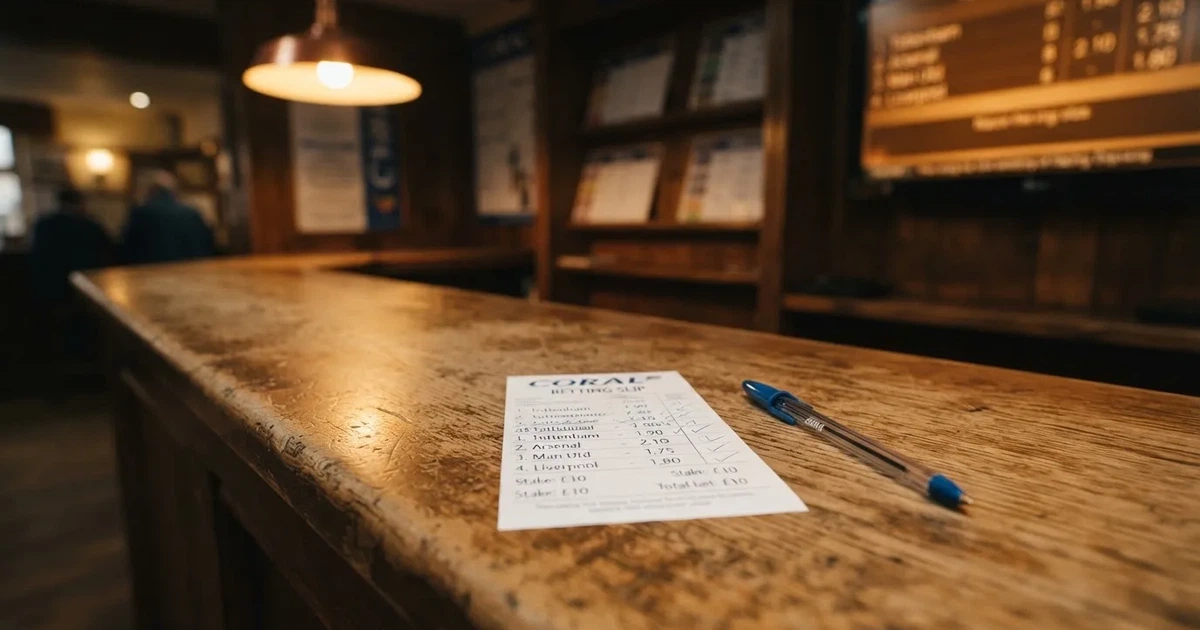
A Trixie on the betting slip looks like four rows rather than one. The bookmaker takes the three selections the punter has named, forms the three doubles (selections 1+2, 1+3, 2+3) and the one treble (selections 1+2+3), and asks the punter for one unit stake. That unit stake is then applied four times — once per row — and the slip total reads four times the unit. Some bookmakers call this “per line”, others “per bet”; the meaning is identical.
Settlement is row by row, leg by leg. Each double wins only if both its legs win; the treble wins only if all three win. A void leg is treated as odds of 1.00 (decimal) by most licensed UK bookmakers, which reduces that combination to a single on the remaining legs. A non-runner in horse racing and a player who does not start in football trigger the same kind of adjustment. Rule 4 deductions apply when a horse withdraws from a race, and that deduction reduces the odds on the affected combinations. None of these rules is specific to a Trixie; they apply to every multiple bet the bookmaker settles.
The return figure the punter reads on the slip is the stake plus the winnings, in pounds. Decimal odds make the math easy: a £10 stake at odds of 4.00 returns £40 (the £10 stake plus £30 of profit). Fractional odds are read the British way — 3/1 means a £1 stake returns £4 (£3 profit plus £1 stake back), and evens (1/1) means a £1 stake returns £2 (£1 profit plus £1 stake back). A bookmaker who shows only fractional odds on the slip is not quoting a different price; it is the same price in a different notation. The punter who sees 3/1 and 4.00 on the same selection is looking at the same bet.
How the bookmaker’s margin lives inside the structures
Every price on a betting market carries the bookmaker’s margin, also called the overround. The margin is what the bookmaker keeps on average from every pound staked on that market. The punter sees it without being shown it. Take a football match priced at home 2.10, draw 3.40, away 3.60 in decimal odds. The “true” probabilities implied by those prices sum to 1/2.10 + 1/3.40 + 1/3.60, which is 0.4762 + 0.2941 + 0.2778, a total of 1.0481. A perfectly fair book would sum to 1.0000. The excess, 0.0481, is the margin — about 4.8% of every pound staked. The bookmaker does not advertise the margin; it sits inside every price.
The same arithmetic governs a Trixie. Each leg carries its own margin, and when the legs are multiplied into the doubles and the treble, those margins compound. A punter paying 5% margin on three legs is paying something close to 15% margin on the combined product, before any compounding on the doubles. The treble is the worst-priced bet in the package; the doubles are somewhere in between. The punter who treats the Trixie as a single bet is treating four bets, and the four bets carry four different total costs to the punter.
The practical reading: the punter who shops the prices on the three selections has more to gain from shopping the doubles than the treble, because the doubles are the larger part of the package by count. A small price difference on each leg compounds across the four bets.
The illustrative payout on three illustrative selections
Working an example is the cleanest way to see the structure pay. Take three selections at decimal odds of 1.50 (1/2), 2.00 (evens) and 2.50 (6/4). Stake £10 on the accumulator as a single bet, or £2.50 per line on a Trixie (so £10 across the four bets). The accumulator at combined odds of 1.50 × 2.00 × 2.50 = 7.50 returns £10 × 7.50 = £75 if all three win. The Trixie is structured differently:
- Double on selections 1 and 2 at 1.50 × 2.00 = 3.00 returns £2.50 × 3.00 = £7.50 if both win.
- Double on selections 1 and 3 at 1.50 × 2.50 = 3.75 returns £2.50 × 3.75 = £9.38 if both win.
- Double on selections 2 and 3 at 2.00 × 2.50 = 5.00 returns £2.50 × 5.00 = £12.50 if both win.
- Treble on all three at 1.50 × 2.00 × 2.50 = 7.50 returns £2.50 × 7.50 = £18.75 if all three win.
If all three selections win, the Trixie returns £7.50 + £9.38 + £12.50 + £18.75 = £48.13 against £10 staked. The accumulator returns £75 against £10 staked. The accumulator is the bigger payout on a clean three-leg win; the Trixie’s case is when one leg fails. If the third leg (the 2.50 shot) loses but the first two win, the accumulator returns £0. The Trixie still pays the 1.50 × 2.00 double at 3.00: £2.50 × 3.00 = £7.50. That £7.50 is the cushion the Trixie buys for the extra stake across the other three rows.
The band to remember: a winning Trixie on three winners returns the sum of three doubles plus the treble, and that sum is always less than the accumulator at the same unit stake. The Trixie’s case is not higher returns on three winners — it is a non-zero return on two.
The cases that return zero
The Trixie returns nothing when fewer than two legs win. One winner: every double that includes that leg needs a second winner, and the treble needs all three. The single row pays nothing; the package pays nothing. Zero winners: the entire slip is dead. A void leg, by contrast, is treated by most licensed UK bookmakers as a winner at decimal odds of 1.00: the affected doubles and the treble drop down to a smaller multiple, which usually returns the stake on that row and nothing more. Rule 4 deductions pull odds back further still. None of this is a Trixie-specific quirk; the rules apply to every multiple.
Where the slip reads “minimum stake” and “maximum payout”
Licensed UK bookmakers set their own minimum and maximum stakes on multiples, including Trixies. A minimum stake of £1 per line is common; some operators set the line minimum higher on certain markets. Maximum payouts cap the total return a slip can produce, and that cap can be lower for multiples than for singles — a bookmaker that caps singles at £1 million may cap multiples at £100,000. The cap is published on the operator’s terms page and on the betting slip’s help text, and the punter reads it before placing the bet, not after. The punter who wants to know the exact cap on a Trixie at a specific bookmaker reads that bookmaker’s maximum-payout rules, because every operator sets its own.
Ten UK-licensed bookmakers and what each offers the Trixie punter
The brands below all hold a Gambling Commission remote licence for general betting on real events. Each row carries the Commission’s account number, the licence holder named on the public register, and a note on what the operator’s own published terms state about the bet or the free-bet rules that affect it. The Trixie itself is a standard market every one of these bookmakers offers; the differences sit in the surrounding product — free-bet eligibility, bet-builder coverage, Best Odds treatment, in-play pricing and the small print on maximum stakes. A punter who is choosing between them is choosing which surrounding product fits the way they bet.
| Brand | Gambling Commission licence and holder | What the operator’s own terms say about Trixies and related bets |
|---|---|---|
| NetBet | Remote licence 039170-R-319343-032, account 39170 — Netbet Enterprises Limited | Daily Boosts, Profit Boosts and free-bet offers run alongside a Bet Builder with instant dynamic odds and sports stats for major leagues |
| QuinnBet | Remote licence 061011-R-335683-004, account 61011 — QuinnBet (Gibraltar) Limited | Free bets valid for 7 days from credit, usable on any market at odds of 1/2 (1.50) or greater, maximum odds 50/1; straight accumulators allowed, Trixies, Patents and Yankees excluded |
| BetTom | Remote licence 064959-R-339314-003, account 64959 — Bet Tom Limited | Sports welcome offer of 50% back as a free bet up to £50, with a matching 50% back up to £50 as free slot funds; full terms apply |
| Dabble | Remote licence 065677-R-340363-005, account 65677 — Dabble Sports UK Ltd | Welcome offer of “Bet £10, Get £10 in Free Bets” on a first deposit for new customers, with minimum odds, 7-day free-bet expiry and stake not returned |
| BetUK | Remote licence 039198-R-319450-029, account 39198 — LeoVegas Gaming PLC | Free bets exclude virtual sports, esports and non-UK/IE horse racing; minimum odds apply |
| DAZN Bet | Remote licence 048756-R-327274-019, account 48756 — DZBT Limited | Cash Out, Bet Builder, daily bet boosts and in-play betting; cash-out availability not guaranteed and bets stand if unavailable |
| 10bet | Remote licence 043173-R-322899-023, account 43173 — Blue Star Planet Limited | Sportsbook covers football, tennis and horse racing with Cash Out, Bet Builder and Live Streaming |
| Tote | Remote licence 054779-R-331321-008, account 54779 — TDCO Limited | Best Odds Guaranteed on UK and Irish horse racing from 8 AM on race day, on single and multiple bets; does not apply to ante-post, tote or pari-mutuel bets |
| Betfred | Remote licence 039544-R-319290-010, account 39544 — Petfre (Gibraltar) Limited | Bet Builder, Sub Switch, Racing Post data, Extra Places, live casino and bingo in the app |
| Fitzdares | Remote licence 000400-R-103839-030, account 400 — Fitzdares Limited | Cash out, accumulators, Lucky 15s, specials and antepost markets across horse racing, football, tennis, rugby, cricket, golf and American football with in-play live odds |
The column on the operator’s terms is what the operator’s own help pages and app-store listings state at the snapshot date, not a description of Trixie-specific mechanics — because every brand in this table offers the Trixie as a standard multiple bet. The differences are in the conditions that touch the bet from the outside: free-bet eligibility, the in-play and cash-out product, the Best Odds treatment for racing. A punter who places a Trixie at any of these brands is placing the same four bets; the brand shapes the experience around them.
NetBet — strong daily boosts and a Bet Builder for the larger card
NetBet’s published product lists Daily Boosts, Profit Boosts and free-bet offers, alongside a Bet Builder with instant dynamic odds and sports stats for major leagues. The Profit Boost product is the natural fit for the punter who wants an edge on a Trixie — a price boost applied to the combined multiple pays more on a clean three-leg win. The Bet Builder extends to the same-game market, which matters when one of the three selections in a Trixie is a same-game multi the punter has built from a single match. NetBet’s licence is held by Netbet Enterprises Limited on the Commission’s register. Best use: a Trixie where the card includes a same-game multi as one leg and the punter wants the boost product to inflate the combined price.
QuinnBet — explicit exclusion of Trixies from free bets
QuinnBet’s help pages are unusually clear about which bet types its free bets can and cannot fund. Free bets are valid for 7 days from credit and can be used on any market at odds of 1/2 (1.50) or greater, with maximum odds of 50/1; straight accumulators are allowed, but Trixies, Patents and Yankees are not. That is a direct line through the page: a punter with a QuinnBet free bet cannot place it on a Trixie at all, regardless of the selections. The punter who places a Trixie at QuinnBet is paying cash, not credit. The licence is held by QuinnBet (Gibraltar) Limited. Bottom line on Trixies: a usable sportsbook for cash bets, but the free-bet product excludes Trixies entirely — so a punter who wants to fund a Trixie with a free bet moves to another brand.
BetTom — modest welcome and casino-parallel terms
BetTom’s sports welcome offer is 50% back as a free bet up to £50, with a matching 50% back up to £50 as free slot funds for casino play; full terms apply. The dual welcome — sports free bet plus casino slot funds — is a structure the punter reads carefully because the two halves settle on different products. The licence is held by Bet Tom Limited. In short, the welcome is sports-skewed but the headline figure is modest compared to brand leaders, and the casino-parallel structure should not distract from reading the sports half on its own terms.
Dabble — short-expiry free bet, stake not returned
Dabble’s welcome offer is “Bet £10, Get £10 in Free Bets” on a first deposit for new customers, with minimum odds, a 7-day free-bet expiry and the stake not returned. The two operational points are the short expiry and the stake-not-returned rule: a free bet that wins pays the profit only, not the stake, so a £10 free bet at 4.00 returns £30, not £40. The punter using a Dabble free bet on a Trixie has to confirm the bet type is eligible and then runs the same stake-not-returned math across the four rows. The licence is held by Dabble Sports UK Ltd. Practical read: a usable welcome for a small first card, with the stake-not-returned caveat the punter prices into the calculation up front.
BetUK — free bets carve out virtual, esports and non-UK/IE racing
BetUK’s free bets exclude virtual sports, esports and non-UK/IE horse racing, and minimum odds apply. The exclusions are markets, not bet types, so a Trixie whose three legs are all real-event football selections is unaffected by the carve-out. A Trixie that includes a virtuals leg or a non-UK/IE racing leg is not eligible. The licence is held by LeoVegas Gaming PLC, the same operator behind several other UK-licensed brands. Net effect: clean for real-event sports cards, narrow for any card mixing virtuals or international racing.
DAZN Bet — cash-out framing the punter reads before placing
DAZN Bet offers Cash Out, Bet Builder, daily bet boosts and in-play betting; the help pages note that cash-out availability is not guaranteed and bets stand if it is unavailable. A Trixie that is cashed out partway through is settled on the rows the punter cashes, not on the package as a whole — a partial cash-out returns some rows, leaves the others running. The licence is held by DZBT Limited. Cash-out framing matters here because partial cash-out on a Trixie is four separate decisions, one per row, and the punter who does not see that reads the slip wrong.
10bet — football, tennis and horse racing with streaming
10bet’s sportsbook covers football, tennis and horse racing, with Cash Out, Bet Builder and Live Streaming. The Trixie sits comfortably on the football card where the streaming and in-play product make a leg-by-leg watch possible. The licence is held by Blue Star Planet Limited. It suits a football-heavy Trixie whose legs the bettor wants to follow live.
Tote — pool-betting heritage and Best Odds Guaranteed from 8 AM
Tote’s product sits on a pool-betting heritage that distinguishes it from fixed-odds bookmakers, but its fixed-odds sportsbook carries Best Odds Guaranteed on UK and Irish horse racing from 8 AM on the day of the race, on both single and multiple bets; the guarantee does not apply to ante-post, tote or pari-mutuel bets. A Trixie with a racing leg as one of the three selections, placed after 8 AM on race day, gets the BOG treatment on that leg. The licence is held by TDCO Limited. The racing BOG is the standout feature and applies on a Trixie, while the ante-post carve-out means a Trixie built on futures does not get it.
Betfred — Bet Builder, Sub Switch and Extra Places
Betfred’s app features Bet Builder, Sub Switch, Racing Post data, Extra Places, live casino and bingo. Sub Switch is the relevant product for a Trixie punter: it lets the punter substitute a player in a Bet Builder selection when the original player does not start, which keeps the leg alive rather than voiding it. Extra Places extends horse-racing place terms to extra positions, which affects the each-way half of a racing bet but not a Trixie (which has no each-way component unless the punter adds one). The licence is held by Petfre (Gibraltar) Limited. On balance, Sub Switch is the most Trixie-relevant feature because it keeps the leg alive and preserves the doubles that include it.
Fitzdares — Lucky 15s and antepost across a broad sport set
Fitzdares’ app offers cash out, accumulators, Lucky 15s, specials and antepost markets on horse racing, football, tennis, rugby, cricket, golf and American football, with in-play live odds. A punter building a Trixie at Fitzdares has the full sport set to choose from, including the antepost markets that other bookmakers restrict. The licence is held by Fitzdares Limited. The menu is wider than most, antepost included, which helps anyone building a Trixie around longer-priced future selections.
How to verify a bookmaker’s licence for yourself
The Commission’s public register is the only test of whether a brand holds a Gambling Commission licence. It is searchable by business name, trading name, domain or account number, and the result shows the licence categories, the licence holder and the licence status. The punter who wants to check a brand before depositing enters the domain (the .co.uk or the .com, either works — licensed operators use both) or the operator’s company name into the register and confirms the entry matches. A brand with no entry on the register is unlicensed for the purposes of the Gambling Act 2005 and the Gambling (Licensing and Advertising) Act 2014, and the protections those Acts provide do not apply to it. No bookmaker should be taken at its word on licensing — the register is the whole check, and the punter who runs it once before their first deposit is not running it again.
What the law allows and what it does not in 2026
The Gambling Act 2005 is the framework, and the Gambling (Licensing and Advertising) Act 2014 closes the consumption gap: an operator whose remote facilities are used in Great Britain needs a Commission licence wherever it is based. Sections 33 and 36 of the 2005 Act, as amended, set the requirement; a Curaçao, Maltese or Gibraltar licence is not a substitute for serving British customers. The Commission’s public register is the only place to verify a licence, and licensed operators use both .co.uk and .com, so the domain proves nothing on its own. The bettor who wants the protections the framework provides — GAMSTOP coverage, the dispute-resolution route, the financial vulnerability check, the 10x bonus cap, the credit-card ban, the source-of-funds rules — confirms the licence before the first deposit.
The Commission offers several remote licence types. Remote general betting standard (real events) covers fixed-odds sports betting and is the category every bookmaker in this comparison holds. Remote general betting standard (virtual events) is a separate category for computer-simulated events. Remote pool betting covers pool-betting products. Remote betting intermediary is the licence for betting exchanges. The punter who sees “remote betting licence” on a brand’s site without a category stated reads the register entry to see which category it covers; a brand licensed only for virtuals is not licensed to take a real-event sports bet.
In-play, esports and what may be bet on
No statutory list of permitted bets or markets exists in Great Britain. An operator holds a licence for a category and offers markets under its own rules and the Commission’s Licence Conditions and Codes of Practice. In-play betting is offered by GB bookmakers and the controls are the operator’s licence conditions and customer-protection duties — never a claim that in-play is “unrestricted” as a legal matter. Esports are treated like any other event. Bets on politics, TV shows and novelty markets are offered by GB bookmakers; no statutory prohibition was found. The punter who sees a market on a GB-licensed site can assume it is offered under that operator’s house rules, not under a separate statute.
Identity verification, the £150 check and the wider consumer-protection frame
Identity verification before the first deposit has been a condition of every GB remote betting licence since 7 May 2019: name, address and date of birth are checked, and the check applies to free bets and bonus credits as well as cash deposits. Anonymous play at a licensed site is not available. The financial vulnerability check (LCCP condition 3.4.4) has been in force since 30 August 2024 and applies when a customer’s deposits minus withdrawals exceed £150 in a rolling 30 days (since 28 February 2025); the check is a public-record check such as a county court judgment or bankruptcy register, not an income check and not a credit reference check. Financial risk assessments — the affordability checks the press describes — are announced in a staged plan as of a Commission article dated 7 July 2026, with no start date. The punter reading these rules should treat them as a layered frame: verification before the first bet, vulnerability screening above £150 net deposits over 30 days, and affordability checks arriving in stages.
Deposit limits under RTS 12 have applied in their first phase since 31 October 2025; a second phase has been postponed to 30 September 2026. The operator must offer a gross deposit limit on a fixed time frame. There is no state-set deposit or loss ceiling for betting: any limit is the customer’s choice. The punter who wants a hard ceiling sets it on the operator’s safer-gambling page.
Bonuses, free bets and what the cap actually caps
The promotional rules in force since 19 January 2026 cap wagering requirements on bonuses at 10x: a £10 bonus at 50x wagering needed £500 of bets before the rule and now needs no more than £100. Mixed-product promotions — an offer that requires gambling on two or more product types such as betting, casino, bingo and lottery, for example “bet on football to get free spins” — are banned. Whether the cap applies to free bets with no wagering condition, and any cap on the money value of a bonus, are not established. The QuinnBet exclusion of Trixies, Patents and Yankees from its free bets is a brand-level eligibility rule that runs alongside the cap, not a replacement for it. The punter who sees “free bet” reads the small print for the eligible bet types, the minimum odds, the expiry and the stake-returned rule — four fields, all of which change the value of the offer.
Credit cards, source of funds and payment method notes
Credit cards have been banned for gambling in Great Britain since 14 April 2020 (LCCP condition 6.1.2), and the ban extends to credit-card-funded payments through an e-wallet. Debit cards and bank-based payments are not covered by the ban. The punter who reaches for a credit card at the cashier of a licensed bookmaker is told the deposit is refused. Source-of-funds questions at higher spend are normal under the money-laundering rules and the punter should expect them. A state list of permitted payment methods, a British named-account rule, and any rule for or against cryptocurrency deposits at licensed operators are not established — the punter checks each operator’s cashier page for what is accepted.
Advertising, sponsorship and the rule on who appears in the ad
Advertising is not licensed by the Commission; it runs through the CAP Code for non-broadcast and the BCAP Code for broadcast, enforced by the ASA, alongside the LCCP marketing conditions. CAP Code section 16: marketing must be socially responsible, must not be of strong appeal to under-18s, and no one who is or seems to be under 25 may be featured gambling or play a significant role, with an exception for marketing placed where a bet can be made directly; that rule concerns who may appear in the advertisement, not who may bet. “Whistle-to-whistle” is an industry code: since 1 August 2019 betting advertisements have not been shown on TV from five minutes before a live sporting event to five minutes after it, before the 9pm watershed, with horse and greyhound racing excluded. The Premier League clubs’ withdrawal of gambling sponsorship from the front of matchday shirts (from 2026/27; sleeves and hoardings remain) is voluntary, not law. The punter who sees gambling advertising understands the rules govern who is shown and where, not whether the punter may bet.
Tax on winnings — the player side and the operator side
The player pays no tax on betting winnings in Great Britain. General Betting Duty is the operator’s tax on gross profits, currently 15%, and from 1 April 2027 a new remote betting rate of 25% applies within it; remote bets on UK horse racing, bets on self-self-service betting terminals in licensed premises, pool betting and in-person betting stay at 15%. Until 1 April 2027 the remote rate stays at 15%. Whether operators pass duty on through odds is not established, and the punter is never charged duty directly. Spread betting has its own rates (3% financial, 10% other). The Commission’s statutory levy is a separate charge, not a tax. The punter’s tax position is unchanged by the operator’s rate change.
Offshore and unlicensed brands
A GB licence is compulsory at the point of consumption. Providing gambling facilities in Great Britain without the licence the Act requires is an offence under section 33 of the Gambling Act 2005 and is aimed at the operator, not the customer. The customer who bets on an unlicensed site loses the protections the framework provides: no GAMSTOP coverage, no Commission complaints route, no approved dispute-resolution body, no British consumer redress if funds are withheld, no application of the 10x bonus cap, no £150 vulnerability check. Enforcement against the operator is disruption — cease-and-desist notices, search-engine referrals, registrar and payment-provider work — and the Commission has been given, or is about to receive, court-order DNS blocking powers. The punter who sees a brand with no entry on the Commission’s register reads the absence as the answer.
Safer gambling: the tools that exist and where they apply
GAMSTOP is the national multi-operator online self-exclusion scheme and a mandatory licence condition for every online operator since 31 March 2020. The punter who registers with GAMSTOP is excluded from every GB-licensed online operator and app for the chosen period: six months, one year, five years, or five years with auto-renewal. After the minimum period, the exclusion stays in place for a further seven years unless the customer asks GAMSTOP to remove it. GAMSTOP covers online sites and apps; betting shops use a separate self-exclusion service. The punter who wants the strongest single-tool protection registers with GAMSTOP first.
A financial vulnerability check is the operator’s obligation, not the customer’s choice: at £150 net deposits in a rolling 30 days, the operator runs a public-record check and may ask follow-up questions. The punter who is honest with the operator saves time on those questions; the punter who is not honest with the operator finds their account restricted. A deposit limit is the customer’s tool, set on the safer-gambling page and applied as a gross ceiling on a fixed time frame. A time-out is a short break from a single operator; a self-exclusion is a longer break that the operator honours for the chosen period.
Help is available beyond the operator. GamCare runs the National Gambling Helpline. GambleAware funds treatment and support across Great Britain. The NHS runs gambling clinics in several regions. Gamblers Anonymous runs peer-support meetings. The punter who wants help chooses the route they will actually use, and the licensed operator’s safer-gambling page lists each of these services with the relevant links.
Free bets and the Trixie: what the small print changes
A free bet is a credit the operator issues to a customer’s account, and the rules around it determine what it can fund and how it pays out. Three fields matter for a Trixie punter: eligibility (which bet types the free bet can fund), expiry (how long the credit lives) and stake treatment (whether the stake is returned on a win). A free bet that excludes Trixies — QuinnBet is the published example in this comparison — is unusable on the package; a free bet that allows accumulators but the punter wants to use on a Trixie has to confirm the package is treated as an accumulator, which most operators do for multiples formed by the system. A free bet that expires in seven days has to be used in that window; a free bet that does not return the stake wins the profit only, not the stake.
The arithmetic on a stake-not-returned free bet is the same as on a cash bet at smaller unit stake. A £10 free bet at 4.00 returns £30 (the £30 profit, not the £40 a cash bet would return). The punter using a free bet on a Trixie treats each row the same way: the row’s stake is the credit, the row’s return is the profit only, and the total return is the sum of the rows that win. The punter who wants to read the value of a free bet correctly multiplies the credit by (odds minus one), not by the full odds.
The 10x bonus cap applies to bonuses with wagering requirements, not to free bets without them. A £10 free bet that has a 10x wagering requirement needs £100 of qualifying bets before the winnings become withdrawable. A £10 free bet with no wagering requirement is withdrawable on first settlement. The punter reading a free-bet offer looks for the wagering requirement and treats it as the more meaningful number; the headline “£10 free bet” is the marketing figure and the wagering figure is the consumer figure.
Choosing between these ten bookmakers for the Trixie
The Trixie is a standard bet every bookmaker offers, so the choice between these ten is the difference around the bet: free-bet eligibility, boost products, racing treatment, in-play framing and the small print on stakes and maximum payouts. The punter who places a Trixie on a real-event football card and pays cash narrows the choice by Best Odds treatment (Tote and William Hill-style BOG if a leg is racing, none if all legs are football), by whether the operator offers a Bet Builder for the same-game leg (NetBet, DAZN Bet, 10bet, Betfred, Fitzdares) and by whether partial cash-out is offered (DAZN Bet, 10bet, Fitzdares). The punter funding the bet with a free bet narrows by eligibility: QuinnBet excludes Trixies, the rest allow them on real-event markets subject to minimum odds.
The punter who wants a boost on the combined multiple looks at NetBet’s Profit Boost and DAZN Bet’s daily bet boosts; the punter who wants the racing leg settled at the higher of forecast and starting price looks at Tote’s BOG; the punter who wants a substitute when a player doesn’t start looks at Betfred’s Sub Switch; the punter who wants antepost markets on the card looks at Fitzdares. None of these is the right bookmaker for every punter, and none is wrong for every punter. The right choice is the one that fits the punter’s specific card and the way they want the bet settled.
Frequently asked questions
What is a Trixie bet?
A Trixie is a full-cover bet on three selections, made up of four separate bets: three doubles (one for each pair of selections) and one treble (all three together). The punter stakes the same unit amount on each of the four bets, and the total stake is four times the unit. A Trixie needs at least two of the three selections to win for any return.
How does a Trixie bet work in practice?
The bookmaker forms the four combinations automatically when the punter names three selections on the slip. Each double wins when both its legs win; the treble wins when all three win. A void leg is settled at decimal odds of 1.00 by most licensed UK bookmakers; a Rule 4 deduction adjusts the affected combinations. Settlement is row by row, and the slip total is the sum of the winning rows.
What’s the difference between a Trixie and an accumulator?
An accumulator is one bet whose combined odds are the product of the leg odds, and it pays only if every leg wins. A Trixie is four bets covering all the multiple combinations, and it pays on two winners (one double) or three (all four rows). The accumulator has a higher ceiling on a clean three-leg win for the same unit stake; the Trixie has a non-zero return when one leg fails. The cost is four stakes rather than one.
How can the punter check a bookmaker holds a Gambling Commission licence?
The Commission’s public register is the only place to verify a licence. It is searchable by business name, trading name, domain or account number, and it shows the licence categories, the licence holder and the licence status. The punter who sees no entry on the register for a brand is looking at an unlicensed brand for the purposes of the Gambling Act 2005, and the Act’s protections do not apply to it.
How is the return on a bet worked out from the stake and the odds?
Decimal odds make the math direct: return equals stake multiplied by the odds, and profit equals return minus stake. A £10 stake at decimal odds of 4.00 returns £40, of which £30 is profit. Fractional odds read a/b — a £1 stake at 3/1 returns £4 (£3 profit plus the £1 stake back); evens at 1/1 means a £1 stake returns £2. For a Trixie, the four rows settle independently and the total return is the sum of the winning rows.
What is the bookmaker’s margin and how can it be seen in the odds?
The margin is the cut the bookmaker keeps on average from every pound staked on a market. It shows up in the prices: a fair book on a three-outcome market would have implied probabilities (1/odds for each outcome) summing to 1.0000; a real book has them summing to more than 1.0000, and the excess is the margin. On a typical football 1X2 priced at 2.10 / 3.40 / 3.60, the implied probabilities sum to about 1.05, giving a margin of around 5%. The margin is what makes the bookmaker a bookmaker rather than a market.
Bet types & in-play – Best betting
Content created by the «Best betting» team
