
Gaelic football betting tips for the season ahead
 Available in US
A guide to betting on gaelic football is mostly a guide to the sport, because the market for it is small and the prices move with little outside attention. The All-Ireland Senior Football Championship is the headline trophy, the provincial championships feed into it, and the league runs through the winter; the bookmakers who quote prices for it are mostly the same firms that quote the Premier League. Knowing the difference between a goal and a point, what the new 40-metre arc does to a shot from distance, and which bookmakers actually post a market before kick-off is more useful than any tip sheet.

The data in this guide is current as of 27 October 2026 and was checked against the Gambling Commission’s public register, the GAA’s own rule book and the operators’ own terms pages.
Why a “tip” is not what most people think it is
Anyone promising a sure thing on a sport played by amateurs who can be pulled out of a team by a club game the same weekend is selling, not telling. The honest work happens before the bet is placed: form, fixtures, injuries, the bookmaker’s own price and the margin inside it. A “tip” is a conclusion, and the conclusion is only as good as the inputs.
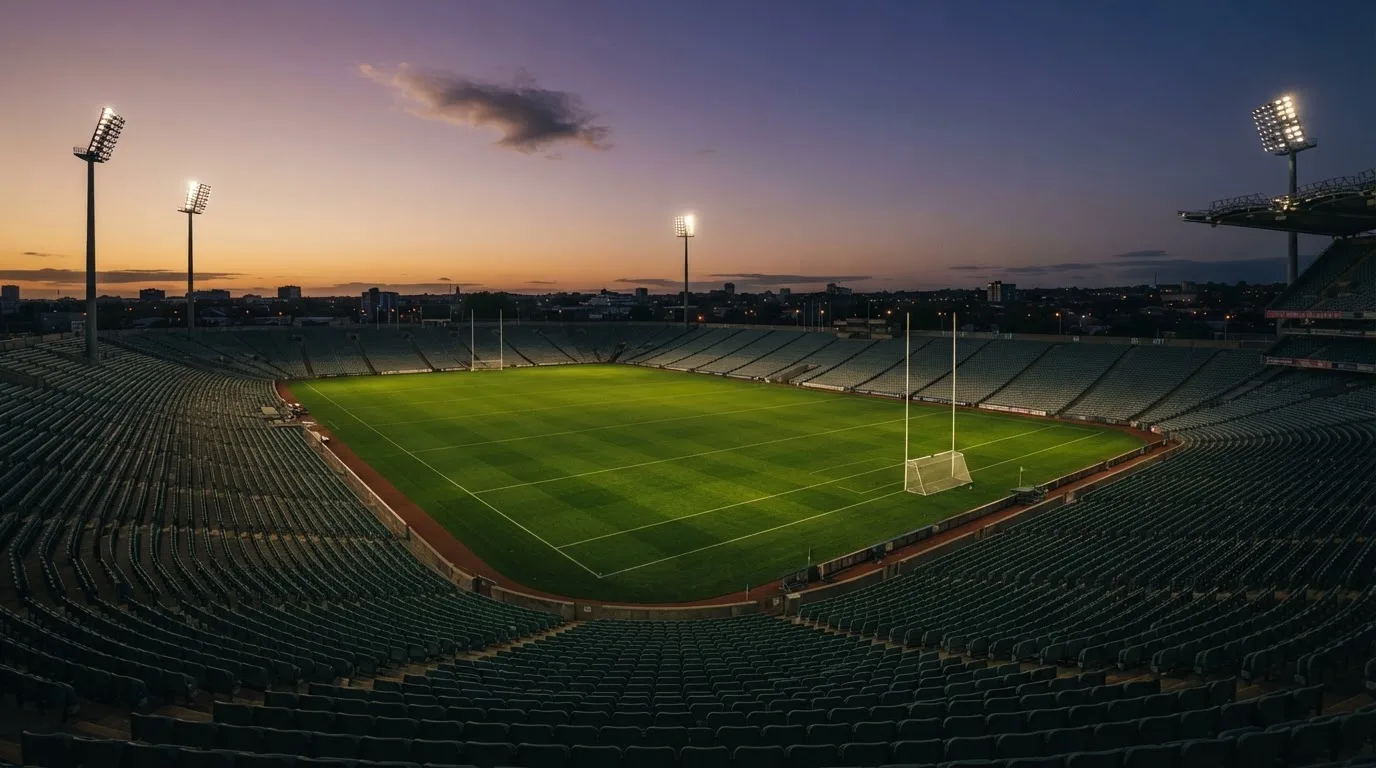
This guide is a primer, not a selections sheet. It explains how a price is built, why no price is fair, and what each major bookmaker actually offers for gaelic football — so a reader can build their own view and place their own bets.
How gaelic football works, in betting-relevant detail
Gaelic football is played on a rectangular grass pitch 130 to 145 metres long and 80 to 90 metres wide by teams of 15, with up to 15 substitutes of whom six may be used. Senior inter-county matches last 70 minutes, two 35-minute halves; most other adult matches last 60 minutes. The ball can be carried for four steps, then it has to be either soloed (dropped onto the foot and kicked back into the hand) or bounced, and after that it has to be passed or shot. Tackling is shoulder-to-shoulder only.

The scoring is what makes the markets interesting. A goal, the ball under the crossbar into the net, is worth 3 points. A point, the ball over the crossbar between the posts, is worth 1 point. The 2025 rule change added a second arc: a shot from outside the new 40-metre arc is worth 2 points if it goes over. The 2-pointer has changed how a game flows, and how a price is built, because a side that can score from range has an extra gear the market has to price in.
The 2026 All-Ireland Senior Football Championship final was played on 26 July 2026 at Croke Park, Dublin, with Mayo beating Kerry 1–20 to 1–17 for their fourth title. Kerry hold the record for most All-Ireland Senior Football Championship titles, with 39. The GAA, the Gaelic Athletic Association, runs the whole show.
The licences, the law and the only register that matters
A bookmaker taking bets from customers in Great Britain needs a Gambling Commission licence, and the Commission’s public register is the whole test of who holds one. The relevant law is the Gambling Act 2005, which covers England, Scotland and Wales; Northern Ireland has its own older regime. Since the Gambling (Licensing and Advertising) Act 2014 the rule is at the point of consumption: a Curaçao, Maltese or Gibraltar licence is not a substitute, and a brand based abroad still needs a Commission licence to take a GB bet. There is no state monopoly, no cap on the number of licences, and the categories a remote betting licence falls into include general betting standard (real events), general betting standard (virtual events), general betting limited, pool betting and betting intermediary (the licence a betting exchange runs on).
Betting on a GB-licensed site means a customer has to pass the same checks the operator has to do: name, address and date of birth are verified before the first deposit or bet, including with a free bet or bonus, and the minimum age is 18. A financial vulnerability check is required once a customer’s deposits minus withdrawals cross £150 in a rolling 30-day window. That is a public-record check, not an income check, and the operator is the one doing the asking. The Commission has announced further affordability checks in a staged plan, with no start date. There is no state-set deposit or loss ceiling: limits are the customer’s choice.
The 10x wagering cap on bonuses is in force, so a £10 bonus at 50x needing £500 of qualifying bets is no longer lawful; the new ceiling is £100. Mixed-product promotions, an offer that requires gambling on two or more product types such as betting, casino, bingo and lottery, are banned.
A bookmaker licensed offshore is not illegal for the customer to use, but it is illegal for the operator to offer the product. The trade-off is protection: no GAMSTOP coverage, no Commission complaints route, no British dispute-resolution body, no recourse if funds are withheld, and the operator is not bound by the bonus cap or the vulnerability check. Honest framing: licensed means checks, limits, GAMSTOP, the bonus cap and a route to complain, plus verification before the first bet; unlicensed means none of those and a real risk of losing the money.
Safer gambling, in a sport that draws a quieter audience
Gaelic football has a smaller betting market than the Premier League, and the audience is partly a community one, where the people on the pitch and the people at the bookmaker’s site are closer than in a top-flight English club. That makes the safer-gambling tools worth knowing by name.
GAMSTOP is the national multi-operator self-exclusion scheme and a mandatory licence condition for online operators; exclusion periods are six months, one year, five years, or five years with auto-renewal, and after the minimum period the exclusion stays in place for a further seven years unless the customer asks GAMSTOP to remove it. Every online operator reviewed below takes part in GAMSTOP.
The bookmakers themselves are required to provide deposit limits, time-outs, product restrictions, reality checks and self-exclusion. Unibet’s safer-gambling page lists deposit limits, a Player Profile test, product restrictions and self-exclusion, with live chat support and links to BeGambleAware, GamCare, GAMSTOP, Gambling Therapy and the Betting and Gaming Council. Where to get outside help: GamCare runs the National Gambling Helpline, GambleAware funds treatment, NHS gambling clinics see the more serious cases and Gamblers Anonymous runs peer-led meetings.
The blunt point: the sport is amateur, the market is small, and the bettor’s edge is mostly built before the whistle. Staking what can’t be lost is the rule that matters more than the others.
Crypto, anonymity and the British licensed site
There is no British named-account rule and no statutory list of permitted payment methods, and the only hard rule on payment is that credit cards are banned for gambling in Great Britain, including credit-card-funded payments through an e-wallet. That ban has been in force since 14 April 2020 and it does not catch debit cards or bank-based payments.
Crypto is not banned at licensed sites by name, but the identity check before the first deposit means a GB-licensed bookmaker cannot run a pseudonymous model. The on-chain ledger is the part of the appeal for some bettors, and that part does not exist at a licensed operator. Offshore brands can take crypto and skip the verification, and the trade-off is the one above: no GAMSTOP, no Commission complaints route, no British dispute-resolution body, no recourse if funds are withheld, and the operator is not bound by the bonus cap or the vulnerability check.
DAZN Bet’s deposit page lists the methods a GB-licensed operator actually offers: debit card, Apple Pay, Paysafecard, Trustly, Skrill from £5 and PayPal from £20, with no processing fees. Crypto is not in the list. The honest summary is that the licensed market has no real anonymous product; an offshore bookmaker offers one, and the reader pays for it in lost protections.
What a gaelic football offer actually costs
Gaelic football promotions look like any other bookmaker offer, and the rules on them are the same: the 10x bonus wagering cap is in force, mixed-product promos are banned, the new-account verification runs before any free bet is paid, and Best Odds Guaranteed, where offered, applies only to UK and Irish horse racing and not to gaelic football.
Best Odds Guaranteed is a horse-racing offer, and two of the brands reviewed below run it: William Hill pays Best Odds Guaranteed on UK and Irish horse racing from 8 AM on the day of the race, on both single and multiple bets, with ante-post, tote and pari-mutuel bets excluded; Fafabet pays Best Odds Guaranteed on UK and Irish horse racing win and each-way bets from 9am on race days, paying the bigger of the original price and the starting price. Neither offer extends to gaelic football. The lesson is to read the sport coverage in the small print before treating a price as a price.
A 10% Acca Bonus up to £1,000 is on offer at Bet Ahoy, alongside Sub-Cover for player substitutions, Best Odds Guaranteed on UK and Irish horse and greyhound racing up to £100, and Double Result payout on UK and Irish racing. Kwiff’s Supercharge feature can instantly boost the odds on a bet, for example from 2/1 to 20/1, and it can apply to single or multi bets on any sport, which catches a gaelic football acca. Midnite’s site shows price boosts with maximum-stake limits, and an acca builder. Spreadex’s new-customer offer is £60 in free bets for a £10 fixed-odds bet, with the free bets usable across fixed odds and spread betting and a 28-day qualifying window. BetTom’s sports welcome is 50% back as a free bet of up to £50, with a matching 50% back up to £50 as free slot funds for casino play. Dabble’s welcome is Bet £10, Get £10 in Free Bets on a first deposit for new customers, with minimum odds applying, a 7-day free-bet expiry and the stake not returned. BetUK’s free bets exclude virtual sports, esports and non-UK/IE horse racing, and minimum odds apply.
The free bet, by the way, is the offer to read most carefully. Where the stake is not returned with a win, the value of a free bet is the free-bet amount multiplied by odds minus 1, divided by the odds, and then adjusted by the market’s payout share. A £10 free bet at decimal odds of 4.00 on a market with a 95% payout share is worth roughly £7.13, not £40. The 4.00 price is the marketing line; the 7.13 is what the offer actually pays on average.
Live betting and the cash-out button on a small market
Gaelic football is not a sport the in-play product leads on. Most bookmakers will offer a match-result market at half-time and a few goal-related markets during the game, but the depth is shallow, and the liquidity is the same. The 70-minute game and the 2-pointer from outside the 40-metre arc give live markets their shape: a 2-pointer pulled back to a one-point lead with 15 minutes left is a different market from the same score with five minutes left.
A cash-out lets a punter close a bet before the final whistle at a price the bookmaker sets, and that price is the bookmaker’s, not the market’s. It is a tool, not a price, and it costs the difference between the cash-out figure and the bet’s true value at that moment. Where a bookmaker offers cash-out, the small print says the firm can suspend it at any time, and it is suspended most often when the bet is winning.
Live gaelic football betting is offered by GB-licensed bookmakers through their standard in-play product, with no sport-specific feature beyond what the firm offers elsewhere. The choice of which bookmaker to use for in-play is mostly a choice of which firm’s in-play product a bettor already knows, because the gaelic football markets are the same handful of lines.
How a price is built, and why no price is fair
A bookmaker’s margin, also called the overround, is the cut the firm takes on every market, and it sits inside every price. For a two-way market at decimal odds of 1.90 and 1.90, the implied probabilities add up to 1 ÷ 1.90 + 1 ÷ 1.90, which is about 1.053, or 105.3%. That extra 5.3% over the 100% a fair book would require is the margin, and it is what the bookmaker keeps of every unit bet on this market on average. State it as a band: somewhere between 5% and 6% on a balanced two-way market, with the exact figure moving by event, market and bookmaker.
That is the headline number, and the more useful one is the payout share, the 1 minus margin figure, because that is what a winning bet returns as a fraction of the stake on average. A 95% payout share on a two-way market and a 90% payout share on a three-way market, the 1X2 of a soccer match, are the same kind of cut at different widths; the three-way market has to spread the margin across an extra outcome, so each leg carries a slightly larger margin.
The value bet is the bet whose price is bigger than the true probability once the margin has been taken out. If a team has a 60% chance of winning in a punters’ view, a fair decimal price would be 1.67; with a 5% margin applied, the price is around 1.59. Anything above 1.59 is a value bet in this view, and anything below is not. The harder part is estimating the 60% in the first place, and that is the work the tip sheets skip over.
A working example: a £10 single at decimal odds of 1.90 returns £19 if it wins, which is a £9 net profit. The same stake at 3.50 returns £35, a £25 net profit. The multiplication is stake × odds for the return, stake × (odds − 1) for the profit; the rest is the estimate of whether the bet wins, and that is the part nobody can do for a reader.
The markets a GB bookmaker posts for gaelic football
The standard markets for a gaelic football match are match result, handicap, total goals-points, half-time result, first goalscorer, and a few player props. The match-result market is two-way (a draw is possible, and most bookmakers price it as a third outcome), the handicap is a points handicap, and the total is a goals-points total. The 2-pointer from outside the arc has produced a new prop: whether a team will register at least one 2-pointer in the match.
Betting accumulators for gaelic football are built from a handful of matches into one price; the odds of the legs multiply into one price, and the margin on the accumulator is the margin on each leg added together, which is why a 10-leg acca pays a much bigger headline number than its true value. Bet builders, same-game multis in some shops, are an in-match combo of two or three selections from the same fixture: match result, first goalscorer, total over a line. The acca insurance offer at some bookmakers refunds a stake as a free bet if one leg of a five-fold or longer lets the bet down; the small print usually caps the refund.
Spread betting, where the winnings and losses scale with how right the punter is, is a separate product. Spreadex is regulated by the FCA for spread betting and by the Gambling Commission for fixed-odds betting, and the firm’s own page states that spread betting losses can exceed the deposit. The 1X2 of a gaelic football match has a points handicap spread and a total goals-points spread, and the unit stake and the size of the spread set the size of a win or a loss.
The fixtures, the format and the GAA’s calendar
The GAA calendar runs the league from late January to early April, the provincial championships in May and June, the All-Ireland quarter-finals and semi-finals in July, and the All-Ireland final in late July. The Tailteann Cup runs alongside the All-Ireland for the teams that did not make it through the provincial championships. The club season runs from late summer to the spring.
The provincial championships are Leinster, Munster, Connacht and Ulster. The winners go to the All-Ireland series, and the runners-up and the next tier enter a preliminary round. The All-Ireland Senior Football Championship final is the showpiece fixture of the year. The 2026 final was played on 26 July 2026 at Croke Park, Dublin, with Mayo beating Kerry. The 2025 rule changes added the 40-metre arc, and the 2-pointer has settled into how the game is played.
The betting market is shaped by the calendar: the league in winter is a slow-build, the provincial championships in May and June see prices harden, the All-Ireland series in July is the firmest market, and the club season in autumn and spring is a thinner market. The bookmakers reviewed below cover the championship and most of the league; club fixtures are mostly an exchange product.
The licensed bookmakers for gaelic football, side by side
The table below lists the brands reviewed in this guide, the Gambling Commission remote licence number against the licence holder, and what each operator’s own terms state about the subject. Read it for the licence, the holder and what each firm commits to; the comparison that follows the table is where the differences land.
| Brand | Gambling Commission remote licence | Licence holder | What the operator’s own terms state |
|---|---|---|---|
| Tote | 054779-R-331321-008 (account 54779) | TDCO Limited | Pool-betting product on UK and Irish racing; gaelic football markets limited to ante-post and a few fixtures on the day |
| Fafabet | 057385-R-333191-006 (account 57385) | Taichi Tech Limited | Best Odds Guaranteed on UK and Irish horse racing win and each-way from 9am on race days |
| Kwiff | 044448-R-323408-017 (account 44448) | Eaton Gate Gaming Limited | Supercharge feature can boost odds on a bet, for example from 2/1 to 20/1, on any sport |
| DAZN Bet | 048756-R-327274-019 (account 48756) | DZBT Limited | Deposits from £5 by debit card, Apple Pay, Paysafecard, Trustly and Skrill; from £20 by PayPal; no processing fees |
| Smarkets | 039173-R-319366-011 (account 39173) | Smarkets (Malta) Limited | Two-factor authentication, live charts, order book view, quick trade-out, 24/7 live chat |
| Bet Ahoy | 100094-R-341742-003 (account 100094) | Bet Ahoy Ltd | 10% Acca Bonus up to £1,000, Sub-Cover, Best Odds Guaranteed on UK and Irish racing up to £100, Double Result |
| BetTom | 064959-R-339314-003 (account 64959) | Bet Tom Limited | 50% back as a free bet of up to £50, with a matching 50% back up to £50 as free slot funds |
| Dabble | 065677-R-340363-005 (account 65677) | Dabble Sports UK Ltd | Bet £10, Get £10 in Free Bets, minimum odds apply, 7-day expiry, stake not returned |
| BetUK | 039198-R-319450-029 (account 39198) | LeoVegas Gaming PLC | Free bets exclude virtual sports, esports and non-UK/IE horse racing, minimum odds apply |
| Spreadex | 008835-R-104580-022 (account 8835) | Spreadex Limited | FCA-regulated spread betting, GC-regulated fixed-odds betting, losses can exceed the deposit |
The licence number is the entry on the Gambling Commission’s public register; the holder is the company that holds the licence. Several brands can run under one licensee, and the holder is the entity, not the brand. None of this is a ranking, and the order in the table is the order this guide reviews them in.
Tote — the pool-betting brand for a different kind of punter
Tote is a pool-betting brand, which is the kind of bet where the dividend is set after the race and the operator takes a cut of the pool. The brand runs on a Gambling Commission remote licence held by TDCO Limited, with the licence number 054779-R-331321-008 against Commission account 54779. The product is built around UK and Irish racing, and gaelic football coverage is a small slice: ante-post on the All-Ireland, a few match-day markets during the provincial championships, and a price on the final. Tote is a poor fit for a bettor who wants a deep in-play gaelic football product, and a strong fit for a bettor who likes pool betting on the racing product and wants a gaelic football ante-post alongside.
Fafabet — the racing-led bookmaker with a BOG and a gaelic football line
Fafabet’s Gambling Commission licence number is 057385-R-333191-006 (account 57385), held by Taichi Tech Limited. The brand’s headline offer is Best Odds Guaranteed on UK and Irish horse racing win and each-way bets from 9am on race days, paying the bigger of the original price and the starting price. The gaelic football product is a standard sportsbook: match result, handicap, total, a few player props, and a price on the All-Ireland throughout the championship. Fafabet suits a bettor who wants a BOG on the racing product and a clean gaelic football line on the championship, with a smaller set of markets than the bigger names.
Kwiff — the surprise-boost bookmaker with a price that can change
Kwiff’s Gambling Commission licence number is 044448-R-323408-017 (account 44448), held by Eaton Gate Gaming Limited. The headline feature is Supercharge, which can instantly boost the odds on a bet — for example from 2/1 to 20/1 — and the boost can apply to single or multi bets on any sport, gaelic football included. The trade-off is that the boosted price is a Kwiff price, not a market price, and the size of the boost varies by bettor and by event. Kwiff suits a bettor who likes the surprise of a bigger price, and a smaller sportsbook product on the gaelic football side.
DAZN Bet — the deposit-friendly bookmaker with a clean payments page
DAZN Bet’s Gambling Commission licence number is 048756-R-327274-019 (account 48756), held by DZBT Limited. The deposit page is one of the cleaner ones: £5 by debit card, Apple Pay, Paysafecard, Trustly and Skrill, £20 by PayPal, no processing fees. The gaelic football product is a standard sportsbook with a focus on in-play, and the brand’s wider marketing is built around the DAZN sports streaming tie-in. DAZN Bet suits a bettor who wants a small minimum deposit, a clean payment set and a sportsbook product that covers the championship.
Smarkets — the exchange for a bettor who wants to lay
Smarkets’ Gambling Commission licence number is 039173-R-319366-011 (account 39173), held by Smarkets (Malta) Limited. The licence category is remote betting intermediary, which is the licence a betting exchange runs on. The product is an exchange: back and lay prices set by users, an order book, live charts, two-factor authentication, a quick trade-out option and 24/7 live chat. The gaelic football product on a betting exchange is shallower than the Premier League market, but the lay side lets a bettor take the bookmaker’s role on a price. Smarkets suits a bettor who wants to lay a team, to trade out of a position, or to take a price the sportsbooks are not offering.
Bet Ahoy — the acca-friendly bookmaker with a real bonus product
Bet Ahoy’s Gambling Commission licence number is 100094-R-341742-003 (account 100094), held by Bet Ahoy Ltd. The brand’s headline offer is a 10% Acca Bonus up to £1,000, with Sub-Cover for player substitutions, Best Odds Guaranteed on UK and Irish horse and greyhound racing up to £100, and Double Result payout on UK and Irish racing. The acca bonus is the right shape under the 10x wagering cap, and the Sub-Cover for substitutions is the kind of small print that matters in a sport with up to 15 subs. Bet Ahoy suits a bettor who builds accumulators and wants a real bonus product with a clear ceiling on the bonus.
BetTom — the matched welcome with a free-bet ceiling
BetTom’s Gambling Commission licence number is 064959-R-339314-003 (account 64959), held by Bet Tom Limited. The sports welcome is 50% back as a free bet of up to £50, with a matching 50% back up to £50 as free slot funds for casino play; full terms apply. The 50% back at a £50 ceiling is below the 10x cap on the wagering requirement, and the matching casino offer is the kind of mixed-product structure that the new ban is closing down. BetTom suits a bettor who wants a clean matched welcome with a clear ceiling on the sports side.
Dabble — the small-stake welcome with a clear expiry
Dabble’s Gambling Commission licence number is 065677-R-340363-005 (account 65677), held by Dabble Sports UK Ltd. The welcome is Bet £10, Get £10 in Free Bets on a first deposit for new customers, with minimum odds applying, a 7-day free-bet expiry and the stake not returned. The £10 stake, the £10 return, the 7-day window and the non-returned stake are the four numbers on the offer, and the trade-off is that the free-bet value at any given price is the £10 multiplied by (odds minus 1) divided by the odds, adjusted by the market’s payout share. Dabble suits a bettor who wants a small-stake welcome and a short, clear product.
BetUK — the free-bet bookmaker with a sport-exclusions list
BetUK runs on a Gambling Commission remote licence held by LeoVegas Gaming PLC, with the licence number 039198-R-319450-029 against Commission account 39198. The free-bet small print excludes virtual sports, esports and non-UK/IE horse racing, and minimum odds apply. The LeoVegas parent gives the brand a casino heritage that shows in the product, and the gaelic football sportsbook is a smaller slice of the page. BetUK suits a bettor who uses a LeoVegas-linked wallet and wants a sportsbook product on the side, with the understanding that gaelic football is not the main event.
Spreadex — the spread-betting bookmaker with a fixed-odds welcome
Spreadex runs on a Gambling Commission remote licence held by Spreadex Limited, with the licence number 008835-R-104580-022 against Commission account 8835. The brand is dual-regulated: the FCA for spread betting, the Commission for fixed-odds betting, and the firm’s own page states that spread betting losses can exceed the deposit. The new-customer offer is £60 in free bets for a £10 fixed-odds bet, with the free bets usable across fixed odds and spread betting and a 28-day qualifying window. Spreadex suits a bettor who wants both a spread-betting product and a fixed-odds sportsbook, and who reads the small print on losses before placing a bet.
The shapes the ten bookmakers fall into
The licensed bookmakers in the table cluster into three groups, and the group a bettor picks decides what kind of gaelic football product they are getting.
The first group is the sportsbook brands with a BOG on horse racing: Fafabet and Bet Ahoy, with the racing offer as the headline and a clean gaelic football sportsbook on the side. The second is the exchange and the spread-betting firm: Smarkets and Spreadex, where the product is a different kind of bet (back and lay on the exchange, points-handicap and total on the spread book) and the gaelic football market is shallower. The third is the brand-led bookmakers with a feature built into the product: Kwiff with the Supercharge boost, DAZN Bet with a clean payments page, BetTom with a matched welcome, Dabble with a small-stake welcome, and BetUK as a casino-rooted sportsbook. Tote sits apart as the pool-betting brand, with a different product on racing and a smaller gaelic football line.
A bettor who wants a deep gaelic football sportsbook with a BOG and an acca bonus is in the first group, with Fafabet and Bet Ahoy as the cleanest fits. A bettor who wants a lay or a spread is in the second, with Smarkets as the exchange and Spreadex as the spread book. A bettor who wants a feature — a boost, a clean welcome, a small-stake welcome — is in the third, with the choice driven by which feature they want to use.
The calculation that the rest of this guide leans on
For a two-way market at decimal odds of 1.90 and 1.90, the implied probabilities add up to 1 ÷ 1.90 plus 1 ÷ 1.90, which is about 1.053. The margin is 1 minus the payout share, where the payout share is 1 divided by the sum of the implied probabilities, so the payout share is about 0.95, and the margin is about 0.053, or 5.3%. State it as a band: between 5% and 6% on a balanced two-way market, with the exact figure moving by event, market and bookmaker.
A 5% margin is the difference between a price that pays 95p in the pound on a winning bet, on average, and a price that pays 100p. The bookmaker keeps the 5p on every unit staked, and the punter pays the 5p on every bet placed. Over a season of bets at a 5% margin, the punter’s expected loss is 5% of total stake, and the bookmaker’s expected profit is the same 5% of total stake. That is the cost of the service, and it is the reason no price is fair.
Where to check a licence, and what to look for
The Gambling Commission’s public register is the only test of whether a brand holds a GB licence, and the search can be run by business name, trading name, domain or account number. The licence number on the register is the licence number the operator should publish on its own page; if the two do not match, the page is not what it says it is. A licensed operator has to publish the licence holder and the account number, and most do, in the small print at the bottom of the homepage. The Commission’s record is the truth, and a brand that says it is licensed but does not name the licence holder is missing the first thing a check looks for.
A financial spread-betting firm in addition needs FCA authorisation, and the FCA’s register is the equivalent test for that part of the business. Spreadex is the only brand in the table that runs a spread-betting product, and the FCA register is where the spread-betting authorisation sits. The Commission’s register covers the fixed-odds side of the same business.
The route from a price to a bet
The order a bettor goes through is the same whatever the bookmaker. Find the match, look at the price, decide whether the price is bigger than the bettor’s estimate of the true probability, place the bet, watch the match, settle the bet. The interesting parts are in the middle: how the bettor’s estimate is built, and how the bookmaker’s margin is taken out.
The estimate is built from form, fixtures, injuries, the bookmaker’s own price on related markets, and the rule of thumb that a price is fair at the inverse of the implied probability with the margin taken out. A decimal price of 2.50 implies a 40% chance of winning; with a 5% margin, the fair probability is 38% (40% × 0.95), and the bet is a value bet if the bettor’s estimate of the true chance is above 38%.
The bookmaker’s margin is taken out by adding the implied probabilities of all outcomes and dividing 1 by the sum; the result is the payout share, and 1 minus the payout share is the margin. The same calculation works for a three-way market (1X2) and for a market with a handicap line, with the sum of implied probabilities built from the three or more outcomes.
The gaelic football market, the prices and the bettor’s edge
The market for gaelic football is shallower than the market for the Premier League, and that is both the opportunity and the cost. The opportunity is that the bookmaker’s margin is sometimes wider, because the bookmaker is pricing a smaller market with less data, and a value bet is easier to find when the price is wider. The cost is that the price can also move further, and the bettor who finds a value bet at 1.80 may not be able to get 1.80 if the price moves before the bet is placed.
The bettor’s edge, where it exists, is built from knowing the sport, the team, the form and the conditions. The 2-pointer from outside the 40-metre arc has changed how a game is priced, and a bettor who knows which side can score from range and which cannot has an edge the bookmaker has to price in. The bookmaker’s price will move once the bettor’s edge is in the market, and the bettor has to be early enough to catch it.
The gaelic football season, in betting-relevant dates
The league starts in late January, with Division 1, Division 2, Division 3 and Division 4 running through to early April. The provincial championships run in May and June: Leinster, Munster, Connacht and Ulster, with the winners going to the All-Ireland series. The All-Ireland quarter-finals and semi-finals run through July, and the All-Ireland final is the showpiece. The Tailteann Cup runs alongside the All-Ireland, and the club season runs from late summer to the spring.
A bettor’s calendar runs the same shape. Ante-post on the All-Ireland opens in the autumn, prices harden through the league and the provincial championships, and the in-play product is deepest in July during the All-Ireland series. The club season is a thinner market, and the bookmakers’ ante-post product is the main route in.
The bookmakers in plain English, the one-line read
Tote is the pool-betting brand with a smaller gaelic football line. Fafabet is the racing-led bookmaker with a BOG and a clean sportsbook. Kwiff is the boost bookmaker with a price that can change. DAZN Bet is the deposit-friendly bookmaker with a clean payments page. Smarkets is the exchange for a bettor who wants to lay. Bet Ahoy is the acca-friendly bookmaker with a real bonus product. BetTom is the matched-welcome bookmaker with a clear ceiling. Dabble is the small-stake welcome bookmaker with a clear expiry. BetUK is the casino-rooted sportsbook. Spreadex is the spread-betting and fixed-odds bookmaker with a 28-day qualifying window.
The brand that fits a bettor depends on what they are betting on, how they are betting, and what the welcome offer is worth in the bettor’s own staking pattern. The right brand for a £10 single on a gaelic football match is the brand with the cleanest price and the lowest margin; the right brand for a £100 acca is the brand with the acca bonus and a clear ceiling; the right brand for a lay is the exchange.
The wider legal frame, in one place
The Gambling Commission is a non-departmental public body sponsored by the Department for Culture, Media and Sport. The relevant law is the Gambling Act 2005 (Great Britain) and the Gambling (Licensing and Advertising) Act 2014. A bookmaker serving customers in Great Britain needs a Commission licence wherever it is based, and the Commission’s public register is the whole test. There is no state monopoly and no cap on the number of licences. The minimum age is 18, identity is verified before the first deposit or bet, and the credit-card ban for gambling is in force. The 10x bonus wagering cap is in force, mixed-product promos are banned, and the financial vulnerability check applies once a customer’s deposits minus withdrawals cross £150 in a rolling 30-day window.
Advertising is run through the CAP Code (non-broadcast) and the BCAP Code (broadcast), enforced by the ASA, alongside the Commission’s LCCP marketing conditions. “Whistle-to-whistle” is an industry code, not law. The player pays no tax on betting winnings; General Betting Duty is the operator’s tax on gross profits, currently 15%, and from 1 April 2027 a new remote betting rate of 25% applies within it while remote bets on UK horse racing, bets on self-service betting terminals in licensed premises, pool betting and in-person betting stay at 15%. The Premier League clubs’ withdrawal of gambling sponsorship from the front of matchday shirts from 2026/27 is voluntary, not law.
The offshore frame is the trade-off: a GB licence is compulsory at the point of consumption, providing gambling facilities in Great Britain without the licence the Act requires is an offence under section 33 of the Gambling Act 2005, and no offence aimed at a customer who merely bets on an unlicensed site was found. Enforcement is disruption, not blocking: cease-and-desist notices, search-engine referrals, work with registrars, hosts and payment providers. Honest framing: licensed means checks, limits, GAMSTOP, the bonus cap and a route to complain, plus verification before the first bet; unlicensed means none of those and a real risk of losing the money.
Frequently asked questions
How do you bet on gaelic football?
Find a GB-licensed bookmaker that covers the GAA fixture list, pick a market — match result, handicap, total or a 2-pointer prop — and place a single or an accumulator. The bet settles at full-time, two 35-minute halves for senior inter-county matches, and the result is the official GAA score, with a goal worth 3 and a point worth 1. Identity is verified before the first deposit or bet, and the minimum age is 18.
What is a value bet and why is no tip ever certain?
A value bet is a price that is bigger than the true probability once the bookmaker’s margin has been taken out, where the true probability is the bettor’s own estimate of the chance of winning. The estimate is built from form, fixtures, injuries and the bookmaker’s own price on related markets, and it is the work the tip sheets skip over. No tip is certain because the estimate is a view, not a fact, and the result on the pitch is the only one that pays.
What is the bookmaker’s margin and how can it be seen in the odds?
The margin is the cut the bookmaker keeps on every market, and it sits inside every price. For a two-way market at decimal odds of 1.90 and 1.90, the implied probabilities add up to about 1.053, the payout share is 0.95, and the margin is 0.053, or 5.3%. State it as a band: between 5% and 6% on a balanced two-way market, with the exact figure moving by event, market and bookmaker.
How is the return on a bet worked out from the stake and the odds?
The return is the stake multiplied by the decimal odds, and the net profit is the stake multiplied by the decimal odds minus 1. A £10 single at 1.90 returns £19 if it wins, a £9 profit. A £10 single at 3.50 returns £35, a £25 profit. The same multiplication works for an accumulator: the odds of the legs multiply into one price, and the stake multiplied by that price is the return.
How can it be checked that a bookmaker holds a Gambling Commission licence?
Search the Gambling Commission’s public register by business name, trading name, domain or account number. The licence number and the licence holder on the register should match the licence number and the holder the operator publishes on its own page. The register is the whole test of whether a brand holds a GB licence, and a brand that does not name the licence holder is missing the first thing a check looks for.
Which tools for controlling play does a licensed bookmaker have to offer?
Deposit limits, time-outs, product restrictions, reality checks and self-exclusion, with GAMSTOP as the national multi-operator self-exclusion scheme. The financial vulnerability check is required once a customer’s deposits minus withdrawals cross £150 in a rolling 30-day window, and the operator is the one doing the asking. Outside help: GamCare runs the National Gambling Helpline, GambleAware funds treatment, NHS gambling clinics see the more serious cases, and Gamblers Anonymous runs peer-led meetings.
Rugby, cricket & Gaelic – Best betting
Content created by the «Best betting» team
