
Snooker Betting Odds in Great Britain — Reading the Price, Picking the Board
 Available in US
A price on Ronnie O’Sullivan to win the Crucible final looks simple — a number, a return, a stake. Behind it sits the bookmaker’s margin, the liquidity of the outright market, and the fact that professional snooker is a long-form game in which one frame can flip a matcher’s reputation and one safety shot can halve a betting liability. Reading the number well matters more than picking a side early. This guide walks through how the price is built, how the framework around it is regulated, where live markets and outrights sit across the GB-licensed boards, and how the welcome offers found at ten UK bookmakers compare once the small print is read. It is written for someone placing their own money, in pounds, on a sport played on a 12 ft by 6 ft cloth.
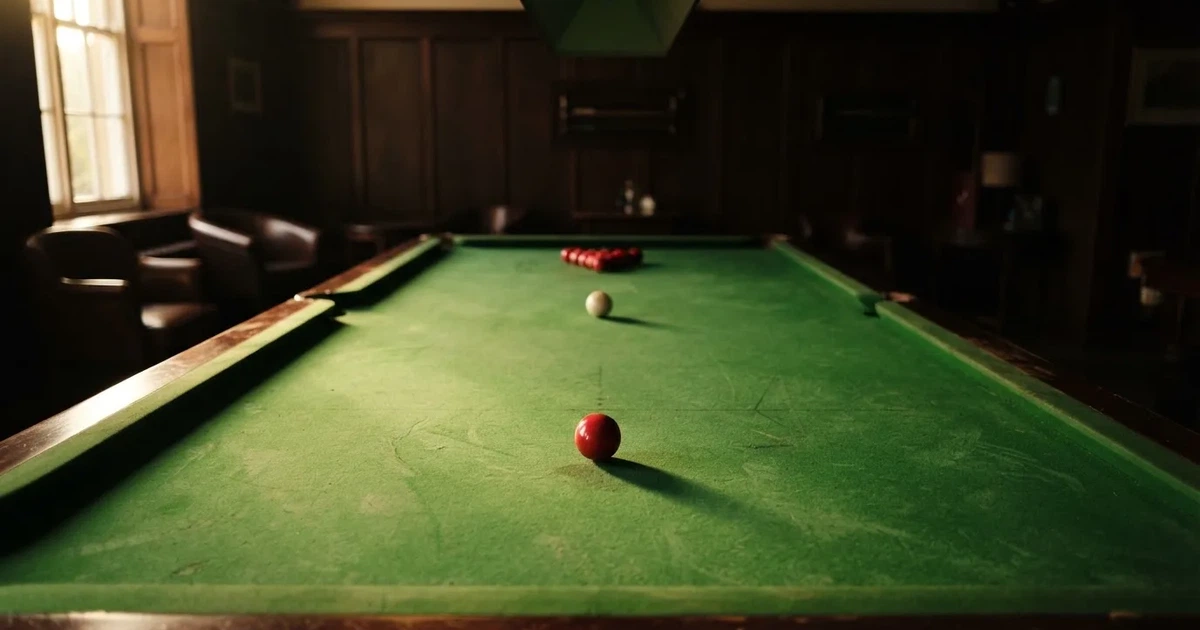
The data below was reviewed on 27 October 2026 and cross-referenced against the Gambling Commission’s public register for each operator named.
How snooker odds are built — and what the margin takes
Snooker sits in the lower-margin tier of professional sports. A pre-match match-winner line on a main-tour event typically opens around 105% to 108% overround, and tightens through the first session as the bookmakers’ traders see the same money. On outright markets the price is wider: the 2026 World Snooker Championship winner market, settled when Wu Yize beat Shaun Murphy 18-17 at the Crucible, drifted from 8/1 on the favourite at the start of the campaign to longer numbers for almost every other name in the draw, with the field margin sitting nearer 130% on the outside places.
The overround is the total of implied probabilities across every outcome. With decimal odds of 1.90 and 1.90 on a two-way match, the implied probabilities are 1 ÷ 1.90 = 52.6316% on either side, summing to 105.2632%. The margin is 100% minus the payout share, so the bookmaker keeps 5.26 pence of every pound staked across the two outcomes. In a band on this exact market — a tightly priced match-winner on a World Snooker Tour event — margins usually fall between 4.5% and 6.0%, with outrights and exotic markets wider.
A margin of 5% sounds modest until the maths is run on a stake. On £100 wagered evenly across the two outcomes, the expected loss is £5.26; on £1,000 it is £52.63. That is what the overround is doing: paying back less than a fair book on every pound the bettor stakes, regardless of which side they pick. The bookmaker does not need to pick the winner — the price does the work.
For a market framed as a frame handicap — one player receives a head start of a number of frames based on their form — the same mechanics apply with three or more outcomes and a wider margin, generally between 7% and 10%. Total frames over/under markets are priced similarly. The skill lies less in finding a market that pays over 100% (none of them do) and more in identifying the price that is closest to the real chance, and in understanding that even a sharp eye loses to margin over the long run.
Statute: what a Gambling Commission licence actually covers
Great Britain has no statutory list of permitted sports or markets. Snooker, like darts, futsal or chess, is bet on because a licensed operator chooses to offer it, not because Parliament has decided it may be offered. The framework that decides who may take bets is the Gambling Act 2005 (covering England, Scotland and Wales; Northern Ireland runs under older legislation and is outside this Act). A bookmaker whose remote facilities are used by customers in Great Britain needs an operating licence from the Gambling Commission (UKGC) wherever the company itself is incorporated — that requirement has applied since the Gambling (Licensing and Advertising) Act 2014 closed the point-of-consumption loophole. A Curaçao, Maltese or Gibraltar licence on its own is not a substitute for a GB licence at the point a customer places a bet from a British address.

The Commission publishes a public register searchable by business name, trading name, domain or account number. Every operator named further down this page is on that register, against the named licensee that holds the licence and the categories the licence covers. The categories relevant to a snooker punter are remote general betting standard (real events) — the standard sportsbook licence — and remote betting intermediary, which is the licence under which betting exchanges operate. A licence for virtual events is a separate category; an operator holding only that category may not offer real-world snooker. Financial spread betting on a snooker index sits outside the Commission’s remit and is regulated by the Financial Conduct Authority. Spreadex, one of the few firms that straddles the two, is regulated by the FCA for spread betting and by the Commission for fixed-odds betting, and its terms make clear that spread betting losses can exceed deposits — a separate kind of risk entirely.
Identity checks happen before the first deposit. Since 7 May 2019, name, address and date of birth are verified before a customer can deposit or gamble, including with a free bet or bonus. Anonymous play at a GB-licensed site is not available, and that is the cost of the framework’s consumer protections. The minimum age is 18, set by the Act and enforced at sign-up.
There is also no state-set stake ceiling on a snooker bet. Operators set their own maximum stakes, and a winning customer may find their stake reduced on a particular market — that is a commercial decision by the bookmaker, not a statutory one. There is no upper or lower limit on the size of a market the operator must offer, nor any rule that says a snooker match must be priced at any particular margin.
Safeguards, self-exclusion and the bonus cap
GAMSTOP is the national multi-operator online self-exclusion scheme and has been a mandatory licence condition for online operators since 31 March 2020. A self-exclusion can run for six months, one year, five years, or five years with auto-renewal. After the minimum period the exclusion stays in place for a further seven years unless the customer asks GAMSTOP to remove it. GAMSTOP covers online sites and apps; high-street betting shops operate a separate in-shop exclusion service.
Two further rules have arrived in stages. First, a financial vulnerability check applies when a customer’s deposits minus withdrawals exceed £150 in a rolling 30-day window, in force since 28 February 2025. The check is a public-record search (bankruptcy, county court judgments and the like), not an income or credit-reference check. Second, deposit limits are themselves a licence condition: operators must offer a gross deposit limit on a fixed time frame, with the first phase live since 31 October 2025 and a second phase postponed to 30 September 2026 — whether the second phase is in force is not established. The Commission’s “financial risk assessments”, the affordability checks of the press coverage, are announced in a staged plan with no start date set.
The bonus cap, in force since 19 January 2026, limits wagering requirements on bonuses to 10x the bonus amount. A £10 bonus at 50x would once have required £500 of qualifying bets; under the cap no bonus can demand more than £100 of turnover per £10 issued. The cap does not cover every shape of promotion: it is wagering requirements it caps, not the headline value of a free bet, and whether it touches a free bet with no turnover condition is not established. Mixed-product promotions — an offer that requires gambling on two or more product types such as betting, casino, bingo and lottery, for example “bet on football to get free spins” — are banned outright. The cap is a UK-specific rule; an offshore bookmaker operating without a GB licence is not bound by it.
Help is available through GamCare and its National Gambling Helpline, through GambleAware, through the NHS gambling clinics and through Gamblers Anonymous. Several of the bookmakers listed further down — Fitzwilliam Sports, Kalooki Sportsbook among them — link to these services from their safer-gambling pages. The Commission’s licence conditions require licensed operators to make those links prominent, and they are a more reliable starting point than a web search for “gambling help”.
Crypto, anonymity and what is actually available
There is no GB-licensed operator that takes deposits in cryptocurrency and no GB-licensed operator that offers anonymous play. Identity verification happens before the first deposit, including before a free bet or bonus can be claimed; a deposit funded by Bitcoin, Ethereum or USDT has to pass the same source-of-funds and identification rules as a deposit funded by a debit card once it lands in the account, and the chain of custody a crypto deposit requires sits uneasily with those rules. The Commission’s Remote Technical Standards require customer funds to be held in accounts separate from the operator’s own funds, with reconciliation and audit trails that a crypto on-ramp does not naturally provide. The framework does not prohibit cryptocurrency outright, but no operator has built a GB-licensed product around it.
What it means in practice: a punter looking for snooker betting with bitcoin, with Ethereum, or for a crypto snooker betting site more generally, is looking outside the GB-licensed set. The site’s responsible-gambling protections, the bonus cap, the GAMSTOP coverage, the £150 vulnerability-check trigger and the Commission’s dispute-resolution route do not apply. Funds held by an offshore operator are not protected by the British framework, and the operator is not bound by the 10x bonus cap or the licence condition that makes a financial vulnerability check a hard rule. An offshore brand may be licensed in Curaçao, Malta, Anjouan or elsewhere; that licence is real in its own jurisdiction and irrelevant to a customer in Great Britain. A British punter who uses one is not committing an offence — the Act’s offence under section 33 is aimed at the operator providing facilities without a licence, with up to 51 weeks’ imprisonment or a level-5 fine on summary conviction — but the customer is also not buying the protections the GB framework exists to provide.
The honest framing: licensed means checks, limits, GAMSTOP, the bonus cap and a route to redress if funds are withheld; unlicensed means none of those, and a real possibility of funds not being returned. Neither is “the safe choice” by default — safety is a personal decision about which trade-offs a bettor can live with. A punter who values pseudonymity and is comfortable managing their own exposure will reach a different answer from one who values the British consumer framework above all else.
Welcome offers, free bets and what they actually cost
Snooker is not the sport most snooker welcome offers are built around. The Crucible fortnight pulls in a free-bet push each April, the UK Championship brings a second in November and December, and the rest of the calendar sees the same bookmakers rotate small-match promotions and outright places. The bigger offers are almost always framed around football. That matters because a free bet issued for football carries the same rules when it is spent on snooker — same minimum odds, same expiry, same treatment of stake-not-returned.
Three of the operators reviewed further down frame the same headline offer: “Get £40 in free bets when you bet £20”. Coral’s version requires a £20 deposit and a qualifying wager at 2.0 or greater, issued as free bets within seven days, for new GB customers who opt in. Unibet’s version mirrors the requirement but enforces stricter payment method rules: a debit card or instant bank transfer is required, excluding e-wallets. William Hill, Tote and Coral run as separate brands on the register but are run through the same licensee group as several others, so their offers are run separately and the small print differs. The framing — bet £20, get £40 — looks generous; the actual conversion is more sobering. A £40 free bet whose stake is not returned is worth £40 × (decimal odds − 1) ÷ decimal odds × the payout share of the market it is placed on. At evens (2.00 decimal, a £40 stake returns £80 if it wins, of which £40 is profit, but the £40 stake is forfeit), the value is £40 × 1 ÷ 2 × the market’s payout share. On a tight snooker match at 105% overround, the payout share is about 95%, so the free bet is worth roughly £19 in real terms, not £40.
BetMGM’s sports welcome offer for new UK customers is structured differently: a deposit of £10 or more and a sports bet within seven days unlocks four £10 free bets — two football accumulators of four or more selections and two sports multiples of two or more — each valid for seven days, with minimum odds and an opt-in required. Vbet’s sports welcome is a £10 free bet if a new, verified customer stakes £10 or more on a first-ever bet that loses. That structure is “risk-free” in marketing language — the stake is returned as a free bet, not as cash, and the free bet has its own minimum odds and expiry. The conversion of a “risk-free” refund is the same arithmetic as the conversion of any other free bet whose stake is not returned; the word “risk-free” is the operator’s, not the maths’s.
Bonuses and barneys, more broadly. A bonus with a wagering requirement sits inside the 10x cap and must be turned over before withdrawal. A free bet with no turnover condition is paid out as winnings only, with the stake forfeit. A price boost — Coral’s “Daily Boosts”, 888sport’s boosted odds, BetMGM’s price boosts on the acca page — pays the stake out and the winnings in cash, but only at the boosted price, and only on the markets the operator chooses to boost. Accumulator insurance refunds a stake as a free bet if one leg lets the punter down, and is priced into the rest of the accumulator’s margin.
The honest reading of any welcome offer is the value of the free bet or bonus once the small print is read, against the value of placing the same stake at the same odds without the offer. A £20 qualifying bet at minimum odds of 2.0 is a £40 return if it wins, of which £20 is profit — the bet loses £20 if it does not — and the £40 free bet has the residual figure of roughly £25.30 once it is spent. The total upside on a winning qualifying bet and a winning free bet is around £45 in profit, against a downside of £20 (qualifying bet loses, free bet still issued). The expected value depends on the strike rate, and the strike rate depends on the bettor’s selection. Welcome offers are not free money.
In-play, cash out and frame-by-frame markets
Snooker is well suited to in-play betting. Frames turn over every 15 to 40 minutes, breaks can be over in three minutes, and a session can shift from one player leading to the other in a single visit. The longer a match runs, the more information a punter has — table conditions, cue-ball control under pressure, who’s potting the long balls — and the more sharply the price can be repriced. Most of the ten bookmakers further down this page offer in-play snooker; the depth varies enormously.
A typical in-play snooker board at a major event offers match winner (updated frame-by-frame), next-frame winner, total frames in the match over/under, a frame handicap and a century-break market. The cash-out button sits beside each open bet; it lets the punter lock in a return before the bet has settled, at a price the bookmaker has re-quoted based on what has happened since. The cash-out price is the bookmaker’s own quote, not a market-clearing one, and the spread between the cash-out and the underlying market is the bookmaker’s edge on the close-out, not the punter’s gain.
888sport’s app lists pre-match and in-play betting, Cash Out, Bet Builder, racing streams, BetFinder form tools, a live bet feed and daily boosted odds — a full house. Midnite’s site shows in-play events, an acca builder, popular accas and price boosts with maximum-stake limits. The depth is what differentiates a snooker bookmaker from a snooker betting site with a market: a market that prices the next-frame winner frame-by-frame is a different product from one that takes the match-winner market down between frames and reopens it at the top of the next. Cash out is universal among the larger names; bet builder on snooker is rarer, because the markets inside a snooker match do not naturally combine — the operator has to engineer the combinations.
There is no statutory rule that says in-play betting on snooker is restricted or unrestricted. The Commission’s licence conditions and the operator’s own conditions apply, and a bookmaker may restrict the size of an in-play stake at its own discretion. There is also no rule that says a live stream of the match must accompany the in-play market, though several of the bookmakers reviewed offer streams of major snooker events to funded customers.
Tips, predictions and the limits of foresight
Snooker betting tips and snooker betting predictions are a category of content that lives mostly outside this page. The page is written for someone deciding what to bet, not for someone deciding who will win. Predictions in snooker are exceptionally difficult because the game is long, the variance within a match is high, and the public form table is a weak guide to the form table at the Crucible in April. A 128-player draw at the World Snooker Championship produces one winner across seventeen days and twenty-five frames per match in the latter rounds; the favourite wins the tournament roughly one year in seven, and the price on the favourite at the start of the draw reflects that.
That said, a few shapes recur. A player who has won a ranking event in the same season is more likely than the outright price suggests to reach the latter rounds of the next major, because momentum on the practice table carries over. A player returning from injury is harder to read, and the bookmaker does not have a sharper view than the form table either. First-round matches at the Crucible between a top-16 seed and a qualifier are settled by best-of-19, which is short enough that one session can decide the match and one safety error can decide the session. Outright markets are best read as liquidity markets rather than information markets: the price on the public favourite tends to shorten as the public arrives, and a sharp price is rarely the favourite at the start of the draw.
The honest framing of “snooker betting tips today” is that no tipster can give a price-accurate edge on a long-form game played on a six-foot table. The tipsters who do are most useful as an aggregator of form data and a commentator on the table conditions, not as a source of edge. The punter who uses them should treat the tip as one input to a price comparison, not as a substitute for one.
Selection, staking and settling — how a snooker bet is read
The match-winner market is the bread and butter: a price on each player to win the match. Outrights are the same market over a longer frame — a price on each player to win the tournament. Frame handicaps are a frame head start: Player A starts at +2.5, meaning they win the match if they win by three frames or more after the handicap is applied, or lose by fewer than three frames after the handicap is applied. Total frames over/under is a settle line on the total number of frames in the match. A century-break market prices whether a player will make a century (a break of 100 or more) in the match; a highest-break market is on the highest break across the match. A first-frame winner market is a one-frame market priced as a match.
The settling rule varies by market and by operator. A walkover settles most markets according to the operator’s stated rules, with the stake returned on the affected selection or the market voided depending on the rule. A frame awarded by the referee because of a foul is settled as a frame to the player awarded it, not as a frame to the player who would have won it. The smaller markets — who pots the first red, whether there is a re-spot, whether the match contains a 147 — are settled by the operator’s terms and are not standardised across the industry.
Staking is the part of the page that matters most. The stake on a single bet is whatever the punter chooses, capped by the bookmaker’s own maximum on the market. On an each-way bet — two bets of equal stake, one on the win and one on the place — the stake doubles. A Patent is seven bets on three selections; a Yankee is eleven bets on four; a Lucky 15 is fifteen bets on four; a Heinz is fifty-seven bets on six; a Goliath is two hundred and forty-seven bets on eight. The total stake is the unit stake multiplied by the number of bets. A £1 Patent is a £7 total stake across three selections. The place terms on snooker outrights are set by the bookmaker and are usually one-quarter or one-fifth the win odds for the latter rounds of a major, with the place paying out at a fraction of the win price depending on the field size.
The return on a winning bet is stake × decimal odds. The profit is stake × (decimal odds − 1). At 5/1 fractional, the decimal odds are 6.00, and a £10 stake returns £60 with a profit of £50. At 11/4 fractional, the decimal odds are 3.75, and a £10 stake returns £37.50 with a profit of £27.50. The conversion a/b → a ÷ b + 1 is the standard form. “Odds-on” is shorter than evens (1/1 fractional, 2.00 decimal), meaning the punter’s profit on a £10 stake is less than £10 — the market is pricing the selection as more likely than not. SP is the starting price, the official market-clearing price at the start of the event; BOG, or Best Odds Guaranteed, pays the SP if the SP is higher than the price the punter took at the time of the bet.
Snooker tournaments, the Crucible and the calendar
The professional snooker calendar runs on a tour structure under the World Professional Billiards and Snooker Association (WPBSA), which governs the professional game and owns the official rules. The amateur game is governed by the International Billiards and Snooker Federation (IBSF). Most professional matches are best of seven, nine or eleven frames on the smaller tour events, extending to best of nineteen in the first round of the Crucible and best of thirty-five in the final. A full-size table is 12 ft by 6 ft with six pockets; the maximum break is 147, made by potting all fifteen reds with blacks and then all six colours; a match contains twenty-two balls in play, the cue ball plus fifteen reds and the six colours worth yellow 2, green 3, brown 4, blue 5, pink 6 and black 7.
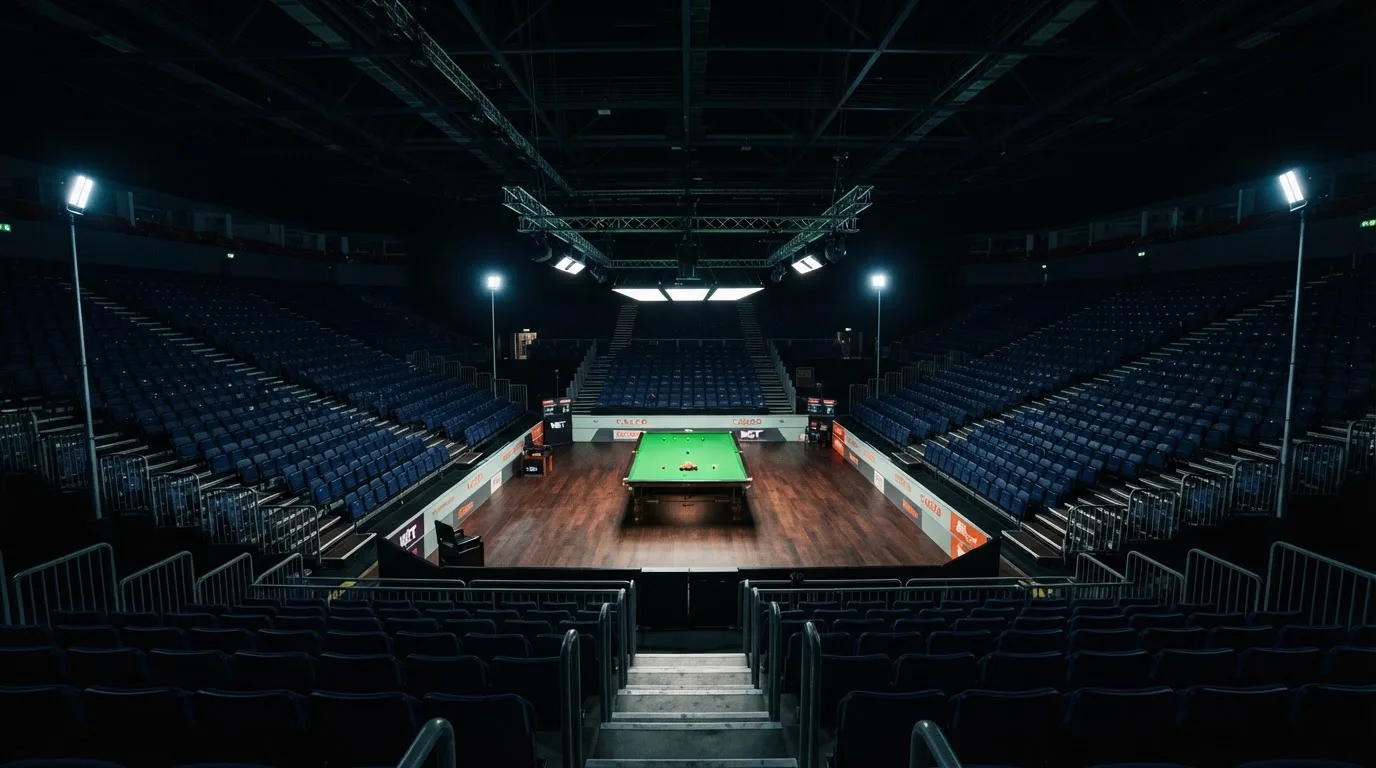
The World Snooker Championship has been held at the Crucible Theatre, Sheffield since 1977. The 2026 tournament ran from 18 April to 4 May; the final was won by Wu Yize, who beat Shaun Murphy 18-17 in a match that went to a deciding frame and earned the winner £500,000 from a £2,395,000 prize fund. Stephen Hendry and Ronnie O’Sullivan have each won seven world championships in the modern era; Joe Davis won fifteen in a row from 1927 to 1946, a record that stands.
The other major ranking events on the tour are the UK Championship, the Masters (an invitational for the top sixteen), the Champion of Champions and the Shanghai Masters, alongside the televised Home Nations events and the Players Series. The calendar runs almost year-round, with the bigger events concentrated in autumn and spring. Each ranking event produces a winner market, an each-way market, a frame-handicap market and a highest-break market at the GB-licensed bookmakers; the depth of the board varies with the event’s profile. The Crucible fortnight and the UK Championship are the deepest; the smaller ranking events are often priced only on the outright winner and the match winner.
The pre-match snooker betting markets also extend to qualifying events, in which the players ranked outside the top sixteen compete for the right to enter the main draw. The Crucible qualifiers in particular are a separate betting market, with most of the qualifiers’ matches priced frame-by-frame, and the outright winner market extended to include all 128 entrants.
Where the snooker boards sit — the ten GB-licensed bookmakers compared
The ten operators below are all on the Gambling Commission’s public register against a named licensee holding a remote betting licence for Great Britain. Each review reads as a snapshot of the operator’s snooker offering as it stood at the snapshot date, against the licence it holds, with a verdict on who the operator is for. The same headings, the same column sets and the same order appear across the ten reviews; the content of each review is its own.
| Brand | Licence | What the operator’s terms state on snooker |
|---|---|---|
| BetMGM | Remote licence 039198-R-319450-029 (Commission account 39198); licence holder LeoVegas Gaming PLC | Sports welcome offer of four £10 free bets — two football accas of 4+ selections, two sports multiples of 2+ — issued after a £10+ deposit and a sports bet within 7 days; minimum odds and opt-in required; free bets valid 7 days |
| Bar One Racing | Remote licence 056516-R-332750-007 (Commission account 56516); licence holder Bar-One Racing Limited | Irish independent bookmaker with shops across Ireland and horse racing sponsorships at Dundalk, Fairyhouse, Navan, The Curragh, Curraheen Park and Cork; rebrand of Bar One Racing to BAR 1 Betting |
| QuinnBet | Remote licence 061011-R-335683-004 (Commission account 61011); licence holder QuinnBet (Gibraltar) Limited | Best Odds Guaranteed on Irish and UK horse racing from 10:00am daily, on singles, multiples and system bets; maximum benefit £150 per customer per race |
| Coral | Remote licence 054743-R-330863-014 (Commission account 54743); licence holder LC International Limited | Sports welcome offer of £40 free bets when a £20+ deposit and £20+ sports bet at minimum odds of 2.0 (1/1) is placed; free bets issued within 7 days, expiring 7 days after issue; new GB customers only, opt-in required |
| Smarkets | Remote licence 039173-R-319366-011 (Commission account 39173); licence holder Smarkets (Malta) Limited | Open-bank deposits instant from £10 to £10,000; withdrawals processed within 6 hours from £10 to £100,000; UK debit card deposits instant from £10 to £15,000 |
| VBet | Remote licence 044662-R-324273-022 (Commission account 44662); licence holder SCGO Limited | Sports welcome offer of a £10 free bet if a new, verified customer stakes £10+ on a first-ever bet that loses |
| Unibet | Remote licence 045322-R-324275-019 (Commission account 45322); licence holder Platinum Gaming Limited | Operator since 1999; sports welcome offer of £40 free bets when a £20+ deposit and £20+ sports bet at minimum odds of 2.0 (1/1) is placed; free bets expire within 7 days; new GB customers; debit card or instant bank transfer only |
| 888sport | Remote licence 039028-R-319297-014 (Commission account 39028); licence holder 888 UK Limited | Pre-match and in-play betting, Cash Out, Bet Builder, racing streams, BetFinder form tools, live bet feed, daily boosted odds |
| Tote | Remote licence 054779-R-331321-008 (Commission account 54779); licence holder TDCO Limited | Best Odds Guaranteed on UK and Irish horse racing from 8 AM on the day of the race, on single and multiple bets; does not apply to ante-post, tote or pari-mutuel bets |
| Kwiff | Remote licence 044448-R-323408-017 (Commission account 44448); licence holder Eaton Gate Gaming Limited | UK Gambling Commission licensed; app carries a 17+ App Store age rating |
BetMGM
BetMGM’s UK sportsbook sits under LeoVegas Gaming PLC, which holds Commission account 39198 with a standard remote betting licence. The sports welcome offer for new UK customers frames four £10 free bets — two football accumulators of four or more selections and two sports multiples of two or more — issued after a deposit of £10 or more and a sports bet within seven days, with minimum odds and an opt-in required; each free bet is valid for seven days from issue. The free bets are nominally split across football and the wider sportsbook, so the punter looking to spend the lot on snooker outrights and frame markets is partially constrained by the two-multiple structure. The wider sportsbook includes in-play snooker, a price-boost function on selected markets, and a bet-builder for football; the snooker markets sit inside the standard pre-match and in-play boards at major events. The conversion of the four-bet welcome into cash is the same arithmetic as any other free-bet bundle whose stake is not returned, and the value depends on the markets the free bets are spent on. BetMGM offers a recognizable, large-scale platform, but the football-focused bonus structure might not align perfectly with the goals of a dedicated snooker specialist.
Bar One Racing
Bar One Racing has rebranded to BAR 1 Betting, an Irish independent bookmaker with shops across Ireland and horse-racing sponsorships at Dundalk, Fairyhouse, Navan, The Curragh, Curraheen Park and Cork. The UK online operation sits under Commission account 56516, held by Bar-One Racing Limited, with a standard remote betting licence. The product is racing-first and Irish-racing-shaped: Best Odds Guaranteed on Irish and UK racing, an emphasis on the festival meetings at Leopardstown, Galway and Punchestown, and a snooker offering that sits inside the wider sportsbook but is thinner than the racing boards. BAR 1 serves primarily as a racing-focused option; for the general punter, it functions as a sensible ancillary account rather than a primary snooker hub.
QuinnBet
QuinnBet’s UK operation sits under Commission account 61011, held by QuinnBet (Gibraltar) Limited, which holds a standard remote betting licence. The headline product feature is Best Odds Guaranteed on Irish and UK horse racing from 10:00am daily, applied to singles, multiples and system bets, with a maximum benefit of £150 per customer per race. The sportsbook also prices snooker outrights and match-winner markets at the bigger events; the depth is moderate rather than deep, and the in-play boards are present rather than frame-by-frame. The £150 BOG cap is a constraint for a high-staking racing punter but not for a snooker-focused one. For a snooker punter who wants a UK-licensed bookmaker with a clear racing heritage and a snooker board at the majors, QuinnBet is a reasonable mid-market pick; however, it lacks the depth of a dedicated snooker specialist.
Coral
Coral’s UK sportsbook sits under LC International Limited, which holds Commission account 54743 with both a remote general betting standard (real events) licence and a remote betting intermediary licence. The sports welcome offer is “Get £40 in free bets when you bet £20”: a £20 deposit and a £20 sports bet at minimum odds of 2.0 (1/1) unlocks £40 in free bets, issued within seven days and expiring seven days after issue, for new GB customers who opt in. The snooker offering includes the standard pre-match boards at the bigger events and an in-play board at the World Snooker Championship, the UK Championship and the Masters; the in-play depth is moderate rather than frame-by-frame. Coral is one of the bigger high-street names operating a UK-licensed online sportsbook, and the welcome offer is straightforward — a £40 free bet bundle whose conversion sits around the £25 mark once the maths is run. Coral is a sensible, large-scale pick for those who value an established brand, though the specific snooker depth is not its primary selling point.
Smarkets
Smarkets is a betting exchange and sits under Smarkets (Malta) Limited, which holds Commission account 39173 with a remote betting intermediary licence. The relevant feature for snooker is on the payments side: open-bank deposits are instant from £10 to £10,000, withdrawals are processed within six hours from £10 to £100,000, and UK debit card deposits are instant from £10 to £15,000. An exchange prices markets against the backers’ stakes and the layers’ offers; the price the punter sees is the best back or lay in the order book, and the overround is closer to zero than a traditional sportsbook because there is no bookmaker margin to add on — the platform earns from a small commission on net winnings. The snooker offering on an exchange is thinner than at a traditional sportsbook at the smaller events, because the liquidity has to back thin in order for the market to price; at the Crucible and the UK Championship, the liquidity is enough to price match winner, frame handicap and a handful of total-frames markets. Smarkets is a strong choice for those prioritizing low-margin pricing, but punters seeking traditional snooker-first features might find it less intuitive.
VBet
VBet’s UK sportsbook sits under SCGO Limited, which holds Commission account 44662 with a standard remote betting licence. The sports welcome offer is a £10 free bet if a new, verified customer stakes £10 or more on a first-ever bet that loses — a structure commonly marketed as “risk-free”, with the refund paid as a free bet whose stake is not returned, not as cash. The conversion of a £10 free bet at evens on a snooker market is around £6.30 in real terms, not £10. The wider sportsbook includes pre-match and in-play snooker, with the depth at the bigger events comparable to the rest of the GB-licensed set. While the low-friction refund can be appealing, it is worth noting that the offer’s headline value is slightly inflated compared to its realizable worth.
Unibet
Unibet’s UK site has been operated since 1999 and sits under Platinum Gaming Limited, Gibraltar, which holds Commission account 45322 with a standard remote betting licence. The sports welcome offer is “Get £40 in free bets when you bet £20”: a £20 deposit and a £20 sports bet at minimum odds of 2.0 (1/1), with the free bets expiring within seven days of issue, for new GB customers using a debit card or instant bank transfer. The eligible payment-method restriction is a tighter condition than other offers; an e-wallet deposit does not qualify. The snooker offering includes standard pre-match boards at the bigger events, in-play markets at the Crucible and the UK Championship, and a depth of on-screen pricing that sits in the upper half of the GB-licensed set. Unibet is a robust, well-established European sportsbook, though potential depositors should be mindful of the specific payment method required to trigger the bonus.
888sport
888sport’s UK sportsbook sits under 888 UK Limited, which holds Commission account 39028 with a standard remote betting licence. The product surface is broader than most of the set: pre-match and in-play betting, Cash Out, Bet Builder, racing streams, BetFinder form tools, a live bet feed and daily boosted odds. The snooker offering includes pre-match and in-play boards at the bigger events, with the cash-out button present and the daily boosts applied to selected outrights. The bet-builder structure on snooker is operator-engineered, because the underlying snooker markets do not naturally combine — the available combinations are those the operator has priced, not a free-form builder. 888sport provides a comprehensive, feature-heavy experience, though casual snooker bettors should note that the market depth is notably stronger at major tournaments than in smaller events.
Tote
The Tote is the UK’s pool-betting brand and sits under TDCO Limited, which holds Commission account 54779 with a standard remote betting licence. The headline product feature is Best Odds Guaranteed on UK and Irish horse racing from 8 AM on the day of the race, on both single and multiple bets; it does not apply to ante-post, tote or pari-mutuel bets. The wider sportsbook also includes a snooker board at the World Snooker Championship and the UK Championship, with the depth shaped by the pool-betting heritage. While the Tote provides a unique, niche experience for racing fans, those who prioritize frame-by-frame, in-play snooker markets may find other operators more suitable.
Kwiff
Kwiff’s UK sportsbook sits under Eaton Gate Gaming Limited, which holds Commission account 44448 with a standard remote betting licence. The app carries a 17+ App Store age rating, above the standard 12+ or 4+ ratings on most sportsbook apps, and positions itself as a sportsbook with a twist on pricing. The snooker offering includes the standard pre-match and in-play boards at the bigger events; the differentiator is the surprise-pricing mechanic rather than the snooker depth. Kwiff offers a distinct pricing mechanic that appeals to some, though those focused on maximum market depth for snooker may prefer larger sportsbooks.
Overview: what a snooker punter is choosing between
A snooker punter in Great Britain is choosing between roughly ten GB-licensed sportsbooks with a snooker board at the bigger events, a betting exchange with lower-margin pricing at the bigger events, and the option of an offshore bookmaker with no GB-licence protection and no GAMSTOP coverage. The choice is not a choice between right and wrong; it is a choice between two frameworks with different costs and different benefits.
The licensed set has identity verification before the first bet, GAMSTOP coverage, a £150 vulnerability-check trigger, the 10x bonus cap, a route to dispute resolution through the Commission and the protection of customer funds in segregated accounts. It does not have anonymous play, it does not have crypto deposits at any operator, and it does not have a snooker-first sportsbook that is appreciably deeper than the rest of the set at the major events. The licensed set is also homogeneous on the deeper snooker board at the Crucible and the UK Championship; the differentiation is on price boosts, cash-out mechanics, bet-builder structure and the depth of in-play at the smaller events.
The unlicensed set has none of the British framework’s protections. It may have a deeper snooker board at the smaller events, may accept cryptocurrency and may offer anonymous play; it does not have GAMSTOP, the £150 vulnerability-check trigger, the 10x bonus cap or a route to dispute resolution through the Commission. Funds held by an unlicensed operator are not protected by the British framework. A punter who uses one is not committing one — the offence under section 33 of the Gambling Act 2005 is aimed at the operator providing facilities without a licence, with up to 51 weeks’ imprisonment or a level-5 fine on summary conviction — but is also not buying the protections the British framework exists to provide.
For most snooker punters the choice is straightforward: pick two or three GB-licensed operators with deep snooker boards at the bigger events and use them. Price-compare the same selection across operators before placing the bet, because the overround varies across the set on the same market. Use the welcome offers on the GB-licensed set as a starting bankroll rather than as a source of edge, and read the small print on minimum odds and expiry before claiming. Stay on the GB-licensed set for the consumer protections; if the trade-off is not worth it, the unlicensed set exists but offers a different product.
Frequently asked questions
How do you bet on snooker?
Pick a market — match winner, outright, frame handicap, total frames or next-frame winner — at a GB-licensed bookmaker. Choose the selection, enter the stake, confirm the bet. The return is the stake multiplied by the decimal odds; settle happens when the match finishes, the frame finishes or the outright is decided. Identity is checked before the first deposit or bet on a LiveBook site, including with a free bet.
Can you bet on snooker in Great Britain?
Yes, at any bookmaker holding a Gambling Commission remote licence for Great Britain. There is no statutory list of permitted sports, so snooker is offered because the operator chooses to offer it. The Commission’s public register is the test of who holds a licence; a Curaçao or Maltese licence on its own is not a substitute at the point of consumption.
How is it checked that a bookmaker holds a Gambling Commission licence?
The Commission’s public register is searchable by business name, trading name, domain or account number. The register carries the licence number, the licence categories and the licence holder’s company name. Every operator named on this page is on the register against the licensee and the category stated in the comparison.
How is the return on a bet worked out from the stake and the odds?
The return is the stake multiplied by the decimal odds. The profit is the stake multiplied by the decimal odds minus one. At 5/1 fractional the decimal odds are 6.00; a £10 stake returns £60 and yields a profit of £50. At 11/4 fractional the decimal odds are 3.75; a £10 stake returns £37.50 and yields a profit of £27.50.
What is the bookmaker’s margin and how can it be seen in the odds?
The margin is the share of every pound wagered that the bookmaker keeps on average. The payout share is the reciprocal of the sum of the implied probabilities of every outcome. With decimal odds of 1.90 and 1.90 on a two-way market, the implied probabilities sum to 105.26%, giving a payout share of 95.04% and a margin of 4.96%. The overround is the percentage by which the sum of implied probabilities exceeds 100.
How do fractional odds such as 5/1 convert to decimal odds such as 6.00?
Divide the numerator by the denominator and add one. Five divided by one is five; add one is 6.00. Eleven divided by four is 2.75; add one is 3.75. The conversion a/b → a ÷ b + 1 is the standard form and is the same regardless of the sport or the operator.
Tennis, darts & cue sports – Best betting
Content created by the «Best betting» team
