
Online Gaelic Football Betting 2026 — Which UK Bookmakers Cover It, What They Offer, and What It Costs
 Available in US
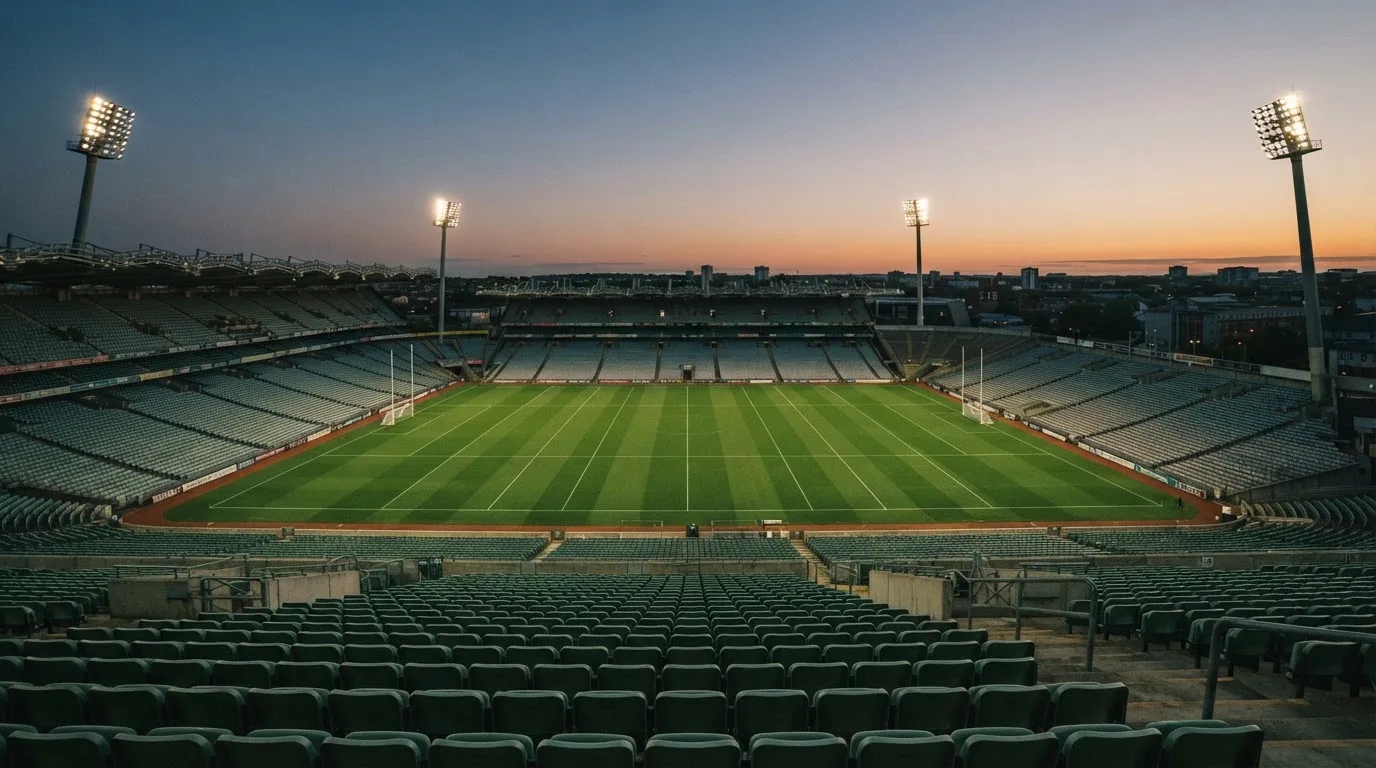
Gaelic football sits in a particular spot in the British betting market. The sport has no Premier League television saturation and no Saturday afternoon fixture pile, but the All-Ireland Championship final at Croke Park pulls a viewing crowd that has nowhere else to go on the same July Sunday, and licensed UK bookmakers price every county match they are given and leave. This page walks through what a bettor in Great Britain actually faces: who can lawfully take the bet, what markets the licensed set carries, what the welcome offers and ongoing promotions actually cost, what live betting and cash-out look like in a sport with no clock stoppages and very few goals, and which bookmakers earn a place in a shortlist of ten.

The data is current as of 27 October 2026, and the licence details below were checked against the Gambling Commission’s public register.
The legal frame for betting on Gaelic football in Great Britain
Great Britain has no list of permitted sports or permitted markets. A bookmaker serving customers in Great Britain needs a Gambling Commission licence under the Gambling Act 2005, and the Commission’s public register is the whole test of who holds one. Since the Gambling (Licensing and Advertising) Act 2014 an operator whose remote facilities are used in Great Britain needs a Commission licence wherever it is based; a Curaçao, Maltese or Gibraltar licence does not substitute. A British punt is, in the regulator’s own framing, a British-regulated transaction no matter where the server sits.
The relevant licence type for a sports bookmaker is remote general betting standard (real events). A betting exchange — a place where customers back and lay against each other rather than against the house — runs on a remote betting intermediary licence. A bookmaker that also offers spread betting on sport, where winnings and losses are calculated against a quoted “spread” rather than a fixed price, sits under the Commission’s general betting licence for that side and under the Financial Conduct Authority for the financial-spread side. The point matters when a brand markets both. The Commission and the FCA are two different regulators with two different complaint routes, and the customer protections on each side are not the same.
Northern Ireland sits outside the 2005 Act and has its own older law. A “GB-licensed” bookmaker is licensed for Great Britain, not for Northern Ireland; a separate check is needed there. No state monopoly exists, and there is no cap on the number of licences the Commission can issue. There is also no statutory cap on stakes in sports betting: operators set their own maximum stakes and may restrict individual customers.
Identity verification runs at the door. Name, address and date of birth are checked before a customer can deposit or gamble at a licensed site, and that has included free bets and bonuses since 7 May 2019. Anonymous play at a licensed bookmaker is therefore not on offer in Great Britain. Credit cards have been banned for gambling since 14 April 2020, including credit-card-funded payments through an e-wallet; debit cards and bank transfers are not covered by that ban.
There is no statutory list of permitted bets, markets or events. What a bookmaker offers is the operator’s choice within its licence conditions and the Licence Conditions and Codes of Practice. In-play betting on Gaelic football is offered by GB bookmakers as a matter of operator policy, and the controls are licence conditions and customer-protection duties, not a separate statutory regime. Esports are treated like any other event; virtual events sit under a separate licence category. Bets on politics and novelty markets are offered by GB bookmakers and no statutory prohibition was found.
Offshore brands that do not hold a Commission licence do take bets from British customers, and the law points the other way: providing gambling facilities in Great Britain without the licence the Act requires is an offence under section 33 of the Gambling Act 2005, aimed at the operator. No offence aimed at a customer who merely bets on an unlicensed site was found. The honest framing is that the customer loses the protections: no GAMSTOP coverage, no Commission complaints route, no approved dispute-resolution body, no British consumer redress if funds are withheld, no bonus cap, no financial vulnerability check. Enforcement is disruption rather than ISP blocking: cease-and-desist notices, search-engine referrals, work with registrars, hosts and payment providers, and court-order DNS blocking powers the Commission has been given or is about to receive. “Legal to use” is not a description that fits.
Tax sits with the operator, not the customer. General Betting Duty is the operator’s tax on gross profits, currently 15%; from 1 April 2027 a new remote betting rate of 25% applies within it, while remote bets on UK horse racing, bets on self-self-service betting terminals in licensed premises, pool betting and in-person betting stay at 15%. A punter pays no tax on betting winnings in Great Britain, which is general information rather than tax advice; a professional gambler should ask HMRC or an adviser.
Responsible gambling at a licensed Gaelic football bookmaker
GAMSTOP is the national multi-operator online self-exclusion scheme and a mandatory licence condition for online operators in Great Britain since 31 March 2020. Every GB-licensed online bookmaker in this comparison is a GAMSTOP member, and a customer who has registered with GAMSTOP is blocked from opening a new account at any of them for the chosen period — six months, one year, five years, or five years with auto-renewal. After the minimum period the exclusion stays in place for a further seven years unless the customer asks GAMSTOP to remove it. GAMSTOP covers online sites and apps; betting shops use a separate service.

A financial vulnerability check is a feature of every licensed remote bookmaker, and it kicks in by spend rather than by date. Under LCCP condition 3.4.4, in force since 30 August 2024, the check applies when a customer’s deposits minus withdrawals exceed £150 in a rolling 30 days (a threshold in force since 28 February 2025). The check is a public-record check, of the kind that looks for bankruptcy or county court judgments; it is not an income check and it is not a credit reference check. The Commission’s “affordability checks” of the press — financial risk assessments — are announced in a staged plan (Commission article of 7 July 2026) with no start date; the framing to write is “announced, staged, no start date”, not “in force”.
Deposit limits are mandatory at every licensed operator under the Commission’s Remote Technical Standards (RTS 12): operators must offer a gross deposit limit on a fixed time frame. The first changes applied on 31 October 2025; a second phase was postponed to 30 September 2026, and whether it is now live is not established. There is no state-set deposit or loss ceiling for betting: limits are the customer’s choice, set inside the operator’s safer-gambling tools.
The help lines sit outside the bookmaker’s own site. GamCare runs the National Gambling Helpline, GambleAware funds treatment and research, NHS gambling clinics operate in several regions, and Gamblers Anonymous runs peer-support meetings. The Commission publishes a list of approved organisations on its site.
The framing for a bettor choosing among licensed brands is that safer-gambling is floor, not ceiling. Every operator in this comparison has GAMSTOP, a financial vulnerability check at the £150 threshold, deposit limits and links to the same set of help lines. The differentiator is the depth of the in-product tools — a configurable deposit cap, a reality-check timer, a session log, a product-level block — and how the operator’s terms describe it.
Crypto and anonymity at Gaelic football bookmakers
There is no British rule naming cryptocurrency as permitted or banned for gambling deposits. The general frame is that licensed operators are responsible under money-laundering rules for understanding the source of a customer’s funds, and crypto deposits make that harder than a bank transfer does; a brand that accepts Bitcoin is making a judgement call about source-of-funds that a Commission reviewer will want to see written down.
Identity verification runs before the first deposit at every licensed site, so anonymous play is not on offer. A name-and-address check and a date-of-birth check stand between the customer and the first bet, including a free bet. The crypto angle sits at the deposit layer rather than the identity layer, and what a customer actually gets is a different funding rail rather than a different identity. The marketing word “anonymous” attached to crypto betting is doing the regulator’s work for it without permission.
Spread betting on sport is not a financial instrument in the FCA’s sense, so it sits under the Commission’s general betting licence and under General Betting Duty rather than under the FCA’s spread-betting regime. That is the route a customer meets at Sporting Index and Spreadex; the customer’s identity is still verified at the door, the deposit still passes through a normal payment rail, and the spread side carries its own commission and its own duty rate.
The honest framing for a Gaelic football bettor is that anonymity is not on the menu at a licensed bookmaker, and that crypto is a deposit method the licensed set tends to handle through a small set of intermediaries rather than wallet-to-wallet. Where research does not name a brand’s crypto policy, write nothing about that brand’s crypto policy.
Bonuses and free bets at Gaelic football bookmakers
A welcome offer at a licensed GB bookmaker is the same house, looking identical: deposit, place a first bet at a stated minimum price, receive free bets. The substance underneath varies more than the marketing suggests.
The mechanics of a free bet are worth setting out before the offers are listed. A free bet is a token rather than cash: the stake is usually not paid back with a win, the free bet cannot be cashed out, and any winnings land as withdrawable cash or as further bonus funds with a wagering condition. A “risk-free” bet refunded as a free bet is not a refund in money — the marketing word “risk-free” obscures that the stake is gone if the bet loses. A price boost adds margin to one price for a stake that is paid back; an acca insurance refunds a stake as a free bet when one leg of an accumulator lets the customer down; a cashback pays back a share of net losses over a period as cash or as a free bet. Each is a different product with a different cost, and the offer type the operator states is the type to keep.
Promotion rules in force since 19 January 2026 cap wagering requirements on bonuses at 10x — a £10 bonus at 50x needs £500 of bets; under the cap no more than £100. Whether the cap applies to free bets with no wagering condition is not established. Mixed-product promotions — an offer that requires gambling on two or more product types such as betting, casino, bingo and lottery, for example “bet on football to get free spins” — are banned. The honest framing is that the licence-condition cap applies to the bonus, not to the free bet, and that the price of the welcome offer is in the small print: minimum odds, expiry, payment-method exclusions, and what counts as the qualifying bet.
Welcome offers at the licensed set in this comparison:
Coral’s sports welcome offer is “Get £40 in Free Bets when you bet £20”: a deposit and sports bet of £20 or more at minimum odds of 2.0 (1/1), with £40 in free bets issued within 7 days and expiring 7 days after issue, for new GB customers who opt in. BetMGM’s sports welcome offer for new UK customers who deposit £10 or more and place a sports bet within 7 days is four £10 free bets (two football accumulators of 4+ selections and two sports multiples of 2+), valid for 7 days with minimum odds and opt-in required. NetBet Sport carries Daily Boosts, Profit Boosts and free bet offers. 888sport runs daily boosted odds. bet365 runs Super Boosts, Winnings Boosts on Bet Builders and selected singles, and daily Bet Boosts.
The cost of a welcome offer sits in the wagering requirement rather than in the headline number. A free bet whose stake is not paid back is worth its face value multiplied by the edge the bettor can find; a bonus with a 10x wagering requirement at a market with a 5% margin costs about half the bonus face value in expected return. The arithmetic runs in the section on odds and margins below; the framing for now is that the bigger the headline number, the more carefully the small print reads.
Ongoing promotions sit at a thinner layer. Most licensed brands run daily odds boosts on a small set of fixtures, acca insurance on selected leagues, and price multipliers for new customers on the first deposit. The value of an ongoing promotion is harder to read than a welcome offer because it varies fixture by fixture; the rule of thumb is that acca insurance that refunds as a free bet is worth about one losing leg’s stake across a season, and a daily boost on a Gaelic football match is worth whatever the operator pays above the underlying price for that match.
Live betting and cash out on Gaelic football
Gaelic football is a flowing sport. There are no clock stoppages for advertising, no throw-ins from the sideline on every play, and very few goals are scored in a match. That shapes the in-play product more than the marketing admits.
In-play betting is offered by the licensed set. Betfair Sportsbook and 888sport both run an in-play product; bet365’s in-play product is built into Bet Builder+ for pre-match and in-play combined markets; Matchbook’s exchange runs on customer-to-customer pricing that moves continuously. Cash Out — the feature that lets a customer settle a bet before the final whistle — sits at 888sport (a Cash Out button on selected markets), at Sporting Index (auto cash-out), and across most of the fixed-odds bookmakers in this comparison. The interesting question for a Gaelic football bettor is what cash-out prices during a match in which scores change slowly and momentum shifts are hard to read from a clock.
The honest framing is that in-play on a low-scoring sport like Gaelic football is a margin game for the bookmaker, and a clock-watching game for the customer. The price of a goal is so high relative to a point that a one-goal swing can move a 1X2 price by ten ticks; cash-out at that moment is the operator’s chance to lock in a margin on a market that just got harder to read. A bettor who uses cash-out as a routine habit is paying a spread twice — once on the original bet and once on the close.
Live streaming of Gaelic football at licensed UK bookmakers is the exception rather than the rule. Matchbook streams horse racing and greyhounds, not Gaelic football. Betfair Sportsbook streams UK and Irish horse racing and football within the app. William Hill’s Best Odds Guaranteed is a horse-racing product — paying the bigger of the price taken and the starting price from 8 AM on UK and Irish racing on the day — and does not apply to Gaelic football. A bettor who wants to watch a match in-play is likely watching RTÉ or a streaming service rather than the bookmaker’s own player.
Predictions, forecasts and strategy
A Gaelic football betting tip is a forecast. It is also a forecast on a sport with a small league structure, a single knockout championship, and matches where a one-goal swing is rarer than a five-point swing. The tip market is thin, and the tip itself has to be read against the price the bookmaker is offering.
The framing for tipping in this product is the same as tipping anywhere else: nobody can know an outcome, and a tipster who sells tips is selling forecasts the customer could write for themselves with a fixture list and a form table. The Commission does not regulate tipping, and there is no British rule requiring a tipster to disclose their betting record or their betting positions. A reader who follows a tip is making a bet on the tipster’s judgement, and the price of that bet is whatever the tipster charges or however the affiliate relationship is set up.
Strategy at the customer end is where the page earns its keep. The pattern that holds across sports is that the margin is the cost of the bet; the pattern that holds across Gaelic football specifically is that the margin is harder to read because the league structure is thin and the price-discovery process is incomplete. The Champion skimming for value means looking for matches where the bookmaker’s price lags the form — typically a provincial round with a shorter price list and a less-watched fixture — and avoiding matches where every major is priced inside a tick of each other and the only edge is in the customer’s information.
Bankroll management is the unglamorous part. A bettor who bets 1% of bank per selection survives a bad week; a bettor who bets 10% on a perceived single-event edge loses the bank on the first upset. The Gaelic football calendar is short, with a handful of high-profile fixtures and a long tail of provincial rounds, and the temptation to load up on the All-Ireland final is the most expensive habit a new customer can pick up. The product pricing does not care about the calendar.
Forecasting tools sit at the licensed bookmakers in different shapes. 888sport carries BetFinder form tools and a live bet feed. Most fixed-odds bookmakers show team form and head-to-head records on the match page. Sporting Index’s Multi-Markets and NetBet’s sports stats for major leagues carry the same kind of information in different layouts. None of them forecast a winner; all of them summarise past results.
Bet types and odds on Gaelic football
A Gaelic football bet is a sports bet on a flowing-field game with two ways to score and a scoring system that does not look like any other British sport. A goal — under the crossbar into the net — is worth 3 points; a point — over the crossbar — is worth 1 point; since the 2025 rule changes, shots from outside the new 40-metre arc are worth 2 points. A match scoreline of 1–20 reads as 1 goal and 20 points, or 23 points of scoring; the same match in goals-and-points form is 1–20, which is how the scoreboard and the radio read it.
The bet types the licensed set carries for Gaelic football are the same set as for any other team sport: 1X2 (home win, draw, away win — Gaelic football does go to draws in the regular season), handicap, total points, both teams to score, half-time/full-time, and a same-game multi under whatever brand name the bookmaker uses. Betfair Sportsbook runs a 90 Minute Payout market on football, which settles on the 90-minute result and is the convention for Gaelic football too because there is no extra time in the regular championship and replays are rare. Matchbook’s exchange supports Bet Builder, multiples, in-play and lay betting. bet365’s Bet Builder+ combines markets from one event into a single bet and is available pre-match and in-play.
The bet types that sit one layer further in are each-way betting (a two-stake bet on a selection to win and to place — common on racing, less common on Gaelic football), spread betting (a quote on a number — total points, winning margin, scoring differential — paid out by how close the quote is to the actual number; Sporting Index and Spreadex are the two brands), and accumulator insurance (a free bet refund if one leg of a multi lets the customer down). The 1X2 market is where the price discovery is thinnest, and the totals market is where the price discovery is thickest, because bookmakers price the total in finer increments than they price the result.
The odds on Gaelic football are presented in fractional form on British bookmakers — 5/1, 11/4, evens — with a decimal form alongside. Fractional a/b reads as £a of winnings for every £b staked, with the £b returned as well; decimal 6.00 reads as £6 returned for every £1 staked, including the stake. The conversion is a/b → a ÷ b + 1: 5/1 becomes 5 ÷ 1 + 1 = 6.00; 11/4 becomes 11 ÷ 4 + 1 = 2.75 + 1 = 3.75; evens (1/1) becomes 1 ÷ 1 + 1 = 2.00. The conversion is mechanical, and the rule is to write decimal odds with two decimal places and fractional odds in their native form.
The margin is the bookmaker’s edge on every market, and it sits inside every price. The arithmetic for a two-way market is the clearest worked example on the page:
Worked example: bookmaker margin on a two-way market
Take an illustrative two-way market priced at decimal odds of 1.90 / 1.90 (fractional 9/10 on each side — an example, not a quoted price). The payout share — the proportion of every unit staked that comes back to winning customers across both outcomes — is 1 ÷ (1/1.90 + 1/1.90) = 1 ÷ (0.5263… + 0.5263…) = 1 ÷ 1.0526… = 0.95. The margin is 1 − 0.95 = 0.05, or 5%. Every £1 staked across both outcomes pays out 95p on average; the bookmaker keeps 5p on average. A two-way market at 1.80 / 1.80 carries a margin of 1 − 1 ÷ (1/1.80 + 1/1.80) = 1 − 1 ÷ 1.1111… = 1 − 0.90 = 10%, or 10%. The pattern is symmetric: the more lopsided the price, the smaller the margin on the favourite; the more even the price, the bigger the total margin.
In practice, a Gaelic football 1X2 market on a match the bookmaker has priced carefully runs at a margin somewhere between 4% and 7%; a totals market at 2.5 goal-equivalent points runs tighter; a same-game multi on a match the bookmaker has priced carelessly runs much higher. The price is not the value; the margin is. A 6/4 shot at a 5% margin is a better bet than an evens shot at a 10% margin on the same selection, because the expected return is higher and the edge is lower.
The relationship between margin and expected cost is the relationship between a book’s price and a bettor’s profit on a long run of bets. A bettor who places 1,000 bets at an average stake of £10 on a market with a 5% margin expects to lose about £500 of stake across those bets (£10 × 1,000 × 5% = £500), give or take variance. A bettor who places the same 1,000 bets on a market with a 10% margin expects to lose about £1,000. The framing is statistical: an average over many bets under the stated assumptions, not a guaranteed outcome for any single bettor.
Gaelic football: the sport, the fixtures and the calendar
Gaelic football is played by teams of 15 players, with up to 15 substitutes of whom six may be used. A senior inter-county match lasts 70 minutes (two 35-minute halves); most other adult matches last 60 minutes (two 30-minute halves). The pitch is a rectangular grass pitch 130–145 metres long and 80–90 metres wide, larger than a soccer pitch and smaller than an Australian-rules oval. The ball is similar in size and shape to a soccer ball but slightly heavier, and the game is run on a flowing-field model with a solo-and-bounce rule that keeps the ball moving.
The scoring system is the part that takes a moment to read. A goal — under the crossbar into the net, with the ball struck from open play or from a free — is worth 3 points. A point — over the crossbar, struck from open play, a free or a 45-metre kick — is worth 1 point. Since the 2025 rule changes, shots from outside the new 40-metre arc are worth 2 points, a “two-pointer” that has changed the geometry of attacking play. A scoreline of 1–20 reads as 23 points of scoring; a scoreline of 0–18 reads as 18 points; a scoreline of 2–14 reads as 2 goals and 14 points, or 20 points of scoring.
The sport is governed by the Gaelic Athletic Association (GAA), founded in 1884 and based at Croke Park in Dublin. The All-Ireland Senior Football Championship is the blue riband event, contested by 31 county teams across four provincial championships (Connacht, Leinster, Munster and Ulster) and a knockout series that concludes with the All-Ireland final at Croke Park each July. Kerry hold the record for most All-Ireland Senior Football Championship titles, with 39. The 2026 All-Ireland Senior Football Championship final was played on 26 July 2026 at Croke Park, Dublin, with Mayo beating Kerry 1–20 to 1–17 for their fourth title.
The fixtures the licensed bookmakers price are provincial championship matches, the All-Ireland series, the National League, the Tailteann Cup for the second tier of counties, the Sigerson Cup for universities, the club championship at county and All-Ireland level, and selected charity and exhibition matches. The fixtures on which the price discovery is thinnest are the provincial championship first rounds, where the bookmaker has fewer comparable matches to anchor the price, and the friendlies and challenge matches before the league starts. The fixtures on which the price discovery is thickest are the All-Ireland semi-finals and final, where every major runs a price and the number of bets is high.
The ten reviewed bookmakers
The table below compares the ten bookmakers in this shortlist on the matters that matter for a Gaelic football bettor in Great Britain: the Gambling Commission remote licence number and the licence holder, and what the operator’s own terms state on the in-play and bet-builder subjects that the sport depends on. Each row is a brand, a Commission account number, the licence holder behind it, and the operator’s own description of its in-play and bet-builder product. The columns are chosen because the licence number is the whole test of whether the brand can lawfully take a British bet, and because in-play and bet-builder are the two product features a Gaelic football bettor uses most.
| Brand | Gambling Commission remote licence | Licence holder | Operator’s own statement |
|---|---|---|---|
| Matchbook | 039504-R-319407-024 | Triplebet Limited | Betting exchange with Bet Builder, multiples, in-play betting and live streaming of horse racing and greyhounds |
| 888sport | 039028-R-319297-014 | 888 UK Limited | Pre-match and in-play betting, Cash Out, Bet Builder, racing streams, BetFinder form tools, a live bet feed and daily boosted odds |
| Betfair | 039439-R-319330-013 | PPB Counterparty Services Limited | In-play betting, Bet Builder, free live streaming of events such as UK and Irish horse racing and football within the app, and a 90 Minute Payout market |
| Sporting Index | 027343-R-308898-011 | Sporting Index Limited | Switch between fixed odds and spread betting, with in-play betting, Bet Builder for football, auto cash-out and Multi-Markets |
| NetBet | 039170-R-319343-032 | Netbet Enterprises Limited | Daily Boosts, Profit Boosts and free bet offers, a Bet Builder with instant dynamic odds, and sports stats for major leagues |
| Coral | 054743-R-330863-014 | LC International Limited | “Get £40 in Free Bets when you bet £20”: a deposit and sports bet of £20 or more at minimum odds of 2.0 (1/1), with £40 in free bets issued within 7 days and expiring 7 days after issue, for new GB customers who opt in |
| Betmaster | 065699-R-339929-002 | BM Solutions GB Ltd | Football, cricket, horse racing, NFL and eSports (League of Legends, Dota 2) betting |
| Tote | 054779-R-331321-008 | TDCO Limited | Pool betting product; in-play coverage to be confirmed from operator’s own terms |
| Kalooki Sportsbook | 057730-R-333396-005 | Kalooki Sportsbook Limited | Operated by Kalooki Sports Book Ltd (company number 12938274), licensed by the Gambling Commission under account number 57730, and is a GAMSTOP member |
| BetMGM | 039198-R-319450-029 | LeoVegas Gaming PLC | Four £10 free bets (two football accumulators of 4+ selections and two sports multiples of 2+) on a £10+ deposit and a sports bet within 7 days, valid for 7 days with minimum odds and opt-in required |
The table reads as a licence-check, not as a recommendation. Each row’s right-hand cell is the operator’s own statement on the in-play and bet-builder subjects, taken from the operator’s home page or app store description; the licence number is what the Commission’s own search returns. A reader who wants to check a brand before depositing is welcome to do the same search and compare the row to the live register.
The verdicts below close each operator block on the angle this site takes: which paths exist for a Gaelic football bettor in Great Britain and who each one suits. Each verdict names the reader the brand earns or loses and the gap between the marketing and the substance.
Matchbook — the exchange for a customer who wants to set their own price
Matchbook is a betting exchange rather than a fixed-odds bookmaker. Customers bet against each other — backing a selection to win at the price on offer, or laying a selection to lose at a price they set — and the platform takes a commission on net winnings. The Commission’s relevant licence category is remote betting intermediary, which is the right category for a betting exchange and the only category that lets a brand offer lay betting.
The product surface is built around the exchange model. Bet Builder, multiples and in-play betting are all available; live streaming covers horse racing and greyhounds but not Gaelic football. A Gaelic football bettor who uses Matchbook is betting on the depth of the exchange’s price discovery rather than on the spread of a fixed-odds bookmaker, and the depth is thinner on Gaelic football than on Premier League football. The exchange works best when there is enough money on both sides to keep the spread tight, and Gaelic football’s provincial fixtures are not that.
The verdict is for a customer who already knows how an exchange works and is happy to set a price and wait. For that reader, Matchbook is the cheapest way to bet on Gaelic football in the licensed set, because the commission is the only edge and the price is the customer’s. For a new customer, lay betting requires a different skill set from backing, and it is important to remember that an exchange is not a fixed-odds bookmaker with a smaller margin. The product is specialised and well-built, but it caters primarily to those already familiar with exchange mechanisms.
888sport — the everyday bookmaker for a casual Gaelic football customer
888sport is a fixed-odds bookmaker under the Commission’s remote general betting standard (real events) licence. The product covers pre-match and in-play betting, Cash Out, Bet Builder, racing streams, BetFinder form tools, a live bet feed and daily boosted odds. The brand is one of the larger generalists in the licensed set, and the Gaelic football product is part of the wider sportsbook rather than a dedicated vertical.
The customer experience is the standard fixed-odds bookmaker experience. The price list covers the bigger Gaelic football fixtures — All-Ireland series, provincial finals, the National League — and thins out at the provincial round and club championship level. Cash Out is available on selected markets, and the BetFinder form tools summarise past results and head-to-head records on the match page.
The verdict is for a customer who wants one bookmaker for everything. 888sport does Gaelic football competently as part of a wider sportsbook, and the welcome offer and ongoing boosts are the kind a customer meets at any large generalist. For a Gaelic football bettor whose interest is the All-Ireland final and a handful of provincial matches, 888sport is a reasonable choice; for a bettor who follows the sport weekly and wants the deepest price list, the licensed exchange or a brand with a sharper in-play product earns the place. The brand is licensed, the product is broad, and the price is the price a generalist charges.
Betfair — the sportsbook-plus-exchange hybrid for a customer who wants both
Betfair runs two products under one licence. Betfair Sportsbook is a fixed-odds bookmaker; Betfair Exchange is a betting exchange. The Commission’s licence covers both — the Sportsbook under remote general betting standard (real events), the Exchange under remote betting intermediary — and the same parent company, PPB Counterparty Services Limited, holds the licence.
The Sportsbook product covers in-play betting, Bet Builder, free live streaming of UK and Irish horse racing and football within the app, and a 90 Minute Payout market on football. The 90 Minute Payout market is the convention for Gaelic football because there is no extra time in the regular championship; the same rule gives the customer the result at 70 minutes rather than at full-time and applies to the sportsbook product. The Exchange product offers the same Bet Builder and in-play plus lay betting and customer-set prices.
The verdict is for a customer who wants both products under one account. For that reader, Betfair is the licensed set’s most flexible option, because the sportsbook and the exchange live behind the same login and the same safer-gambling tools. For a customer who only wants one of the two, the more useful framing is that the Sportsbook is a generalist bookmaker like 888sport and Coral, and the Exchange is an exchange like Matchbook. The licence is sound, the products are well-built, and the choice between Sportsbook and Exchange is the choice the customer makes at the bet slip.
Sporting Index — the spread-betting brand for a customer who reads a quote
Sporting Index lets customers switch between fixed odds and spread betting. The fixed-odds side runs under the Commission’s remote general betting standard (real events) licence; the spread-betting side runs under the same Commission’s licence for spread betting on sport and under the FCA’s regime for financial spread. The relevant categories on the Commission’s register are remote general betting standard (real events).
The product surface covers in-play betting, Bet Builder for football, auto cash-out and Multi-Markets. The Multi-Markets product is Sporting Index’s spread-betting framing: a customer is given a quote on a number — total points, winning margin, scoring differential — and the payout is the difference between the quote and the actual number, multiplied by the stake. The right product for a Gaelic football bettor who reads a quote and accepts the wider variance spread betting carries; the wrong product for a customer who wants a fixed-odds bet and is surprised by the variance.
The verdict is for a customer who reads a quote and accepts the wider variance. For that reader, Sporting Index is the licensed set’s only spread option, and the auto cash-out and Multi-Markets are the right tools. For a customer who wants fixed odds, the framing is that Sporting Index does offer them, but the brand’s centre of gravity is the spread. It is a specialised product for those who prefer calculating variance over simple win/loss outcomes.
NetBet — the boost-led bookmaker for a customer who wants price bumps
NetBet Sport offers Daily Boosts, Profit Boosts and free bet offers, a Bet Builder with instant dynamic odds, and sports stats for major leagues. The product surface is built around the boost layer: a customer opens the site, sees the day’s boosted prices at the top of the page, and works down from there. The licence is remote general betting standard (real events).
The boost layer is the brand’s centre of gravity. The Profit Boost applies to a customer’s winnings on a selected market; the Daily Boosts raise the price on a small number of fixtures; the Bet Builder with instant dynamic odds lets the customer combine selections and see the price recalculate as the slip is built. The sports stats for major leagues cover form, head-to-head and injury news for the larger leagues, and Gaelic football’s All-Ireland series sits inside that.
The verdict is for a customer who values a price bump over a deep market. For that reader, NetBet is the licensed set’s most boost-heavy option, and the Bet Builder with instant dynamic odds is the right tool for a multi-leg acca. For a customer who prioritises market depth, however, the boost layer is merely a feature on top of the standard sportsbook, and the underlying prices mirror those of any other generalist.
Coral — the welcome-offer bookmaker for a customer who wants the headline bonus
Coral is a fixed-odds bookmaker under the Commission’s remote general betting standard (real events) licence, held by LC International Limited — the same parent company that holds the Ladbrokes licence. The welcome offer is “Get £40 in Free Bets when you bet £20”: a deposit and sports bet of £20 or more at minimum odds of 2.0 (1/1), with £40 in free bets issued within 7 days and expiring 7 days after issue, for new GB customers who opt in.
The product surface is a generalist sportsbook. Coral carries Gaelic football under the wider sportsbook umbrella, with the same in-play product, Bet Builder and safer-gambling tools as the rest of the licensed generalist set. The welcome offer is the brand’s centre of gravity at the customer-acquisition layer.
The verdict is for a new customer who wants a headline bonus and is willing to read the small print. For that reader, Coral’s £40-in-free-bets offer is a real offer at a clear minimum price and a clear expiry, and the rest of the product is a standard generalist sportsbook. For a customer prioritising market depth over bonuses, it is worth noting that Coral’s Gaelic football price list is consistent with a standard generalist offering.
Betmaster — the multi-sport bookmaker for a customer who watches several sports
The Betmaster app is published by Bm Solutions Gb Limited and covers football, cricket, horse racing, NFL and eSports (League of Legends, Dota 2) betting. The product surface is built around a multi-sport rotation rather than a dedicated Gaelic football vertical, and Gaelic football sits inside the football umbrella rather than as its own section.
The eSports coverage is the differentiator at the brand level. League of Legends and Dota 2 are the two titles the app lists, and a customer who bets on those and on Gaelic football is using the app across both ends of the sportsbook. The Commission’s licence covers remote general betting standard (real events), which is the right licence category for the multi-sport product.
The verdict is for a customer who watches several sports and wants one bookmaker for all of them. For that reader, Betmaster is a reasonable choice, and the multi-sport rotation keeps the product fresh across the calendar. For a customer whose only interest is Gaelic football, it is worth noting that this is a multi-sport platform where Gaelic football is just one of many options. It caters best to those seeking broad coverage rather than sport-specific depth.
Tote — the pool-betting brand for a customer who likes a different payout structure
Tote runs the UK’s pool-betting product on horse racing and has extended the pool model to selected football fixtures. The Commission’s licence covers remote general betting standard (real events) and is held by TDCO Limited; pool betting on horse racing is a separate licence category and a separate duty rate under the Betting Act.
The pool product pays out by dividend rather than by fixed odds. A customer backs a horse or a selection into a pool, the pool is divided among the winners after the operator’s take, and the dividend is the payout per unit stake. The mechanism is different from fixed-odds betting, and the framing for a Gaelic football bettor is that pool betting on Gaelic football is offered by Tote on selected fixtures rather than by every licensed bookmaker.
The verdict is for a customer who likes the pool model. For that reader, Tote is the licensed set’s only pool-betting option, and the dividend structure is a different way to think about the price. For a customer who prefers fixed-odds, the brand does provide such markets, but the centre of gravity remains firmly on pool products.
Kalooki Sportsbook — the smaller licensed brand for a customer who reads the small print
Kalooki Sportsbook is operated by Kalooki Sports Book Ltd (company number 12938274), licensed by the Gambling Commission under account number 57730, and is a GAMSTOP member. The brand is one of the smaller names in the licensed generalist set, and the product surface is a focused sportsbook rather than a wide multi-sport rotation.
The product’s differentiator is the licence and the safer-gambling framing. Kalooki is a GAMSTOP member and operates under the Commission’s standard licence conditions; the safer-gambling tools — deposit limits, timeouts, reality checks — sit at the standard licensed set. The Gaelic football price list covers the All-Ireland series and the provincial championships; the depth is thinner than at Coral or Betfair but the price list is honest.
The verdict is for a customer who wants a smaller licensed brand and is happy to accept a thinner price list. For that reader, Kalooki is a real alternative to the larger generalists. For a customer prioritising the deepest price list and the broadest product surface, it is worth noting that Kalooki is a smaller brand and its coverage is more focused.
BetMGM — the welcome-offer bookmaker for a customer who wants a structured free-bet pack
BetMGM’s sports welcome offer for new UK customers who deposit £10 or more and place a sports bet within 7 days is four £10 free bets (two football accumulators of 4+ selections and two sports multiples of 2+), valid for 7 days with minimum odds and opt-in required. The Commission’s licence covers remote general betting standard (real events) and is held by LeoVegas Gaming PLC.
The product’s differentiator at the acquisition layer is the structure of the welcome pack. Two of the free bets are restricted to football accumulators of 4+ selections and two to sports multiples of 2+ selections; the £10 deposit and the 7-day qualifying window are the entry fee. The rest of the sportsbook is a LeoVegas Gaming product under the BetMGM brand, with the standard in-play product, Bet Builder and safer-gambling tools.
The verdict is for a new customer who wants a structured free-bet pack and is happy to build the qualifying bets. For that reader, the four-free-bet pack is a real offer with a clear structure, and the rest of the product is a standard sportsbook.
Frequently Asked Questions
How does a customer bet on Gaelic football in Great Britain?
A customer opens an account at a bookmaker licensed by the Gambling Commission, completes the name, address and date-of-birth verification at the door, deposits by debit card or e-wallet (credit cards are banned for gambling in Great Britain), and places a bet on the Gaelic football fixture of choice. The bet types available are 1X2 (home win, draw, away win — Gaelic football does go to draws in the regular season), handicap, total points, both teams to score, half-time/full-time, and a same-game multi under whichever brand name the bookmaker uses. The 90 Minute Payout convention applies because there is no extra time in the regular championship.
How can a customer check that a bookmaker holds a Gambling Commission licence?
The Gambling Commission’s public register is searchable by business name, trading name, domain or account number, and it is the whole test of whether a brand holds a licence. Each reviewed bookmaker’s row in the comparison table above names the Commission’s account number and the licence holder; the customer is welcome to enter the account number into the Commission’s search and compare the result to the operator’s own terms. The register is updated as licences are issued, varied, surrendered or revoked, and a brand that does not appear on the register is not licensed by the Commission in Great Britain.
How is the return on a bet worked out from the stake and the odds?
For a single bet, the return is stake × odds and the net profit is stake × (odds − 1). A £10 bet at decimal odds 6.00 returns £60 and the net profit is £50. For a combination bet, the odds of the legs multiply into one price: a £10 double at legs 3.00 and 4.00 returns £10 × 3.00 × 4.00 = £120, with net profit £110. A free bet follows the same rule but the stake is usually not paid back with a win, so the return on a winning £10 free bet at odds 6.00 is £50 in winnings rather than £60. The arithmetic is mechanical and the rule is to write decimal odds with two decimal places and fractional odds in their native form.
What is the bookmaker’s margin and how can it be seen in the odds?
The margin is the proportion of every unit staked across all outcomes of a market that the bookmaker keeps on average. The arithmetic for a two-way market is 1 − 1 ÷ (1/odds₁ + 1/odds₂): an illustrative two-way market priced at 1.90 / 1.90 carries a margin of 1 − 1 ÷ (0.5263 + 0.5263) = 1 − 0.95 = 5%, or 5%; the same market at 1.80 / 1.80 carries a margin of 10%. The pattern is symmetric and the rule is that a more lopsided price carries a smaller total margin while an even price carries a larger total margin. The margin is the cost of every bet, and a 5% margin on every bet across a season is the difference between a profitable customer and a losing one.
How do fractional odds such as 5/1 convert to decimal odds such as 6.00?
The conversion is a/b → a ÷ b + 1: 5/1 becomes 5 ÷ 1 + 1 = 6.00; 11/4 becomes 11 ÷ 4 + 1 = 2.75 + 1 = 3.75; evens (1/1) becomes 1 ÷ 1 + 1 = 2.00. Fractional a/b reads as £a of winnings for every £b staked, with the £b returned as well; decimal 6.00 reads as £6 returned for every £1 staked, including the stake. British bookmakers present fractional odds natively with the decimal form alongside, and the rule is to write decimal odds with two decimal places and fractional odds in their native form.
Which tools for controlling play does a licensed bookmaker have to offer?
Every licensed bookmaker in this comparison is a GAMSTOP member, runs a financial vulnerability check when a customer’s deposits minus withdrawals exceed £150 in a rolling 30 days, offers deposit limits under the Remote Technical Standards (RTS 12), and links to GamCare, GambleAware, NHS gambling clinics and Gamblers Anonymous. In-product tools vary by operator: most licensed bookmakers offer a configurable deposit cap, a reality-check timer, a session log, a product-level block and a self-exclusion option that sits inside the operator’s own site as well as at GAMSTOP. The licence-condition floor is the same across the set; the in-product ceiling varies.
Rugby, cricket & Gaelic – Best betting
Content created by the «Best betting» team
