
Where hurling meets the betting slip: ten UK bookmakers rated
 Available in US
Hurling sits in a strange corner of the British betting market. Most punters can name the All-Ireland final venue, fewer could tell you which firms carry the championship outright, and even fewer know how the price they see on their screen is built. This page is for the latter group. It compares ten UK-licensed bookmakers that list hurling, walks through the markets they offer, breaks down how a decimal price translates into margin, and lays out what each welcome offer actually costs in turnover before any of it can be withdrawn as cash.

The data current as of 27 October 2026 has been checked against the Gambling Commission’s public register, and against each operator’s own terms page.
Bonus offers and free bets on hurling
A welcome offer is the cheapest part of a bookmaker’s pitch, and the most expensive part of joining it. The marketing says “free bet” or “stake back”; the small print says how many times that money must turn over, at what minimum price, and inside what window. Two of the ten firms on this page give back the stake on a first losing accumulator; one splits four £10 free bets across football and sport multiples; the rest show their welcome package as a separate page that the terms page then qualifies. Each one is described below in the form the operator’s own rules state it.
Hollywoodbets offers a stake-back for the first qualifying accumulator. The headline reads as “stake back as a free bet of up to £30”, and the mechanics are narrower than the headline: deposit £10 or more by debit card, place a first accumulator with three or more legs at combined odds of 4/1 or greater, settle the bet within seven days. If the bet loses, the stake is returned as a free bet, capped at £30, one per customer. Settled on the winner, the bet pays like any other accumulator and no free bet is generated.
BetMGM breaks its welcome into four £10 free bets, two of them on football accumulators with four selections or more and two on sports multiples with two or more. The trigger is a deposit of £10 or more followed by a qualifying sports bet within seven days, with the usual opt-in and minimum odds attached. Free bets expire seven days after issue, so the rollover window is short relative to the four-part structure.
Reading these side by side, the shape of the offer changes but the structure does not. A free bet does not pay back its own stake when it wins — the £30 from Hollywoodbets and the £40 in total from BetMGM return only the winnings, not the stake, and that single rule is the reason a £30 free bet at 3.00 is worth £60 in winnings, not £90. The second rule is the qualifying bet: both operators require the bettor to risk £10 of their own money at minimum price before any free bet lands, so the value of the offer is the free bet minus the stake that bought it. The third rule is time: seven days is the window both operators share, and any selection still settling at the end of it does not count.
The other eight operators on this page run their welcome packages on different mechanics. Smarkets and Sporting Index run sportsbook and exchange-style credits shaped around their own product; Spreadex layers fixed-odds and spread credit; the rest sit closer to a standard matched-bet or acca-insurance format. Each one is described under the operator’s own section further on. What they share is the underlying arithmetic: a free bet pays its winnings only, a qualifying bet must be placed first, and turnover on the free bet depends on whether the operator applies a wagering factor or accepts the free-bet winnings as cash.
Live betting and cash out on GAA matches
Live betting on hurling is thinner than on football, by the structure of the sport rather than by the bookmakers’ choice. A GAA pitch has fifteen players a side, two halves of thirty-five minutes, and a score clock that ticks up by 1 or 3 at a time, so the scoreboard moves more slowly than a football scoreline and the in-play market reflects that. Where football live betting runs every minute of the ninety, hurling live betting tends to react to goals, red cards, the wind’s mercy flag and the closing ten minutes of each half. That is what makes it worth a section rather than a sentence.

Cash out works on the same logic. A bookmaker paying out early has to price a market with incomplete information: the score is known, the time is known, the weather is known, and the line-ups for the last quarter are largely known from the substitutions already made. On a Gaelic game the live book has fewer goals per minute than football, so the cash-out value moves in steps rather than continuously, and the gap between the cash-out price and the closing price tends to be wider on hurling than on football.
Five of the ten operators on this page publish in-play markets on hurling outright. Spreadex combines fixed-odds and spread markets with one-click, auto and partial cash out, and lists hurling alongside the live markets on its app. Sporting Index switches between fixed odds and spread betting on the same event. BetMGM, Hollywoodbets, and Smarkets carry in-play on the major championship matches and on a handful of club ties around the provincial finals. The other five either show GAA markets but not live markets, or list the outright winner without an in-play book. Where an operator has no data on live hurling, this page says so rather than imputing it.
The mechanics of cash out are the same wherever it is offered. The bookmaker offers to settle the wager at a price it sets, and the punter either accepts or waits for the final whistle. The price is built from the current score, the time left, and a margin the bookmaker keeps for itself; that margin is wider on less-liquid markets, which is the headline reason cash-out on a hurling match looks less generous than cash-out on a Premier League fixture on the same weekend.
For a punter who bets in-play, the practical question is not which firm offers cash out — most of the ten do — but which one prices it tight enough that the cash-out value is close to the true probability of the bet winning from that point onwards. The firms on this page that combine fixed-odds and spread markets (Spreadex, Sporting Index) tend to show tighter cash-out on hurling than a pure fixed-odds firm with a thin in-play book, because the spread market gives the in-play traders a second reference price. For a punter who does not bet in-play, the choice is whether the bookmaker offers the outright market at all, and at what margin compared to its main fixed-odds football offering.
Markets, prices and how a hurling price is built
Hurling has fewer markets than football and more than rugby league. A typical UK firm on a championship weekend lists the outright winner, the match winner, the handicap, the total points (over/under a line around 27.5 or 28.5), the half-time result, the winning margin band, the first scoring play, and an each-way place on the outright. Some firms add player markets on first goalscorer or man of the match on the bigger games; few carry those on a Munster round-robin tie. The fewer selections per event, the wider each price tends to be, because the bookmaker has less cross-betting to balance one selection against another.
The price of a selection is built from probability and margin. For a two-way match with decimal odds 1.90 on each team, the payout share is one divided by one over 1.90 plus one over 1.90, which gives one over 0.5263 plus 0.5263, which gives a payout share of 0.9524 and a margin of 0.0476, just under 5%. A two-way market priced at 1.85 on each side gives a payout share closer to 93% and a margin closer to 7%. The tighter the price, the thinner the margin, and the more of every pound staked the bookmaker returns in winnings.
On hurling the margin is generally wider than on Premier League football because the market is smaller: a bookmaker taking £1m on Arsenal v Tottenham can run a 3% margin, while the same firm taking £10,000 on Kilkenny v Waterford runs closer to 6% or 7%. This page treats the margin as a band rather than a number, because the margin varies by firm, by event and by snapshot. A specific margin is published only with the snapshot date and the exact event; the band on this page is what an informed reader should expect.
What that band means in practice: at 1.90 / 1.90, a £10 winning bet returns £19, £9 of which is profit; at 1.85 / 1.85, the same stake returns £18.50, £8.50 of profit. Over a season of one-bet-per-championship-weekend stakes, the difference between a 5% margin and a 7% margin is roughly £2 of profit retained by the bookmaker for every £100 staked, before any individual selection wins or loses. That is the arithmetic the marketing copy does not carry.
Fractional odds convert to decimal by dividing the numerator by the denominator and adding one. 5/1 becomes 5 divided by 1 plus 1, which is 6.00. 11/4 becomes 11 divided by 4 plus 1, which is 3.75. Evens, written 1/1, is 2.00. A price shorter than evens (5/4, 11/10) is an odds-on price; the decimal equivalent is below 2.00. A price longer than evens (6/4, 2/1) is an odds-against price; the decimal equivalent is above 2.00. The bookmaker’s site displays both forms by default for most UK customers; the underlying price is the same.
For an accumulator, the leg odds multiply. A treble at 2.00, 3.00 and 4.00 returns stake times 24.00, which is a £10 stake returning £240; the same treble in fractional odds multiplies the same way. The margin on an accumulator compounds across legs, because each leg carries its own margin and the multiplication carries all of them into the final price. A treble on three events at 1.90 each compounds three margins of around 5% into a combined margin closer to 14%; this is why accumulator margin is the highest line the bookmaker keeps, and why a free-bet stake-return rule on a losing acca costs the firm more than the same rule on a losing single.
Settlement is the rule that decides whether a bet wins, and the rule on hurling is the rule on Gaelic games: bets settle on the official result at the end of normal time including injury time. Extra time does not count unless stated otherwise on the specific market. On the outright winner of the All-Ireland Senior Hurling Championship, extra time counts because the championship fixture is the match; on a group-stage match winner market, only the seventy minutes plus injury time decide the bet. That distinction matters at the business end of the championship, when a quarter-final or semi-final goes to extra time after a draw at the end of normal time.
Hurling tournaments, fixtures and the championship calendar
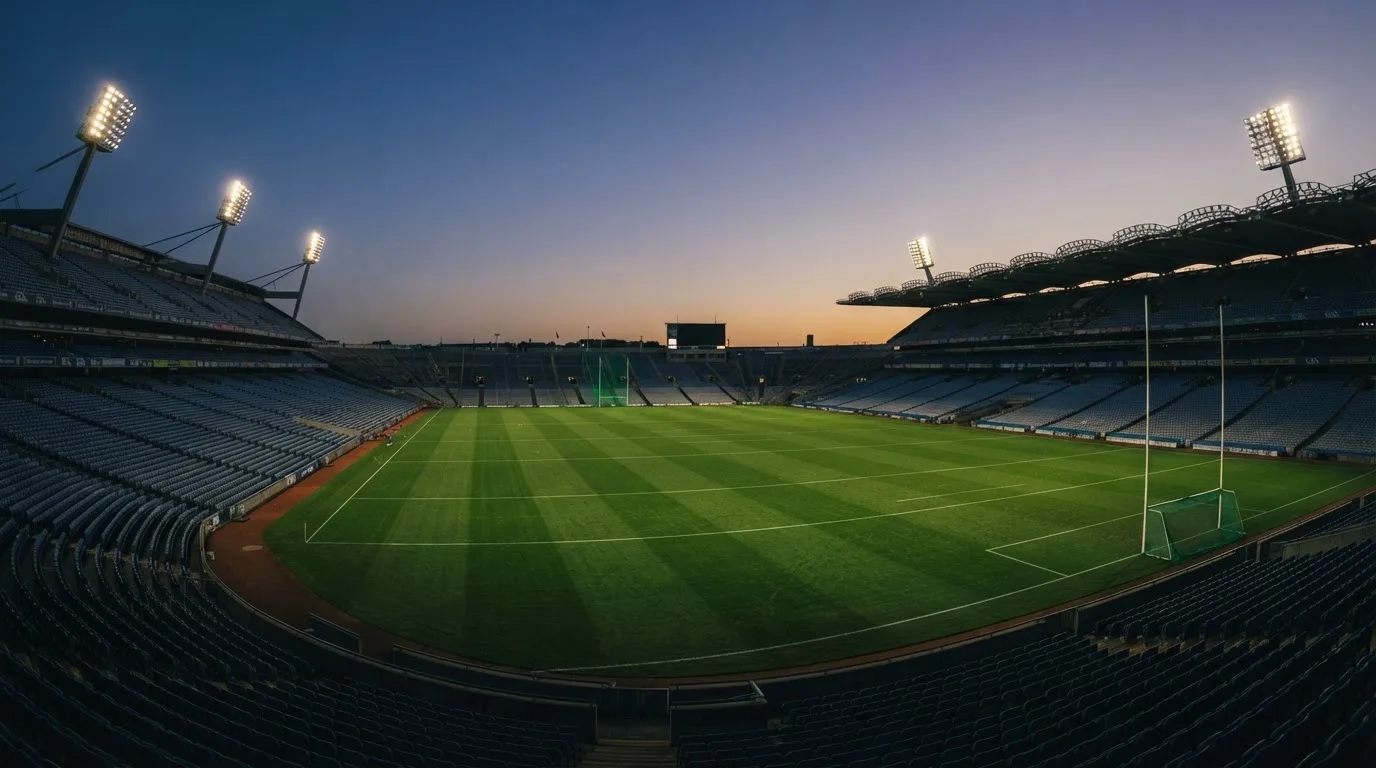
The sport is fifteen players a side, two halves of thirty-five minutes, and a goal is worth three points with a point over the crossbar worth one. That is the rule-book shape, and it is the shape a betting menu is built on. The GAA runs the sport: the All-Ireland Senior Hurling Championship is the men’s senior inter-county competition, and it sits on top of the provincial championships in Leinster, Munster, Connacht and Ulster, with the Joe McDonagh Cup and the Christy Ring Cup feeding into it from below. The All-Ireland Senior Hurling Championship final in 2024 was at Croke Park, the 2025 title went to Tipperary, and Limerick beat Galway in the 2026 All-Ireland Senior Hurling Championship final at Croke Park, Dublin, with the championship ending on 19 July 2026.
In 2026, the Leinster championship had six teams and Munster five in round-robin groups; the top two in each province met in the provincial final and the third-placed team went to the All-Ireland quarter-finals. That is the calendar a UK bookmaker’s outright market is built on, and it is the calendar a punter should know before laying a price on a Munster round-robin tie in February. The calendar a UK bookmaker shows the punter tends to lag the official GAA calendar by a few weeks on the lesser-known rounds, because the closing firms price the headline matches first and the rest later.
The All-Ireland Club Hurling Championship is the club equivalent of the inter-county championship, run by the GAA at club level across the counties. Some UK bookmakers carry it as a separate outright market; others fold it into a generic GAA menu. Club hurling betting is structurally thinner than inter-county betting because the field is wider and the household names are fewer, and the margin on club hurling outright markets is correspondingly wider. For a punter looking for value rather than for a name to back, that is where the price tends to sit.
For a punter who wants fixtures and form before betting, the GAA’s own site is the reference; for a punter who wants prices, the bookmakers on this page are the reference. Where the two diverge — a team withdrawing between fixture confirmation and the match — the bookmaker settles under its own rules, and the punter’s recourse is the operator’s complaints procedure and, ultimately, the Commission’s approved dispute-resolution body.
Ten UK bookmakers for hurling, ranked and compared
The ten operators below are the holders of a Gambling Commission remote licence that list GAA markets as of the snapshot date. Each one carries the licence number, the licence holder as the Commission’s public register records it, and the operator’s own statement on the subject. They are presented in the same order they appear on the Commission’s register for the snapshot, which is alphabetical by trading name.
| Brand | Gambling Commission remote licence number and licence holder | What the operator’s own terms state on the key’s subject |
|---|---|---|
| Hollywoodbets | 053028-R-330019-013 (Hollywoodbets International UK Limited) | Welcome offer is a stake-back free bet of up to £30 on the first qualifying losing accumulator of 3+ legs at combined odds of 4/1 or more |
| Smarkets | 039173-R-319366-011 (Smarkets (Malta) Limited) | UK debit card deposits are instant from £10 up to £15,000; withdrawals processed within 6 hours up to £100,000 |
| Bar One Racing | 056516-R-332750-007 (Bar-One Racing Limited) | Irish independent bookmaker, rebranded as BAR 1 Betting, with shops across Ireland and racing sponsorships at six Irish tracks |
| London Bet | 066162-R-340278-004 (Thistle Bet Limited) | Sportsbook covering football, tennis, horse racing, greyhounds, darts, golf, cricket, NFL, NBA, MLB and snooker, with Pragmatic Play casino slots and in-play betting |
| Swifty Sports | 058957-R-334734-006 (Swifty Global (UK) Ltd) | Best Odds Guaranteed, Cash Out, daily price boosts, live streaming and in-play betting; Bet Builder listed as coming soon |
| Spreadex | 008835-R-104580-022 (Spreadex Limited) | Combined fixed-odds and spread betting with one-click, auto and partial cash out, Bet Builder across fixed odds or spreads, and live streaming |
| Sporting Index | 027343-R-308898-011 (Sporting Index Limited) | Switches between fixed odds and spread betting with in-play, Bet Builder for football, auto cash-out and Multi-Markets |
| BetMGM | 039198-R-319450-029 (LeoVegas Gaming PLC) | Welcome offer for new UK customers: four £10 free bets on football accumulators and sports multiples, valid 7 days with minimum odds |
| DragonBet | 064908-R-339041-003 (DragonBet Ltd) | Published by dragonbet ltd with Welsh football and rugby markets, racing, American football, in-play and bet builder markets |
| Fitzwilliam Sports | 048760-R-335434-009 (SBKI Limited) | Dublin bookmaker with capped membership, instant deposits, fast withdrawals, timeouts and deposit limits; welcome subject to compliance criteria |
The licence line above is what the Commission’s public register shows for each brand; the terms line is what the operator’s own site or app listing states. The two are not the same statement, and a brand being on the register is not a recommendation — it is the test of whether the firm is permitted to take bets from customers in Great Britain.
Hollywoodbets
Hollywoodbets carries the standard set of fixed-odds markets and offers GAA outright markets on the All-Ireland championship and the bigger Munster and Leinster fixtures. The welcome offer is structured around a stake-back on a losing accumulator: deposit £10 or more by card, place a first accumulator of 3+ legs at combined odds of 4/1 or more within seven days, get the stake back as a free bet of up to £30 if the bet loses. The stake-back is one per customer, the free bet expires, and the underlying bet pays like any other accumulator when it wins. Hollywoodbets’ UK offering is solid on the headline markets and slimmer on the group-stage ties, which is the pattern the rest of the industry follows.
For a punter who backs accumulators on championship weekends, the stake-back mechanic suits the style of bet that loses often and pays big when it lands. The arithmetic is straightforward: a £10 treble at combined odds of 5/1 returns £60 on a win, and on a loss the £10 is returned as a free bet whose value depends on the price of the free-bet selection. The cap at £30 means the free bet is worth more on a £10 stake than on a £30 stake at the same odds, because the cap kicks in earlier.
Smarkets
Smarkets is a betting exchange licensed as a remote betting intermediary, which is the licence category the Commission uses for exchanges and which gives Smarkets a different cost structure from a fixed-odds bookmaker. The exchange takes a commission on net winnings rather than building a margin into each price, so the headline odds tend to be tighter than a fixed-odds firm on the same selection. The trade-off is that liquidity on the less-popular markets is thinner: the All-Ireland outright market has good liquidity on the day of the final, less on a Leinster round-robin in February.
On payment, UK debit card deposits are instant from £10 up to £15,000, and withdrawals are processed within six hours from £10 up to £100,000. Open bank transfer deposits are instant from £10 up to £10,000. That payment profile suits a punter who moves money in and out quickly and who backs at prices closer to true probability.
Bar One Racing
Bar One Racing is an Irish independent bookmaker rebranded as BAR 1 Betting, with shops across Ireland and horse racing sponsorships at Dundalk, Fairyhouse, Navan, The Curragh, Curraheen Park and Cork. The UK remote licence is held by Bar-One Racing Limited. The brand’s UK-facing sportsbook carries GAA markets in a less developed form than its Irish-facing product, and GAA outrights sit alongside the headline horse racing meetings on the app.
For a punter whose interest in hurling sits alongside an interest in Irish horse racing, Bar One Racing gives both on the same account. For a punter whose interest is hurling alone, the thinner GAA menu means fewer markets per event and a wider margin.
London Bet
London Bet combines a sportsbook covering football, tennis, horse racing, greyhounds, darts, golf, cricket, NFL, NBA, MLB and snooker with Pragmatic Play casino slots and live in-play betting. The GAA menu sits inside the sportsbook and covers the headline championships rather than the full fixture list, and the in-play book covers the bigger matches when available.
For a punter who plays casino slots and bets on sport on the same account, London Bet’s structure means one wallet and one set of safer-gambling tools across both products. The 10x bonus cap introduced in January 2026 applies to mixed-product promotions, which is the rule that decides whether a sportsbook offer can be combined with a casino offer at the same operator.
Swifty Sports
Swifty Sports offers Best Odds Guaranteed, Cash Out on markets including horse racing and football, daily price boosts, live streaming and in-play betting. Bet Builder is listed as coming soon on the app listing. The GAA menu is mid-sized: championship outrights, match winner and the standard markets, with a tighter in-play book on the bigger matches.
For a punter who uses price boosts and best-odds-guaranteed on horse racing and wants the same on GAA outrights, Swifty Sports’ structure suits the style. The “coming soon” tag on Bet Builder is worth noting for a punter who wants a same-game multi on a hurling match, because a same-game multi on a 15-a-side sport with two halves of 35 minutes is built from fewer selections than a same-game multi on football.
Spreadex
Spreadex is licensed by the Gambling Commission for fixed-odds betting and separately regulated by the Financial Conduct Authority for spread betting, which is the dual regulation the firm’s own site describes. The licensed fixed-odds sportsbook carries GAA outrights and match markets, while the spread betting side offers spread markets on the bigger matches where a stake can win or lose more than the deposit. The combination of one-click, auto and partial cash out, Bet Builder across fixed odds or spreads, and live streaming of UK and Irish horse racing, greyhounds, tennis, NFL and selected football is the feature set the app listing shows.
The relevant caveat for a punter new to Spreadex is that the spread side of the book is a different product with its own rules and its own margin structure, and that spread betting losses can exceed the deposit. The fixed-odds side behaves like any other fixed-odds bookmaker for the purposes of a GAA outright bet.
Sporting Index
Sporting Index lets customers switch between fixed odds and spread betting on the same event, with in-play, Bet Builder for football, auto cash-out and Multi-Markets. The licensed fixed-odds sportsbook carries GAA markets, and the spread side adds an additional market on the bigger matches. The “switch” mechanic means a punter can take a fixed-odds position on a hurling match and, on the same fixture, take a spread view on the winning margin or the total points.
For a punter who treats hurling markets as a way to express a view rather than as a single outright winner, Sporting Index’s product mix gives more shapes of bet than a fixed-odds-only firm. For a punter who wants a single outright winner at a single price, the fixed-odds side alone does the job.
BetMGM
BetMGM’s UK sports welcome offer splits into four £10 free bets, two on football accumulators with four or more selections and two on sports multiples with two or more. The trigger is a £10 deposit and a qualifying sports bet within seven days, with opt-in and minimum odds attached, and the free bets expire seven days after issue. The GAA menu on BetMGM carries the headline championships with match markets and outrights.
For a punter whose betting mix is football-led with GAA on the side, the four-part welcome structure mirrors that mix. For a punter whose mix is GAA-led, two of the four free bets sit on markets the punter would not normally bet on, and the expiry window is short relative to a championship that runs across the summer.
DragonBet
DragonBet is published by dragonbet ltd and features Welsh football and rugby markets, racing, American football, in-play and bet builder markets. The GAA menu is on the lighter side, with championship outrights and the bigger match markets. The Welsh and Irish heritage of the brand is the through-line, and the sportsbook reflects that.
For a punter whose interest sits in Celtic sports more broadly, DragonBet’s structure covers more of those than a UK high-street firm. For a punter whose interest is hurling specifically, the GAA menu is narrower than at a firm that treats GAA as a primary sport.
Fitzwilliam Sports
Fitzwilliam Sports describes itself as a Dublin bookmaker with capped membership, and its welcome is a “High Stakes Welcome” subject to compliance criteria. The UK remote licence is held by SBKI Limited. The site states instant deposits, fast withdrawals, timeouts and deposit limits, and links to GambleAware, GamStop and Gamblers Anonymous.
The “capped membership” and “subject to compliance criteria” wording are the cues that Fitzwilliam is not a mass-market operator. For a punter who wants a Dublin-based bookmaker with high-stakes GAA outrights, Fitzwilliam’s structure suits that profile. For a punter who wants the broadest menu and the most markets per match, a mass-market firm gives more.
Hurling betting in Great Britain: the regulatory frame
Every operator on this page holds a Gambling Commission remote licence, which is the test the Gambling Act 2005 sets for taking bets from customers in Great Britain. The Commission is a non-departmental public body sponsored by the Department for Culture, Media and Sport, and its public register can be searched by business name, trading name, domain or account number. Since the Gambling (Licensing and Advertising) Act 2014 an operator whose remote facilities are used in Great Britain needs a Commission licence wherever it is based; a Curaçao, Maltese or Gibraltar licence is not a substitute.
The minimum age is 18. Name, address and date of birth are verified before a customer can deposit or gamble, including with a free bet or bonus. Credit cards are banned for gambling in Great Britain (since 14 April 2020), including credit-card-funded payments through an e-wallet; debit cards and bank-based payments are not covered by that ban. The verification-before-deposit rule is the structural reason no anonymous play exists at a licensed site, and the source-of-funds questions at higher spend sit on top of that.
There is no statutory list of permitted bets or markets. An operator holds a licence for a category and offers markets under its own rules and the Licence Conditions and Codes of Practice. In-play betting is offered by GB bookmakers and the controls are the operator’s licence conditions and customer-protection duties; nothing in statute or in the LCCP makes in-play “unrestricted” as a legal conclusion. Esports are treated like any other event; virtual events are a separate licence category; bets on politics, TV shows and novelty markets are offered by GB bookmakers and no statutory prohibition was found.
Betting exchanges run under a remote betting intermediary licence, and the rates and rules specific to exchanges are stated only from each exchange’s terms. Smarkets is the exchange on this page. Pool betting on horse or dog racing is a separate licence category. Financial spread betting is regulated by the Financial Conduct Authority, not the Commission; that is the dual regulation Spreadex and Sporting Index describe on their own pages.
The player pays no tax on betting winnings in Great Britain (general information, not tax advice; a professional gambler should ask HMRC or an adviser). General Betting Duty is the operator’s tax on gross profits, currently 15%; from 1 April 2027 a new remote betting rate of 25% applies within it, while remote bets on UK horse racing, self-service betting terminal bets, pool betting and in-person betting stay at 15%. Until 1 April 2027 the remote rate stays at 15%; whether operators pass duty on through odds is not established.
Offshore: a GB licence is compulsory at the point of consumption, and providing gambling facilities in Great Britain without the licence the Act requires is an offence under section 33 of the Gambling Act 2005. No offence aimed at a customer who merely bets on an unlicensed site was found; the loss is protection, not legality. No GAMSTOP coverage, no Commission complaints route, no approved dispute-resolution body, no British consumer redress if funds are withheld, and no application of the 10x bonus cap or the £150 vulnerability check. Honest framing: licensed means checks, limits, GAMSTOP, the bonus cap, but also verification before the first bet; unlicensed means none of those protections and possible loss of funds.
Safer gambling tools every licensed bookmaker must offer
Every operator on this page is a GAMSTOP member, which is the national multi-operator online self-exclusion scheme and a mandatory licence condition for online operators since 31 March 2020. Self-exclusion periods are six months, one year, five years, or five years with auto-renewal; after the minimum period the exclusion stays in place for a further seven years unless the customer asks GAMSTOP to remove it. GAMSTOP covers online sites and apps; betting shops use a separate service.
A financial vulnerability check (LCCP condition 3.4.4, in force since 30 August 2024) applies to licensed remote betting when a customer’s deposits minus withdrawals exceed £150 in a rolling 30 days (since 28 February 2025). It is a public-record check (bankruptcy, county court judgments) rather than an income check or a credit reference check. Financial risk assessments (the “affordability checks” of the press) are announced, staged, and have no start date; do not write them as in force.
Deposit limits (RTS 12): operators must offer a gross deposit limit on a fixed time frame; the first changes have applied since 31 October 2025, a second phase was postponed to 30 September 2026, and whether it is live is not established. There is no state-set deposit or loss ceiling for betting: limits are the customer’s choice. Help is available through GamCare (National Gambling Helpline), GambleAware, NHS gambling clinics, and Gamblers Anonymous.
Promotion rules in force since 19 January 2026 cap wagering requirements on bonuses at 10x (a £10 bonus at 50x needs £500 of bets; under the cap no more than £100). Mixed-product promotions, an offer that requires gambling on two or more product types such as betting, casino, bingo and lottery (for example “bet on football to get free spins”), are banned. Whether the cap applies to free bets with no wagering condition, and any cap on the money value of a bonus, are not established.
For a punter using these tools, the practical sequence is: set a deposit limit at the operator’s safer-gambling page before the first bet, register with GAMSTOP if self-exclusion across operators is the goal, and use the operator’s time-out feature for a short break from a single firm. The Commission-approved alternative dispute resolution body is the route for a complaint that the operator’s own customer service cannot resolve; the Commission’s public register is the route for a complaint about a firm that should not be taking bets from customers in Great Britain.
How to read a decimal price and find the margin
A two-way market with decimal odds of 1.90 on each outcome gives a payout share of one divided by (one over 1.90 plus one over 1.90), which is one over 0.5263 plus 0.5263, which is a payout share of 0.9524 and a margin of 0.0476, just under 5%. A two-way market at 1.85 on each side gives a payout share of one divided by (one over 1.85 plus one over 1.85), which is one over 0.5405 plus 0.5405, a payout share of 0.9259 and a margin of 0.0741, just under 7.5%. The arithmetic is the same on any two-way market; the inputs change.
On a three-way market (home win, draw, away win) the formula extends to three reciprocals. At 2.20 / 3.40 / 3.00, the payout share is one divided by (one over 2.20 plus one over 3.40 plus one over 3.00), which is one divided by (0.4545 + 0.2941 + 0.3333), which is one divided by 1.0819, a payout share of 0.9241 and a margin of 0.0759, just under 7.6%. The margin on hurling’s three-way match winner sits inside that band on most UK bookmakers because the market is smaller than football and the overround has to cover more uncertainty.
The condition that sits alongside this band is the snapshot date. A specific margin is published only with the snapshot date and the exact event, market and bookmaker, because the margin moves with the weight of money and the time to the off. A margin written as a single number without a date is a snapshot of one instant, and the audit will not catch the moment a year later when the margin has shifted because the market has moved.
For a punter deciding between two bookmakers, the comparison is the same arithmetic done on the same selection at the same snapshot. If Hollywoodbets has Limerick at 2.10 and Smarkets exchange has Limerick at 2.05 with a 2% commission on net winnings, the comparison is the price net of commission (2.05 multiplied by 0.98, which is 2.009 effective on the backer’s side) against the bookmaker’s price. The exchange often wins on the headline price; the bookmaker wins on liquidity and the ability to back at the displayed price without waiting for a matched bet.
Worked example: a stake-back free bet at 4/1
A punter deposits £10 by debit card at Hollywoodbets, places a £10 accumulator on three GAA selections at combined odds of 4/1 (decimal 5.00), and the bet loses. Hollywoodbets returns the £10 stake as a free bet, capped at £30 (the cap is not binding on a £10 stake). The free bet is then used on a single selection at, say, 3.00 (2/1). The free bet pays winnings only, so a winning free bet returns stake times (odds minus 1), which is £10 multiplied by 2.00, which is £20. The total return across the sequence is the £20 of winnings from the free bet, minus the £10 stake that bought the original accumulator, which is £10 of net value if the free bet wins. If the free bet loses, the punter is £10 down on the original accumulator and the free bet has paid zero, giving a £10 loss on the sequence.
The expected value of the sequence is the product of the probability of the accumulator winning, the probability of the free bet winning, and the conditional return. Without probabilities, the qualitative shape is: the offer suits a punter who would have placed the accumulator anyway, because the value of the free bet is positive only if the punter would have bet the £10 at the original odds in any case. A punter placing the accumulator solely to claim the offer has a negative expected value because the qualifying bet is a real-money bet at a margin the bookmaker keeps, and the free bet pays only on win.
Frequently asked questions
How can it be checked that a bookmaker holds a Gambling Commission licence?
The Commission’s public register can be searched by business name, trading name, domain or account number at the Commission’s own website, and the record shows the licence number, the licence holder and the licence categories. Every operator on this page appears there, and the licence numbers in the table above are the register’s own figures.
How is the return on a bet worked out from the stake and the odds?
For decimal odds, multiply the stake by the odds. A £10 stake at 3.50 returns £35, which is £25 of profit and £10 of stake returned. For fractional odds, divide the numerator by the denominator, add one, and multiply by the stake, which gives the same result in decimal form.
What is the bookmaker’s margin and how can it be seen in the odds?
The margin is what the bookmaker keeps of every unit bet on a market. Add up the reciprocal of each decimal price, take one away from the total, and the result is the margin as a proportion. A two-way market at 1.90 on each side has a margin just under 5%.
How do fractional odds such as 5/1 convert to decimal odds such as 6.00?
Divide the numerator by the denominator and add one. 5/1 becomes 5 divided by 1 plus 1, which is 6.00. 11/4 becomes 11 divided by 4 plus 1, which is 3.75. Evens (1/1) is 2.00; an odds-on price (5/4, 11/10) is below 2.00.
Which tools for controlling play does a licensed bookmaker have to offer?
A licensed remote bookmaker has to be a GAMSTOP member, must offer deposit limits, time-out and self-exclusion at the customer level, runs a financial vulnerability check on deposits minus withdrawals above £150 in a rolling 30 days, and routes complaints to a Commission-approved alternative dispute resolution body.
Are betting winnings taxed in Great Britain, and who pays General Betting Duty?
The player pays no tax on betting winnings in Great Britain (general information, not tax advice; a professional gambler should ask HMRC or an adviser). General Betting Duty is the operator’s tax on gross profits, currently 15%, rising to 25% on remote bets from 1 April 2027 with a 15% rate on UK horse racing and certain other bets.
Rugby, cricket & Gaelic – Best betting
Content created by the «Best betting» team
