
Bet builder bookmakers ranked: how the feature works and who offers it best
 Available in US
A bet builder, marketed as BuildABet by Sky Bet and Bet Builder+ by bet365, takes several selections from the same match — a goalscorer, the total, the result — and folds them into one priced bet. The combined price reflects the product of each leg’s odds, minus the bookmaker’s margin taken out twice along the way. Two strangers watching the same fixture in the same pub, each holding the same betting slip on the same six markets, will be holding two different prices — because the in-built margin depends on which combinations the bookmaker has priced and which it has withheld. That detail, more than any marketing slogan, decides whether the feature is worth using.
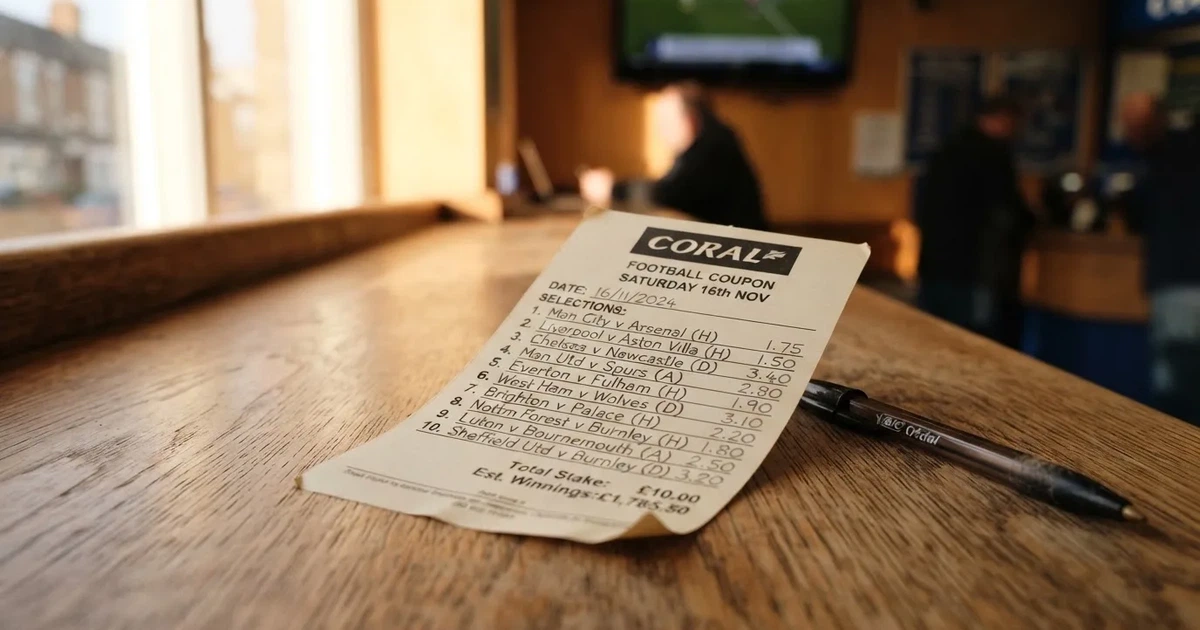
This page covers the choice a UK bettor actually has. Every operator named below holds a Gambling Commission remote licence, and the register’s account number sits beside each one. The first sections explain how a bet builder settles, what the margin inside the price means in pounds, where the feature works on a phone, when cash out is available, and what safer-gambling tools to set up before placing one. Later sections run through a ten-name comparison and answer the questions research flagged for the FAQ.
As of 27 October 2026, the Gambling Commission’s public register was checked against the licence accounts named below. Operators’ own terms pages were checked the same day.
How a bet builder settles and what it really costs
The maths underneath a bet builder is the same as the maths underneath any combination bet, with one extra rule: every leg has to come from the same event. Pick Liverpool to win, Andy Robertson to score, over 1.5 goals and Liverpool to score in both halves, and the four prices multiply into one return; you win on the whole bet only if every leg wins, and you lose on the whole bet as soon as one leg loses. Reading that as “I just need three of four right” is the costliest mistake a new bettor makes with the feature.

A practical start is the Sky Bet version, called BuildABet. The published rules state it combines several selections from the same event into a single bet, that one BuildABet can hold up to 10 selections, and that a betslip can stack up to 20 selections across several same-event bet builders, with no single bet builder exceeding 10.
Those numbers are ceilings, not targets. Three-leg and four-leg combinations are the trade-off point at which the cumulative margin starts to bite harder than the headline price. Six-leg combinations look generous on a coupon because each leg is roughly 2.00, but the combined price rarely matches the published multiplication; the bookmaker has withdrawn at least one of the lucrative pairings, often the one that would have closed the bet early.
Three rules of the bet builder that catch bettors out:
- Contradictory selections cannot be priced. The Sky Bet help page gives the example of a team to win 2-0 combined with over 2.5 goals — a pair that says the same fixture cannot finish a scoreline that nobody has ever seen.
- Not every market is added to a bet builder. The markets that qualify are visible only from the dedicated build tab on the event page; the rest of the sportsbook is closed off, and trying to drag a market in from outside the tab returns an error rather than an apology.
- One void selection does not void the bet. If a four-leg bet builder has one void leg, the remaining three keep running and settle at their cumulative price. That is friendlier than the standard each-way rule on an accumulator.
Cash out is layered on top, not underneath, the bet builder. Settling a bet builder early uses the live prices of every leg at the moment of the cash-out button, and the value shown is whatever the current matched combination would return. Bettors who use cash out often carry a quietly smaller long-term return than those who let the bet run, and that gap is bigger on multi-leg combinations than on singles.
Inside every price is a margin. Take a perfectly balanced two-way market at decimal odds 1.90 and 1.90: the payout share is 1 ÷ (1/1.90 + 1/1.90), which equals around 0.95, and the margin is around 5 %. In real betting markets the line is rarely balanced — one side is roughly 1.85, the other around 2.05 — and the margin typically sits between 4 % and 8 % on the major leagues. Where the bet builder arrives, the cumulative price reflects margin taken on each leg, then a second margin on the combination itself. A bettor who is choosing between a bookmaker’s bet builder and laying the same legs as singles is choosing between a one-stop price that already paid for the convenience, or a slightly sharper assembled price on a slip that pays commission-style effort. The wager sits where the punt comes from.
How to read the comparison
The comparison table that closes the operators section lists ten UK-licensed bookmakers, the Gambling Commission account number that authorises each, and what the operator’s own terms say on the key of this page. The licence column is the only one that proves anything in court; the offer column is what each bookmaker wants a new account holder to read on day one. The two never tell the same story.

Three pieces of context that frame the table:
- Account numbers change hands. The number sitting beside William Hill’s name is 39225; that is the same number attached to WHG (International) Limited, the company that owns the brand, and not to a separate entity. Two trading names under one account are still one licence holder with one set of safer-gambling duties.
- The domain is not the proof. William Hill runs on William Hill; Lottoland runs on lottoland.co.uk and Fitzwilliam Sports on Fitzwilliam Sports. UK-licensed brands use both, and a
.comaddress is not, in itself, a sign of an offshore operator. - “The only licensed brand” is a sentence that never appears on this page. The Gambling Commission’s register lists hundreds of remote licences, of which ten are reviewed below. A name on the register is required to take money from a GB customer; it is not, by itself, a recommendation.
Choosing between the ten
The bookmakers below are not ordered by quality. They are ordered so that the feature most readers came looking for — the bet builder itself — is foregrounded, and so that the alternative angles (Best Odds Guaranteed on horse racing, app experience, in-play) sit a step or two behind. Read down the licence and offer columns and pick the one whose offer reads like a thing you would use this week, not the one whose free-bet amount looks biggest. Free-bet amounts above £50 are almost always paired with conditions that cost the bettor more than the headline in real money; the small-print bullet is the one worth measuring first.
Picking a path through the safer-gambling controls
The safer-gambling tools below are not optional. They are part of every licensed bookmaker’s product since a series of Gambling Commission rule changes between 2024 and 2026, and they are the practical difference between a UK-licensed operator and an offshore site where the same fixture takes the same bet without any of them.
Three controls every UK bettor should set up before the first deposit, in this order:
- A deposit limit. The operator must offer this under RTS 12; the first changes applied from 31 October 2025, and a second phase was postponed to 30 September 2026. The limit does what the punter asks it to do, no higher than the punter sets it, and any attempt to raise it is held back by a cooling-off period.
- GAMSTOP. The mandatory national self-exclusion scheme, six months at the shortest, five years plus seven-year tail at the longest. Once registered, the scheme blocks new accounts at every UK-licensed site for the chosen period, which is the only tool that closes the door on a relapse across multiple brands at once.
- A reality-check timer. The operator must show the running session at fixed intervals; the punter can shorten the gap. Set it to twenty minutes for a casual account and to five minutes for one already showing signs of chasing losses.
The financial vulnerability check is the next layer. A licensed remote bookmaker will, in 2026, run a public-record check (bankruptcy, county court judgments, similar registers) once a customer’s deposits minus withdrawals exceed £150 in any rolling 30-day window — the threshold that has applied since 28 February 2025. That is not an affordability check in the press sense; the latter has been announced in a staged plan with no start date yet, and the first rule that lands is the public-records one. A bettor who keeps the running deposit under £150 in most months will not meet this trigger; one whose account runs hot will, and the form is best read the first time around the kitchen table rather than at the slot.
Help that does not run through the bookmaker
Four routes. They are independent of the operator, which matters because an account that is in trouble is, by definition, one the customer is already trying to step away from.
- GamCare runs the National Gambling Helpline, available 24 hours a day on 0808 8020 133. Telephone, live chat and email; first conversation is free and confidential.
- GambleAware funds treatment and produces the public information pages on harms from gambling. The website accepts the report that an account holder is at risk, and the referral pathway into NHS clinics is run from there.
- The NHS has opened gambling clinics in several parts of England, with referrals via the GP or self-referral. Treatment is free of charge, with cognitive-behavioural therapy for the habitual gambling pattern that has been growing for some years.
- Gamblers Anonymous runs mutual-help meetings across the UK on the same model as its alcohol dependency parent. The first meeting can be the one that breaks a run.
An unlicensed site carries none of the above. A GB-licensed operator must signpost them on the safer-gambling page; an offshore brand typically does not, and the duty of the read falls back on the punter.
How a UK bookmaker’s offer really pays out
A bookmaker’s headline number — 50 % back as a free bet, £40 in free bet tokens, the seemingly-soft “risk-free” word — is rarely the figure that lands in the customer’s account a week later. The smaller the bonus, the less the small print matters; the larger it gets, the more the small print decides whether the offer is worth taking.
A worked example using Betway’s published welcome offer, which research carries as £40 in free bet tokens (four tokens of £10) credited on settlement of a first bet of at least £10 at minimum odds of 2.0, with a seven-day expiry and a debit card deposits only clause. The stake of the qualifying bet is not refunded with a win — it is paid out as profit only — and £10 of the returned credit goes to each of the four tokens. A bettor who treats £40 as 40 quid in their pocket has mistaken the offer for a deposit match; the offer pays out only on bets that win, at the published minimum price, before the seventh day.
Staking requirements are the second lever. The promotion rules that came into force on 19 January 2026 cap wagering requirements on bonuses at 10x — a £10 bonus at 50x needed £500 of betting through, and under the cap no more than £100. Mixed-product promotions (an offer that requires the punter to bet on football to claim free spins, for example) are banned in the same package. Both rules apply to licensed bookmakers; the same offer from an offshore site is, by definition, outside the rule, and the cap that protects the punter at the licensed brand is missing altogether at the unregistered one.
A free bet is not a stake. Where a free-bet token wins, the customer receives profit only, not stake plus profit; the value of a £10 free bet at 3.0 is £20 on the page and £10 in the wallet once the bet is settled. That distinction shows up most clearly in a calculated value: free-bet value = free-bet amount × (odds − 1) ÷ odds × payout share of the market. The margin inside the market eats into the figure again, and the resulting number is below the face value of the token by a clear percentage. The online bonuses and the minimum-price rules in the small print are why the headline rarely matches the value.
The promotion rules’ carve-outs are themselves worth reading. A free bet with no wagering condition is the rule the cap most closely resembles, and its treatment under the cap is not yet settled. A cap on the money value of any one bonus is also not settled. A punter whose account is heavy with free-bet tokens should plan for the worst, accept that any bonus above £100 of face value is unusual at the licensed end of the market, and read the terms rather than reading the headline.
Choosing a betting app with a bet builder
The mobile experience has caught up with desktop faster than the marketing has caught up with the experience. Every UK-licensed bookmaker in this comparison runs a native iOS and Android app, and most of them run the bet builder on the phone in the same way the desktop builds one. Three patterns show up where the apps differ:
- The build-from-the-match-page route. Open the fixture, scroll past the standard markets, tap a tab labelled “Build”, and add each leg. Bet365, Sky Bet, William Hill, Betway and 10bet all run this pattern; the latency between adding a leg and seeing the combined price is roughly half a second on a modern handset.
- The build-from-the-betslip route. Add selections to the slip first, on the markets page, and the slip assembles the bet builder in the background. Betway uses this on the Acca Saver markets, and a few of the older bookmakers rely on the pattern for in-play combinations where the build tab may be slow to refresh.
- The hybrid. Pick the event, choose “Build”, and the slip falls into a list of available markets with the leg prices locked until the next refresh. Spreadex and Octobet run patterns close to the hybrid; bet365 fits it cleanly into the in-play tab.
A bet builder on a phone runs into two practical limits. The screen is too small for a serious six-leg combination to be re-read at speed; most bettors cap the phone version at three or four legs and use the desktop slip for anything longer. In-play bet builders are harder to use on the phone because the legs that would have closed the bet continue to drift while the bettor is still tapping; this is one reason Spreadex’s spread-betting inventory, which moves differently, is more forgiving on the same handset.
Battery and data are the unglamorous variables. A 60-second build on the train drains the battery less than a live in-play session covering 35 markets, and the difference is enough that a bettor who places most combinations in-play will see the handset on the charger at the end of the half. A flat-rate data plan is fine for the assembly; the in-play price feed is heavier, and on a metered connection a 4G booster is worth its cost over a season.
In-play bet builders and cash out
The two features that move into the bet builder in the live window are the same two that fail to come along on slower bookmakers. A bet builder that is pre-match only is useful; a bet builder that also builds in-play is what a serious punter reaches for when the first ten minutes have reshaped the game’s picture.
bet365 names this combined offering Bet Builder+ — combining markets from one event into a single bet, available pre-match and in-play. The same product on the same licence is a much more serious thing than the pre-match-only version; an in-play leg has the live bookmaker’s prices, not the kick-off snapshot, and the cumulative price reflects the movement. Where the in-play tab re-prices the legs faster than the user can read them, the slip may be visually locked but quietly drifting, and the bettor is dealing with a moving target.
Cash out rides on top. The Cash out value shown on a bet builder is the matched price of every live leg at the instant the button is pressed; a five-second wait between green-button press and Cash out press is five seconds of new drift. The breadth of cash out across the ten bookmakers below is uneven — Betway offers it on selected markets only, William Hill runs it on singles and accumulators but excludes a few specials, Betboro covers football, racing and tennis. The bigger the brand, the more comprehensive the coverage; the smaller the brand, the more likely that an offer is limited to the markets visible on the main coupon.
A rule of thumb. Cash out is a useful parachute, not a substitute for a sharper price. Where the cash out value is consistently below the cumulative live price by less than 5 %, the parachute is on fair terms. Where the gap is wider, the brand is taking the parachute as a margin, and the punter should let the bet run. The wider brands tend to publish the wider gaps; this is something to keep an eye on from the second or third coupon that triggers a partial cash out.
Bet builder tips, predictions and the strategy that isn’t one
“Bet builder tips”, “bet builder predictions” and “football bet builder tips today” are three of the four highest-search-volume question phrases in the cluster. There is no archive of past performance for a feature that has only run seriously for a couple of years; there is no statistical database of leg-by-leg correlations across leagues; there is no body of evidence that any combination of selections is more likely than another. Anyone who claims otherwise is selling certainty that does not exist.
What can be said, from the small body of research that exists on the topic:
- Each leg’s correlation with the others is what makes a bet builder different from an accumulator. A goalscorer, the result and over 1.5 goals are positively correlated — if the favourite leads, the goalscorer and the over are more likely. Combining them does not multiply the bookmaker’s edge; it reduces the legs the bookmaker would have priced sharply, which is one of the small effects that compounds.
- Each leg’s margin is what makes the cumulative price expensive. Three legs at 1.80 each, compounding to 5.83, is supposed to be the price of the bet. The bookmaker’s combined margin is closer to 12 %, and the actual offered price tends to come in around 5.40. The 7 % gap is the cumulative cost of using the feature.
- The clearest case for using a bet builder is a fixture the bettor has watched enough to have a model. A clear favourite, a strong over, a goalscorer, a half-time lead: the four-corner play is somewhere between 4.00 and 6.00 on most operators, and the bettor with a model on the four legs has a sharper price than the punt on the favourite.
The role of “tips today” sites is to harvest the search. They do not produce picks that beat the book’s price; they produce picks at the same price the book would have offered anyway, and they sell them to a reader who has not done the maths. The advice on this page is mechanical: build what you have a view on, do not pay for tips, and limit the bet to one fixture at a time.
The mechanics of a bet, an accumulator and a bet builder
A single bet is one selection on one outcome: Liverpool to win, the under on total corners, the favourite to lead at half-time. The price is published, the stake goes on, the bet wins or loses. That is the simplest product the modern bookmaker offers, and a bettor’s first ten bets are usually a mix of singles and small accumulators.
A double is two singles joined: Liverpool to win and the over; both must win. The odds multiply, the stake is one figure, the return is stake × odds. A treble is the same shape with three legs; an accumulator (also called an acca, in casual use) is the same shape with four or more. The bigger the leg count, the higher the headline price, and the smaller the probability of every leg landing. That tradeoff is the engine of the multi-leg markets.
A bet builder is the same shape with one constraint: every leg is from the same event. The constraint reduces the leg menu and raises the typical leg quality, which is why the cumulative price on a bet builder is usually better than the cumulative price on an equivalent cross-fixture accumulator. The constraint is also why a strong bettor’s hand on a single big fixture is a bet builder, not an acca.
Two practical combinations worth knowing by name:
- Trixie: four bets across three selections (three doubles plus one treble).
- Yankee: eleven bets across four selections (six doubles, four trebles, one four-fold).
- Lucky 15: fifteen bets across four selections (four singles, six doubles, four trebles, one four-fold).
- Heinz: fifty-seven bets across six selections (every combination except the singles).
- Goliath: two hundred and forty-seven bets across eight selections.
The unit stake multiplies by the number of bets; a Lucky 15 at £1 unit stake costs £15 and offers coverage on every single plus every combination, useful when a strong favourite is paired with three wide outsiders. The bet builder sits at the bottom of the same family; it is a single bet on a small combined coupon.
The ten bookmakers reviewed
The order below is editorial, not a ranking. Each write-up ends with a verdict for the kind of reader it suits; the verdict answers a different question in each block, and the question is the one the lines above it have actually been about.
1. 10bet
10bet holds Gambling Commission account 43173 against the operating company Blue Star Planet Limited, with categories on the register covering remote general betting standard (real events). The 10bet app carries football, tennis and horse racing alongside a casino tab, and the sportsbook flags Cash out, Bet Builder and Live Streaming among the features on the event pages. The offer structure is the standard 100 %-and-free-bet shape, and the brand runs the sort of rotating promos that show up on the home page in the days before a major fixture.
The bet builder does what the marketing describes: a market tab inside the event, a running combined price, a slip that supports the bet builder alongside other accumulators. In-play coverage on football and tennis is broad enough that the bet builder is a usable product on the second day of a tournament.
10bet’s profile fits a punter who wants a slim app, a price on football and tennis, and a bet builder that is the same product on the phone as on the desktop. While it lacks the wide racing archives of larger rivals, it remains a consistent pick for a football-focused weekend.
2. BetTom
BetTom holds Commission account 64959 against Bet Tom Limited, in the same remote general betting standard (real events) category. The sports welcome offer is 50 % back as a free bet up to £50, paired with a matching 50 % back as free slot funds for the casino tab. That parallel structure is unusual: the same percentage on the sportsbook and the casino, the same £50 ceiling on each side, and the two flows sit in the same first-deposit page. A punter who plays both ends of the site reads the offer as a single balance; one who plays only sport reads it as a sharper-than-average headline that comes with the casino matching.
The bet builder is the standard build-from-the-match-page pattern, and the price feed is on the slower side of the average — useful for a punt at leisure, less useful when the bettor is trying to lock a price during a fast in-play stretch. Coverage on football is the priority; tennis and basketball sit close behind; horse racing is the smaller section of the three.
BetTom fits a customer whose interest is split across sports and casino and who values one balance across both. The brand is a smaller one; the safer-gambling controls sit on the standard rails, and the operator’s compliance with GAMSTOP and the vulnerability check is full.
3. bet365
bet365 holds Commission account 55148 against Hillside (UK Sports) ENC, the same operating company behind the green-jersey international brand. The sportsbook is the deepest of the ten reviewed, and the in-play tab is the deepest of the in-play tabs. Bet Builder+ combines markets from one event into a single bet, available pre-match and in-play. Super Boosts run on the homepage; Winnings Boosts apply to bet builders and selected singles; daily Bet Boosts are the front-page curve.
The size of the price list is the bet365 advantage. Margins on Premier League football tend to sit closer to the lower end of the market — research across multiple seasons suggests 4 % to 6 % margin on the headline 1X2 — and the depth of the specials is what the smaller brands cannot match. The bet builder is comprehensive precisely because the price feed is comprehensive; the cumulative leg count is high enough that an eight-leg combination is rarely refused on the grounds of pricing.
bet365 fits the punter who bets in volume on the big football leagues, who reads a price between operators, and who wants the same product on the phone as on the desktop. The brand is the benchmark; the offer structure is the standard 100 % match on the first settled bet, plus a fixture-specific free bet cluster that varies by week. The brand is not the cheapest on every market, and a careful punter may find sharper prices on William Hill or Betway on a Tuesday’s racing card.
4. Spreadex
Spreadex holds Commission account 8835 against Spreadex Limited, regulated by the Gambling Commission for fixed-odds betting and by the FCA for spread betting. The dual regulation is the brand’s mark of difference, and it matters because spread betting losses can exceed deposits — research carries this verbatim from the Spreadex home page, and that warning is genuinely part of the rules of the product, not a marketing gloss.
The fixed-odds welcome offer is £60 in free bets for a £10 fixed-odds bet, with the credit usable across fixed odds and spread betting. The 28-day window for placing the qualifying bet is wider than the seven-day windows that some brands offer, and that longer runway is a practical advantage for a punter who decides to claim the offer over a week rather than on day one. The bet builder is the build-from-the-match-page pattern; the legs are the standard football and racing ones; the spread-betting offering adds a parallel product on the same fixture.
Spreadex suits a punter who reads spread betting and knows the margin calls, or one who wants a small fixed-odds welcome with a longer qualifying window. The dual product is the differentiator; the small print on the spread side is the same kind of small print any spread brand carries.
5. Betway
Betway holds Commission account 39372 against Betway Limited. The welcome offer for new UK and Ireland customers is £40 in free bet tokens (four tokens of £10) credited on settlement of a first bet of at least £10 at minimum odds of 2.0, with a seven-day expiry and debit card deposits only. The structure is the standard 100 %-with-tokens shape; the minimum odds of 2.0 is the filter that disqualifies the closest favourite on a coupon, which is the lever that distinguishes a workable offer from a noisy headline.
Betway’s app carries the bet builder on football and the larger American leagues, and the in-play tab is competitive on Premier League and Champions League fixtures. The Acca Saver feature is on the same product page as the bet builder; it is a separate feature rather than an add-on.
Betway fits a punter who watches the Champions League and the NFL, and who values a single-app experience with a stable bet builder and a stable acca. The debit card only clause on the offer is one of the strictest in the comparison; a punter who deposits by bank transfer or e-wallet will find the offer cannot be triggered that way and should pick another brand if the offer is the deciding factor.
6. Betboro
Betboro holds Commission account 44181 against Webmedia Development N.V. The sportsbook offers in-play markets on football, racing and tennis, and cash-out runs across the same three. Boosted odds on selected singles from £10 stakes are the rotating offer on the home page. The brand sits in the smaller-bookmaker tier of the comparison, and the safer-gambling tools — deposit limits, reality checks, self-exclusion — are on the standard rails.
The bet builder on Betboro covers football and tennis; horse racing is not the bet builder’s strong suit. The price feed is on the slower side of the average, and a punt on a fast in-play combination may see the leg prices drift between the cup and the slip. The brand is honest about the smaller catalogue and the mobile-first design.
Betboro suits a punter whose betting calendar is football-heavy and tennis-heavy, and who values a calmer interface over the larger brands’ depth. It trades the expansive racing and specials catalogue of the tier-one bookmakers for a streamlined focus that benefits the casual punter.
7. Octobet
Octobet holds Commission account 62545 against Octopus Game Limited. The sports welcome offer is Best Odds Guaranteed on UK and Irish horse racing, with a cap of up to £150 per customer per race. The cap is the headline; the BOG itself is the feature — if the starting price is bigger than the price the punter took at the time of the bet, the book pays out at the bigger one.
Octobet’s bet builder covers football and the more popular sports; the in-play tab is competitive on the major leagues. The cap on BOG at £150 per race is generous for an everyday punter and limiting for a high-stakes one; the £150 figure is the line that separates the offer from the brand’s larger competitors, where the cap on Best Odds Guaranteed is usually a single fixed number per bet rather than per race.
Octobet suits a punter whose weekend calendar is dominated by UK and Irish horse racing and who wants a BOG offer with a per-race limit rather than per-bet. This focus comes at the expense of a vast in-play football catalogue, but the BOG structure provides a clear value proposition for the racing fan.
8. William Hill
William Hill holds Commission account 39225 against WHG (International) Limited. The BOG rules, published on the help page, run from 8 AM on the day of the race, on both single and multiple bets, excluding ante-post, tote and pari-mutuel bets. The 8 AM start time is earlier than some of the larger competitors; a punter placing the bet the evening before gets the BOG on the morning of the race.
William Hill’s bet builder is the build-from-the-match-page pattern; the leg catalogue is the standard football and racing offering plus the higher-traffic specials. The brand is the deepest horse racing bookmaker in the comparison — the market depth on the Saturday card is what the smaller brands cannot match, and the BOG coverage on UK and Irish racing is among the most generous.
William Hill suits a punter whose calendar is dominated by UK horse racing and football, and who values depth on the racing card and a BOG with an 8 AM start. The brand is the second-largest brand on the comparison after bet365 in terms of sport depth, and the offer structure is the standard 100 %-with-conditions shape.
9. Fitzwilliam Sports
Fitzwilliam Sports holds Commission account 48760 against SBKI Limited. The brand’s home page says its prices are based on Oddschecker’s average price for each selection, which is the differentiator — the price feeds draw from the average across the market, and a punter who reads the average as a benchmark rather than a specific bookmaker will get the brand’s particular value on offer. Apple and Google mobile apps are available, and the in-play tab is a usable football and racing product.
The bet builder on Fitzwilliam Sports covers football and the larger US sports; horse racing is not the brand’s deep section. The brand is in the smaller-bookmaker tier of the comparison, and the price average means the headline price is rarely the cheapest in the market, but rarely the most expensive either.
Fitzwilliam Sports fits a punter who reads Oddschecker and wants the average price as the brand’s product, who values a clean mobile app, and who trades depth on the racing card for a stable football product with a stable bet builder. The smaller catalogue is the cost.
10. Lottoland
Lottoland holds Commission account 38991 against EU Lotto Limited. The UK app combines casino, lottery betting, sports betting and scratchcards, and the sportsbook sits in the same app as the lottery products. The brand sits in the smaller-bookmaker tier of the comparison, and the bet builder is a recent addition to the sportsbook.
The differentiator is the bundled product: a punter who buys lottery tickets and plays scratchcards in the same app can also place a sports bet on the same sign-in. The depth on football is moderate; the depth on horse racing is the smallest of the ten; the bet builder sits inside the football tab. The bundled product is the brand’s offer to a customer who would otherwise play across two apps.
Lottoland suits a punter whose interest spans the lottery, scratchcards and the football coupon, and who values a single sign-in. The brand is not the deepest in any one sport, and the bet builder does not have the depth of the larger bookmakers; the integration with the lottery products is the trade-off.
The UK-licensed bookmaker landscape at a glance
| Operator | Gambling Commission account | Licence holder | What the operator’s own terms say about the bet builder |
|---|---|---|---|
| 10bet | 43173 | Blue Star Planet Limited | Cash out, Bet Builder and Live Streaming called out on the app’s event pages |
| BetTom | 64959 | Bet Tom Limited | Build-from-the-match-page bet builder; sports and casino welcome offered as a parallel 50 % back structure |
| bet365 | 55148 | Hillside (UK Sports) ENC | Bet Builder+ combines markets from one event into a single bet, available pre-match and in-play |
| Spreadex | 8835 | Spreadex Limited | Build-from-the-match-page bet builder across football and racing, fixed odds alongside spread betting |
| Betway | 39372 | Betway Limited | Bet builder on football and the larger American leagues; Acca Saver on the same slip |
| Betboro | 44181 | Webmedia Development N.V. | Bet builder on football and tennis; cash out on football, racing and tennis |
| Octobet | 62545 | Octopus Game Limited | Best Odds Guaranteed on UK and Irish horse racing, up to £150 per customer per race |
| William Hill | 39225 | WHG (International) Limited | Bet builder on football and racing; Best Odds Guaranteed on UK and Irish racing from 8 AM on the day |
| Fitzwilliam Sports | 48760 | SBKI Limited | Bet builder on football and the larger US sports; prices based on Oddschecker’s average |
| Lottoland | 38991 | EU Lotto Limited | Bet builder in the football tab; lottery, scratchcards and sports in one sign-in |
How UK regulation actually shapes the bet you place
A UK-licensed bookmaker does three things differently from an unlicensed operator, and the difference is most visible at the moment a customer wants to take their money out. The first is verification before the first deposit — name, address, date of birth, and the checks that follow. The rule has applied since 7 May 2019 and covers a free bet or bonus as much as a real-money stake. The second is the GAMSTOP membership; every UK-licensed online operator is part of the scheme, and periods run from six months to five years plus seven-year tail. The third is the dispute-resolution route — a real complaints body that is independent of the bookmaker.
The Financial Conduct Authority regulates financial spread betting, not the Gambling Commission, and that is one part of Spreadex’s product. A punter reading the dual regulation in the Spreadex marketing should read it as “two regulators watch this firm” rather than “two regulators protect me twice”; the FCA’s role is market-conduct, not consumer-redress.
Offshore is the alternative. An operator without a GB licence can still take a bet from a GB customer, but the absence of the licence is the absence of the safer-gambling controls that depend on the licence. No GAMSTOP coverage, no Commission complaints route, no approved dispute-resolution body, no British consumer redress if funds are withheld, no 10x bonus cap, no £150 vulnerability check. The Commission enforces against the operator — cease-and-desist notices, work with payment providers, and court-order DNS blocking powers either granted or about to be granted — not the punter. A bet at an unlicensed site is not illegal for the punter; it is unprotected.
The financial vulnerability check at a GB-licensed brand applies once a customer’s deposits minus withdrawals exceed £150 in any rolling 30-day window — the threshold that has applied since 28 February 2025. A public-record check (bankruptcy and county court judgments are the two main ones) is the form the rule takes; it is not a credit-reference check and not an income check. A punter who keeps the running net deposit under £150 in most months will not meet the trigger. A punter whose account is heavier will, and should read the form the first time around a kitchen table rather than at half-time.
The promotion rules that landed in January 2026 cap wagering requirements on bonuses at 10x and ban mixed-product promotions. The cap is the same kind of practical distinction the licence carries: at a licensed brand, no bonus requires £500 of bets at 50x wagering; at an unlicensed brand, the same headline is offered without the cap. A punter whose betting calendar attracts the bigger offers should consider the licensed list first.
The General Betting Duty is the operator’s tax, currently 15 %, moving to a 25 % remote rate inside the same framework from 1 April 2027 — the duty on bets on UK horse racing, on SSBTs in licensed premises, on pool betting and on in-person betting stays at 15 % across the same date. The punter pays no tax on winnings in Great Britain. Whether operators pass duty on through odds is not established, and the safe way to write the rule is to leave it at “the operator’s tax”, not to translate the rate into a claim about prices.
The minimum age for gambling in Great Britain is 18. The identification check before the first deposit is the same check that catches the under-18 at the door. A punter running more than one account on behalf of others, or running one account with someone else’s identity, is breaking the operator’s terms and the law. The bookmaker’s right to void bets under those circumstances is the practical backing of the rule.
A worked example: reading the margin on a balanced two-way market
Take a two-way market with decimal odds of 1.90 and 1.90. The payout share is 1 divided by (1 ÷ 1.90 + 1 ÷ 1.90), which works out to roughly 0.95. That is the share of every £1 staked that the market returns in payout across all outcomes. The margin is 1 minus the payout share, which is roughly 5 %. Read the other way, the market returns around £0.95 in winnings for every £1 of stake across both sides, and the £0.05 retained is the bookmaker’s cut.
In a real market the two sides of the line are rarely perfectly balanced. A typical Premier League football match shows the favourite at decimal odds around 1.85 and the underdog at around 4.50, with the draw at 3.75. The three-way market adds a third leg to the calculation: the payout share is 1 ÷ (1/1.85 + 1/4.50 + 1/3.75), which works out to roughly 0.92, and the margin is roughly 8 %. Margins on the major leagues in football typically sit between 5 % and 8 % on the headline 1X2, with the tighter end of that range coming from the larger brands and the wider end from the smaller ones.
Where the bet builder enters, the cumulative price reflects the margin taken on each leg, then a further adjustment for the combination. A three-leg bet builder at decimal odds of 1.80, 1.80 and 1.80 looks like a coupon paying 5.83, but the published price on the bet builder is closer to 5.40 — that gap is the cumulative effect of the feature’s pricing. A punter who builds the same three legs as singles pays a sharper combined price minus the convenience, and the bet builder is the trade between the two.
The range across the comparison above runs from the lower end (the major brands on headline 1X2) to the higher end (smaller brands on specials and accumulators). A punter reading the comparison table should treat the order of the brands as one signal and the leg catalogue as another; the brand with the deepest in-play tab tends to have the tighter margin on that tab, and the brand with the smallest catalogue tends to have the wider margin on the catalogue it has.
A note on the licensor, the licensee and the date of the check
The Gambling Commission is the regulator; the licence holder is the company. The licence holder named on the Commission’s register is the legal entity, and that is who the safer-gambling duties attach to. Brand names change hands; account numbers do not. The number sitting beside William Hill’s name is 39225, and that is the number attached to WHG (International) Limited, the company that owns the brand. Two trading names on the same account (Ladbrokes and Coral, for example, sit on the same parent in many structures) read as two brands to the punter but are one licence holder to the regulator.
The register’s access date matters as much as the register’s contents. A licence listed in the register is correct as of the date it is checked, not the date the register is read on a different day. Brands change hands more often than the licence numbers change; a punter reading the register on the morning of a major race should re-check the register rather than rely on a tab from a previous month.
The remote licence categories on the register matter too. A “remote general betting standard (real events)” licence authorises sports betting on real events. A separate licence covers virtual events; a further licence covers pool betting; a separate licence, the betting intermediary, covers exchanges. A brand’s sports betting licence does not, by itself, authorise an exchange; an exchange brand has its own intermediary licence. The Commission publishes each licence category on the register, and the licence holder’s categories are there for the read.
A bettor who uses the comparison above as a starting list rather than a final list is using the table as intended. The ten brands reviewed are not the only licensed brands; the register lists hundreds of remote betting licences, and a punter who has a brand in mind that is not on this list can confirm the licence by searching the register by domain, trading name or company name. The register’s search field accepts all three; the licence number is what comes back.
Frequently asked questions
What is a bet builder?
A bet builder is the name bookmakers give to the feature that combines several selections from the same event — a result, a goalscorer, a total, a half-time outcome — into a single priced bet. Sky Bet calls the same thing BuildABet; bet365 calls its version Bet Builder+. The combined price is the product of each leg’s odds adjusted for the bookmaker’s margin on the combination. Every leg has to come from the same fixture, contradictory legs are refused at the price-check, and the bet wins only if every leg wins.
How does a bet builder differ from an accumulator?
An accumulator combines selections from different events into one bet; a bet builder combines selections from one event only. The constraint tightens the menu and raises the typical leg quality, which is why the cumulative price on a bet builder is usually better than the cumulative price on an equivalent cross-fixture accumulator. The constraint is also why a strong bettor’s hand on a single big fixture is a bet builder rather than an acca.
What is the difference between a free bet and a stake?
A stake is the customer’s cash, returned with the profit on a win. A free bet is the bookmaker’s credit; on a win, only the profit returns, the stake of the free bet does not. A £10 free bet at decimal odds of 3.0 returns £20 in profit and £0 of the free-bet stake; that is the calculus underneath the headline “free bet” wording. A free bet’s “value” is the bet amount multiplied by (odds − 1) ÷ odds, multiplied by the market’s payout share — a number below the face value of the token.
How can the reader check that a bookmaker holds a Gambling Commission licence?
The Commission’s public register is the test. It is searchable by business name, trading name, domain or account number, and the result returns the licence holder’s name, the licence number and the categories on the licence. The access date of the search matters; the register is current to the date of reading, and a licence listed yesterday is still listed today unless the Commission has revoked it. A punter checking the register should look up both the trading name and the operator’s domain — UK-licensed brands use .co.uk and .com interchangeably, and a single trading name under multiple domains is common.
How is the return on a bet worked out from the stake and the odds?
The return is stake multiplied by the decimal odds. For a £10 bet at decimal odds of 4.50, the return is £45; the profit is the return less the stake, so £35 in this case. For a free bet whose stake is not returned, the profit is the same calculation less the free bet amount itself. A bet builder’s return follows the same rule, with the odds set by the cumulative combination rather than by a single leg.
Bet types & in-play – Best betting
Content created by the «Best betting» team
