
How football betting tips actually work in 2026
 Available in US
Data current as of 27 October 2026 and checked against the Gambling Commission’s public register. The figures, odds and licences below are snapshots — markets and offers move, and a price you see on a bookmaker’s site today may differ from the one shown here.

A “football betting tip” arrives every matchday. From a WhatsApp group, a tipster’s X feed, a friend’s “five-fold” pinned to a Saturday morning text. The labels vary — banker, value, lock — but the underlying claim is the same: somebody knows who is going to win. The picture below the surface is more interesting, and far more useful. How is a tip built from form, statistics, line-ups and the bookmaker’s own price? When does a price sit above the true probability it should sit at? What does “value” actually mean once a margin is taken out, and why is every tip still uncertain even when the work behind it is sound? Those are the questions this page is built to answer, in the British sporting register punters actually use, anchored to the way Great Britain regulates online betting in 2026.
The fundamentals: what the game and the wager actually are
The Laws of the Game of association football are maintained by the International Football Association Board (IFAB), which has done so since 1886. A standard adult match consists of two halves of 45 minutes each, with stoppage time added at the referee’s discretion. A tied match may go to extra time of two further 15-minute periods, and some competitions then use a penalty shoot-out. Eleven players per side, including the goalkeeper; a goal 7.32 m wide and 2.44 m high. None of that is betting, but every line of it decides what a bookmaker’s market looks like. A book splits the 90 minutes into dozens of selections — 1X2, both teams to score, over/under, Asian handicap — and each is built on top of the same core event. A punter who knows how a match is structured knows which selections are settled how, which markets can void on an abandonment and which can ride a red card into a surprise settling rule.
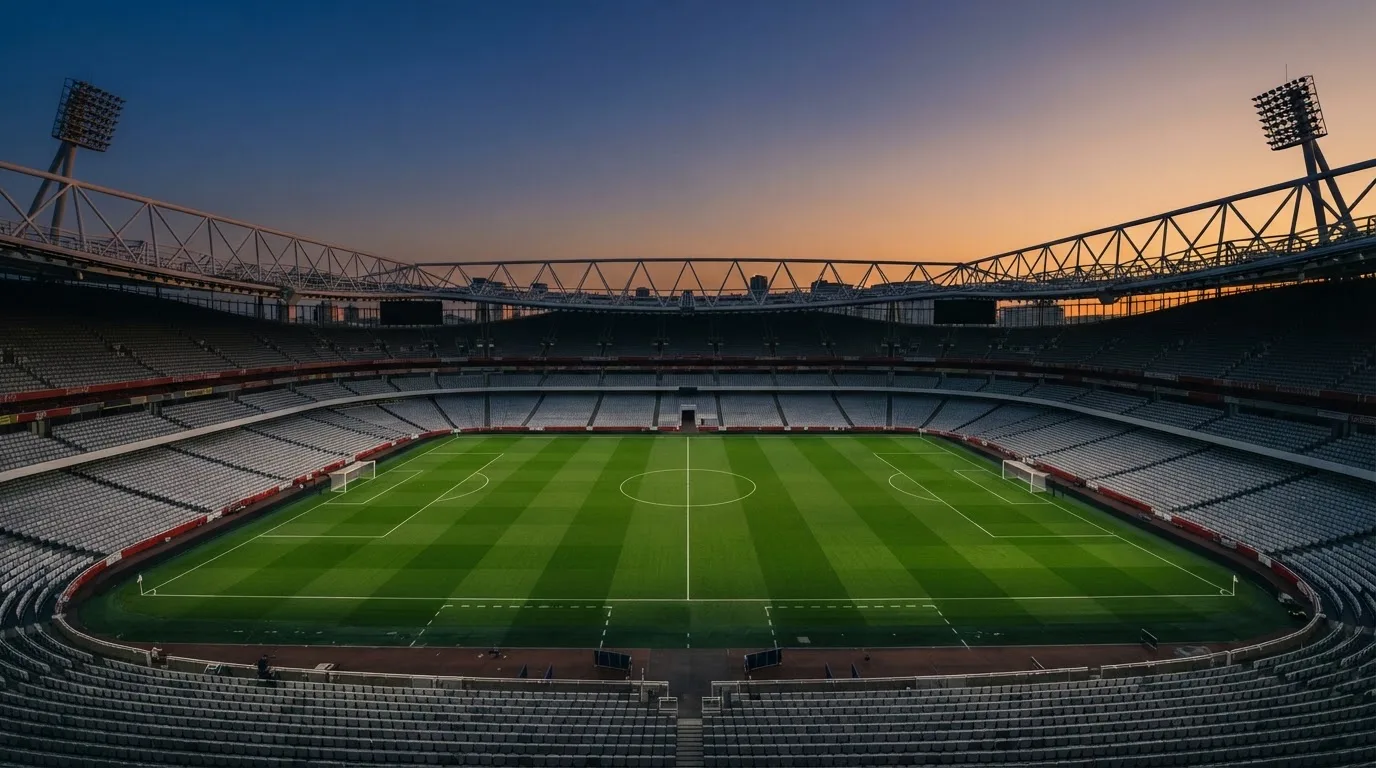
That matters because the price of a tip is set against the structure as much as against the form. A 1X2 market is three outcomes (home win, draw, away win); a BTTS market is two (both score, one or both don’t). Each is priced out of the bookmaker’s model of those outcomes. The punter’s edge, when there is one, sits in the gap between the model and reality, not in knowing which team is going to win.
What the landscape looks like in 2026
Football betting in 2026 runs on three layers: the betting sites themselves, the tipsters who publish predictions on top of them, and the data feed underneath. A serious punter touches all three. The site is where the wager lives and where the licence either holds or doesn’t — every commercial online bookmaker serving customers in Great Britain needs a Gambling Commission licence, wherever the operator is based. The tipsters are independent — some paid, some subscriber-only, some free — and their work ranges from careful form analysis to recycled press conference quotes with a price laid on top. The data feed is everything that informs both: xG models, shot location heat maps, injury reports, expected line-ups, referee tendencies. Skipping a layer is how punters mistake the third for the first.
How the law frames a football bet in Great Britain
The regulator is the Gambling Commission (UKGC), a non-departmental public body sponsored by the Department for Culture, Media and Sport. It licenses the commercial market under the Gambling Act 2005, which covers Great Britain (England, Scotland and Wales) — Northern Ireland sits outside the Act under its own older law. Since the Gambling (Licensing and Advertising) Act 2014 an operator whose remote facilities are used in Great Britain needs a Commission licence wherever it is based; sections 33 and 36 of the 2005 Act as amended are the operative provisions. A Curaçao, Maltese or Gibraltar registration does not substitute.
The Commission’s public register is searchable by business name, trading name, domain or account number and is the whole test of whether a brand holds a licence. Quote no count of licensed operators without its access date. Every online general betting licence holder runs GAMSTOP and is subject to the same customer-protection duties: a 7 May 2019 identity-verification rule that checks name, address and date of birth before a customer can deposit or gamble (including with a free bet or bonus), and the LCCP’s marketing and social-responsibility codes. There is no state monopoly and no cap on the number of licences.
What may be bet on is not set out by statute. An operator holds a licence for a category and offers markets under its own rules and the LCCP. Categories include remote general betting standard (real events), remote general betting standard (virtual events), remote general betting limited, remote pool betting and remote betting intermediary (the licence for betting exchanges). Bets on esports are treated like any other event; virtual events sit under their own licence category; bets on politics and novelty markets appear on GB bookmakers with no statutory prohibition. In-play markets are offered by GB operators under their licence conditions and customer-protection duties — never write that in-play is “unrestricted” as a legal conclusion. Spread betting that is not a regulated financial product is inside General Betting Duty; a financial spread bet is regulated by the Financial Conduct Authority, not the Commission.
The statute in plain terms
Section 33 of the Gambling Act 2005 makes it an offence to provide gambling facilities in Great Britain without the licence the Act requires. The sentence on summary conviction is up to 51 weeks’ imprisonment, a fine up to level 5, or both; in Scotland, up to six months. There is no offence aimed at a customer who merely bets on an unlicensed site — but the protections that come with a licence vanish. No GAMSTOP coverage, no approved dispute-resolution route, no British consumer redress if funds are withheld, no 10x bonus cap, no £150 vulnerability check. The Commission can issue cease-and-desist notices, work with search engines and payment providers, and is being given court-ordered DNS blocking powers; that is disruption, not blocking at the customer end. None of that makes an unlicensed site “legal to use” — it makes it a site outside the British protective net.

Responsible gambling: the part of the picture nobody markets
The safer-gambling toolkit inside the licensed market is built around four things: GAMSTOP self-exclusion, deposit limits, vulnerability checks, and a stack of help services. GAMSTOP is mandatory for online operators since 31 March 2020; exclusion runs for six months, one year, five years, or five years with auto-renewal, and after the minimum period a further seven years apply unless the customer asks to lift it. Betting shops use a separate service. A licensed operator must offer a gross deposit limit on a fixed time frame — first changes have applied since 31 October 2025, a second phase was postponed to 30 September 2026, and whether it is live on that schedule is not established. The limits the customer sets are the cap that matters: there is no state-set ceiling on either stakes or losses at a GB-licensed betting site.
The financial vulnerability check is the rule that catches people who did not know to set a limit. Under LCCP condition 3.4.4, in force since 30 August 2024, it applies to licensed remote betting when a customer’s deposits minus withdrawals cross £150 in a rolling 30 days — a 28 February 2025 trigger. It is a public-record check (bankruptcy, county court judgments), not an income or credit-reference check. Financial risk assessments — the “affordability checks” of the press — were announced in a staged plan in a Commission article of 7 July 2026, with no start date: write that they are “announced, staged, no start date”, never “in force”.
For help, the British names punters actually call are GamCare (which runs the National Gambling Helpline), GambleAware, the NHS gambling clinics, Gamblers Anonymous and, for online exclusion specifically, GAMSTOP. Most bookmakers carry live links to these on their safer-gambling pages — Unibet lists BeGambleAware, GamCare, GAMSTOP, Gambling Therapy and the BGC. The licensed site is required to make those visible; the unlicensed one is not.
The deep layer is the hardest one to talk about. Every tipster page, every bookmaker offer, every accumulator boost works on the fact that betting is exciting in small doses and ruinous in large ones. A punter who treats it as a hobby with a budget — small, fixed, written down — and knows that the long-run house edge is the only certainty is not a punter who needs this section. A punter who finds the budget is drifting, who hides deposits from a partner, who chases losses with bigger stakes — that punter needs GAMSTOP tonight, not tomorrow.
Crypto and anonymity: where the licensed market sits
A licensed football book takes pounds through debit cards, bank transfers and the e-wallets and instant-payment apps the operator’s terms list — Visa and Mastercard debit, Apple Pay, PayPal, Pay by Bank over Open Banking, Revolut Pay, a few others. No licensed GB operator runs on Bitcoin, Ether, USDT or any other cryptocurrency; that is not established by the inputs above. The match-by-match finding here is descriptive, not legal advice: a punter who wants to stake with crypto at a football market leaves the licence behind, and takes the consequences on themselves.
Anonymity is the wider point. Identity verification before the first deposit means no anonymous play at a licensed site, free bet or not — name, address and date of birth have to clear. A source-of-funds conversation at higher spend is normal under the money-laundering rules. Crypto deposits inside the licensed market are not established; offshore books that take crypto do not verify at that threshold and do not place funds in a British segregated account. The honest framing of this is two sentences, not a verdict: licensed play in 2026 means no crypto deposit rail and a verified identity; unlicensed play means both, and no recourse if a wallet is drained or a withdrawal sits unpaid. Neither is “the safe choice” by default — they are different bets on different conditions.
Bonuses and free bets: the marketing word and what it costs
Bonus and free bet marketing is the loudest layer of any bookmaker’s homepage. “Free bet”, “bet credits”, “enhanced odds”, “acca insurance”, “deposit match” — every term carries a price, and the price is set by the bookmaker’s terms, not by the punter’s intuition. Two rules govern the offer landscape in 2026.
First, the promotion rules in force since 19 January 2026: wagering requirements on bonuses are capped at 10× (a £10 bonus at 50× needed £500 of bets; under the cap, no more than £100). Mixed-product promotions — an offer that requires gambling on two or more product types, such as “bet on football to get free spins” — are banned. Whether the cap applies to free bets with no wagering condition, and any cap on the money value of a bonus, are not established in the inputs above.
Second, the type of the offer. A cash bonus stays a cash bonus. A free bet stays a free bet, whose stake is usually not paid back when the bet wins. A “risk-free” bet refunded as a free bet is not a refund in cash. A price boost is a one-off enhanced price; an accumulator insurance refunds a stake if one leg lets the multi down; a cashback returns a percentage of net losses over a period. These are different products at different prices, and grouping them is the most common marketing trick punters fall for.
Let a worked example stand in for the rest. Betway’s welcome offer for new UK and Ireland customers in 2026 is £40 in free-bet tokens (4 × £10) credited on settlement of a first bet of at least £10 at minimum odds of 2.0, with a 7-day expiry, debit card deposits only. The four tokens are free bets — a winning free bet pays the profit only, not the stake back. A punter who understands that understands the offer. A punter who reads “£40 free” and walks into it expecting £40 cash on top of a win is in for a smaller cheque than the headline promised.
The disqualifications are also where the small print costs. BetUK’s free bets exclude virtual sports, esports and non-UK/IE horse racing, and minimum odds apply. A token cannot be used on the markets the customer actually follows; that is the typical shape. Each offer in this guide is described in its own terms, never as the marketing copy that introduces it.
The arithmetic of a free bet
A free bet whose stake is not returned has a calculable average value: the free-bet amount × (odds − 1) ÷ odds, then weighted by the market’s payout share (the share of one unit bet the bookmaker pays out on that market). For a £10 free bet at decimal odds of 3.00 on a market with a 95% payout share: £10 × (3.00 − 1) ÷ 3.00 = £6.67 raw expected winnings, then × 0.95 = £6.33 average value. Lower odds shrink the value; higher odds raise it. The free bet is never worth its nominal amount, and a punter who collects ten of them at £10 each should plan on something like £60 of expected return, not £100. That is the gap between “ten free bets” and “£100 in value”; the gap is the bookmaker’s margin.
Mobile and the app experience in 2026
The phone is where most football bets land in 2026. A modern bookmaker app combines four things: a fast log-in, an in-play tab, a bet slip on the same screen as the market, and a fingerprint / face-ID confirmation before each stake. Latency on the in-play tab matters more than any of those features — a one-second delay on a price refresh turns a value bet into a taken price. The apps reviewed later in this guide all run on iOS and Android; browser-based betting is the fallback for punters who do not want a second app on the handset.
The deeper layer is data use. A live football app pulls odds, scores and settlements over a mobile connection while the phone is on Wi-Fi at home. The Licensed site must verify the bettor before the first deposit; the same rule applies on the mobile sign-up. The bookmaker is responsible for in-app push notifications — a bet boost should not be marketed to a self-excluded customer; the safer-gambling settings have to be one tap away from the bet slip, not buried in an account menu. That is the architecture the LCCP sets; the apps below are the ones that implement it.
The punters who need an app the least are the punters who bet the least. A weekend £5 Saturday accumulator does not need fingerprint confirmation, price-boost notifications, or live-streaming access to make the call — it needs a working browser, a deposit limit and the willingness to walk away from a losing run. The app is the tool, not the hobby; the hobby is the bet, and the bet is supposed to be small.
Live betting and cash out: price and pace
In-play football turns the static pre-match coupon into a moving target. Bookmakers offer prices at intervals — between 30 seconds and a few minutes — and the price on a 1X2 line moves with goals, red cards, possession and shot counts. Cash out is the lever that monetises that movement: settle a bet before the final whistle, take the price on offer, forgo the rest. The price reflects the bookmaker’s recalculated probability for the remaining time plus the bookmaker’s margin. Cash out is not, despite the framing, “protecting your winnings” — it is closing a position at a market price that includes the same overround every other market on the site carries.
Sportingbet, bet365, Betway and most of the brands reviewed below carry an in-play tab on football. Some — Betway, 10bet — also offer a partial cash out, where the bettor closes a portion of the stake at the in-play price. Kwiff’s Supercharge feature can instantly boost the odds on a bet, for example from 2/1 to 20/1, and it can apply to single or multi bets on any sport. That is a marketing toggle wrapped around a price — it does not raise the long-run expectation, it raises the variance of a single bet. A punter who likes variance should treat Kwiff as a high-variance bookmaker and adjust their stake accordingly.
The licence frame matters here. In-play markets are offered by GB operators under their licence conditions and customer-protection duties; the controls are the operator’s, not statutory. The bettor’s edge in-play is identical to pre-match — read the form, find the price above the true probability, take the stake you can afford to lose. The fact that the price moves every thirty seconds does not change the maths; it changes the temptation.
The shape of a live bet
A 1X2 in-play bet priced at 2.10 / 3.40 / 3.60 means the home side is favourite, the draw is in the middle, the away side is the long shot. The bookmaker’s margin built into that line is roughly 1 − (1/2.10 + 1/3.40 + 1/3.60) ≈ 1 − (0.476 + 0.294 + 0.278) ≈ −0.048 — which is a brief mismatch, because the calculation produces a payout share above 100% on three outcomes that are not quite balanced to a margin of zero. In practice a live bookmaker sets a margin closer to 5–8% per side, with the overround stacked so that all three legs of the 1X2 sit below their fair-probability counterpart. A punter using an in-play price tracker over a session of fifty matches will see margins settle into a band; outliers are where the value, if any, lives.
Predictions and strategy: building a tip that earns its name
A tip is built from three threads: form, statistics, and the price the bookmaker offers. Form is recent results — wins, losses, draws, the shape of the team over the last six matches. Statistics are the underlying numbers — xG, xGA, shot counts, possession in the final third, set-piece conversion, the referee’s card tendencies. Line-ups decide a price the moment they drop: a striker out with a hamstring pull changes the expected goals total of the side in question. And the bookmaker’s price is the test a tip must pass before it earns the punter a stake — the tip is only worth taking when it claims a probability higher than the price implies.
Form alone is noisy. A side can lose three matches running because of red cards, offside rulings and a freak bounce of the ball, and the underlying performance is unchanged. Form plus statistics is closer to the truth but still a sample. Form, statistics and the bookmaker’s price is the cleanest available picture — and even then, no tip is certain. There is no system that wins, no trick that flips the margin, no streak that survives a hundred matches at a profit. The long-run expectation of betting on football is the bookmaker’s margin subtracted from one — five to eight per cent of the stake gives it back to the bookmaker, and the punter who bets flat stakes without a model will, on average, lose to the line.
A second layer that often goes unspoken: staking and bankroll. A flat unit stake of, say, 1% of bankroll per bet turns a losing streak into a survivable stretch; a stake that grows with confidence turns a small run of bad luck into a wiped-out bank. The discipline matters as much as the prediction. A punter who picks correctly 55% of the time at average decimal odds of 1.90 will make a small profit, mathematically, but only at 1% of bankroll per bet, with no tilt, no parlays, no chasing. The same punter at 5% per bet adds variance the bankroll cannot ride.
Third, the line at which a tip becomes a bet. A punter who has form, statistics and line-ups in hand, who knows the bookmaker’s price and the public’s line on it, who has a flat stake and a banking limit — that punter can find a price worth taking once or twice a week across a busy fixture list. That is the working picture of a value tipster: not a hot streak, not a system that wins, but a steady gap between the price offered and the price the model says is fair.
Where tipsters fit
Tipsters are not the same as betting models, and the difference is the depth of independent analysis. Some tipsters publish reasoned form-and-statistics work, stake sizes, the bookmaker the tip is placed with, and a long-run record that is auditable. Others publish a one-line pick with no analysis, no record, no stake plan, and a paid subscription behind it. The licensed bookmakers do not endorse external tipsters; the bettor who subscribes to a tipster does so on the tipster’s own reputation.
The honest position on football betting tips in 2026 is that they are starting points, not picks. A tip that names a side, an outcome and a price has the punters’ half of the analysis: the decision of who to back. The punters who make the model end of the trade are the ones who decide whether the price is fair. Both halves are work; neither is a shortcut.
Bet types and odds: how a price is built and what it pays
Football carries more market variety than any other sport in the book. The core lines: 1X2 (home / draw / away), both teams to score (BTTS), over/under goals (typically 2.5), Asian handicap, double chance (1X, 12, X2), correct score, and the various goalscorer markets. On top of that, a same-game multi (the bookmaker’s name for the same as “bet builder”) lets the punter combine several selections on one match into one accumulator. Each market settles under the bookmaker’s own rules — an abandonment voids most markets at GB bookmakers, an Asian handicap half-line refunds half the stake on a void, and a correct-score bet on a 4-3 match at a 2-2 line settles as a win by one goal.
The price is set on a market-by-market basis. Each outcome carries a decimal price; the prices imply probabilities that sum to more than 100% (the overround). The overround is the bookmaker’s margin — the cut the book takes off every unit bet on that market. On an even-money line priced at 1.91 / 1.91, the implied probabilities are both 52.4%, summing to 104.8% — a margin of 4.8%. A margin of 5–8% per side is ordinary for top-flight football 1X2; handicaps and totals run tighter because the bookmaker’s model is more confident on the totals. A punter reading prices should know what the band looks like and treat anything way outside it as a misprint or a price-boost promotion, not as a free lunch.
The payment of a bet is stake × odds, with profit = stake × (odds − 1). A £10 stake at decimal 2.50 pays £25 back, £15 of which is profit. A four-fold accumulator with legs at 2.00, 2.20, 1.80 and 1.95 has combined odds of 2.00 × 2.20 × 1.80 × 1.95 = 15.44 — a £10 stake pays £154.40, profit £144.40. Each leg multiplies the risk and the reward by the same factor, and each leg has its own margin built into the leg price. That is the second layer of cost an accumulator carries — not just a higher failure rate, but a margin stacked four times over.
Worked margin at an even-money line
To make the margin concrete, take an illustrative two-way market at decimal odds 1.90 / 1.90 (fractional 9/10). Two outcomes, each priced at 1.90. The implied probabilities are each 1 ÷ 1.90 ≈ 52.6%, summing to 105.3%. The payout share is 1 ÷ (1/1.90 + 1/1.90) = 1 ÷ 1.053 ≈ 95.0%. The margin is 1 − 0.95 = 0.05, or about 5%. So on every £1 staked at 1.90 / 1.90 the bookmaker keeps roughly 5p of every pound on average across outcomes; 95p of every pound returns to the punters in proportion to their stakes on the winner. A three-way line — say 1.50 / 4.00 / 6.50 — carries more margin, because more outcomes means more probability the bookmaker can stack into the overround. A typical 1X2 line runs at 5–8% margin; a totals line tighter, around 4%; an Asian handicap around 3%, depending on the side.
That arithmetic is what every tip in the country is measured against. A tip worth taking is one whose model probability exceeds the price-implied probability by enough to clear the margin, repeatedly, across enough bets for the variance to settle. That is a smaller gap than it sounds — and the work on either side is the cost.
Sports, tournaments and fixtures: what’s on the coupon
The 2026–27 Premier League runs from 21 August 2026 to 30 May 2027, with 20 teams, the promoted clubs Coventry City, Ipswich Town and Hull City, and Arsenal as defending champions. The 2026 FIFA World Cup took place in 2026 and Spain beat Argentina 1–0 after extra time in the final on 19 July 2026. Champions League, Europa League and Conference League fill the European midweeks across the season; the domestic cups — FA Cup, EFL Cup — run on the weekends between league fixtures; international breaks split the autumn and spring.
The bookmaker’s football menu in 2026 carries all of those plus lower-division English football, Spanish La Liga, German Bundesliga, Italian Serie A, French Ligue 1, the rest of the European top flights, MLS, the Saudi Pro League (a smaller market than the top five European leagues but growing every season), the J-League and the K-League, the South American competitions, friendly internationals and women’s football. Top-flight English football carries the deepest market depth — totals, handicaps, player markets, shots, tackles, fouls, bookmaker-built price boosts on the day’s headline match. Lower divisions get the main markets but skip the prop markets. International tournaments carry bookmaker-built specials the rest of the calendar doesn’t (top goalscorer, group-stage qualifying markets, outright winner).
The fixture density is the opportunity. Punters do not lack for matches to bet on in 2026; they lack for matches where the price offered exceeds the model’s fair probability. The latter is what makes a coupon worth working through.
Top 10 reviewed bookmakers
The brands below are every operator the Gambling Commission’s public register lists against a remote general betting standard (real events) licence that this guide covers. Each appears in alphabetical order; each is described in its own terms, not in the order of any ranking.
| Brand | Gambling Commission licence | Key feature |
|---|---|---|
| 10bet | 043173-R-322899-023 (Blue Star Planet Limited) | Cash out, Bet Builder and Live Streaming across football, tennis and horse racing |
| BetUK | 039198-R-319450-029 (LeoVegas Gaming PLC) | Free bets that exclude virtual sports, esports and non-UK/IE racing |
| Betway | 039372-R-319367-029 (Betway Limited) | Free-bet welcome split into 4 × £10 tokens, minimum odds 2.0, 7-day expiry |
| Kalooki Sportsbook | 057730-R-333396-005 (Kalooki Sportsbook Limited) | Instant bank-transfer withdrawals inside minutes; Best Odds Guaranteed on UK and Irish racing |
| Kwiff | 044448-R-323408-017 (Eaton Gate Gaming Limited) | Supercharge price-boost feature applicable to single or multi bets |
| LiveScore Bet | 056859-R-332720-005 (LiveScore Betting and Gaming (Gibraltar) Limited) | Payment breadth — debit, Apple Pay, PayPal, Open Banking, Revolut Pay |
| London Bet | 066162-R-340278-004 (Thistle Bet Limited) | Multi-vertical app — sports, Pragmatic Play slots, live in-play |
| Sporting Index | 027343-R-308898-011 (Sporting Index Limited) | Fixed-odds and spread bets on one account; FCA-regulated for the spread side |
| Tote | 054779-R-331321-008 (TDCO Limited) | Pool-betting heritage; tote-style bets on racing |
| William Hill | 039225-R-319373-015 (WHG (International) Limited) | Best Odds Guaranteed on UK and Irish racing from 8 AM, single and multiple bets |
10bet
10bet’s sportsbook covers football, tennis and horse racing, with Cash out, Bet Builder and Live Streaming among the in-app features. The in-running tab is the part of the product that catches attention — a busy Saturday afternoon in football typically carries a hundred-plus in-play markets on the headline match alone, and price refreshes sit in the same sub-second window as the bigger British books. The free-bet package is described in the operator’s own terms, not in any headline. For a punter who wants Cash Out on accumulators and a single app for football plus a tennis or racing flutter alongside it, 10bet fits well; for a punter who stakes primarily on women’s football or lower-division fixtures, the menu depth is a fraction of what Betway or William Hill carry.
BetUK
BetUK’s free bets exclude virtual sports, esports and non-UK/IE horse racing, and minimum odds apply. The shape of the offer is therefore narrower than a headline suggests — a token cannot be used on the markets a punter following the Premier League weekend-by-weekend might want it on (though pre-match Premier League singles and same-game multis sit at the centre of the menu, so this is a caveat, not a veto). BetUK runs on the LeoVegas Gaming PLC licence and is built as a casino-led product with a sportsbook attached. The bettor who wants a sportsbook inside a casino app gets BetUK cleanly; a sports-only punter will find the depth a step below Betway.
Betway
Betway’s welcome offer for new UK and Ireland customers is £40 in free-bet tokens (4 × £10) credited on settlement of a first bet of at least £10 at minimum odds of 2.0, with a 7-day expiry and debit card deposits only. The four tokens are free bets in the strict sense — the stake of a winning free bet does not return with it. A punter who reads the small print finds £40 of nominal tokens worth £25–£30 in expected return across the four-token package, depending on the prices the tokens are placed at. Betway’s menu depth on top-flight football is among the wider ones reviewed here; a Saturday Premier League card carries a hundred-plus markets a match, an in-play tab with same-game multis refreshed throughout, and price-boost promos placed on the headline matches. The debit-card restriction on the qualifying bet is the part of the offer that catches some first-time depositors — Apple Pay and PayPal do not qualify. Worth picking for the menu depth; worth noting on the deposit method.
Kalooki Sportsbook
Kalooki Sportsbook is operated by Kalooki Sports Book Ltd (company number 12938274), licensed by the Gambling Commission under account number 57730, and is a GAMSTOP member. The advertised feature stack includes instant withdrawals by bank transfer within minutes, Best Odds Guaranteed on UK and Irish horse racing, in-play betting, daily boosts and extra-place races. The “instant bank-transfer withdrawals inside minutes” is the part that deserves a second look — most GB books quote “within hours” at best for a first withdrawal; an instant bank rail narrows the gap between requesting a payout and seeing it land. The football menu is narrower than the bigger books; racing carries more weight in the offering. For a punter whose weekend revolves around horse racing more than football, Kalooki is closer to a natural fit than to a fall-back; for a football-first punter, the menu depth is a few ticks below Betway, William Hill or LiveScore Bet.
Kwiff
Kwiff’s Supercharge feature can instantly boost the odds on a bet, for example from 2/1 to 20/1, and it can apply to single or multi bets on any sport. The boost is applied by the bookmaker at the moment the bet is struck, not negotiated by the punter — the punter accepts a randomly-enhanced price or the unstuck stake is returned. The pitch is high-variance betting on the cheap — a 20/1 enhancement on a £5 stake carries a ceiling the rest of the market cannot match. The downside is that most bets do not get the boost; the boost, when it lands, does not improve the long-run expectation, it widens the variance. For a punter who likes variance and budgets accordingly, Kwiff is a working bookmaker at a different price point than the rest; for a punter who likes flat stakes and tight margins, Kwiff is a gimmick that doesn’t repay.
LiveScore Bet
LiveScore Bet accepts debit cards (Visa and Mastercard), Apple Pay, PayPal, Pay by Bank (Open Banking) and Revolut Pay. The payment breadth is the part that catches the eye — five rails, two e-wallets, an instant open-banking route, an Apple Pay path. Most GB books offer three of those at most. A punter who already has a Revolut account and would prefer not to enter card details on the betting site has LiveScore Bet as a working answer; a punter with a sportsbook they already use has less reason to switch. Football menu depth is competitive with the bigger books; in-play runs on the same live-score feed as the broadcaster, which keeps latency down.
London Bet
London Bet’s app combines sports betting (football, tennis, horse racing, greyhounds, darts, golf, cricket, NFL, NBA, MLB, snooker) with Pragmatic Play casino slots and live in-play betting. London Bet is published by Thistle Bet Limited, states it is licensed and regulated in the UK, and its app has a 17+ App Store age rating. The product is multi-vertical — a punter who wants slots on the same account as their football coupon gets London Bet; a sports-only punter gets a sportsbook whose menu depth is competitive for the top flight and narrows as fixtures move down the divisions. The football lines cover the Premier League, the Championship, the Scottish Premiership and the top five European leagues solidly; women’s football and the lower English divisions appear more thinly.
Sporting Index
Sporting Index is the spread-betting side of the table — a £10 fixed-odds bet at minimum odds of 1/2 unlocks three £10 fixed-odds free bets, three £5 Total Goals spread bets, three £5 Winning Favourites spread bets and a £1 Race Index spread bet; the qualifying bet cannot be placed in play or cashed out early. Spread betting is a different beast from fixed odds: the stake is the liability, the win/loss is multiplied by how far the spread proves right or wrong, and the loss can comfortably exceed the deposit. The fixed-odds leg of the new-customer offer is its own thing — three £10 free bets on a £10 qualifying bet is competitive enough — but a punter who clicks through the Total Goals or Winning Favourites spreads without reading the spread terms is taking on a product where the loss can dwarf the stake. Worth picking on the fixed-odds side; worth approaching on the spread side with the spread disclaimer in clear sight.
Tote
Tote sits in a different bracket — pool betting, the tote-style bet that was the only way to bet on racing in the UK for half a century before 1961. Pool bets settle against the pool, not against a bookmaker’s price; the dividend pays out after the pool is divided among winning tickets, less the operator’s take. The football menu is a smaller bet than the racing menu, as the operator’s history suggests. The Tote is more useful as a complement to a sports-first bookmaker than as a sole account — a punter who wants a different pricing structure on the Grand National or the Cheltenham card can place a pool bet alongside a fixed-odds bet and ride both sides of the move.
William Hill
William Hill pays Best Odds Guaranteed on UK and Irish horse racing from 8 AM on the day of the race, on both single and multiple bets; it does not apply to ante-post, tote or pari-mutuel bets. BOG is a rule punters reach for in their sleep — start the bet at the early price, take the higher of the early price and the starting price at settlement. The 8 AM trigger is the bookmaker’s window; some books open BOG at a different hour. The football menu runs deep — Premier League, EFL, the Scottish leagues, the top five European leagues, MLS, internationals — with same-game multis, an in-play tab and the usual prop markets. The brand is one of the longest-standing British sportsbooks; the punters who have used William Hill in the betting shop, decades in some cases, will not find the app jarring.
The picture: who each bookmaker suits
A review that ranks ten bookmakers top-down is not a guide — it is a leaderboard. The honest shape of the comparison is a fit-by-fit reading of the menu.
The punter who bets mostly on Premier League weekends, who wants a single app with deep football markets, BOG on the racing they occasionally place, and a working free-bet welcome that actually clears at minimum odds 2.0, has the best path to Betway, William Hill or LiveScore Bet. The punter who already has a Revolut or PayPal account on file and wants the deposit to land in one tap gets the most value from LiveScore Bet’s payment breadth. The punter who wants instant withdrawals on the racing they bet has an answer in Kalooki Sportsbook’s bank-transfer rail.
The punter who wants a same-app sportsbook and slots gets BetUK or London Bet cleanly. The punter who bets football and likes a high-variance product wrapped around the same bet slip has Kwiff’s Supercharge. The punter who wants to lay on a betting exchange — not a feature of any book on this list — would need a separate exchange account licensed under a betting intermediary licence.
The punter who bets small has a path through every book on this list, provided the deposit limit is set at a budget the bankroll can ride and the bettor will not adjust it mid-month. The punter who bets large has paths through the same books, with the £150 vulnerability check waiting at the rolling-30-day deposits minus withdrawals threshold for the licensed sites — a public-record check (bankruptcy, county court judgments), not an income check, applied by the operator under LCCP condition 3.4.4.
How to think about a tip in 2026
A tip in 2026 is the same thing it was in 2006 — somebody’s view that a price is wrong, packaged with enough evidence to support it. The packaging changes (tipsters now publish screenshots of their settled slips, record their strike rates, layer model probabilities on top of the price), but the underlying claim is the same: this price is higher than this outcome’s probability warrants. Whether the claim is true on any given week is not knowable in advance; whether the claim is true on a 200-bet sample is partially knowable by the punter, who can audit their own settled slip.
The licence frame is what makes the difference between a tip in 2026 and a tip twenty years ago. Today, the only tip worth taking seriously is one placed with a GB-licensed bookmaker. That book has the punter’s identity verified before the first deposit; that book runs GAMSTOP self-exclusion; that book is subject to the bonus cap and the safer-gambling code; that book can be searched by its licence number on the Commission’s public register. The book the tip is placed with is half the analysis. The price the book offers is the other half. A tip that names a side but ignores both halves is not a tip; it is a hunch.
A punter who treats football betting as a hobby with a budget — small, fixed, written down — and the licence as a precondition rather than a slogan, is the punter the rest of this guide is for. The pricing above matters; the menu depth matters; the free-bet terms and the in-play latency and the vulnerability checks matter. The tip is the bet is the price is the licence is the duty — the same chain it has been for years. What changes in 2026 is that the licence is verifiable at a click and the price is auditable at the close. That is more than there was before; it is not more than a punter needs.
Frequently asked questions
How to bet on football tips?
Betting on football tips means staking money on a tipster’s selection — usually on a 1X2, BTTS or correct-score market — at the price a licensed bookmaker offers. The bettor chooses a tipster (a free blog, a paid service, a friend’s run of tips) and a bookmaker (any GB-licensed operator); the work of the bet is matching the tip to the price and staking the amount the budget can lose.
How to bet on football for beginners?
Begin with a licensed GB bookmaker (every one is on the Commission’s public register), set a deposit limit before the first deposit, stake 1% of the bankroll per bet, and start with single bets on Premier League or Champions League matches where the menu is wide and the news is plentiful. Skip accumulators at first — the variance will eat the bankroll before the work is in place.
How to bet on football online?
Pick a bookmaker licensed by the Gambling Commission for Great Britain (the Commission’s public register is the test), open an account, verify name, address and date of birth (the standard procedure since 7 May 2019), deposit by debit card or one of the e-wallets the operator lists, find a football match on the menu, place a stake. The whole sequence fits in a single app session.
What is a value bet and why is no tip ever certain?
A value bet is a price that exceeds the probability the bettor’s model says it should. If the bettor thinks a side has a 55% chance of winning and the bookmaker’s decimal price implies a 50% chance (i.e. is 2.00), the bet is positive expected value. No tip is ever certain because every bet has variance — even a 90% favourite loses one in ten — and the bookmaker’s margin means the average bettor’s long-run return is below the stake.
What is the bookmaker’s margin and how can it be seen in the odds?
The bookmaker’s margin is the cut the book keeps of every unit bet on a market. Mathematically, it is 1 minus the sum of the reciprocals of the decimal odds on every outcome: a 1.91 / 1.91 line has payout share 1 ÷ (0.524 + 0.524) ≈ 95.0%, so the margin is 5.0%. The margin shows up in the odds as the gap between the implied probability and a fair 1/N — the prices never add up to 100% across the outcomes because the book’s cut is in there.
Football – Best betting
Content created by the «Best betting» team
