
Best spread betting platforms in the UK: ten licensed operators compared
 Available in US
Data current as of 27 October 2026 and checked against the Gambling Commission’s public register.
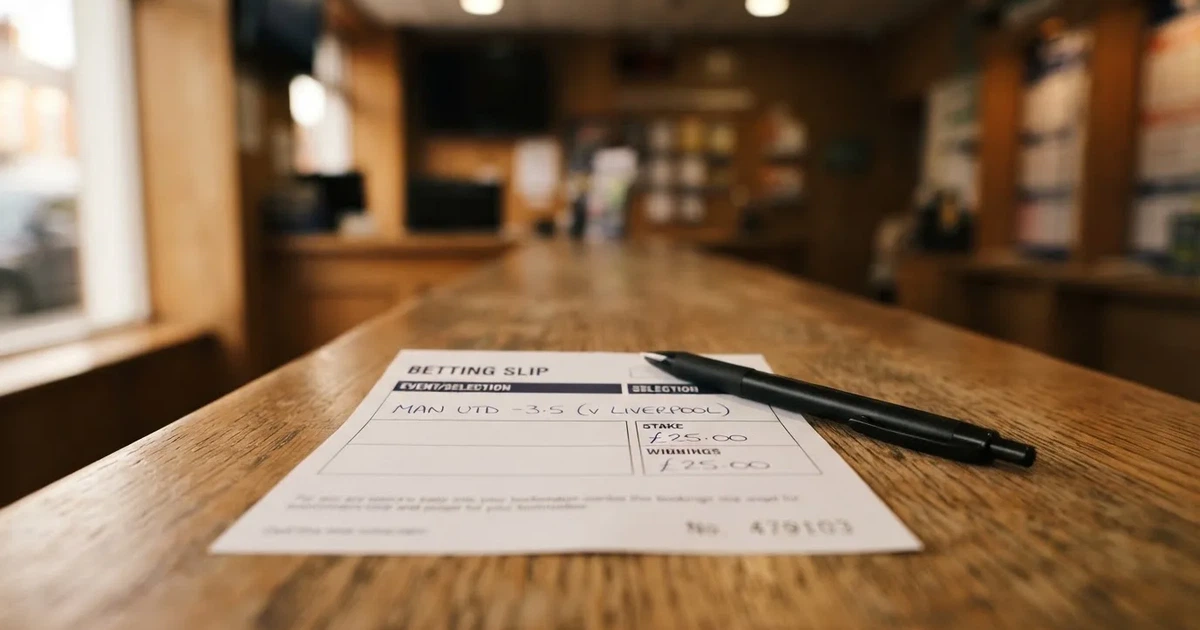
Spread betting in the UK comes in two distinct flavours. Financial spread betting, on indices, shares, forex and commodities, sits under the Financial Conduct Authority and is treated as a tax-free wager on price movement. Sports spread betting, where the “spread” is a range of outcomes (total goals, a team’s Supremacy margin, a sport-specific index) and the punter buys or sells against it, falls under the Gambling Commission like fixed-odds betting does. That split matters because it changes who regulates whom, what duty the operator pays, and where the player’s protection comes from. This page focuses on the sports side, because that is where the search sits, but it draws the line at financial spread where a reader’s question crosses both.
The pitch of spread betting, when a firm makes it, is simple: bigger returns for a smaller stake. The honest pitch is also simple, and it sits in Spreadex’s own risk warning: losses can exceed the deposit. Every unit the result moves past your level multiplies your stake against you, in either direction. That is the feature and the cost of the product, and the rest of the page works out what that costs in practice.
Where spread betting predictions and tipsters fit, and where they don’t
Search traffic on sports spread betting splits into two camps. One wants a tipster, a system, someone who can call the next outcome. The other wants a framework: how to think about a market before staking. The honest answer is that no tipster turns spread betting into a positive-expectation game for the reader, because the bookmaker’s margin is built into every spread on the screen. What a tip can do is narrow which spreads to look at, which sports the punter already watches, and which markets reward prior knowledge rather than a hot streak.

What a reader actually controls is the staking plan. The first question on any spread bet is not “am I right” but “how wrong am I prepared to be”. A £10 stake at a level of 2.0 against a football Supremacy spread does not risk £10. It risks £10 per goal of difference between the predicted margin and the actual one. A 4-0 home win against a level that implied a one-goal margin wins £30, before commission. A 4-1 away win loses £30. The mechanism is symmetrical, which is why bankroll discipline matters more here than in fixed-odds betting: there is no stake ceiling enforced by the firm, only the one the punter sets for themselves.
The tipster angle also changes shape in spread betting because the markets that interest the tipster are not the markets most readers watch. Football Supremacy, Total Goals, Corner Supremacy, Cricket Runs, Rugby Supremacy, Horse Racing Index, Winning Favourites: each has a published spread on the firm’s site, a settlement rule, and a “make-up” — the difference between predicted and actual, expressed in units. A tipster who tracks Premier League corners is more useful on the Corner Supremacy market than on the 1X2 match result, because corners are where a stable edge, if one exists, tends to live.
What readers should take from any tipster, regardless of sport, is the logic, not the call. A tip that says “buy the Goals Galore spread at 2.6” carries no information unless the reader knows why 2.6 is the level and what the historical distribution of match goals looks like around it. A subscription service that sells picks but cannot explain its reasoning is selling a number on a losing track.
Strategy, in the genuine sense, is a sequence of rules that survive losing runs. The rules that matter most are stake sizing (a fixed unit of bankroll, not a fixed pound amount), market selection (only the spreads the punter has a reason to back), and a stop-loss. None of those rules come from a tipster; all of them are available to anyone who has decided that the spread-betting product is what they want to use.
The bet types the punter sees, and how each settles
Spread betting products look like a list of prices, but each carries a settling rule that the punter should read before staking. The mechanics are uniform across firms; what changes is which markets each firm chooses to offer, and at what spread width.

The most common market is Supremacy. In football, Supremacy is the home side’s goal margin. The quoted spread sits around zero (a coin-toss), and the punter buys (bets the favourite wins by more than expected) or sells (bets the favourite wins by less than expected, or the underdog wins outright). Settlement is in goals, multiplied by the stake. A £5 buy at a Supremacy spread of 0.3 to 0.5, with a final 2-0 home win, makes up 1.5 goals against a buy at the higher end of 0.5, paying 5 × (1.5 − 0.5) = £5; at the lower end of 0.3 the same result pays £6. The same logic in reverse applies to the seller.
Total Goals is the simplest market for a reader to follow. The spread sits on the predicted combined match goals (a tight Premier League game might be priced 2.4 to 2.6). Buying at 2.6 wins if both teams score three or more; selling at 2.4 wins on a goalless draw. There is no per-leg maths to carry: the units-stake outcome is the difference between the predicted total and the actual total, signed by which side of the spread the punter took.
Winning Favourites is a market most firms price across a meeting or a Saturday card, and it asks how many favourites will win across the day’s racing. The spread sits in the middle of the historical range (a typical Saturday might run 5 to 7), and the punter buys or sells against the firm’s prediction. A buy at 6 wins if seven or more favourites win, with each favourite above or below adding one unit to the make-up. The same settlement idea applies to a Race Index spread on a single race: the spread sits on the cumulative finishing position of two or three named horses, and the punter is right or wrong by the gap between the predicted index and the actual one.
Cricket spread example: with a spread of 340–350 runs, buying at 350 wins 50 units × stake if the team scores 400 and loses 50 units × stake if it scores 300. That sentence, in its plain form, is how the firm writes its own example, and it is the cleanest illustration of why spread betting feels different from fixed-odds. Each run past the level is a unit, in either direction, multiplied by the stake.
Corner markets, Supremacy on rugby and the bookmakers’ index products (a player Performance Index, a baseball Hit Index) all settle by the same principle. The difference between two numbers, multiplied by the stake, with a sign the punter chooses when they buy or sell the spread.
One market behaves differently. In North American point-spread betting, a result landing exactly on the spread is a push and the stake is refunded; the standard price is 10 to 11 (-110). That is the fixed-odds handicap punters meet on NFL and NBA markets at UK firms. It is not a sports spread bet in the British sense, and the firms on this page generally offer it as a fixed-odds market, settled against the American handicap line. A reader who sees a “spread” at a UK firm should check which kind of spread it is before staking.
Sports and tournaments the market actually covers
Spread betting is concentrated where the underlying events produce stable, measurable numbers. The bookmakers’ core calendar is English football (Premier League down to the lower divisions), international football tournaments (World Cup years, European Championship summers), the four major US leagues (NFL, NBA, MLB, NHL), rugby union (Six Nations, autumn internationals, Premiership), cricket (internationals, the Hundred, county championship totals), horse racing (daily UK and Irish meetings), and a long tail of tennis, golf, darts, and snooker events where the firm chooses to quote a spread.
Football is the volume sport for spread betting. The Premier League is where the markets (Supremacy, Total Goals, Corners, Booking Points, Shots on Target) are deepest and the spreads tightest, because the bookmaker has the most data and the most liquidity. A reader who already watches a league has a built-in edge on the markets for that league, which is the strongest reason to stick to the fixtures already on the screen. Championship, League One and Scottish Premiership get quoted spreads, often wider than the Premier League equivalent, because the firms see less volume.
International football brings a spike in market availability. A World Cup summer opens new markets (tournament Supremacy, Group Supremacy, Total Goals per match, Top Goalscorer Index) that are not quoted outside the four-year cycle. The Euros follow the same shape. Rugby World Cups and Six Nations weekends thicken rugby spreads; the Calcutta Cup and the Grand Slam decider get the deepest book. Cricket’s international calendar (World Cups, the Ashes, bilateral series) and the domestic T20 blast add runs-based spreads; County Championship division matches quote narrower markets, often only Total Runs.
US sports are the bridge between spread betting and the North American point-spread market. UK firms offer both: spread markets on NFL and NBA game totals (Total Points, Supremacy in points), and the American handicap line as a fixed-odds market at -110. NFL week-on-week is the busiest US schedule; the Super Bowl is its own event with bespoke markets. NBA runs November to June and settles in points, which makes the Total Points spread a natural product. MLB settles in runs, NHL in goals, and the firm’s spreads sit where the data sits. None of these US sports carries a Premier League-sized liquidity, and spreads can be wider, which a reader should know before staking.
Horse racing is its own discipline. The day’s card carries a Sudden Manspread, a Winning Favourites spread, and per-race Index products. The settlement of every horse-racing spread is the official result on the day, not the SP or the morning price, and Rule 4 deductions apply to some fixed-odds markets at the same firm. Ante-post markets (the Grand National, the Cheltenham Gold Cup) settle at the off, and non-runner rules vary by firm.
How a spread bet actually works, from screen to settlement
The mechanics look opaque the first time. They are simpler than they seem, and once a reader has walked through one bet, every other bet follows the same shape.
A bettor opens an account with a licensed firm and verifies their identity (name, address, date of birth) before the first deposit, because the Gambling Commission requires it for every remote betting licence in Great Britain. The firm runs a public-record check at higher spend, and the customer’s deposit options exclude credit cards by law, with debit cards and bank transfers the standard route.
The bettor chooses a market. The firm’s screen shows a spread (Total Goals 2.4 to 2.6, for example). Two numbers, the lower called “sell” (bet under) and the upper called “buy” (bet over). The punter decides which side of the spread to take and at what stake. Each unit of stake is exposed to every unit of make-up.
A £5 buy at 2.6 on a match that finishes 3-1 (four goals) makes up 4 − 2.6 = 1.4 units, returning 5 × 1.4 = £7. The same stake on a 0-0 draw makes up 0 − 2.6 = −2.6 units, returning −£13 (a £13 loss). A £5 sell at 2.4 on a 0-0 draw makes up 0 − 2.4 = −2.4 units, so the sell wins £7.50 (because selling lower than actual produces a loss, and the seller keeps the opposite). The sign-flipping is the bit that confuses new readers, and the rule to remember is that the make-up is the actual minus the predicted, with the direction chosen at the time of the bet.
Settlement runs at the firm’s standard intervals, often same-day for racing and football, sometimes overnight for US sports. The firm’s trading screen locks once the event starts, and the bet is settled against the official result. In a small minority of markets (certain cricket markets, some US markets) a market is “closed to new bets” once it has begun, and a bet the punter missed cannot be placed at the closing spread.
Losses are not capped by the firm. The punter’s stake limits them, and the punter’s stop-loss is the only ceiling on a bad run. That is the product’s central difference from fixed-odds betting, where the stake is the maximum loss, and it is the reason the regulator treats it as a more dangerous product.
Ten licensed UK operators, and which reader each one suits
The table lists every operator reviewed in this section with the Commission account number and the licence holder, as the Gambling Commission’s public register records it. The “key” column reads from each operator’s own terms.
| Brand | Commission account | Licence holder | What the operator’s terms state on spread betting |
|---|---|---|---|
| Spreadex | 8835 | Spreadex Limited | Sports spread betting and fixed-odds betting, regulated by the FCA on the financial side and by the Gambling Commission on the fixed-odds side; new-customer offer is a £60 free-bet package on a £10 fixed-odds qualifying bet, valid for 28 days from account opening |
| Sporting Index | 27343 | Sporting Index Limited | Spread betting with a £10 fixed-odds qualifying bet at minimum odds of 1/2 unlocking three £10 fixed-odds free bets, three £5 Total Goals spread bets, three £5 Winning Favourites spread bets and a £1 Race Index spread bet; the qualifying bet cannot be placed in-play or cashed out early |
| Coral | 54743 | LC International Limited | Fixed-odds sports welcome offer of £40 in free bets against a £20 qualifying bet at minimum odds of 2.0 (1/1), free bets issued within seven days and expire seven days after issue |
| Sky Bet | 67370 | SBG Sports Limited | Fixed-odds welcome offer of £30 in free bets credited as three £10 tokens on a deposit of £5 and a first single or each-way bet of at least 5p at minimum odds of 1/1 |
| Dabble | 65677 | Dabble Sports UK Ltd | Fixed-odds welcome offer of £10 in free bets against a £10 first bet for new customers, with a 7-day free-bet expiry and the stake not returned on winning free bets |
| Swifty Sports | 58957 | Swifty Global (UK) Ltd | Fixed-odds sportsbook with Best Odds Guaranteed, Cash Out, daily price boosts, live streaming and in-play betting; Bet Builder is listed as coming soon on the app |
| Betfred | 39544 | Petfre (Gibraltar) Limited | Fixed-odds sportsbook with Bet Builder, Sub Switch, Racing Post data, Extra Places, plus live casino and bingo |
| Lottoland | 38991 | EU Lotto Limited | Casino, lottery betting, scratchcards and a sportsbook, all under one Gambling Commission licence for Great Britain |
| 888sport | 39028 | 888 UK Limited | Fixed-odds sportsbook with pre-match and in-play betting, Cash Out, Bet Builder, racing streams, BetFinder form tools, a live bet feed and daily boosted odds |
| VBet | 44662 | SCGO Limited | Fixed-odds sportsbook with Bet Builder, pre-match and in-play betting, live streaming and a live calendar with results and stats |
The licensed set is not the only licensed set in Great Britain; the public register carries several hundred remote betting licence holders, of which these ten are the ones this page reviews.
Spreadex
Spreadex sits at the top of any serious UK sports spread-betting shortlist because it is the firm most directly exposed to the product. Its licence covers fixed-odds betting under the Gambling Commission and financial spread betting under the FCA, and the same screen quotes sports spreads (Supremacy, Total Goals, Winning Favourites, Race Index), financial spreads on indices and forex, and a fixed-odds sportsbook. The new-customer package is a £60 free-bet bundle on a £10 qualifying fixed-odds bet, with a 28-day window from account opening and the free bets usable across both fixed odds and spread markets. A £10 stake against a fixed-odds minimum, free-bet returns often read less than headline, and the spread-betting side of the same account carries the bigger-risk product. Spreadex suits a reader who already wants spread betting and is happy to learn the product on a real-money account. A reader who only wants fixed-odds betting can find the same offer more cheaply elsewhere.
Sporting Index
Sporting Index is the other firm whose licence sits primarily in sports spread betting. The welcome offer packages three fixed-odds free bets, three Total Goals spread bets, three Winning Favourites spread bets and one Race Index spread bet, which is the cleanest single illustration on this list of what a spread bookmaker thinks a starter portfolio looks like. The £10 qualifying bet cannot be placed in-play or cashed out early, which is a normal restriction in this market and worth knowing before the punter clicks. Sporting Index suits a reader who wants to try multiple spread markets at small stakes without sizing their own portfolio.
Coral
Coral is a fixed-odds operator with a sportsbook licence, not a spread bookmaker. Its £40-in-free-bets welcome offer is a standard fixed-odds product, the licence holder is LC International Limited (the Ladbrokes-Coral group), and the spread-betting offer does not exist as a product on its screen. A reader looking for sports spread betting will not find it at Coral. A reader who wants a deep fixed-odds sportsbook with horse racing, football and in-play, plus the Ladbrokes-Coral trading engine behind it, gets exactly that. Coral suits the fixed-odds reader; it does not suit the spread reader.
Sky Bet
Sky Bet’s licence sits with SBG Sports Limited, the Sky Betting and Gaming arm, and the welcome offer is the £30-in-free-bets format the firm has run for several years: a £5 deposit and a 5p first bet at 1/1 minimum unlocks three £10 free bet tokens. The 5p minimum qualifying stake is unusually low, which makes the offer cheap to claim, and the free-bet stake is not returned on a win, which is the standard treatment for free bets in the UK. Sky Bet is a fixed-odds operator without a sports spread-betting product. A reader who watches a lot of racing and football and wants a tight in-play product gets a familiar choice. A reader who wants spread markets does not.
Dabble
Dabble is a fixed-odds sportsbook that pitches itself at the social end of the market, with a “Bet £10, Get £10 in Free Bets” welcome offer for new customers, a 7-day free-bet expiry and the stake not returned on a win. Dabble is a licensed remote betting operator under Dabble Sports UK Ltd, not a spread bookmaker. It suits a reader who wants a clean mobile experience and a flat welcome offer, not a reader looking for spread markets.
Swifty Sports
Swifty Sports carries the standard fixed-odds sportsbook feature set: Best Odds Guaranteed, Cash Out, daily price boosts, live streaming, in-play betting, and a Bet Builder that the app store listing flags as not yet live. The licence holder is Swifty Global (UK) Ltd. Like Coral and Sky Bet, Swifty is a fixed-odds operator with no spread-betting product on its screen. A reader who wants a UK-facing sportsbook with a complete feature set gets it here. A reader who wants sports spread betting should look at Spreadex or Sporting Index instead.
Betfred
Betfred is the long-established fixed-odds bookmaker, licensed via Petfre (Gibraltar) Limited and offering Bet Builder, Sub Switch, Racing Post form data, live casino and bingo alongside the sportsbook. Betfred is a fixed-odds sportsbook without a sports spread-betting product, which is worth knowing for any reader scanning this list for spread markets. A reader who already bets with Betfred on football, racing and a long tail of sportsbooks gets a familiar product with a mature trading platform. A reader who wants sports spread betting should keep looking.
Lottoland
Lottoland’s licence covers casino, lottery betting, scratchcards and a sportsbook in a single Gambling Commission account (38991), held by EU Lotto Limited. The sportsbook is the part the page reviews, and it sits as one product inside a larger gambling-and-looklottery brand. Lottoland suits a reader who wants to mix sports betting with lottery play on the same account. It does not suit a reader looking for sports spread betting.
888sport
888sport is the sportsbook arm of 888 UK Limited, and its licence covers remote general betting standard (real events) for a product that includes pre-match and in-play betting, Cash Out, Bet Builder, racing streams, BetFinder form tools, a live bet feed and daily boosted odds. 888sport is a fixed-odds sportsbook; no sports spread-betting product is listed. A reader who wants the full fixed-odds feature set with a recognised brand gets exactly that. A reader who wants spread markets will not find them on this account.
VBet
VBet is published by SCGO Limited and offers a fixed-odds sportsbook with Bet Builder, pre-match and in-play betting, live streaming and a live calendar with results and stats. The licence covers remote general betting standard (real events). VBet is a fixed-odds sportsbook with no sports spread-betting product, which makes it the same shape as Coral, Sky Bet, Betfred, Lottoland, 888sport, Swifty and Dabble on the spread question. A reader who wants spread markets should know that VBet does not offer them.
What spread betting is, in one sentence
Sports spread betting is a form of wagering where the payoff depends on how accurate the wager is, rather than a simple win-or-lose result. In a UK sports spread bet the punter buys (bets above the top of the spread) or sells (bets below the bottom), and the profit or loss equals the stake multiplied by the number of points by which the result differs from the bet level. That definition is the one Wikipedia carries for the broader product and the one this page treats as standard.
The key word in it is “accuracy”. A punter who buys at 2.6 Total Goals and the match finishes 3-1 has a 1.4-unit win; the same punter on a 4-4 draw has a 5.4-unit win; the same punter on a 0-0 has a 2.6-unit loss. The bigger the punter is right, the bigger the return. The bigger the punter is wrong, the bigger the loss.
That is the product. The marketing pitch tends to lead with the upside; the regulator’s risk warning tends to lead with the downside. Both are true, and a reader who treats either as the whole story has missed the other half.
The legal frame: who regulates whom, and what that means for the player
Great Britain splits the regulation of spread betting across two regulators. Sports spread betting (Total Goals, Supremacy, Winning Favourites, the sportsbook’s spread markets) is general betting, regulated by the Gambling Commission under the Gambling Act 2005. Financial spread betting (indices, shares, forex, commodities) is regulated by the Financial Conduct Authority, with its own conduct rules, its own dispute-resolution route, and a separate duty regime.
For a punter who bets on football, racing and cricket, the Gambling Commission is the relevant regulator. The Commission’s role is licensing (each operator holds a remote general betting standard (real events) licence, or a remote betting intermediary licence for exchanges), enforcement (LCCP conditions, social responsibility code), and player protection (GAMSTOP, the financial vulnerability check, the bonus cap). The Commission’s public register is the test of whether a brand holds a licence; a brand whose account number is on the register is licensed, and the same account number is what this page lists for every operator above.
The minimum age is 18. Identity verification (name, address, date of birth) happens before the first deposit at every licensed site, which is a sharp break from the pre-2019 market and worth knowing for any reader who remembers a different era. Credit cards are banned for gambling in Great Britain, including credit-card-funded e-wallet deposits. Bonuses carry a 10x wagering cap on the bonus amount (a £10 bonus at 50x would be £500 of bets; under the cap no more than £100), and mixed-product promotions (an offer that requires gambling on two or more product types) are banned. None of those rules existed in their current shape ten years ago, and the 2026 reader is betting under a stricter set of consumer-protection rules than the 2016 reader.
Northern Ireland is outside the Gambling Act 2005 and has its own older law; a Great Britain licence does not regulate Northern Ireland, and this page says “Great Britain” or “GB-licensed” for that reason.
Financial spread betting, by contrast, is regulated by the FCA. The FCA’s consumer-protection regime is different from the Commission’s, and the duty treatment is different: financial spread bets carry a 3% duty, and other spread bets carry a 10% duty, both paid by the operator. The punter pays no UK tax on either type of bet in the standard case (general information, not tax advice). The licensed firm of either kind is the legal entity the punter has a contract with, and the punter’s protection runs against that firm and its regulator, not against a third party.
Player protection: what the licence actually buys the punter
A Gambling Commission licence is not a guarantee of outcome. It is a set of rules the operator has to follow, and the rules the punter can use if the firm does not.
GAMSTOP is the national multi-operator self-exclusion scheme. Every operator listed above is a GAMSTOP member. A punter who excludes themselves through GAMSTOP cannot open a new account at any GB-licensed remote operator for the period they choose (six months, one year, five years, or five years with auto-renewal), and after the minimum period the exclusion stays in place for a further seven years unless the punter asks GAMSTOP to remove it. GAMSTOP covers online sites and apps; betting shops use a separate service.
The financial vulnerability check (LCCP condition 3.4.4, in force since 30 August 2024) applies to licensed remote betting when a customer’s deposits minus withdrawals exceed £150 in a rolling 30 days, with checks in force since 28 February 2025. It is a public-record check (for example bankruptcy or county court judgments), not an income check. Financial risk assessments — the affordability checks the press describes — are announced in a staged plan, with no start date; the page writes “announced, staged, no start date”, never “in force”.
Deposit limits are the customer’s choice. The Commission requires operators to offer a fixed-time-frame deposit limit (RTS 12); the first changes have applied since 31 October 2025, and a second phase was postponed to 30 September 2026, and whether the second phase is live is not established. There is no state-set ceiling on deposits or losses; limits are the customer’s choice.
Help is available at GamCare (National Gambling Helpline), GambleAware, NHS gambling clinics, and Gamblers Anonymous. A punter who feels their betting is moving in the wrong direction can use any of those routes; a punter who wants a self-exclusion can register with GAMSTOP and the operator’s own self-exclusion in parallel.
The bonus cap (10x wagering, since 19 January 2026) and the mixed-product promotion ban are the rules the punter meets most directly. A reader who sees a “200% bonus” headline at any licensed site is reading a number that has been compressed by the cap; the headline figure no longer means what it did before 2026, and the actual wagering requirement sits under £100 for any £10 bonus.
The cost of a spread market, in numbers
A bookmaker’s margin sits inside every spread. It is the difference between what the punter would receive on a perfectly fair market (100%) and what the firm actually pays (the payout share). On a two-way fixed-odds market at decimal odds 1.90 / 1.90, the payout share is 1 / (1/1.90 + 1/1.90) = 0.526, so the margin is 1 − 0.526 = 0.474, or roughly 47%. That is a wide margin for a fixed-odds market, and it sits at the top of the band for a typical bookmaker.
On a typical sports spread, the margin is built in by the spread width. A Total Goals spread of 2.4 to 2.6 sits two tenths of a goal wide, and a football match with a 50/50 chance of falling in any narrow goal band pays the firm whenever the result lands inside the spread. The narrower the spread, the closer the punter gets to a fair market; the wider the spread, the bigger the firm’s edge.
What that means for the reader is that the choice of market matters as much as the choice of pick. A 2.4 to 2.6 Total Goals spread carries a different margin from a 5.4 to 5.6 Total Goals spread on the same match, because the 5.x band is denser with outcomes and the firm needs a wider spread to make its margin. The headline price is not the cost; the spread width is the cost, and a reader who only looks at the screen is right in the wrong direction.
Frequently asked questions
What is sports spread betting?
Sports spread betting is a form of wagering where the payout depends on how accurate the wager is, rather than a simple win-or-lose result. The firm quotes a spread (a range of outcomes) and the punter buys or sells against it; profit or loss equals the stake multiplied by the number of units the result differs from the chosen level. A £10 buy at Total Goals 2.6 pays £14 if the match finishes 3-1 and loses £26 if it finishes 0-0. Sports spread betting is regulated by the Gambling Commission in Great Britain.
How is a spread bet placed on a football match?
The punter opens a licensed account, picks a market (Supremacy, Total Goals, Corners), chooses a side of the spread (buy or sell), enters a stake, and confirms. The bet settles after the match against the official result, with the make-up (the difference between predicted and actual) multiplied by the stake. A push (a result landing exactly on the spread) is rare in UK sports spread betting and is treated by each firm’s own rules.
What is the difference between sports spread betting and point-spread betting?
Sports spread betting (UK) uses a range of outcomes; the punter buys or sells against it, and the result multiplies the stake by the difference. Point-spread betting (US, also called the handicap) is a fixed-odds market where the punter backs a team to cover a set line (a -3 favourite must win by more than three), at a standard price of -110. In a North American point-spread bet a result landing exactly on the spread is a push and the stake is refunded; the standard price is 10 to 11 (-110). UK firms offer the North American line as a fixed-odds market, not as a spread bet.
How can a punter check that a bookmaker holds a Gambling Commission licence?
The Gambling Commission’s public register is searchable by business name, trading name, domain or account number, and is the test of whether a brand holds a licence. A punter who searches the register for the brand’s trading name will find the licence number, the licence holder (which may be a different legal entity from the trading brand), and the licence categories. The Commission account numbers this page lists are the ones the register carries.
How is the return on a bet worked out from the stake and the odds?
For a fixed-odds single, the return equals stake × odds, with the stake returned on a win; net profit equals stake × (odds − 1). For a combination bet the odds of the legs multiply into one price, and the return is stake × combined odds. For a spread bet the return is stake × make-up, signed by the side of the spread the punter took. Decimal odds are used throughout this page; a UK fractional price of 5/1 is decimal 6.00, and a price of 1/2 is decimal 1.50.
What is the bookmaker’s margin, and how is it visible in the odds?
The margin is the share of every unit staked the firm keeps, averaged across the market. On a two-way fixed-odds market at decimal odds 1.90 / 1.90 the payout share is 1 / (1/1.90 + 1/1.90) = 0.526, so the margin is roughly 47%, which is wider than the typical Premier League 1X2 market. On a spread market the margin is built in by the spread width: a Total Goals spread of 2.4 to 2.6 carries a different margin from 5.4 to 5.6, and a narrower spread is a cheaper market for the punter. A punter who reads only the headline price misses the cost; a punter who reads the spread width sees it.
Betting sites & exchanges – Best betting
Content created by the «Best betting» team
