
Where a £10 deposit actually gets you in: ten GB-licensed bookmakers reviewed
 Available in US
Current as of 27 October 2026 · checked against the Gambling Commission’s public register of remote operating licences
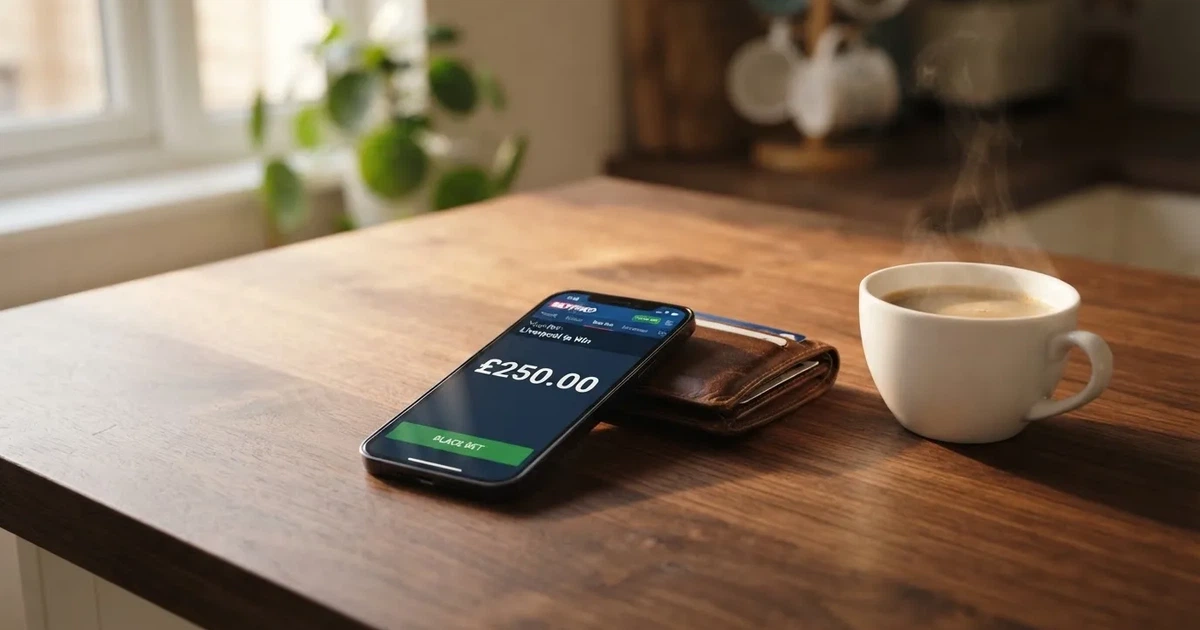
The honest starting point is also the simplest one. Almost every bookmaker serving customers in Great Britain lets a new account fund itself from £5 or £10, and a great many accept exactly £10 without complaint. The interesting question is not “who lets me in at this stake” — that describes the entire market — but what that £10 buys once it lands, and what the reader gives up by choosing one cashier over another. This page works through that choice in two passes. The first ranks ten Gambling Commission-licensed operators by what their own terms say about minimum deposits, accepted payment methods and welcome offers. The second covers the wider landscape: the credit-card ban, the identity check that happens before the first £10 clears, the bonus cap that took effect in January 2026, and the protection a bettor loses by gambling on a site that does not hold a Commission licence at all.
The featured set is ten brands drawn from the Commission’s remote licence register. Every one of them is licensed to take bets from customers in Great Britain; every one of them is a member of GAMSTOP, the multi-operator self-exclusion scheme that has been a mandatory licence condition for online operators since 31 March 2020. Some of these names are familiar — Unibet, Sky Bet, William Hill territory via the wider market — and others are quieter outfits that turn up on the register without making it onto every shortlist. The job here is not to pick a winner but to show what each one looks like at the cashier, what the small print says and where the gaps in the data sit, so the reader can make the call themselves.
How this ranking is built
The angle is choice. Every cluster in this guide is treated as a fork: who each path suits, what it costs the bettor in time, friction or forfeited protection, and where the choice stops mattering because the rules above it have already decided.

The ranking itself is built on four matters: the brand, its Gambling Commission remote licence number and the holder named on the register, what the operator’s own terms say about minimum deposits and accepted methods, and one row of context on what else the operator offers that a £10 bettor may bump into during the first week. Brands are presented in the order set by the Commission’s public record and the editorial judgement of which operator a new account-holder will benefit from understanding first; the position in this list is not a recommendation and the absence of a brand from this list says nothing about its licence status.
The ten brands at a glance
| Brand | Gambling Commission licence | Licence holder | What the operator’s own terms say about a £10 deposit |
|---|---|---|---|
| Unibet | 045322-R-324275-019 (account 45322) | Platinum Gaming Limited, Gibraltar | Operated since 1999 in the UK; new-customer offer requires a £20 first sports bet at minimum odds 2.0 for £40 in free bets, expiring within 7 days; debit card or instant bank transfer only for the offer |
| Star Sports | 009177-R-104555-019 (account 9177) | Star Racing Limited | App available in the UK and Ireland; deposit limits, Play Break and self-exclusion all live in My Account |
| QuinnBet | 061011-R-335683-004 (account 61011) | QuinnBet (Gibraltar) Limited | Accepts debit cards, Apple Pay and OpenBanking, plus Revolut cards; Skrill and Neteller deposits are not accepted |
| Betboro | 044181-R-324363-007 (account 44181) | Webmedia Development N.V. | First qualifying wager of £5 to £25 on three or more selections at minimum odds 1.60 unlocks a 100% matched free bet up to £25; debit card deposit of £10 or more required for the welcome offer |
| Fafabet | 057385-R-333191-006 (account 57385) | Taichi Tech Limited | Best Odds Guaranteed on UK and Irish racing win and each-way bets from 9am; if the starting price is bigger, the bigger price is paid |
| Sky Bet | 067370-R-341330-005 (account 67370) | SBG Sports Limited | Minimum deposit £5 across every method; up to three debit cards can be linked per account (Apple Pay not counted); credit cards are not accepted, by law |
| BoyleSports | 039469-R-319383-025 (account 39469) | Boylesports Enterprise | Early payouts on selected sports: football 2-up, basketball at +20, rugby and NFL at +16, boxing after a knockdown |
| Lottoland | 038991-R-319408-020 (account 38991) | EU Lotto Limited | States a £79 million EuroJackpot win as the largest online gambling payout in history; sports betting is part of the wider product |
| Matchbook | 039504-R-319407-024 (account 39504) | Triplebet Limited | Betting exchange; 110 days of commission-free betting from registration, standard commission applies afterwards |
| Hollywoodbets | 053028-R-330019-013 (account 53028) | Hollywoodbets International UK Limited | Welcome offer: card deposit £10+ triggers a stake-back free bet up to £30 if a first qualifying acca (3+ legs, 4/1+, settled within 7 days) loses; one free bet per customer |
The reader’s eye goes first to the welcome offers, because that is what the marketing plants in front of it. Worth pausing on what each one actually requires. Sky Bet credits £30 in free bets from a £5 deposit and a single 5p bet at evens or bigger — the cheapest possible qualifying bet at the lowest permitted stake. Hollywoodbets requires £10 from a card and an accumulator of three legs or more at minimum combined odds 4/1 — a real stake on a real bet, not a token. Betboro asks for £10 deposited by debit card and a £5 to £25 first bet across three selections at minimum odds 1.60. None of these “free” offers is free in the loose sense; each one ties the £10 deposit to a qualifying bet the reader must place at specified odds. The £30 Sky Bet hands back as free bets has a 7-day expiry. The £40 Unibet credits expires within 7 days of issue. A £10 deposit that lands on Monday and is not staked by the following Monday has, in two of the four clearest cases above, already expired before the weekend’s racing.
A note on what this table does not show. Welcome offers change. The qualifying terms, the stake size, the minimum odds, the free-bet expiry, the payment method the offer is restricted to — every one of these is the operator’s own commercial call and can be revised without notice. Before claiming, the operator’s own promotion page and full terms are the only document that binds them. The Commission’s role is to license the operator and police the broader conduct rules; it does not approve individual promotions.
The fundamentals: what a £10 deposit actually buys
The mechanics are simple enough to clear up in a paragraph, because the differences between them are smaller than the marketing makes them sound. A £10 deposit moves £10 from a bank account, an e-wallet or a payment app into a betting account held by the operator. The deposit itself is not a bet. To turn the deposit into betting credit, the customer places a wager from the account balance; any returns — stake plus winnings on a successful bet — go back into the account and can be withdrawn, subject to the operator’s withdrawal terms and any bonus conditions in play. A free bet is not a deposit. It is a token the operator credits to the account, usually as the result of a welcome offer or a promotion; when a free bet wins, the stake is usually not paid back with the winnings. A £10 free bet at odds of 3.0 returns £20 in profit, not £30.

Three rules of the British market sit above all of this, and they shape what a £10 deposit can be used for at any licensed bookmaker:
The credit card ban. Since 14 April 2020, no operator licensed by the Gambling Commission may accept a credit card as a deposit method, including credit-card-funded payments through an e-wallet. The ban covers credit cards; it does not cover debit cards, and it does not cover bank-based payments. Most operators’ deposit pages state this rule on the page itself — Sky Bet’s deposit help page says so in plain English. The practical consequence is that a customer wanting to deposit £10 needs a debit card, a bank transfer, an e-wallet funded from a debit card, or a payment app tied to a debit card. A credit card in isolation does not work.
Identity before the first deposit. Since 7 May 2019, every Commission-licensed operator must verify the customer’s name, address and date of birth before the customer can deposit or gamble, including with a free bet or bonus. There is no anonymous play at a licensed site. The check is run against a database of public records and identity documents, and a failed or unfinished check freezes the account. For most customers the verification completes within minutes; for some, it requires a photo of a driving licence or passport and a proof of address, which adds a day. Either way, the £10 deposit sits behind the check, not in front of it.
The minimum age. Eighteen. The Commission-licensed market is an adult market. A customer who cannot prove they are 18 cannot deposit, cannot claim a free bet, and cannot withdraw any balance built up. The age check is part of the same identity verification.
Two consequences fall out. The first is that a £10 deposit at a licensed bookmaker is a transaction the operator already knows a great deal about, because by the time the money moves the operator has confirmed who is paying, that they are old enough, and that the payment method is not a credit card. The second is that the identity check, the age check and the card-type check all happen before the customer can find out whether, for example, the welcome offer’s free bet is limited to debit-card deposits or whether a specific e-wallet is excluded. There is no clean test environment at a licensed operator. The first deposit is the test.
A wider set of brands holds a Commission licence and accepts £10. Several sit on the same licence as one of the ten above — Ladbrokes and Coral run on the same licence, as do Paddy Power and Betfair — and so are not listed separately, because a single licence line on the Commission’s register covers the group. The ten above are picked because each one sits on its own licence and each one turns up in the search for low-minimum-deposit betting under that licence. A reader who has a particular brand in mind can confirm the licence by looking up the brand name or its domain on the Commission’s public register.
The legal frame: who may take your £10, and on what authority
The licensing test in Great Britain is the Gambling Commission’s public register, and only the register. The Commission is a non-departmental public body sponsored by the Department for Culture, Media and Sport. The statute that authorises the whole framework is the Gambling Act 2005, which covers England, Scotland and Wales; Northern Ireland has its own older law and is outside the Act, so a “GB-licensed” operator is licensed for Great Britain, not the United Kingdom as a whole. Since the Gambling (Licensing and Advertising) Act 2014, an operator whose remote facilities are used in Great Britain needs a Commission licence wherever the operator itself is based. A Curaçao, Maltese or Gibraltar corporate licence is not a substitute, even where the operator runs from one of those jurisdictions. A brand running from abroad without a Commission licence is committing an offence under section 33 of the 2005 Act — a point aimed at the operator, not the customer.
The categories of licence that matter for online sports betting are remote general betting standard (real events), which covers bets on real sporting events; remote general betting standard (virtual events), which is a separate category for computer-simulated events; remote betting intermediary, which is the licence a betting exchange such as Matchbook runs under; and pool betting, which covers off-course pool betting on horse and dog racing. Every brand in this ranking runs a real-events licence; Matchbook also runs an intermediary licence. The Commission’s register records the category against each account number.
Two checks matter to a customer opening a £10 account. The first is that the brand actually appears on the register, against an account number, with a remote licence of one of the categories above. The Commission’s public register is searchable by business name, trading name, domain and account number; quoting a count of licensed operators is unreliable without an access date, because the register changes. The second is that the domain the customer is visiting is the one named on the register against that licence. Licensed operators use both .com and .co.uk, so the domain suffix proves nothing on its own. The proof is that the brand-name lookup on the register lists that exact domain.
Two related points round out the legal frame.
What may be bet on. No statutory list of permitted bets or markets exists. An operator offers markets under its licence category and under the Licence Conditions and Codes of Practice (LCCP), which is the Commission’s social-responsibility and conduct rulebook. In-play betting is offered by GB bookmakers under their own licence conditions; it is not a free-for-all, and writing it as “unrestricted” is a misreading of the duty of customer care. Esports are treated like any other event under a real-events licence. Virtual events sit under their own category. Politics, TV and novelty markets are offered, and no statutory prohibition was found.
Tax. The player pays no tax on betting winnings in Great Britain. This is general information, not tax advice; a professional gambler should ask HMRC or an adviser. General Betting Duty is the operator’s tax, charged on gross profits at 15%, with a remote-betting rate rising to 25% from 1 April 2027 alongside existing rates for UK horse-racing remote bets, self-service terminals, pool betting and in-person betting; until that date the remote rate stays at 15%. Whether operators pass duty on through odds is not established. The Commission’s statutory levy is a separate charge, not a tax. Never write that the player is charged duty.
A punt on what the legal frame means for the £10 reader. The frame constrains the operator, not the customer. The customer is not committing an offence by placing a £10 bet at a licensed site, and there is no offence aimed at a customer who merely bets on an unlicensed site. The cost of betting on an unlicensed site is the loss of the protections built into the licensed market — and those protections are real. No GAMSTOP coverage. No Commission complaints route. No approved dispute-resolution body. No British consumer redress if funds are withheld. Not bound by the 10x bonus cap or the £150 vulnerability check. No obligation on the operator to verify identity or to ban credit-card deposits. The honest framing is not “safe versus unsafe” but “checks, limits, GAMSTOP, bonus cap, plus verification before the first bet” on the licensed side, against “none of those and possible loss of funds” on the unlicensed.
Safer gambling: what the licensed market owes a £10 customer
The honest framing of safer gambling at a £10 stake is that most of the protections do not switch on until the customer either asks for them or begins to spend beyond the de minimis level. A £10 deposit on day one sits well below every threshold in the rulebook. The framework is still worth understanding, because it is what the licensed market offers and what the unlicensed market does not.
GAMSTOP. National multi-operator online self-exclusion, a mandatory licence condition for online operators since 31 March 2020. Self-exclusion can be set for six months, one year, five years, or five years with auto-renewal; after the minimum period, the exclusion stays in place for a further seven years unless the customer asks GAMSTOP to remove it. GAMSTOP covers online sites and apps; betting shops use a separate in-shop self-exclusion scheme. Every brand in this ranking is a GAMSTOP member.
Financial vulnerability check. Triggered when a customer’s deposits minus withdrawals exceed £150 in a rolling 30-day period, in force since 28 February 2025 under LCCP condition 3.4.4. The check is a public-record check — bankruptcies, county court judgments and the like — not an income check and not a credit-reference check. A £10 deposit, on its own, will not trigger it; the threshold is meant to catch sustained play rather than a single small transaction.
Financial risk assessments. The Commission has announced, in a staged plan published in July 2026, a wider check that the press calls “affordability checks”. No start date has been set, so the working description is “announced, staged, no start date”. The financial vulnerability check above is the rule currently in force.
Deposit limits. Operators must offer customers the option to set a gross deposit limit on a fixed time frame. The first changes to how those limits are configured have applied since 31 October 2025; a second phase has been postponed to 30 September 2026 and whether it is live is not established. There is no state-set ceiling for betting; limits are the customer’s choice.
Help. GamCare runs the National Gambling Helpline. GambleAware funds treatment and education. NHS gambling clinics operate in several regions. Gamblers Anonymous runs mutual-support meetings. The licensed operators in this ranking link to these services from their safer-gambling pages — Unibet links to BeGambleAware, GamCare, GAMSTOP, Gambling Therapy and the BGC; Midnite links to GambleAware, GamCare, GamStop and BetBlocker; Betmaster links to GambleAware, GamStop, BetBlocker and GamCare; Fitzwilliam Sports links to GambleAware, GamStop and Gamblers Anonymous. Where an operator’s safer-gambling page is silent on external help, that silence is a meaningful signal: a reader who wants named, independent support should not have to dig for it.
The product-level tools. Star Sports lists deposit limits, a Play Break facility and self-exclusion in My Account. Unibet lists deposit limits, a Player Profile test, product restrictions and self-exclusion. Betmaster lists deposit and session limits, time-outs and self-exclusion. Fitzwilliam Sports lists timeouts and deposit limits alongside instant deposits and fast withdrawals. None of these tools is the same as a GAMSTOP self-exclusion, and none of them covers other operators. They are the customer’s own account-level switches.
A practical note. The deposit-limit tool is the one a £10 stake can use on day one. A customer who decides, before opening the account, that they will only ever deposit £20 a week can set that limit during sign-up, and the operator is required to honour it. The limit can be reduced immediately and increased only after a delay, by design — to prevent a customer raising a limit in a moment of frustration and then reversing the decision an hour later. A £10 bettor who never raises the limit again will never bet more than they have decided to.
Bonuses and free bets: what the £10 actually unlocks
Welcome offers are the marketing’s loudest claim and the rulebook’s most-contested line. Two facts sit above the rest:
Wagering requirements are capped at 10x. Since 19 January 2026, no Commission-licensed operator may attach a wagering requirement above 10x the bonus amount to a promotion. A £10 bonus at 50x needed £500 of qualifying bets; under the cap, no bonus can require more than £100 of qualifying bets. The cap is on the multiple, not on the bonus value, and the Commission has not set a cap on the money value of a bonus. The cap also does not cover free bets with no wagering condition, because a free bet with no turnover requirement has nothing for the cap to bite on.
Mixed-product promotions are banned. An offer that requires gambling on two or more product types — betting, casino, bingo and lottery — to unlock is not permitted. “Bet on football to get free spins” is the example the rule was designed for. Welcome offers at sports bookmakers, including the four described below, are pure-sports products and are unaffected.
Against that frame, the four clearest welcome offers in this ranking:
Sky Bet. New customers depositing £5 or more and placing a first single or each-way bet of at least 5p at odds of 1/1 (2.0) or greater receive £30 in free bets, credited as three £10 tokens. The qualifying bet pays the smallest stake the operator accepts — 5p — so the £10 deposit is mostly credit that sits in the account until the customer chooses to use it. The free-bet tokens expire on the operator’s own clock; the help page does not give an explicit day-count, so the customer reads the credit email and acts inside whatever window is stated there.
Unibet. New GB customers using a debit card or instant bank transfer who deposit and bet £20 or more on sports at minimum odds 2.0 receive £40 in free bets. The free bets expire within 7 days of issue. The qualifying bet is twice the Sky Bet qualifying bet and at the same minimum odds.
Betboro. A first qualifying wager of £5 to £25 on three or more selections at minimum odds 1.60 (3/5) unlocks a 100% matched free bet of up to £25. The deposit must be £10 or more by debit card. The free bet is matched to the qualifying bet’s stake.
Hollywoodbets. A card deposit of £10 or more triggers a stake-back free bet of up to £30 if the first qualifying accumulator loses; the acca needs three legs or more at minimum combined odds of 4/1, and must be settled within 7 days of placement. The free bet pays only on a losing qualifying bet; a winning qualifying bet produces winnings but no free bet.
The reader’s three honest questions.
Which is the cheapest to qualify? Sky Bet. A 5p bet at evens or bigger is the qualifying action. The £10 deposit sits in the account and can be withdrawn, used for future bets, or split across a series of small wagers. Most readers will not withdraw the deposit immediately, because the operator’s terms require the deposit to be turned over at least once before withdrawal in many cases — that detail lives in the full terms.
Which pays back the most in free bets? Unibet. £40 in free bets from a £20 qualifying bet is the largest headline number in the ranking. The £40 expires within 7 days; a customer who cannot place £40 of free bets inside a week leaves value on the table.
Which costs the customer the least in expected loss? A free bet whose stake is not paid back is worth its amount multiplied by (odds minus 1) divided by the odds, then multiplied by the market’s payout share. At 2.0 with a 95% payout share, a £10 free bet is worth £4.75 on average. At 3.0 with the same payout share, it is worth £6.33. The “expected cost” of clearing a turnover-gated bonus is the turnover required multiplied by the market’s margin. None of the four offers above is turnover-gated; the qualifying bet is the only spend the offer requires, and the spend is at the minimum stake the offer permits.
A note on the words themselves. “Free bet” and “risk-free bet” are marketing phrases. A free bet whose stake is not returned on a win is not risk-free; the reader has paid for the chance with the stake of the qualifying bet. A “boosted odds” offer is a single-bet price enhancement that pays out at the boosted price and not the original. A “best odds guaranteed” offer — Fafabet’s racing product is the example here — pays the bigger of the original price and the starting price on UK and Irish racing from 9am. None of these terms describes what the offer costs. The reader’s job is to translate the phrase into the underlying numbers, which is what the qualifying-bet stake, the minimum odds, the expiry and the payout-share calculation do.
Payments and payout speed: the cashier behind the £10
The cashier is where the £10 question actually gets answered, because the welcome offer sits behind it. Three sections cover what the licensed market looks like at the deposit screen.
Accepted methods. The Commission’s rule is the credit-card ban; the rest is the operator’s call. The ten brands in this ranking do not all publish a single accepted-methods list, and where they do, the lists differ.
- QuinnBet accepts debit cards, Apple Pay and OpenBanking, plus Revolut cards, and does not accept Skrill or Neteller deposits. Help-centre page states this in plain language.
- Sky Bet accepts debit cards, Apple Pay, Pay by Bank and Revolut Pay (GBP) for deposits, and the deposit help page repeats the credit-card ban verbatim. Sky Bet also states Pay by Bank has no minimum deposit amount, while other methods produce an error message if the amount is below the operator’s stated minimum.
- Midnite accepts Visa, Mastercard, Apple Pay, Google Pay and Trustly.
- Betmaster accepts Visa, Mastercard, Maestro and V PAY.
- bet365 accepts debit card, PayPal and Apple Pay.
- William Hill lets customers deposit and withdraw by debit card from £5, with a maximum deposit of £99,000 and a maximum withdrawal of £33,000 per transaction, and charges no fee on debit-card transactions.
A reader who relies on a specific method — Revolut, an OpenBanking provider, a specific e-wallet — should check the operator’s deposit page before opening the account. Where the operator’s own terms are silent on a method, the reader assumes it is not supported; the deposit screen is the test.
Minimum deposits. The headline of this page is £10. The honest data is that £10 is not the universal minimum.
- Sky Bet’s terms state a £5 minimum deposit for all payment methods, and that the operator may change this minimum without prior notice, acting reasonably. The help page adds that Pay by Bank has no minimum.
- William Hill accepts debit-card deposits from £5.
- Betboro’s welcome offer requires a £10 debit-card deposit.
- Hollywoodbets’ welcome offer requires a £10 card deposit.
A reader who wants to deposit exactly £10 should choose an operator that accepts £10 cleanly — Betboro, Hollywoodbets, and the broader market at large — rather than an operator whose £5 minimum means a £10 deposit sits awkwardly above the floor. The £5-versus-£10 distinction is not a quality difference; it is a question of whether the operator is calibrated for the small bettor or for everyone.
Card-linking rules. Sky Bet allows up to three debit cards to be linked to a single account; the limit does not apply to Apple Pay. A reader planning to fund from a single debit card does not notice the rule. A reader planning to fund from several cards does.
Withdrawal speed. Withdrawal speed depends on the payment method, the operator’s processing window and any verification step. The operator’s own terms state withdrawal times where they state them; where they are silent, the deposit-page turnaround is a fair proxy. William Hill states no fee on debit-card transactions and quotes maximums rather than minimums. Fitzwilliam Sports’ homepage mentions fast withdrawals without a stated window. Sky Bet’s help page describes the deposit side in detail but does not give a published payout-speed target. The honest data here is qualitative: withdrawals to debit cards are common.
Verification, again. The £10 deposit is not the first interaction the operator has with the customer. The identity check, the age check and the card-type check all run before the deposit clears. The first withdrawal is the second verification event: the operator confirms that the customer withdrawing is the customer who deposited, and the payment method used for withdrawal must usually be one the operator has on file from a previous deposit. A £10 bettor who deposits from a Revolut card and tries to withdraw to a bank account the operator has never seen will be asked for the Revolut statement or for the source-of-funds question, and that step is what slows payouts down. Funding and withdrawing from the same method, on the same name, on a verified account, is the path of least resistance.
Fees. Commission-licensed operators do not publish deposit fees on the licensed payment methods. William Hill states no fee on debit-card transactions, which is the industry norm rather than a special offer. Where an operator charges a fee on a less-common method — a bank transfer from outside the UK, a currency conversion — the fee is stated on the deposit page or the cashier screen. A reader who sees a fee the operator did not advertise should stop and read the small print.
Cryptocurrency, named accounts and other gaps. No British rule on named accounts, on cryptocurrency deposits at licensed operators, or on a state list of permitted payment methods was found. The licensed operators describe their accepted methods qualitatively and from their own terms. A reader who wants to deposit £10 in cryptocurrency will not find that path at a Commission-licensed bookmaker in this ranking; an offshore operator may accept it, at the cost of every protection described in the legal frame above.
A punt on what the cashier actually decides. The cashier decides whether the £10 deposit is friction-free. The marketing decides whether the welcome offer feels generous. The two are not the same thing, and a £10 bettor is well served by treating them as separate choices: pick the operator whose accepted-methods list includes the customer’s actual card or app, and then look at the welcome offer as a separate question — because the welcome offer’s value depends on whether the customer places the qualifying bet at all, and that is a customer-level decision, not an operator-level one.
The operators, reviewed
Each review carries the brand’s Commission licence line, what the brand’s own terms say about a £10 deposit and what sets the brand apart in the comparison. Every brand is presented as a reviewed bookmaker; the absence of a verdict below each one would describe an offer without judging it, which is not the job of this page.
Unibet — the established all-rounder
Unibet’s UK site has run since 1999, and the operator’s safer-gambling page lists deposit limits, a Player Profile test, product restrictions and self-exclusion, alongside live-chat support and links to BeGambleAware, GamCare, GAMSTOP, Gambling Therapy and the BGC. The licence line is Platinum Gaming Limited, Gibraltar, against Commission account 45322 — the longest-running licence in this ranking. The welcome offer is £40 in free bets from a £20 first sports bet at minimum odds 2.0, for new GB customers using a debit card or instant bank transfer; the free bets expire within 7 days. The verdict for a £10 bettor: Unibet is the right fit for a customer who can fund the £20 qualifying bet from a debit card or bank transfer, plans to bet on sports within the week the free bets are valid, and values the longest licence history in the set. A customer who only wants to stake £10 exactly, on a non-sports product or through an e-wallet that excludes the offer, will find the welcome offer closed to them.
Star Sports — the racing-and-shop brand with an app
Star Racing Limited holds the licence behind Star Sports, against Commission account 9177. The brand’s app is available in the UK and Ireland; deposit limits, Play Break and self-exclusion all live in My Account. The brand’s racing heritage is what sets it apart in the comparison; the app extends the same product to a national audience. The verdict for a £10 bettor: Star Sports is the right fit for a customer whose betting interest is horse racing and who values having the safer-gambling tools — Play Break, in particular — built into the account from day one. The brand’s £10 welcome offer, where one is published, should be read against the racing calendar.
QuinnBet — the cashier that names what it does not take
QuinnBet (Gibraltar) Limited runs against Commission account 61011. The help-centre page states that QuinnBet accepts debit cards, Apple Pay and OpenBanking, plus Revolut cards, and does not accept Skrill or Neteller deposits — a level of cashier clarity the rest of this ranking does not always match. The verdict for a £10 bettor: QuinnBet is the right fit for a customer who values a cashier that states plainly which methods it takes and which it does not. A Skrill or Neteller user should choose elsewhere; a Revolut-card user should look here first.
Betboro — the matched-free-bet newcomer
Webmedia Development N.V. holds the licence behind Betboro, against Commission account 44181. The welcome offer is a 100% matched free bet of up to £25 on the first qualifying wager, requiring a debit-card deposit of £10 or more and a first bet of £5 to £25 on three or more selections at minimum odds 1.60 (3/5). The verdict for a £10 bettor: Betboro is the right fit for a customer who plans to place a first qualifying acca of three legs or more anyway, and wants the matched-free-bet structure. A customer who only wants singles will not clear the qualifying-bet requirement.
Fafabet — the racing each-way specialist
Taichi Tech Limited holds the licence behind Fafabet, against Commission account 57385. Best Odds Guaranteed on UK and Irish racing win and each-way bets from 9am on race days is the brand’s distinctive feature; if the starting price is bigger than the original price, the bigger odds are paid. The verdict for a £10 bettor: Fafabet is the right fit for a customer whose interest is UK and Irish racing, particularly each-way bets, and who values the BOG safety net from 9am onwards. A customer who bets mostly on football will not see BOG in action.
Sky Bet — the cheapest qualifying bet in the set
SBG Sports Limited holds the licence behind Sky Bet, against Commission account 67370. Sky Bet is the brand whose terms are most-cited-in-the-market for low-deposit betting: the operator’s terms state a £5 minimum deposit for all payment methods, with Pay by Bank having no minimum, and up to three debit cards can be linked per account (Apple Pay not counted). The welcome offer — £30 in free bets from a £5 deposit and a 5p qualifying bet at 1/1 or greater — is the cheapest in the ranking. The verdict for a £10 bettor: Sky Bet is the right fit for a customer who wants the lowest-possible friction at the cashier, the cheapest qualifying bet in the market, and the broadest payment-method list including Apple Pay, Pay by Bank and Revolut Pay. The free-bet expiry is the customer’s enemy; the £10 deposit, however, has no urgency at all.
BoyleSports — the early-payout specialist
Boylesports Enterprise holds the licence behind BoyleSports, against Commission account 39469. Early payouts on selected sports are the brand’s distinctive feature: football 2-up, basketball at +20, rugby and NFL at +16, boxing after a knockdown. The verdict for a £10 bettor: BoyleSports is the right fit for a customer who values an early-payout safety net on accumulators — a 2-up goal in football settles the acca leg before the final whistle. The feature is most valuable on multi-leg bets; on a single, the price already reflects the probability.
Lottoland — the lottery-led operator
EU Lotto Limited holds the licence behind Lottoland, against Commission account 38991. The brand’s marketing cites a £79 million EuroJackpot win as the largest online gambling payout in history; sports betting is part of the wider product. The verdict for a £10 bettor: Lottoland is the right fit for a customer whose interest spans lottery products and sports betting under one account, and who values that combination. A customer who only bets on sports has no reason to choose Lottoland over a sports-first operator.
Matchbook — the betting exchange
Triplebet Limited holds the licence behind Matchbook, against Commission account 39504, which runs both a real-events licence and a betting-intermediary licence. The new-customer offer is 110 days of commission-free betting from registration, with standard commission applying afterwards. A betting exchange is not the same product as a bookmaker: the customer backs or lays selections against other customers, the exchange takes a commission on net winnings, and there is no bookmaker margin in the prices. The verdict for a £10 bettor: Matchbook is the right fit for a customer who understands the back-and-lay mechanic, wants the lower-margin prices an exchange offers, and is comfortable staking against other customers rather than against the house. A £10 bettor who has not used an exchange before is not the right customer for the product.
Hollywoodbets — the acca-insurance newcomer
Hollywoodbets International UK Limited holds the licence behind Hollywoodbets, against Commission account 53028. The welcome offer pays a stake-back free bet of up to £30 if a first qualifying accumulator loses; the acca needs three legs or more at minimum combined odds 4/1, settled within 7 days. The card deposit must be £10 or more; one free bet per customer. The verdict for a £10 bettor: Hollywoodbets is the right fit for a customer who plans to place a £10 first acca of three legs or more at combined odds 4/1 anyway, and values the stake-back safety net if the bet loses. A customer who bets on singles, or who wants a win-side reward rather than a lose-side refund, will find the offer mis-shaped.
Other Commission-licensed names worth knowing
Beyond the ten above, the register lists several more names. Kalooki Sportsbook is operated by Kalooki Sports Book Ltd (company number 12938274), licensed under account number 57730, and is a GAMSTOP member. Midnite’s site cites Commission licence 101839 and shows in-play events, an acca builder, popular accas and price boosts with maximum-stake limits. Betmaster’s safer-gambling tools include deposit and session limits, time-outs and self-exclusion, with links to GambleAware, GamStop, BetBlocker and GamCare. Fitzwilliam Sports offers instant deposits, fast withdrawals, timeouts and deposit limits, with links to GambleAware, GamStop and Gamblers Anonymous. None of these is in the top-ten ranking because the Commission’s public register and the editorial judgement of which operator a new account-holder benefits from understanding first places the ten above ahead of them; each holds a real licence and the same protections follow.
Spreadex and the FCA point
Spreadex is regulated by the FCA for spread betting and by the Gambling Commission for fixed-odds betting. A reader who arrives at Spreadex through a £10 search will see two products with two regulators: financial spread betting, where losses can exceed the deposit, sits under the FCA; fixed-odds sports betting sits under the Commission. The two are not the same bet, and the protections are not the same. A financial spread bet is not a £10-deposit-friendly product, and the FCA’s framework is built around different customer-protection rules.
The offshoring question, briefly
A brand running from outside Great Britain without a Commission licence is not in this ranking because it does not meet the test the test in this ranking applies. The honest framing of an offshore brand is not “illegal to bet on” but “no Commission licence”. The reader loses GAMSTOP coverage, the Commission’s complaints route, the approved dispute-resolution body, British consumer redress if funds are withheld, the 10x bonus cap and the £150 vulnerability check. The reader may also face a withdrawal process that is slow, opaque or both. The Commission’s enforcement toolkit is disruption, not blocking: cease-and-desist notices, search-engine referrals, work with registrars, hosts and payment providers. The Commission has been given, or is about to receive, court-order DNS blocking powers — never write that ISP blocking is in operation. The licensed market is the only market where the £10 deposit is a transaction the operator is required to handle inside a defined rulebook; the offshore market is the market where the operator sets the rules and the reader has no recourse to the Commission.
Reading the small print
Three places where the small print does its work.
The promotion page. Welcome offers change. Qualifying terms, stake size, minimum odds, free-bet expiry, the payment method the offer is restricted to — every one of these is the operator’s own commercial call and can be revised. The Commission’s role is to license the operator and police the broader conduct rules; it does not approve individual promotions.
The general terms. Each operator publishes a general terms document that governs everything else. Sky Bet’s general terms state the £5 minimum deposit and the right to change that minimum without prior notice, acting reasonably. Reading the general terms is the only way to find out the rules on staking, withdrawal, account dormancy, withdrawal fees and the operator’s right to void bets.
The safer-gambling page. Each operator links to external help from this page. The quality of that link list is itself a signal: Unibet’s five links to BeGambleAware, GamCare, GAMSTOP, Gambling Therapy and the BGC is the broadest in the ranking; an operator that links only to its own deposit-limit tool has chosen to make external help harder to find.
The verdict, in one line
A £10 deposit at a Commission-licensed bookmaker opens a real account with a real identity check, at a cashier that bans credit cards and accepts the customer’s debit card, Apple Pay, bank transfer or OpenBanking route. The welcome offer behind the deposit has a qualifying bet, an expiry and a free-bet value the reader can calculate from the odds and the market’s payout share. The safer-gambling tools behind the account are the customer’s own to use, and the £10 deposit on day one does not trigger any of the higher-spend checks. The choice is not whether to take a £10 deposit — the whole licensed market does — but which operator’s cashier and welcome offer suit the way the reader actually bets.
Frequently asked questions
Can a reader deposit £10 with a betting site?
Yes. Almost every Commission-licensed bookmaker in Great Britain accepts a £10 deposit from a debit card, bank transfer or e-wallet, and several — Sky Bet, William Hill and others — accept £5 as the floor. A credit card cannot be used, by rule since 14 April 2020, and the customer must complete identity verification before the first deposit clears.
Which betting apps accept less than £10?
Sky Bet’s terms state a £5 minimum deposit across all payment methods, with Pay by Bank having no stated minimum. William Hill accepts debit-card deposits from £5. Several other operators in the wider licensed market have published £5 floors. The licensed market is calibrated to the small bettor.
Which payment methods do GB-licensed bookmakers accept, and are credit cards allowed?
Common methods are debit cards (Visa, Mastercard, Maestro, V PAY), Apple Pay, Google Pay, Pay by Bank, OpenBanking, PayPal and selected e-wallets. Credit cards are banned for gambling in Great Britain, including credit-card-funded payments through an e-wallet. A full list of methods is on each operator’s deposit page.
From what age can bets be placed in Great Britain, and when is identity verified?
Eighteen. Name, address and date of birth are verified before the customer can deposit or gamble, including with a free bet or bonus; the rule has been in force since 7 May 2019. A failed or unfinished verification freezes the account.
How can a reader check that a bookmaker holds a Gambling Commission licence?
The Commission’s public register is searchable by business name, trading name, domain and account number. A registered account number, against a domain, with a remote betting licence of one of the recognised categories — real events, virtual events, betting intermediary, pool betting — is the proof. The register’s access date should be noted, because the register changes.
What does a player lose by betting on a site without a Gambling Commission licence?
No GAMSTOP coverage, no Commission complaints route, no approved dispute-resolution body, no British consumer redress if funds are withheld, no obligation on the operator to verify identity or to ban credit-card deposits, and no coverage by the 10x bonus cap or the £150 vulnerability check. The reader may also face slow or opaque withdrawals. The Commission does not claim that placing a bet on an unlicensed site is itself an offence aimed at the customer.
Payments & apps – Best betting
Content created by the «Best betting» team
