
High limit betting sites in Great Britain: who lets big stakes through, and on what terms
 Available in US
A “high limit” bookmaker is one that accepts the kind of stake that makes the average punter’s weekly bankroll look like a coffee. The phrase sounds like a marketing tier, but it is really a description of a working relationship: how much the firm will carry on a single bet, how much it will let one customer have outstanding, and how it reacts when a customer keeps winning. Nothing in British law caps those numbers. The Commission, the regulator for Great Britain under the Gambling Act 2005, sets conduct rules — verification, self-exclusion, advertising, the bonus cap — but it does not prescribe how big a stake has to be. Every ceiling on a slip is the firm’s own. That makes “high limit” less a feature on a price list than a posture the operator adopts. Some firms compete for sharp money; others trim it back.
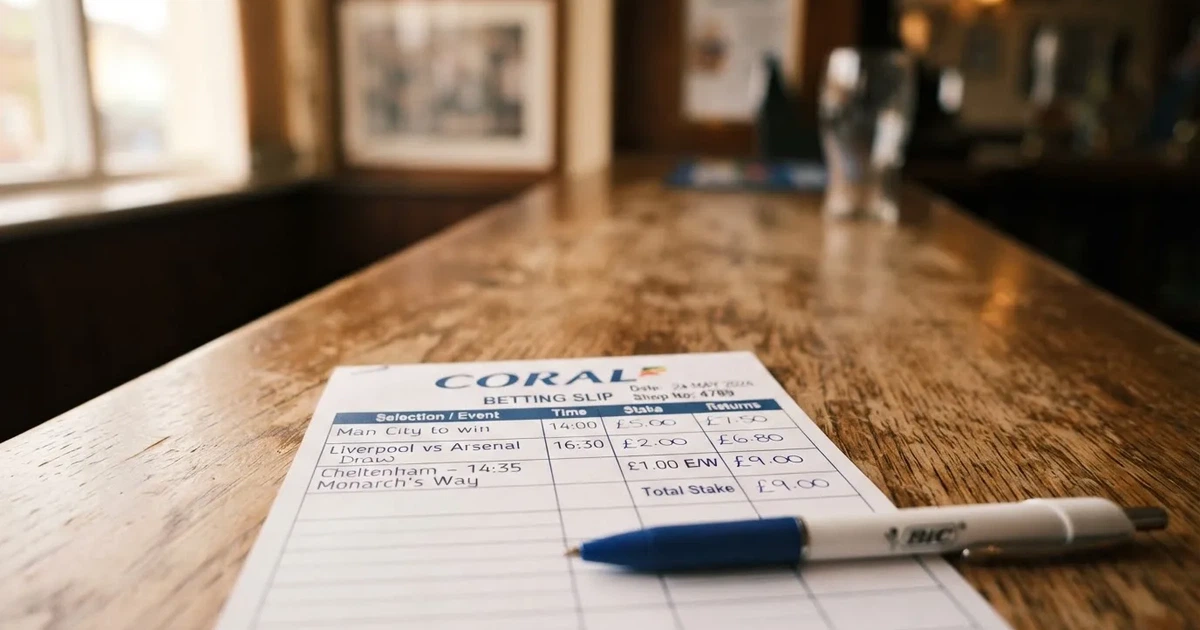
This page is the picture of that landscape in 2026. It explains what a stake limit actually is, where it comes from, why sharp customers run into them, and how a punter can read an operator’s own terms before putting a four-figure sum on a football match. The licensed brands reviewed below are drawn from the Commission’s public register; each holds a remote general betting licence and operates in Great Britain. None of them is the only licensed brand — the register lists far more than any article features — and none of them is “the best” in any absolute sense. They are ten brands whose published terms and licensing footprint make them worth comparing on this specific subject.
The data on this page was checked against the Gambling Commission’s public register and the operators’ own UK sites and app store listings on 27 October 2026.
Where the ceiling actually sits: the shape of the British market
The phrase “high limit” is British punters’ shorthand for three different numbers, and most confusion on forums comes from talking about them as one. There is the per-bet stake ceiling: the maximum the firm will accept on a single selection, displayed on the bet slip when a customer types a number in. There is the outstanding exposure: the running total of unsettled bets the firm will carry against one account, which can bite even when no single bet looks large. And there is the deposit limit, which is a customer-set ceiling rather than a bookmaker ceiling, but it stops being optional at the level a serious punter plays at. A bookmaker with a generous per-bet ceiling can still quietly choke off a sharp customer by lowering exposure, raising the minimum price the firm will count toward turnover, or sitting on withdrawals long enough that the customer’s working capital is locked up.

There is no statutory list of permitted markets in Great Britain. An operator holds a licence for a category — remote general betting standard is the one that covers sports — and offers markets under its own rules. No ceiling on stakes is set by statute either. The Commission’s licence conditions and codes of practice govern conduct (verification, affordability checks, marketing) but do not dictate how big a bet must be. What governs the ceiling on a slip is the bookmaker’s own commercial judgement: how much it wants one customer to be able to win on one event, how much it wants to carry on a hot accumulator, and how exposed it is willing to be if a few favourites oblige the wrong way.
The corollary is that the same brand will quote very different limits to different customers. A recreational punter betting a tenner on the weekend football sees the kind of ceiling a serious punter never encounters. The serious punter’s slip often tells them, by way of a stake box refusing to take the typed-in number, exactly where the firm’s current tolerance stops. The brands reviewed below all hold remote general betting licences; what they do with the discretion the licence gives them is the comparison this page makes.
Why the limits exist at all: bookmaker risk in one paragraph
A bookmaker’s profit on any market is the margin: the gap between what the firm pays out across all outcomes and what it takes in across the same outcomes, expressed as a percentage of turnover. A firm quoting 1.90 / 1.90 on a two-way market is paying out, on a perfectly balanced book, around 1.053 units per unit staked across both outcomes — keeping about 5.3% as gross profit before any deduction. That is the figure the worked example below turns into. The harder a market is to balance, and the sharper the customers it attracts, the more that percentage has to rise to keep the firm’s exposure in check. A stake limit is one of the levers for that. If the firm cannot price the market tightly enough to be confident of winning, it restricts how much a customer can put on. A ceiling on the slip is a refusal to take the bet at the price the firm is showing, dressed up as a technicality of the betslip.

Sharp customers are the obvious target. A bettor who prices markets themselves — building a model, looking at closing-line value, hunting mispriced outsider accounts — costs the firm margin on every bet they take. Several mechanisms come into play. The firm can lower the maximum stake on the markets that customer is winning on, leaving the rest of the catalogue alone; it can set a low “minimum price” the bet must beat for a free bet or bonus to count; it can refuse the customer’s bet outright; or it can close the account. The Commission’s public register does not record any of these actions, so a reader who wants to know how a brand behaves on this point is reading the operator’s own terms and other customers’ accounts, not the regulator.
The two ceilings a brand actually runs
A recreational customer rarely meets a stake ceiling; a sharp one meets them at every turn. The reason is that the firm’s real exposure is not the single bet, it is the running total of unsettled bets against one account. A £500 ceiling on the slip with three open bets already on the slip becomes a £500 ceiling against an additional £4,000 of exposure, depending on how those bets are settling. A bookmaker can therefore appear generous on a per-slip basis while quietly clamping the running total. A serious punter looks at both numbers, and a brand whose published terms mention the per-bet ceiling and not the exposure ceiling has not told the customer the whole story.
The exposure ceiling is not a published number. It lives in the firm’s trading screen. A punter finds out they have hit it by typing in a stake that ought to have been accepted, on a market they have bet on before, and watching the slip refuse it. Brands that compete for sharp money tend to publish at least indicative numbers. Brands that trim sharp money rarely tell the customer what their current exposure is until the slip refuses.
How the limit is built: the mechanism, from margin to slip
The arithmetic that produces a price is also the arithmetic that produces a limit. A firm pricing a market works from the back: it asks what it thinks the true probability of each outcome is, then applies a percentage to each side to deliver a margin that keeps the book balanced. A two-way market priced at 1.90 and 1.90, for example, pays out 1.053 per unit staked on a perfectly even book — the firm’s overround is about 5.3%, which the worked example below turns into. A margin of 5% is tight; a margin of 8% is ordinary for in-play markets; a margin of 12% on outrights is common.
The firm then has to decide how much it is willing to be wrong by. If it sets the maximum stake too high, a single mispriced match can wipe out a week’s margin. If it sets it too low, a sharp customer will not come back, and the firm loses its best read on where the market actually sits. Different brands answer that trade-off differently, which is why the catalogue of ceilings varies.
For a combination bet, the legs multiply into one price. Five legs at 1.80 each deliver a price of about 18.86, which means a £100 bet returns £1,886 if all five legs win. A firm running a £100,000 ceiling on a single does not necessarily run a £100,000 ceiling on a five-leg accumulator — the variance on a long-odds combination is much higher than on a single. Most firms set accumulator ceilings lower than single ceilings, and the slip will tell the customer so. The brands reviewed below vary in whether they publish their accumulator ceilings at all.
For a free bet, the stake is usually not paid back with a win, so the value of a £10 free bet at 3.0 is £20, not £30. The Commission has capped wagering requirements on bonuses at 10x since 19 January 2026 — a £10 bonus at 50x would need £500 of qualifying bets; the cap takes that to £100 — but the rule does not change the underlying arithmetic of what a free bet is worth. It just limits how much a bonus can be made to cost the customer in qualifying bets. The ceiling on free-bet winnings, where one applies, is a separate number the firm’s terms state.
A worked example: the margin on a 1.90 / 1.90 market
Take a two-way market quoted at 1.90 on each side. Across the two outcomes, the bookmaker’s potential payout share per unit staked is 1 ÷ (1 ÷ 1.90 + 1 ÷ 1.90), which equals 0.95 — that is, for every pound staked across both outcomes, the firm pays out 95p in the perfectly balanced case. The margin is 1 − 0.95, or roughly 5%. State it as a band rather than a single figure: a market priced symmetrically at 1.90 carries a margin of roughly 5%, and the wider the prices stretch, the more the margin widens. A 2.00 / 2.00 market is around 0% — the firm breaks even with no margin, which is why no firm actually publishes that — and a 1.80 / 1.80 market is roughly 11%. A punter looking at the ceiling on the slip can fairly read the slip as a statement about how much the firm is willing to be wrong by, not as a statement about how much the customer is allowed to bet.
This is the same market seen from the other side. A payout share of 95% is what the punter collects in the long run across both outcomes; a margin of 5% is what the firm keeps. Saying “5% margin” is not the same as saying “5% of the stake” — the first is a percentage of total turnover across the market, the second is a percentage of one customer’s bet, and the two numbers are not interchangeable. Brands quoting the same price can run different margins only by quoting slightly different prices; the margin is what the prices encode, not a separate figure on the firm’s terms.
The illustrative figures here are not a quoted price from any bookmaker on any event. They are the inputs to the calculation the page is making. The pattern — what the price encodes and what the slip then refuses — is the same on every licensed bookmaker’s site. The number on the slip varies.
What the regulator says: the Gambling Commission’s frame
Every operator reviewed below holds a remote general betting licence from the Gambling Commission under the Gambling Act 2005. The Commission’s public register is the test of who holds one; a brand whose name or domain does not appear against an active licence is not licensed to take bets from customers in Great Britain, wherever the brand itself is based. The Gambling (Licensing and Advertising) Act 2014 closed the route of licensing overseas operators on a home-jurisdiction basis: providing remote gambling facilities used in Great Britain is a licensable activity in Great Britain, and a Curaçao, Maltese or Gibraltar licence is not a substitute. Section 33 of the 2005 Act is the offence provision aimed at the operator; the offence is providing the facilities, not the customer betting on them.
Betting licence categories the platform holds: each reviewed brand operates under a remote general betting standard (real events) licence, which covers sports betting. Pool betting (Tote-style), betting intermediary (exchange), and the limited and virtual variants are separate categories, and a brand licensed for one is not licensed for another. Financial spread betting is regulated by the Financial Conduct Authority, not the Commission — Spreadex, for instance, is regulated by both bodies for different products, and the spread-bet product can cost more than the deposit.
What the Commission does not cap
No statutory ceiling on stakes in sports betting exists. The Commission’s role is conduct — verification, social responsibility, marketing, dispute resolution — not the size of a slip. Operators set their own maximum stakes and may restrict customers. The Commission’s licence conditions and codes of practice (LCCP) and the Remote Technical Standards (RTS) set conduct rules; the cap on stake size is not among them.
What the Commission does require, in summary:
- Identity verification before the first deposit. Since 7 May 2019, name, address and date of birth are verified before a customer can deposit or gamble, including with a free bet or bonus. No anonymous play at a licensed site.
- Credit cards banned for gambling. Since 14 April 2020, LCCP condition 6.1.2: credit cards and credit-card-funded e-wallet payments are not accepted at licensed operators. Debit cards and bank-based payments are not covered.
- GAMSTOP membership. Since 31 March 2020, every GB-licensed online operator joins GAMSTOP, the national multi-operator online self-exclusion scheme. Periods are six months, one year, five years, or five years with auto-renewal; after the minimum period the exclusion remains for a further seven years unless the customer asks GAMSTOP to remove it.
- Bonus cap. Since 19 January 2026, wagering requirements on bonuses are capped at 10x. A £10 bonus at 50x would have needed £500 of qualifying bets; the cap takes that to £100. Mixed-product promotions — an offer that requires gambling on two or more product types such as betting and casino — are banned.
- Financial vulnerability check. Since 30 August 2024 (with the deposit-threshold trigger since 28 February 2025), LCCP condition 3.4.4: when a customer’s deposits minus withdrawals exceed £150 in a rolling 30 days, a public-record check (bankruptcy, county court judgments) is required. This is not an income check and not a credit reference check.
The headline-press term “affordability checks” refers to a separate, staged set of financial risk assessments the Commission has announced but not brought into force. The Commission’s article of 7 July 2026 sets out a staged plan; no start date has been published. A reader who sees “affordability checks” on a current article is reading marketing or commentary ahead of regulation.
What the customer gets from a licence, and what the customer gives up
A licence buys the customer a number of things the customer does not see until they need them. GAMSTOP coverage means a customer who has self-excluded cannot reopen an account at any licensed brand for the exclusion period. The Commission’s complaints route means a customer whose withdrawal has been unreasonably delayed can complain to an alternative dispute resolution (ADR) body approved by the Commission. Source-of-funds questions, deposit limits, time-outs and reality checks are all features the licence forces onto the firm. A bonus with a 50x wagering requirement is no longer possible.
A licence also takes some things from the customer. Verification is mandatory before the first deposit, so a punt-and-go customer has to hand over photo ID. The credit-card ban is universal at licensed sites. A punter looking for anonymous crypto deposits will not find them at a licensed brand.
The off-shore alternative is not “illegal to use” — no offence aimed at the customer who merely bets on an unlicensed site was found in the statute — but it does lose the protections. No GAMSTOP coverage, no Commission complaints route, no approved dispute-resolution body, no British consumer redress if funds are withheld. The 10x bonus cap and the £150 vulnerability check do not apply. Enforcement is disruption rather than blocking: cease-and-desist notices, search-engine referrals, registrar and payment-provider work. The Commission has been given, or is about to receive, court-order DNS blocking powers; ISP blocking is not in operation. A reader weighing the trade is weighing a licensed firm against an unlicensed firm on which nothing in British consumer law applies.
Tax, and what it does to the price
The customer pays no tax on betting winnings in Great Britain. General Betting Duty is the operator’s tax on gross profits, currently 15%. From 1 April 2027 a new remote betting rate of 25% applies within the duty, while remote bets on UK horse racing, bets on self-service betting terminals in licensed premises, pool betting and in-person betting stay at 15% (HM Government policy paper of 26 November 2025). Until 1 April 2027 the remote rate stays at 15%; whether operators pass duty on through odds is not established. The Commission’s statutory levy is a separate charge, not a tax. A reader who sees “no tax on winnings” is reading the right of it; a reader who sees the duty passed on as a customer charge is reading marketing. Spread betting has its own rates (3% financial, 10% other).
Where the limits hit: sports, tournaments and the kind of bet
Different sports carry different ceilings because they carry different variances. A £10,000 ceiling on a Premier League match-result market is ordinary; a £10,000 ceiling on a League Two correct-score market would not be. A firm that runs a £100,000 ceiling on a Champions League outright winner is running a different number from the one it runs on a League Two outright. The slip often carries the difference: the firm’s published ceiling on the slip, where one exists, varies by event tier.
Football is the deep market. Premier League, Champions League and the major European leagues carry the highest ceilings because they are priced tightest and balanced quickest. Lower English leagues, Scottish football, Welsh football and women’s football carry smaller ceilings because the firm is less confident of having the price right. The brands reviewed below include one (DragonBet) that has built part of its catalogue around Welsh football and rugby, where the firm has a local-information edge and the ceiling reflects that.
Horse racing carries its own ceiling pattern. Best Odds Guaranteed — BOG — is a feature most reviewed brands offer: if the starting price (SP) is bigger than the early or show price the customer took, the bet is paid at the SP. The deadline varies by brand — some from 8am on race day, others from 9am, others from the previous evening. The starting-price ceiling itself is set by the on-course market and is not the firm’s number; what the firm controls is whether the price the customer took gets bumped up to it. A brand offering BOG from 8am is offering a longer BOG window than a brand offering it from 9am, and the difference matters to a serious racing punter. ante-post betting — before the final declarations — runs to different ceilings again, with non-runner money-back the norm rather than the exception.
Cricket carries the kind of variance that pulls ceilings down. A Twenty20 innings can turn on one over, and a long-format match can change in a session. The slip often refuses the largest stakes on outrights for that reason. The brands reviewed do not market themselves on cricket ceilings in any consistent way; the punter checks the slip.
In-play markets carry smaller ceilings than pre-match because the firm has less time to rebalance the book. The brands reviewed mostly offer in-play; the ceiling on the in-play slip is, by the firm’s own choice, smaller than the equivalent pre-match slip.
Combination bets carry ceilings of their own. A brand that runs a £50,000 ceiling on a single Premier League match will often run a smaller ceiling on a five-leg accumulator across different sports, because the variance is much higher. The slip tells them; the firm’s published terms do not always do so. A punter running an accumulator wants the accumulator ceiling, not the single ceiling, and most reviewed brands do not publish the accumulator ceiling. The slip is the source of truth.
The serious-money shortlist: ten licensed bookmakers compared
Each brand below holds a remote general betting licence from the Gambling Commission and is listed on the Commission’s public register against an account number verified against the register on 27 October 2026. The table that follows them sets out the licence detail each brand holds and the firm’s own terms on the key subject of stake limits. After the table, each brand gets a short review covering what its terms and its catalogue actually do for a punter who bets bigger than the recreational average.
The landscape at a glance
| Brand | Gambling Commission licence (account number, holder) | What the operator’s own terms say about high-stake play |
|---|---|---|
| Bet600 | Account 44731, Tyche Tech Limited | Pays Best Odds Guaranteed on horse racing: starting price paid if bigger than the price taken |
| VBet | Account 44662, SCGO Limited | App offers Bet Builder, pre-match and in-play betting, live streaming and a live calendar with results and stats |
| Swifty Sports | Account 58957, Swifty Global (UK) Ltd | Offers Best Odds Guaranteed, Cash Out on horse racing and football, daily price boosts, live streaming and in-play; Bet Builder listed as coming soon |
| Betmaster | Account 65699, BM Solutions GB Ltd | Remote general betting licence; site terms apply to the standard product set |
| Fafabet | Account 57385, Taichi Tech Limited | Pays Best Odds Guaranteed on UK and Irish horse racing win and each-way bets from 9am on race days |
| DragonBet | Account 64908, DragonBet Ltd | App features Welsh football and rugby markets, racing, American football, in-play betting and bet builder markets |
| Dabble | Account 65677, Dabble Sports UK Ltd | Welcome offer is a £10 free bet on a first £10 deposit, with minimum odds, a 7-day expiry and the stake not returned |
| Betboro | Account 44181, Webmedia Development N.V. | In-play markets and cash-out on football, racing and tennis, boosted odds on selected singles from £10 stakes, responsible-gambling tools |
| DAZN Bet | Account 48756, DZBT Limited | Offers Cash Out, Bet Builder, daily bet boosts and in-play betting; cash out availability not guaranteed and bets stand if unavailable |
| Betway | Account 39372, Betway Limited | Welcome offer of £40 in free bet tokens (4 x £10) on settlement of a first bet of at least £10 at minimum odds of 2.0, 7-day expiry, debit card deposits only |
The two recurring patterns worth noting before the reviews: the first is that almost every brand in the table quotes the licence account number rather than the licence reference number. The account number is the Commission’s identifier for the licensed business; the reference number includes the suffix the register prints against the licence. A reader checking a brand on the public register searches by business name or domain; the account number is the field that comes back. The second is that the descriptions in the right-hand column are what the firm’s own published terms say about each brand’s stance on stake-relevant features — BOG, cash out, bet builders, in-play ceilings — rather than a comment on the brand’s overall quality. The reviews that follow read those terms against the rest of the brand.
Bet600 — racing-friendly, app-recommended
Bet600 is a Tyche Tech Limited brand on a remote general betting standard licence. The racing-friendly part is the Best Odds Guaranteed: starting price paid if bigger than the price taken, on the standard horse-racing set the App Store listing describes. A serious racing punter’s main interest in BOG is the window — when does the BOG lock in? — and on Bet600 the published rule applies when the SP beats the price taken, on the same basis as the major firms. The app recommendation (this is what the App Store listing, not the brand, frames) and the BOG line together give a brand a clear racing posture.
The unknowns to check on the slip: the per-event ceiling on Premier League football, the in-play ceiling (typically lower), and the accumulator ceiling, which most brands do not publish. A punter weighing Bet600 against a brand with a larger catalogue should look at the slip rather than the catalogue description.
The verdict: Bet600 is a clean fit for a racing-led punter who bets BOG-eligible stakes and wants an app-first experience. The licence is current; the racing feature set is straightforward; the rest of the catalogue is enough but not deep. For a football-led punter, the comparison is with brands below that publish more on football features.
VBet — depth across the build-and-watch stack
VBet is an SCGO Limited brand, licensed under a remote general betting licence. The catalogue depth is what sets the brand apart on this list. The app offers Bet Builder, pre-match and in-play betting, live streaming and a live calendar with results and stats — a stack that competes with the bigger names on the British market. Live streaming in particular is a serious-money feature because a punter who wants to watch a market they have bet on needs the stream inside the app, not a separate tab.
The unknowns to check on the slip: the in-play ceiling (a feature-rich brand often runs tighter in-play ceilings than its pre-match ones), the cash-out terms (VBet publishes cash out but does not always guarantee it; the slip’s behaviour when cash out is unavailable is the test), and the maximum stake the bet builder will accept on a single combination. VBet’s app store listing makes the catalogue depth the headline; the slip is the test of how the depth is priced.
The verdict: VBet is the depth play on this list. A punter who uses bet builders, watches live and wants in-play is the customer the catalogue is built for. The ceiling picture is the one the slip draws; a serious punter opens an account with a small stake, types the planned stake on a Premier League match-result, and reads what the slip accepts before committing real money.
Swifty Sports — BOG plus the catalogue, builder on the way
Swifty Sports is run by Swifty Global (UK) Ltd on a remote general betting standard licence. The features the App Store listing describes read as a complete racing-plus-football package: Best Odds Guaranteed, Cash Out on horse racing and football, daily price boosts, live streaming and in-play betting. The one feature missing — Bet Builder — is listed as coming soon, which matters to a punter for whom the bet builder is a make-or-break feature.
The unknowns to check on the slip: the Bet Builder gap (a punter relying on Bet Builder should check whether the brand has shipped it since the app store listing was last updated), the cash-out terms on racing (the racing one is the harder to honour), and the in-play ceiling.
The verdict: Swifty Sports is a near-complete catalogue with a known gap on Bet Builder. A punter whose betting relies on Bet Builder should treat Swifty as a “watch the update” rather than a current option; a punter whose betting does not rely on the builder can take the catalogue as it stands.
Betmaster — straightforward licence, standard product set
Betmaster is operated by BM Solutions GB Ltd, a Maltese-registered company, on a remote general betting standard licence. The licence is the story: GB-licensed, account 65699, the same kind of licence as the rest of this list. The product set is the standard one; nothing in the public terms reads as distinctive for high-stake play. A punter choosing Betmaster is choosing on features that are not visible at this view: the slip’s behaviour, the in-play ceiling, the cash-out terms.
The unknowns to check: the standard ones. Slip behaviour at high stakes, in-play ceiling, accumulator ceiling, cash-out availability.
The verdict: Betmaster is a vanilla option in this comparison. There is no feature in the public terms that reads as a clear draw for serious-money play, and no feature that disqualifies it. The decision comes down to the slip and the catalogue.
Fafabet — racing BOG from 9am, with a clear window
Fafabet is run by Taichi Tech Limited on a remote general betting standard licence. The racing BOG window is from 9am on race days, applied to UK and Irish horse racing win and each-way bets, with the bigger of the SP and the original price paid. The window matters: a punter comparing brands on racing BOG is comparing windows as much as whether BOG exists at all, and a 9am window is shorter than the 8am windows some other brands run.
The unknowns to check: the football slip’s ceiling, the in-play ceiling, the accumulator ceiling. Fafabet’s public terms do not market the brand on those points.
The verdict: Fafabet is a racing-focused option with a clear but late BOG window. A punter who places racing bets before 9am and wants BOG to apply should compare against brands with earlier windows; a punter who places racing bets after 9am has no such constraint.
DragonBet — Welsh-led catalogue with a local-information edge
DragonBet is run by DragonBet Ltd on a remote general betting standard licence. The catalogue is what sets the brand apart: Welsh football and rugby markets, racing, American football, in-play betting and bet builder markets. The Welsh football and rugby focus is a regional specialism; a Welsh-based or Wales-following punter has a brand whose pricing on those markets the firm is more confident in than a national firm would be.
The unknowns to check: the slip’s behaviour at high stakes on the national-market side of the catalogue (Premier League, Champions League), where DragonBet is competing against national-scale firms, and the in-play ceiling on Welsh football, which is a lower-variance market and may carry different ceilings than the bigger leagues.
The verdict: DragonBet is the regional option on this list. A Welsh punter gets a brand whose local catalogue is real; a non-Welsh punter is choosing DragonBet against national-scale brands on the same markets, and the comparison is the slip.
Dabble — simple free-bet offer with a clean rule set
Dabble is run by Dabble Sports UK Ltd on a remote general betting standard licence. The welcome offer reads as a clean rule set: a £10 free bet on a first £10 deposit, with minimum odds, a 7-day expiry and the stake not returned. That last clause — the stake not returned — is the standard form of a free bet on the British market, and a punter who reads it as “£10 free bet at 3.0 wins £30” is misreading the offer. The value of a £10 free bet at 3.0, with the stake not returned, is £20.
The unknowns to check: the slip’s ceiling on football, the in-play ceiling, the catalogue beyond the welcome offer. The free-bet terms tell a punter the welcome mechanic; they do not tell the punter what the brand’s slip looks like on a serious football bet.
The verdict: Dabble is a clean free-bet offer on a licensed brand, with the standard British free-bet form. A punter taking the welcome offer should read the stake-not-returned line; a punter choosing on catalogue depth is choosing on a smaller catalogue than some competitors.
Betboro — boosted odds from £10, with in-play and cash out
Betboro is run by Webmedia Development N.V. on a remote general betting standard licence. The features in the public terms are in-play markets and cash-out on football, racing and tennis, boosted odds on selected singles from £10 stakes, and responsible-gambling tools (deposit limits, reality checks, self-exclusion). The boosted-odds floor — selected singles from £10 — is a low entry point, which a serious punter reads not as a ceiling but as a sign the brand is willing to publish the floor.
The unknowns to check: the slip’s ceiling on un-boosted football, the boosted-odds ceiling (typically lower than the un-boosted ceiling), and the in-play ceiling. The “from £10 stakes” line is the floor, not the ceiling.
The verdict: Betboro is a catalogue-deep brand with a published boosted-odds floor. A punter using the boosts should treat the floor as the entry point and the boosted ceiling as the test; a punter not using the boosts is comparing Betboro on the standard slip.
DAZN Bet — cash out with the standard non-guarantee
DAZN Bet is run by DZBT Limited on a remote general betting standard licence. The features the help pages describe are Cash Out, Bet Builder, daily bet boosts and in-play betting, with the cash-out availability not guaranteed and bets standing if cash out is unavailable. The non-guarantee clause is standard on the British market — most licensed brands publish it — but it matters at serious stakes because a punter relying on cash out to manage a position cannot rely on it. The slip is the test; the published terms say cash out may not be there when the punter needs it.
The unknowns to check: the slip’s ceiling, the in-play ceiling, the bet builder ceiling, the boosted-odds ceiling.
The verdict: DAZN Bet is a feature-rich brand on the standard cash-out-non-guaranteed terms. A punter using cash out to manage a position should treat it as a feature that may not be available at the moment of need; a punter not relying on cash out is comparing the catalogue.
Betway — major-brand welcome with the standard rule set
Betway is run by Betway Limited on a remote general betting standard licence. The welcome offer for new UK and Ireland customers is £40 in free bet tokens (4 x £10) credited on settlement of a first bet of at least £10 at minimum odds of 2.0, with a 7-day expiry and debit card deposits only. The four-token split is a Betway convention that lets the brand split a free-bet package into multiple smaller bets; a punter taking the offer places four qualifying bets at 2.0 or bigger and receives four £10 free bet tokens.
The minimum price — 2.0 — is the standard minimum on the British market for a free bet to qualify, and a punter comparing welcome offers is comparing the minimum price as much as the headline number. The debit-card-only deposit rule is a brand-specific limitation that excludes punters funding from e-wallets; a punter funding from PayPal or Skrill does not qualify. The 7-day expiry is standard.
The unknowns to check: the slip’s ceiling, the in-play ceiling, the catalogue. Betway’s catalogue is wider than most of this list; the slip is the test of how that catalogue is priced.
The verdict: Betway is the major-brand option on this list, with the standard welcome offer and a wide catalogue. A punter funding from a debit card and betting at 2.0 or bigger takes the standard welcome; a punter funding from an e-wallet is not eligible and is comparing on the catalogue alone.
How a serious punter actually reads the slip
The slip is the only document that tells a serious punter the ceiling that matters. Published terms on a public site describe the brand. The slip’s behaviour on a typed-in stake describes the firm’s tolerance at that moment, for that customer, on that market. A punter who plans a serious bet does not read the published terms and stop; the punter opens an account, places a small qualifying bet to clear verification, types the planned stake on the planned market, and reads what the slip accepts.
The sequence a serious punter follows:
- Check the licence. The brand is on the Commission’s public register. The punter checks by business name or domain, finds the active licence, and confirms the account number and licence holder match the brand’s published terms.
- Open the account and verify. Identity verification is mandatory before the first deposit. The punter hands over photo ID, address proof and date of birth, and waits for the verification to clear.
- Place a small qualifying bet. A £5 or £10 bet on a Premier League match settles the welcome offer and gives the punter a working account.
- Type the planned stake on the planned market. The slip accepts or refuses. If the slip accepts the full stake, the punter has the brand’s tolerance for that market on that day. If the slip refuses or accepts a smaller number, the punter has the ceiling and can plan accordingly.
- Check the in-play ceiling. In-play ceilings are typically smaller. The punter types the planned in-play stake and reads the slip.
- Check the cash-out terms. Cash out is published but not guaranteed. The punter tests cash out on a small position and watches the slip’s behaviour.
- Read the bonus terms carefully. The 10x cap is the ceiling on wagering requirements, but minimum prices, expiry windows and stake-not-returned clauses still apply. The “free bet” that pays back only the win, not the stake, is the standard form on the British market.
A punter who follows the sequence gets the slip’s behaviour in writing, before committing serious money. A punter who skips the sequence and places a four-figure bet on the first day is reading the slip at the wrong moment — under pressure, after commitment — and is the punter the firm’s trading desk is designed to manage.
The two limits a punter forgets
The exposure ceiling and the deposit ceiling. The exposure ceiling is the running total of unsettled bets; it lives in the firm’s trading screen and is not published. A punter with three open bets at £500 each has £1,500 of exposure; a slip whose per-bet ceiling reads £500 may refuse a £500 stake because the punter is already at £1,500 of exposure on a market the firm is watching. The slip’s refusal is the punter’s only signal.
The deposit ceiling is set by the customer, not the firm, but it becomes load-bearing at the level a serious punter plays at. A punter who has set a £500 weekly deposit limit is choosing between £500 of weekly deposit and a serious Saturday bet. The deposit limit is a self-imposed ceiling; the punter can raise it, but raising it without thinking is how a punter loses control of the bankroll.
Why sharp customers get trimmed, in one paragraph
A sharp customer is one who prices markets themselves — building a model, looking at closing-line value, hunting mispriced outsider accounts — and who therefore wins at a margin the firm cannot match. The firm’s response is a sequence: lower the maximum stake on the markets the customer is winning on, leaving the rest of the catalogue alone; set a low minimum price the bet must beat for a free bet or bonus to count; refuse the customer’s bet outright; close the account. None of these actions are recorded on the Commission’s public register. The register records the licence; it does not record how the licence is operated against any one customer.
A serious punter should not be surprised by any of these. The punter should expect them. The brand whose terms describe how it deals with sharp customers is the brand that is being honest about what its terms describe; the brand whose terms do not is being silent on a point the slip will tell the punter about anyway.
What the bonus cap actually changed
The Commission’s 19 January 2026 cap on wagering requirements at 10x was the most consequential bonus rule change on the British market in years. A £10 bonus at 50x would have required £500 of qualifying bets; the cap takes that to £100. A punter taking a welcome offer is now reading the wagering requirement against a hard ceiling rather than against the brand’s own choice. The cap also bans mixed-product promotions — an offer that requires gambling on two or more product types such as betting and casino — so “bet on football to get free spins” is no longer a permitted offer.
The cap does not change the form of a free bet. The standard British free bet still does not pay back the stake with a win: a £10 free bet at 3.0 still pays £20, not £30. The cap does not change the cap on free-bet winnings, where one applies. The cap does not change the minimum price a free bet or bonus requires. The 10x ceiling is the ceiling on wagering, and the rest of the bonus mechanic is unchanged.
What the credit-card ban did
The credit-card ban, in force since 14 April 2020, is universal at licensed sites. Credit cards and credit-card-funded e-wallet payments are not accepted at any GB-licensed operator. A punter funding a betting account from a credit card is funding it from a debit card or a bank transfer instead, or not betting with that operator. The ban does not cover debit cards or bank-based payments. It also does not cover cryptocurrency deposits at licensed operators — there is no rule for or against cryptocurrency deposits at licensed sites in the statute the Commission operates — but a brand’s own terms will state whether the brand accepts crypto. The serious-money punter’s deposit method is debit card or bank transfer; the credit-card ban is not a constraint.
The wider market: a few brands worth naming outside the shortlist
The ten brands reviewed above are the comparison set. A few names appear in the wider market that a serious punter will encounter and should be able to place.
bet365 is the major British brand with a deep catalogue. Bet Builder+ combines markets from one event into a single bet, available pre-match and in-play. Super Boosts, Winnings Boosts on Bet Builders and selected singles, and daily Bet Boosts are standard features. The slip is the test of the catalogue’s pricing.
William Hill is the major British brand with a long racing pedigree. Best Odds Guaranteed on UK and Irish horse racing from 8am on the day of the race, on both single and multiple bets; does not apply to ante-post, tote or pari-mutuel bets. The Football Acca Boost covers accas of two or more legs with each selection at 1/5 or bigger, with a boost from 3% on a double up to 200% on 20 or more legs, a maximum boost of £10,000 per online bet, and runs until 30 May 2027. Cash Out is not available on each-way bets and is not always available on accumulators.
Betfair runs two products: the Sportsbook, with in-play betting, Bet Builder, free live streaming of events such as UK and Irish horse racing and football within the app, and a 90 Minute Payout market; and the Exchange, where customers bet against other customers rather than a traditional bookmaker, with back and lay bets, the option to request a better price, and a MatchMe feature. The Exchange is a betting intermediary under a separate licence category and operates on different rules.
Coral offers Best Odds Guaranteed on all UK and Irish horse racing from 8am each morning and on every UK greyhound race, plus Bet In-Race betting and cash out during races. The Bet Builder covers match result, goalscorers, total goals and corners across more than 100 football leagues and competitions, with cash out on selected Bet Builder markets. The welcome offer is “Get £40 in Free Bets when you bet £20” for new GB customers who opt in. A free daily Reward Shaker, an Odds Booster on hundreds of markets, and free-to-play games such as Football Super Series with a £10,000 jackpot are standard.
BetVictor offers Best Odds Guaranteed on UK and Irish horse racing, enhanced live race streaming, a BetFinder feature for finding racing bets, and Smart Stats.
These brands do not appear in the comparison table above, which covers ten operators in detail. The wider market is wider than ten brands, and a serious punter building a portfolio of accounts will read each of these names against their own terms.
Reading the fine print without losing the afternoon
The fine print on a licensed brand is not a trap; it is a description of how the brand handles its relationship with the customer. The trap is not reading it. The minimum price a free bet must beat is the difference between a £10 free bet at 2.0 (which counts) and the same free bet at 1.8 (which does not). The 7-day expiry is the difference between a free bet used and a free bet lapsed. The “stake not returned” clause is the difference between a £30 payout on a £10 free bet at 3.0 and a £20 payout on the same bet. None of these is hidden; all of them are in the terms.
The cumulative read is the read that matters. A welcome offer looks generous on the headline; the terms tell the punter what it costs. A £40 free bet on a £20 qualifying bet looks like a 100% match; the minimum price on the qualifying bet, the free-bet expiry, the stake-not-returned clause, and any market restrictions all reduce the headline to a real number. A serious punter reads the headline and the terms together, and judges the offer on the terms.
The minimum price, the deadline, and the cap
Three numbers define what a bonus or free bet really costs: the minimum price the qualifying bet must beat; the deadline by which the qualifying bet must be placed and settled; and the cap on free-bet winnings or bonus conversion, where one applies. A punter weighing one offer against another is weighing these three numbers as much as the headline.
The minimum price on the British market is typically 2.0 for a free bet to qualify. Some brands go lower; a few go higher. The deadline is typically seven days. The cap on free-bet winnings is brand-specific; some brands cap free-bet winnings at the stake times a fixed multiple, others do not cap at all.
A punter who reads the three numbers knows what the offer is. A punter who reads only the headline does not.
How the calculation behind the slip is done
The arithmetic behind a bookmaker’s price is also the arithmetic behind the slip’s refusal. The worked example earlier — a two-way market at 1.90 / 1.90 carrying roughly a 5–6% margin — is the simplest version of the calculation. The same arithmetic on a three-way football market (home / draw / away) produces a higher margin because the book is harder to balance; on an outrights market with twelve runners the margin is higher again.
For a combination bet, the legs multiply into one price. Five legs at 1.80 each deliver 18.86. A £100 bet returns £1,886 if all five legs win. The bookmaker’s variance on the combination is the product of the variances on the legs, which is why the ceiling on a five-leg combination is typically tighter than the ceiling on any single. The slip encodes the ceiling; the published terms do not always do so.
For a free bet whose stake is not paid back, the value is the free-bet amount times the price minus one, divided by the price, times the payout share of the market. A £10 free bet at 3.0 on a market with a 95% payout share has a value of about £6.33 — what the free bet is worth on average, not what it wins. The same free bet at 1.5 has a value of about £3.17; the lower the price, the lower the free-bet value, even at the same stake.
These calculations are statistical estimates. They are averages over many bets under the stated assumptions, not guaranteed outcomes for any single bet. A punter who treats them as forecasts is misreading the page; a punter who treats them as a description of the offer’s cost is reading it right.
What a serious punter checks before opening the next account
A serious punter building a portfolio of accounts does not open ten accounts on day one. The punter opens one, follows the sequence in the section above, reads the slip on the markets the punter bets on, and judges the brand on the slip. The punter opens a second account only after a working account at the first brand is established, and only if the first brand’s slip is unsatisfactory on a market the punter cares about.
The reasons to open a second account: the first brand’s ceiling on a market the punter bets on is too low; the first brand does not offer a feature the punter uses (Bet Builder, cash out, BOG, live streaming); the first brand’s in-play ceiling is too tight for the punter’s in-play style. The reason not to open a second account: the punter has not yet placed a serious bet at the first brand. A punter who opens ten accounts and places £5 bets at each is reading the slip on £5 stakes, which is the recreational experience, not the serious-money experience.
How the slip tells the punter the most
The slip is the only document the punter trusts on the serious-money picture. The published terms describe the brand. The marketing describes the brand. The App Store listing describes the app. The slip describes what the punter actually faces. A serious punter opens the slip on the planned market, types the planned stake, and reads the response.
The slip’s refusal is the slip’s verdict. A punter who plans a £2,000 single on a Premier League match and sees the slip accept £1,500 has the brand’s current tolerance. The punter places £1,500. The punter does not email the firm to ask why £2,000 was refused; the firm does not have to tell the punter. The slip is the answer.
The shape of the landscape at the end of this read
A “high limit” bookmaker in Great Britain is one whose slip accepts the kind of stake the average punter never types in. The phrase is descriptive, not a marketing tier. No statutory ceiling on stakes exists. The Commission’s role is conduct, not ceiling. The ceiling on the slip is the firm’s commercial judgement, and that judgement varies by market, by customer and by the moment.
The four names a serious punter will end up holding accounts with are the ones whose slips accept the stakes the punter types, on the markets the punter bets on, with the features the punter uses. The ten brands reviewed above are ten candidates; the slip on each is the test. The punter’s portfolio is the answer the slips give together.
Frequently asked questions
Which bookmakers do not limit?
No bookmaker in Great Britain is required to publish its limits, and the Commission’s public register records the licence rather than the firm’s per-customer policy. Sharp customers are routinely restricted — through per-bet ceilings, account-level exposure ceilings, minimum-price floors on bonuses, or account closure — and a serious punter reads the slip on the planned market, with the planned stake, before committing. A brand whose published terms describe how it handles sharp customers is being more transparent than a brand whose terms do not.
Why do sportsbooks limit winning bettors?
A winning bettor costs the firm margin. The firm’s profit on a market is the gap between the payout across all outcomes and the stake taken in; the sharper the customer, the more the firm pays out, and the lower the firm’s margin. Restricting a winning customer’s stake is a way of limiting the firm’s exposure on a customer who, by the firm’s own trading data, prices markets more accurately than the firm. The restriction is a commercial response, not a regulatory one.
Why do sportsbooks limit sharp bettors?
A sharp bettor is one who prices markets themselves — building a model, looking at closing-line value, hunting mispriced outsider accounts — and who therefore prices markets more accurately than the firm’s traders can on every event. Restricting the sharp bettor’s stake, or closing the account, is the firm’s way of refusing to take bets at prices the firm would not have set if it had priced the market as accurately as the customer. The Commission records the licence; it does not record the firm’s per-customer restrictions.
How can it be checked that a bookmaker holds a Gambling Commission licence?
The Commission’s public register is the whole test. The punter searches by business name, trading name or domain; the register returns the licence detail, including the account number, the licence holder, the licence category, and the licence status. Every brand reviewed above appears against an active remote general betting standard (real events) licence; the register’s data was verified on 27 October 2026.
How is the return on a bet worked out from the stake and the odds?
For a single bet, the return is the stake multiplied by the decimal odds. A £100 bet at 3.0 returns £300, of which £100 is the stake returned and £200 is the net profit. For a combination bet, the legs multiply into one price: five legs at 1.80 each deliver 18.86, and a £100 combination returns £1,886 if all five legs win. The decimal form is the form every section uses; fractional odds (5/1, 11/4, evens) convert to decimal by dividing the numerator by the denominator and adding one (5/1 → 6.00, 11/4 → 3.75, evens → 2.00).
What is the bookmaker’s margin and how can it be seen in the odds?
The margin is the percentage of turnover the firm keeps across all outcomes of a market. It is calculated as one minus the payout share, where the payout share is one divided by the sum of the reciprocals of the decimal prices across all outcomes. A two-way market priced at 1.90 and 1.90 carries a margin of about 5–6%; a 1.80 / 1.80 market carries about 11%; a 2.00 / 2.00 market carries 0%. The wider the prices stretch, the more the margin widens, and the price on the slip encodes the margin rather than stating it separately.
Betting sites & exchanges – Best betting
Content created by the «Best betting» team
