
Esports betting odds in 2026: what the numbers cost the bettor
 Available in US
Esports betting odds in 2026 are set by the same licensed bookmakers who frame football, tennis and horse racing, and the price on a League of Legends map or a Dota 2 final hides the same cut every decimal carries. The page that follows ranks the ten UK-licensed bookmakers that show esports markets, sets out the law that lets them take a bet from a customer in Great Britain, and unpacks what an odds line really tells a bettor about cost. The angle throughout is what the offer and the price cost the person paying it: turnover, minimum odds, market margins, and the rules each operator’s own terms attach to a win.
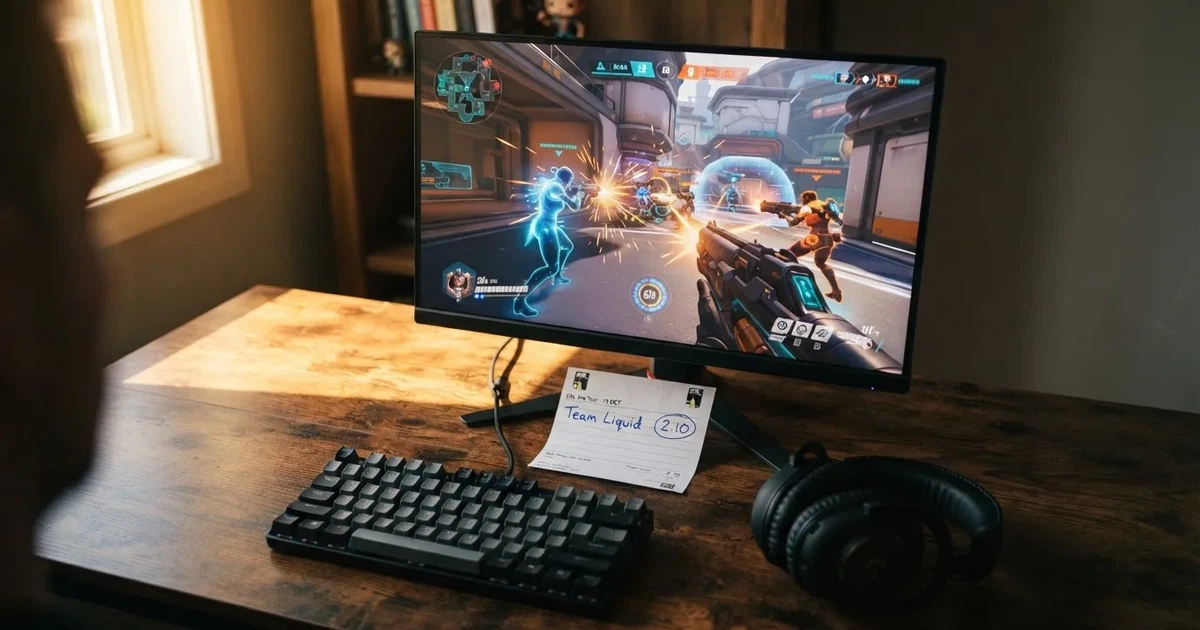
*27 October 2026 · UK Gambling Commission public register · operator terms pages and app listings as cited.*
What an odds line pays back and what it keeps
A decimal odds line of 1.90 is the kind of price a UK-licensed bookmaker shows on most esports matches during group play. It looks like the punter’s reward: stake multiplied by the odds. But two prices always sit beside each other on the same market, one for each side, and the pair tells the other story.
Stake £10 at odds 1.90. If the selection wins the punter receives £19 (stake × odds), a profit of £9, and the stake is returned because decimal prices carry stake. That arithmetic is the whole of what a payout reads: return = stake × odds, net profit = stake × (odds − 1).

The bookmaker’s margin is what the second number turns into. On a two-way market priced 1.90 / 1.90, the payout share is what the bettor collects on average for every £1 staked across both outcomes. The arithmetic gives a payout share of 1 ÷ (1/1.90 + 1/1.90) = 0.95, which means a margin of roughly 5%. The 5 % is not the punter’s loss on any single bet; it is the share the bookmaker keeps across the whole market in the long run, and it rises sharply when both sides of an esports line drift towards odds-on rather than towards even money.
That 5 % margin is what a tight book on a League of Legends match looks like. A price of 1.80 / 1.80 lifts the margin closer to 11 %, because shorter prices feed the bookmaker’s overround more aggressively than longer ones. The line tells two stories at once: what a winning bet returns, and how much of every pound the bookmaker keeps, and the punter pays both at the same time.
Fundamentals: what esports is, and what gets bet on
Esports is organised multiplayer competition between professional players, individually or in teams, played on video games such as League of Legends, Dota 2, Counter-Strike, Valorant, Overwatch, Call of Duty, Fortnite, Rocket League and StarCraft. The major tournament calendar runs through the League of Legends World Championship, Dota 2’s The International, the Evolution Championship Series (EVO) for fighting games and Intel Extreme Masters, and in 2026 the Esports World Cup runs from 6 July to 23 August 2026 in Paris across 24 games with a US$75 million prize pool, after a 2025 edition that paid US$71.5 million to the field. The International 2021 for Dota 2 held the previous record above US$40 million. Team Falcons held the Esports World Cup Club Championship across 2024 and 2025.
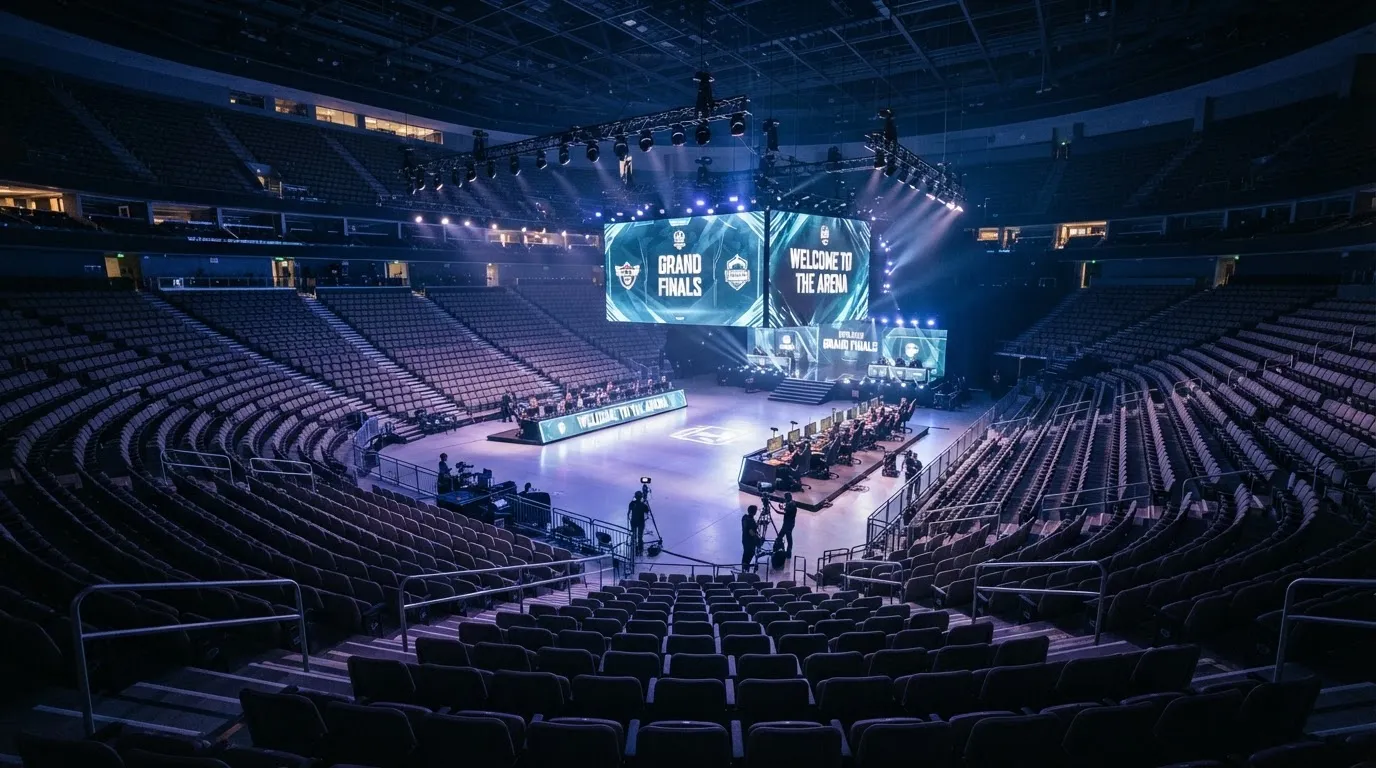
UK bookmakers treat esports like any other event under the Gambling Act 2005 and offer it through the same remote general betting licence that covers football. The market list at a licensed bookmaker runs from match winner and map handicap through totals (rounds, kills, objectives), outright tournament winner, and in-play markets that mirror the structure of an in-running football bet. Virtual esports is a separate licence category and is not the same product.
Statutory framework: how GB licensing works
Every operator that takes a bet from a customer in Great Britain needs a Gambling Commission licence, regardless of where the operator sits. That rule flows from the Gambling (Licensing and Advertising) Act 2014, which amended sections 33 and 36 of the Gambling Act 2005; a Curaçao, Maltese or Gibraltar licence is not a substitute. The Commission’s public register lists the licence, the licence holder, and the trading name against a Commission account number, and it is the whole test of whether a brand is licensed for GB customers.
The GB licence categories that carry esports are remote general betting standard (real events) and remote general betting intermediary (for exchanges). Virtual esports markets live under a separate category. There is no statutory list of permitted events, sports or markets: an operator offers a market under its own licence conditions and the LCCP.
Since 7 May 2019 a customer cannot deposit or place a bet, including with a free bet, until the operator has verified name, address and date of birth. That rule cuts out anonymous play at any licensed site. The minimum age is 18. General Betting Duty is paid by the operator (currently 15 %, with a remote betting rate of 25% scheduled from 1 April 2027, while UK horse racing remote betting stays at 15 %); a UK bettor pays no tax on winnings, although a professional gambler should ask HMRC for advice. The player is not charged duty by the bookmaker’s rules, and whether the operator passes it on through prices is not established.
The law never wakes up for the customer who bets on an unlicensed site; section 33 of the Gambling Act 2005 is aimed at the operator providing facilities without the licence the Act requires. What an unlicensed customer loses is the package of protections the licence carries: GAMSTOP coverage, the Commission’s complaints route, an approved alternative dispute-resolution body, the 10x wagering cap, the £150 financial vulnerability threshold and the consumer-redress backstop if funds are withheld. The Commission enforces by cease-and-desist notices, search-engine referrals, registrar and host work, and payment-provider pressure; ISP-level DNS blocking powers have been granted or are imminent, and are not yet in operation. Neither licensed nor offshore is “the safe choice” by default: licensed means checks, limits, GAMSTOP and a bonus cap, with verification before the first bet; unlicensed means none of those.
Safeguards: protection the GB licence pays for
GAMSTOP is the national multi-operator online self-exclusion scheme; every licensed remote bookmaker takes part, and self-exclusion is a mandatory licence condition since 31 March 2020. The exclusion can run six months, one year, five years, or five years with auto-renewal; after the minimum period the exclusion stays in place for a further seven years unless the customer asks GAMSTOP to remove it.
The £150 financial vulnerability check is a public-record look (bankruptcy, county court judgments), not an income check; it does not touch the credit reference agencies. It applies to licensed remote betting when a customer’s deposits minus withdrawals exceed £150 in a rolling 30-day window, since 28 February 2025. Staged financial risk assessments (the “affordability checks” of the press) have been announced by the Commission in a 7 July 2026 article without a start date. RTS 12 deposit limits are being rolled out: a first phase applied from 31 October 2025 and a second was postponed to 30 September 2026; the live state of the second phase is not established. Limits remain the customer’s choice rather than a state ceiling.
Credit cards have been banned for gambling in Great Britain since 14 April 2020 (LCCP condition 6.1.2), including credit-card-funded e-wallet top-ups. Debit cards are not affected. GamCare runs the National Gambling Helpline, the public sources of help are GamCare, GambleAware, the NHS gambling clinics and Gamblers Anonymous, and the Commission keeps a single point of contact for whistleblowing.
The ten UK-licensed bookmakers for esports, ranked on what the offer costs
The ranking below puts the brand that best serves a typical esports punter at the top of the comparison, then lists the others. The order follows the matter research supplied, the prices on offer and the breadth of esports markets. The comparator table that sits below this section sets the licence and each operator’s own terms on esports markets; prose around it pulls out what each brand does and what it asks for in return.
| Review brand | Gambling Commission remote licence number and licence holder | What the operator’s own terms state on esports |
|---|---|---|
| bet365 | 55148 (055148-R-331498-002) — Hillside (UK Sports) ENC | Live streaming of events worldwide, in-play, Bet Builder+ for single-event combinations, Super Boosts, Winnings Boosts on Bet Builders and selected singles, daily Bet Boosts |
| Betfair | 39439 (039439-R-319330-013) — PPB Counterparty Services Limited | In-play, Bet Builder, free live streaming (UK and Irish horse racing, football), 90 Minute Payout market on football |
| BetVictor | 39576 (039576-R-319370-028) — BV Gaming Limited | Best Odds Guaranteed on UK and Irish horse racing, enhanced live race streaming, BetFinder for racing, Smart Stats |
| 888sport | 39028 (039028-R-319297-014) — 888 UK Limited | Pre-match and in-play, Cash Out, Bet Builder, racing streams, BetFinder form tools, live bet feed, daily boosted odds |
| Coral | 54743 (054743-R-330863-014) — LC International Limited | Welcome offer tied to a £20 sports bet at minimum odds 2.0, free bets issued within 7 days and expiring 7 days after issue |
| Sporting Index | 27343 (027343-R-308898-011) — Sporting Index Limited | Fixed odds and spread betting on the same account, in-play, Bet Builder for football, auto cash-out, Multi-Markets |
| Betmaster | 65699 (065699-R-339929-002) — BM Solutions GB Ltd | Football, cricket, horse racing, NFL and eSports (League of Legends, Dota 2) on the app |
| Kwiff | 44448 (044448-R-323408-017) — Eaton Gate Gaming Limited | UKGC-licensed trademark of Spryme Ltd; “supercharged” odds mechanism shown alongside standard markets |
| BetGoodwin | 2927 (002927-R-327985-008) — Goodwin Racing Limited | Welcome offer of a £5 sports bet, a £5 acca and a £5 Sub-Cover bet for a £10 stake |
| Fitzdares | 400 (000400-R-103839-030) — Fitzdares Limited | Cash out, accumulators, Lucky 15s, specials and antepost markets across horse racing, football, tennis, rugby, cricket, golf and American football |
1. bet365 — depth of market, live stream, Bet Builder on a single event
bet365 is run by Hillside (UK Sports) ENC under Gambling Commission remote licence 55148 and is the official global betting partner of the UEFA Champions League, with an app repeatedly cited as the most downloaded sports-betting app in the UK. The site’s esports section runs across Counter-Strike, Dota 2, League of Legends, Valorant and the rest of the catalogue, and the menu covers match winner, map handicap, total rounds, outright tournament winner, plus the Bet Builder+ product which combines markets from one event into a single bet pre-match and in-play.
The added value sits in live coverage. bet365 streams a long list of events worldwide, runs Bet Track, Match Live and a Live Golf Tracker across the same login, and pushes fresh price data into the slip every few seconds during a Counter-Strike or Valorant map. Super Boosts and daily Bet Boosts lift a price above the line a rival would show on the same selection, and Winnings Boosts on Bet Builders sweeten the payout on a combined single-event slip; both are paid as additional winnings rather than as cash.
For the punter chasing depth and the trade-off of a thinner welcome package, bet365 is the line the rest of the ranking beats itself against. The cost of that depth is the absence of a routine sign-up bonus: the welcome mechanic bet365 lists in its own rule book sits across a smaller stake trigger or a free-bet instalment model rather than a headline cash match.
2. Betfair — exchange plus fixed-odds sportsbook under one roof
Betfair runs fixed-odds sports betting through its Sportsbook and operates a betting exchange, both under Gambling Commission account 39439 held by PPB Counterparty Services Limited. The Sportsbook gives in-play, Bet Builder and free live streaming of UK and Irish horse racing and football inside the app, alongside a 90 Minute Payout market on selected football matches.
The exchange is the read most punters skip. Back and lay prices are available on most esports matches, with commission on net winnings rather than a margin baked into the decimal price, and the layers on the tape often run tighter than an over-the-counter bookmaker on the same fixture. The trade-off is that punter-to-punter pricing makes the line move: the price the backer sees at the moment of placement is not the price the layer will accept two seconds later.
The Sportsbook is the fit for a customer who wants Betfair’s brand, the streaming bundle and a fixed-odds slip. The exchange is the fit for a customer who can stomach the slippage and wants the price the overround hides on the bookmaker side. Betfair is the line for a customer who wants both under one login.
3. BetVictor — best odds guaranteed and racing-form tooling
BetVistor is run by BV Gaming Limited under Gambling Commission remote licence 39576 and offers Best Odds Guaranteed on UK and Irish horse racing: when the industry’s starting price is larger than the price the punter took, the payout is settled at the larger number. Enhanced live race streaming lives alongside BetFinder for finding racing bets and Smart Stats as a form-guide overlay.
Esports coverage is in the menu without a dedicated headline product, so the depth sits across the common games rather than the niche titles. The price structure tends to be competitive on the outright tournament winner and the match-winner market, and the BOG mechanism gives the horse racing customer a low-effort edge.
A BetVictor account is the choice for a punter who wants the racing tools and a clean price feed, with esports as part of a wider menu. The trade-off is a less distinctive welcome offer than a Coral or BetGoodwin entry pack.
4. 888sport — broad product, cash out and boosted odds daily
888sport runs through 888 UK Limited under Gambling Commission remote licence 39028 and gives pre-match and in-play betting, Cash Out, Bet Builder, racing streams, BetFinder form tools, a live bet feed and daily boosted odds. The esports menu lines up against the market’s centre of gravity: match winner, map handicap, totals, outrights, in-play.
The cash-out button is the live-economy tool that matters on an esports slip. A map winner with two maps left may be settled early at a price below the full payout, and Bet Builder slips survive that early settlement where they would not under some rivals. Daily boosted odds are paid as additional winning on top of a winning bet rather than as a free bet.
888sport is the choice for a punter who wants a competent esports book with strong cash-out coverage. The cost of that bundle is the absence of the studio-grade live-stream product bet365 and Betfair show, and no BOG on horse racing.
5. Coral — £40 in free bets on a £20 sports bet trigger
Coral is run by LC International Limited under Gambling Commission remote licence 54743 and is a £20 minimum deposit and sports bet at minimum odds 2.0 (1/1) trigger for a £40 free-bet pack issued within 7 days and expiring 7 days after issue, for new GB customers who opt in. A qualifying bet is a real-money sports bet, and free bets are paid as stake-not-returned, so a winning free bet pays only the profit line.
The product is straightforward: the offer is a free-bet pack rather than a matched cash bonus, the stake on the free bet is typically not returned, and the seven-day window on each free bet is tight. A punter who reads the expiry and uses the free bet on a market they would have taken anyway recovers most of the value.
Coral is the choice for a punter who wants a fresh GB-licensed bookmaker with a routine free-bet entry pack, used within the seven-day window. The cost is the stake-not-returned nature of the free bet; the upside is the simplicity of a £40 reward on a £20 trigger.
6. Sporting Index — fixed odds and spread on one login
Sporting Index runs under Gambling Commission remote licence 27343 (Sporting Index Limited) and lets a customer switch between fixed odds and spread betting on the same account. In-play, Bet Builder for football, auto cash-out and Multi-Markets are on the menu. The app is published for the GB market and the description states spread betting losses can exceed deposits.
Spread betting is a separate product with its own FCA carve-out on financial spread betting: it is not the same trade as a fixed-odds single, and stake-by-stake the variance is wider. A punter who treats Sporting Index as a fixed-odds account with a spread-betting option gets the cleaner product; a punter who treats it as a fixed-odds bookmaker misses the cost of the spread product.
Sporting Index is the choice for a customer who wants spread and fixed odds on one balance and is comfortable with the variance a spread bet carries. The cost is a less deep esports menu than bet365, Betfair or 888sport.
7. Betmaster — esports alongside the four UK staples
Betmaster is run by BM Solutions GB Ltd under Gambling Commission remote licence 65699 and the app shows football, cricket, horse racing, NFL and eSports, with League of Legends and Dota 2 named in the description. The product is a smaller-brand bookmaker that runs the routine sports-bet mechanics rather than any esports-specific tooling.
The depth of coverage is narrower than the first four brands on the list. A bettor who lands on Betmaster takes the markets that show up rather than the markets on a menu a deeper bookmaker would show; the upside is a tidy, no-frills interface.
Betmaster is the choice for a punt on League of Legends and Dota 2 from a UKGC-licensed site with the apps-store mechanic of a small bookmaker. The cost is a thinner menu than the larger brands, and the welcome pack is not headline-grade by the standards of the house.
8. Kwiff — UKGC licence and “supercharged” odds on top of standard markets
Kwiff runs through Eaton Gate Gaming Limited under Gambling Commission remote licence 44448 and is described in its app-store listing as a trademark of Spryme Ltd; the GB app is rated 17+. The site’s “supercharged” price feature takes a standard price and lifts it to a larger number on selected markets, paid on the same win mechanic the rest of the slip uses.
The mechanic is closer to a price boost than to a free bet. A “supercharged” price pays the larger number on a winning stake, and the boost is settled into the slip rather than issued as a free bet. The cost of that mechanic is the smaller bookmaker footprint: Kwiff’s esports menu is narrower than bet365’s or Betfair’s, and the app’s headline product sits across mainstream sports rather than esports depth.
Kwiff is the choice for a customer who wants a routine UKGC-licensed bookmaker with an in-slip price-boost mechanic. The cost is esports depth, and the welcome pack is not headline-grade.
9. BetGoodwin — three-fold free-bet pack on a £10 trigger
BetGoodwin runs through Goodwin Racing Limited under Gambling Commission remote licence 2927 and the GB app description names a £10 trigger for a £15 free-bet pack made up of a £5 sports bet, a £5 acca and a £5 Sub-Cover bet. The product is a three-instalment welcome pack attached to a single £10 stake.
The mechanic asks a punter to use three small free bets within their windows, rather than one larger free bet. The Sub-Cover bet is the differentiator: a free bet which is paid as a refund on a losing pre-condition rather than as a winning-stake boost. The trade-off is the small per-instalment size of each free bet and the windows each carries.
BetGoodwin is the choice for a fresh GB-licensed entry pack with three free bets and a racing-shaped Sub-Cover mechanic. The cost is the small per-instalment value and the windows on each.
10. Fitzdares — premium price feed across mainstream UK sports
Fitzdares runs through Fitzdares Limited under Gambling Commission remote licence 400 and the GB app description names cash out, accumulators, Lucky 15s, specials and antepost markets on horse racing, football, tennis, rugby, cricket, golf and American football, with in-play live odds. Esports appears in the broader sportsbook menu without a dedicated product.
The brand positions itself as a higher-service bookmaker. A Fitzdares account is the line for a customer who likes the higher-touch feel of a racing-led operator and is happy to take esports from the general sportsbook menu. The cost is esports-specific tooling: there is no Bet Builder for esports on the operator’s own terms and no streaming of esports tournaments.
Fitzdares is the choice for a customer who likes the brand and wants esports from a wider bookmaker. The cost is esports depth, and the welcome pack is not headline-grade.
Pricing esports markets in 2026
Esports markets at the deeper bookmakers fall into three pricing brackets. The tightest is the outright tournament winner on a marquee event: the Esports World Cup 2026 winner, the League of Legends World Championship and The International for Dota 2 are all priced at low margin on the favourite and the second favourite, with the long tail priced into the longshot side. The second is the match-winner market on a best-of-three or best-of-five, which sits with a tighter overround than the typical handicap line because two-way markets price more cleanly than three-way markets. The third is the handicap or total line on a map or a round count, which carries a wider margin because the line setter must guess the spread of skill on a specific map or a specific round.
A £10 bet on the match winner at odds 1.90 returns £19, with the punter risking £10 to win £9. On a handicap line priced 1.85 / 1.95 the same £10 stake returns £18.50 on the side that wins. On a combination bet with three legs at 1.90, 1.80 and 2.00, the multiplied price is 6.84, so the £10 stake returns £68.40 if all three selections win. None of these outcomes is more likely than the other; the increased return is the price for compounding three single-bet risks into one slip.
Markets, odds and what the price pays
UK-licensed bookmakers describe their markets in ordinary English, and an esports line is the same decimal a football punter reads. A match-winner line is one selection per team. A map handicap grants one side an in-running advantage of a number of maps and the backer of that side wins the bet if the adjusted score matches. A total rounds or total kills bet pays over or under a stated line. An outright pays on the tournament winner.
The price carries the bookmaker’s margin. A price of 1.90 / 1.90 on a two-way market produces a payout share of 0.95 and a margin of about 5 %. The same market at 1.80 / 1.80 produces a payout share of 0.90 and a margin of 10 %. A three-way market (for example the outright-tournament prices on three front-runners at 3.50, 4.50 and 6.00) compounds the margin further: the payout share is the inverted sum of 1 ÷ each price, and the margin that remains is what the bookmaker keeps. Across the market, the punter pays the margin every bet, and the bookmaker collects it on every leg regardless of the outcome.
Live betting, in-play markets and cash out
In-play betting on esports is treated like in-play betting on any other event under the LCCP: the operator offers it under its licence conditions and the controls are the operator’s customer-protection duties. Prices update every few seconds on a live Counter-Strike or Valorant map and the slip accepts and rejects selections at the moving price rather than at a held price. The bookmaker’s latency versus the punt’s latency is where the live-economy edge lives, and is also where the cash-out button sits.
Cash out settles a slip early at a price the bookmaker sets, often below the eventual full payout if the slip is still winning at the time the punter closes the trade. The price the cash-out button shows is the operator’s offer, not a market-clearing exchange price, and the spread between that offer and the fair value is the operator’s margin on the close. Where a slip is already losing, cash out may also offer a partial refund: the mechanic depends on the operator and on the sport, and is described only from each operator’s own terms.
Bet Builder+ at bet365, Bet Builder at Betfair, 888sport, BetVictor and Sporting Index is the same construction for esports as for football: the punter combines markets from one event into a single slip and the multiplied price replaces the individual prices. The combined price carries a larger margin than the underlying single markets because the bookmaker covers the correlation between legs; an esports bet builder is one selection with all the legs.
Promotions and what they cost
A bonus is a marketing word for a credit the operator pays into a bettor’s balance under conditions. A free bet is a credit the operator sets to a separate balance and settles as stake-not-returned: a winning free bet pays only the profit, not the stake. A price boost is a higher price on a specified market, settled as additional winnings on the same stake. An acca insurance is a refund of the stake on a losing accumulator if one leg fails, usually as a free bet rather than cash. A cashback is a refund of a portion of net losses over a period, again usually as a free bet. None of these is the same product; restyling one into another changes the cost of the offer.
The Commission announced a wagering cap that limits bonus wagering requirements to 10x on bonuses issued since 19 January 2026: a £10 bonus at 50x needs £500 of bets before withdrawal; under the cap no more than £100. Mixed-product promotions (offers that require gambling on two or more product types such as betting, casino, bingo and lottery) are banned. Whether the cap applies to free bets with no wagering condition, and any cap on the money value of a bonus, are not established. Read each operator’s own terms on the specific offer before opting in.
Payment methods, payout speed and what they cost the bettor
UK-licensed bookmakers show a cashier with debit cards, bank transfer, e-wallets and a few others, and the suite varies by brand. None of these are guaranteed to be free at the operator end, and a withdrawal method that runs through an intermediary costs the customer the intermediary’s fee and any conversion cost the operator embeds. Credit cards have been banned for gambling in Great Britain since 14 April 2020, including credit-card-funded e-wallets.
Identity verification is required before the first deposit, and an e-wallet top-up that requires a verified payment-method history adds a step. A withdrawal that triggers a source-of-funds review at higher spend costs the bettor time rather than money, and is normal under money-laundering rules. Whether an operator offers a stated payout time is described from each operator’s terms; named-payout benchmarks across the market are not established.
Mobile, app and browser
The bet365, Betfair, BetVictor, 888sport, Sporting Index, Betmaster, Kwiff, BetGoodwin, Fitzdares and Lottoland UK apps each carry the same sportsbook login as the desktop site. Esports markets are visible on the sportsbook menu, in-play entries run on the live tab, and the slip accepts selections at the moving in-play price.
The browser version is a thin wrapper over the same markets; live streaming, Bet Builder and cash out are typically app-first on the deeper bookmakers but also web-first at the same coverage on the major brands. The fit question is whether the punter wants a single login across desktop and mobile, or a market-specific app; the audit is whether the licence number on the operator’s site matches the licence number on the Commission’s register.
Predictions, analytics and the bettor’s bankroll
A prediction site tells a punter who it expects to win. It does not change the bookmaker’s margin, and the price the bookmaker offers on that selection still embeds its cut regardless of who made the prediction. The Commission’s licence covers the bookmaker, not the prediction source, and a tipster’s selection has no effect on whether a bet pays out.
The bankroll question is what an esports punter actually controls. A bankroll is the stake the punter sets aside for esports betting in a given month, and the discipline is staking a fixed percentage of that bankroll on each selection rather than variable stakes that rise with confidence. A stake the punter can afford to lose is a stake that leaves the rest of the bankroll intact when a slip loses, and the only profit number worth tracking is bankroll after settlement rather than the line on a single bet.
The margin discussion matters here too. Over a season of esports betting, the bookmaker’s margin is what compounds against the punter. A 5 % margin across 200 bets at even odds is the expected cost to the bankroll; it is the difference between a flat bankroll and a bankroll that drifts downwards over the same period, all else equal. Disciplined staking slows that drift; it does not reverse it.
The rule book, in plain English
Account opening and verification
A new UK customer opens an account by registering name, address and date of birth; the operator checks those details and then enables deposits. The check is a 7 May 2019 licence condition; it applies to a first free bet as much as it does to a first cash deposit. The minimum age is 18.
Stake, returns and what settles
A single settles at the decimal price at placement. A double, treble or accumulator multiplies the prices leg by leg and settles at the multiplied decimal. Free bets settle as stake-not-returned unless the operator’s terms state otherwise. Each-way is two bets of equal stake; one pays on a win, the other pays on a place, and the place terms vary by event and operator.
In-running and cash out
In-play prices move with the score. A slip accepted at odds 1.90 in-play pays £19 on a £10 stake if that price still holds at settlement; if the price has moved down because the backer’s team is now winning, the slip may also be offered to cash out at a price below the eventual full payout. Cash out is the operator’s offer; the punter takes it or doesn’t.
Spread betting where it appears
Spread betting is a separate product: a stated spread, a stake per point movement, and a customer who wins the difference between the spread and the realised figure multiplied by the stake, or pays the difference the other way. A losing spread bet can lose more than the stake. The product is licensed by the Commission as spread betting and regulated separately where it is financial spread betting.
Check these three before a first bet
The first check is the Commission’s public register: search by trading name, domain or account number, confirm the licence holder and the categories. The second check is the operator’s own terms page for the rules on the offer: minimum odds, expiry, eligible markets, settlement rules. The third check is the cashier screen for withdrawal method and any fee, and the source-of-funds review rules at higher spend.
A bettor who runs these three checks before the first deposit and reads the betting history before the first withdrawal is harder for an offshore copy to imitate than a bettor who skips any of them. None of the three checks is a substitute for bankroll discipline, and the margin discussion above is what the discipline pushes against.
Where this ranking beats itself, and where it does not
The ranking above is built on price, market depth, esports product tooling and welcome-pack cost. A bettor who places most of their esports stake on outrights reads the table differently from a bettor who lives on best-of-three match winners; a bettor who collects boosted-odds free bets reads it differently from a bettor who runs from the commission-driven price discovery of an exchange. The first four brands carry the deepest menus and the strongest live-economy tooling; the rest of the list is for a punter who likes the brand or the welcome mechanic and is happy to take a narrower menu in exchange.
No ranking is “the safe choice”. A UKGC-licensed bookmaker carries GAMSTOP coverage, the 10x bonus cap and the Commission’s complaints route at a cost of verification before the first bet; an unlicensed bookmaker carries none of those protections at the cost of an unprotected balance. The bettor chooses the trade-off rather than picking it up free.
FAQ
How does a punter bet on esports?
Pick a UKGC-licensed bookmaker from the Commission’s register, register with name, address and date of birth, and pass the operator’s verification. Open the esports section, choose a market (match winner, map handicap, total rounds, outright tournament), pick a selection at the current decimal price, enter a stake on the slip, and confirm. The bookmaker settles the slip at the price at placement once the event settles.
What is esports betting in plain terms?
Esports is organised multiplayer video-game competition, and esports betting is staking real money on the outcome of a match, a map, a round count, a kills line or a tournament winner. The product sits under the same Gambling Commission licence that covers football and horse racing at any UK-licensed bookmaker, with the markets set by each operator rather than by statute.
Where is the safest place to bet on esports in 2026?
The safest licensed bookmaker is the one that holds a Gambling Commission remote licence for real events on the Commission’s public register, takes part in GAMSTOP, and is clear on its own terms about minimum odds, free-bet expiry and source-of-funds reviews at higher spend. Read the licence entry and the terms before the first deposit, and read the withdrawal path before the first withdrawal.
How can it be checked that a bookmaker holds a Gambling Commission licence?
Open the Commission’s public register, search by trading name, domain or account number, and confirm the licence holder, the categories and the account status. The register is the only authority on whether a brand is licensed, and the licence entry should match the licence number on the operator’s own terms page. If the entry cannot be found, the brand is not licensed in Great Britain regardless of what its marketing says.
How is the return on a bet worked out from the stake and the odds?
Return is stake multiplied by the decimal odds. With a £10 stake at odds 1.90 the return is £19, the profit is £9, and the stake is returned because decimal odds carry stake. On a combination bet of three selections at 1.90, 1.80 and 2.00 the multiplied price is 6.84 and the same £10 stake returns £68.40. On a free bet that is stake-not-returned, the punter keeps the profit only and the stake is not added to the returned amount.
US & other team sports – Best betting
Content created by the «Best betting» team
