
Badminton betting odds in 2026 — what the price on a shuttle actually pays
 Available in US
The market on a badminton match is small, sharp, and quietly built. Most licensed bookmakers in Great Britain carry it under their wider tennis or “racquet sports” tab rather than as a stand-alone sport, and a handful do not list it at all. That makes the price a bettor sees less a reflection of the players and more a reflection of which bookmaker has bothered to put one up. This guide walks through the shape of that price: how it is built, what it leaves the bookmaker, which markets are worth a look, what the in-play and live side of the sport looks like in practice, and what the promotional language around it really costs. Every figure is taken from the public terms of the operators reviewed, the Gambling Commission’s public register, and the rule book the sport itself runs on.

Data current as of 27 October 2026 and checked against the Gambling Commission’s public register and each bookmaker’s own published terms.
Stay in control of the stake before the price matters
Badminton is a fast, point-a-rally sport. The matches are short — most are over in well under an hour — and the betting slips tied to them tend to be short too. That makes the easy mistake easy to make: the betting slips are small, so the stake creeps up. Every licensed bookmaker in Great Britain runs GAMSTOP, the national multi-operator self-exclusion scheme, with exclusion windows of six months, one year, five years, or five years with auto-renewal. After the minimum period the exclusion stays in place for a further seven years unless the customer asks GAMSTOP to remove it. GAMSTOP covers online sites and apps; betting shops run a separate service. Activation is free, and it stops the registered details from opening new accounts at every participating operator at once.

A second line of defence sits inside every operator’s own site, and the better ones make it plain on the homepage rather than burying it in a footer: instant deposits, fast withdrawals, timeouts and deposit limits, plus the three help lines — GamCare (which runs the National Gambling Helpline), GambleAware, and Gamblers Anonymous. Timeouts are short pauses measured in hours or days; deposit limits are the customer’s own ceiling on what they will load into the account over a fixed period. Neither is a substitute for GAMSTOP, but both run alongside it. The point of naming them here is that the controls a bookmaker offers on its own site are the ones a bettor will actually use on a Tuesday evening with a BWF World Tour match running.
A third control has come in from the regulator’s side. Since 7 May 2019, name, address and date of birth are verified before any deposit or bet, including with a free bet or bonus, so anonymous play at a licensed site is no longer available. From 30 August 2024 the Gambling Commission has run a financial vulnerability check on remote betting: when a customer’s deposits minus withdrawals exceed £150 in a rolling 30 days, the operator runs a public-record check — bankruptcy, county court judgments — before taking more. From 28 February 2025 that threshold has applied in the form now in force. It is not a credit reference check and not an income check, and it does not by itself block play: it triggers the question that the operator asks the customer. A second tier — the financial risk assessments that the press calls “affordability checks” — was announced in the Commission’s July 2026 policy paper, staged, with no start date.
The limits themselves are the customer’s. There is no statutory cap on a stake or a loss in British sports betting. The bookmaker’s own maximum stake applies, and the customer’s own deposit limit applies, and the two together are what the bettor actually feels. A punter who wants a hard ceiling sets the deposit limit first and the stake limit second; a punter who wants the regulator’s protection rather than the operator’s runs GAMSTOP. Both routes are free.
What a “free bet” on a badminton match actually pays back
The promotional language around badminton sits inside the wider sportsbook offer: a “bet £10 get £10”, an acca boost, a stake-back-if-your-first-accumulator-loses deal. None of it is a badminton-specific market — the sport is too small to anchor an offer on its own — and the value of the offer does not depend on the sport. What matters is the offer’s terms.
The headline figure of a “bet £10 get £10 in free bets” deal is two things at once: a sports bet of £5 and a £5 acca free bet, both halves of a single welcome package on one reviewed app. “Bet £20, get £40 in free bets” doubles the size but doubles the qualifying bet too: deposit and place a sports bet of £20 or more at minimum odds of 2.0 (1/1 in fractional form), and the free bets land afterwards, expiring within 7 days of issue, for new GB customers using a debit card or instant bank transfer. That minimum odds threshold is the line that matters. A qualifying bet at odds shorter than 2.0 does not trigger the free bet, and a free bet used at odds shorter than the minimum on the offer does not count towards the turnover the offer requires. The free bet itself, in the common British form, does not return the stake with a win. A £5 free bet at odds of 3.00 pays £10 in profit, not £15 in return, and that distinction — stake not returned — is the single most expensive word in the offer.
A stake-back deal works differently. New players who deposit £10 or more by card get their stake back as a free bet of up to £30 on their first qualifying losing accumulator — stake £10 or more, three legs or more, odds at 4/1 or greater, settled within 7 days. One free bet per customer. The “up to £30” is a cap on what the offer returns, and a winning accumulator returns nothing extra: the offer pays only on a loss. A punter who reads the offer as insurance against any first acca is right; a punter who reads it as a free ride is reading past the 4/1 minimum and the 7-day window.
Since 19 January 2026 the bonus terms across the licensed market have sat under a Commission cap: wagering requirements on bonuses are capped at 10x, so a £10 bonus at 50x — which would mean £500 of qualifying bets — is no longer lawful; under 10x the same bonus needs £100 of bets. Mixed-product promotions — an offer that asks a customer to bet on football to get free spins, for instance, or casino to unlock a sports free bet — are also banned. A pure sports offer is allowed; a sports-plus-anything-else offer is not. The cap on the money value of a bonus, and the question of whether a free bet with no wagering condition falls under the 10x cap, are not settled in the published rules.
The question every punter should answer before claiming: what is the qualifying bet, what minimum odds does it carry, what turnover does the offer require, and how long do the free bets last. The promotional headline answers none of those questions and the small print answers all four.
Live betting and cash out on a rally-point sport
Badminton’s scoring makes the in-play market unusually clean. Each game is played to 21 points, with play continuing past 20-all until one side leads by two, and at 29-all the next point wins. A match is the best of three games. There are no injury timeouts of the football kind, no stoppages for substitutions, and the rallies are short. The market on a game in progress can therefore be repriced at almost every change of serve, and an in-play bookmaker who wants to can carry a live line on every game of every BWF World Tour event it lists.
The bigger operators carry the full live suite: in-play betting and live streaming of events worldwide, plus Bet Track, Match Live and a Live Golf Tracker for following bets in play. The streaming rights sit with the bookmaker, not with the sport, so a stream that is up at one bookmaker may be missing at another. A bad one would only carry the odds. The price a punter sees in-play is built from the same inputs as a pre-match price, refreshed faster; the margin on it tends to be higher than on the pre-match line because the bookmaker is taking more risk per refresh and is being paid for it. The punter pays that wider margin on every in-play bet rather than seeing it as a separate fee.
Cash out is the bookmaker buying the bet back before the match settles. A £10 back bet on Player A at odds of 2.50, with Player A leading 11-7 in the first game, will show a cash-out value somewhere between the £25 the bet would pay if it ran to a win and the £10 stake the bettor would keep if it ran to a loss — the closer to a win, the closer to the £25. The closer to a loss, the closer to the stake. The cash-out value is built from the live odds and the bookmaker’s own margin, not from the original price, so the cash-out is always slightly worse for the punter than the underlying market. The bookmaker is buying the bet at a discount to its true value, and that discount is the cost of the certainty. Some bookmakers suspend cash out near the change of ends and during injury stoppages; the same price is unavailable at those moments. A punter who treats cash out as an exit button rather than as a price is paying the discount twice — once by not waiting for the better line, and again by taking the line the bookmaker has priced for itself rather than for the market.
The acca builder sits next to cash out. Most of the larger sportsbooks let the punter combine markets from a single badminton event into one bet slip — match winner, total games, handicap games, total points — and that combination is a same-game acca, with the odds of the legs multiplied into a single price. A two-leg acca at 1.80 and 1.95 carries odds of about 3.51, and the margin on the combined bet is wider than the margin on either leg alone, because the bookmaker is taking on the correlation risk that one result blows both legs out. The wider margin is the cost of the combination.
Why a “tip” on badminton is rarely worth the price of the click
The tipster market on badminton is thin. The sport is not a football, not a horse race, and not a sport with a deep public statistics feed: a punter who wants form data has to build it from the BWF’s own tournament pages, and the major bookmakers do not publish a feed of historical results on badminton the way they do on football or tennis. That thinness is the structural reason tips sell: a tipster who publishes a 5/1 selection that wins looks prescient, and a tipster who publishes a 5/1 selection that loses is forgotten. The same selection in a deeper market, where the form data is published and the bookmaker’s margin is known, looks less like a tip and more like a price.
The first cost of a tip is the subscription. The second is the bookmaker’s margin baked into the odds the tipster points at. A tipster who picks the favourite at odds of 1.50 is pointing at a price with a margin of perhaps 5–8 %, and the punter pays that margin on every bet the tipster makes whether the tipster wins or loses. A tipster who picks the outsider at odds of 4.0 is pointing at a wider price with a smaller overround, and the punter pays less margin but takes more variance. Neither tipster changes the underlying price.
The third cost is the bias the tipster does not see. A tipster who follows one player or one nation over many matches will build a sample that reflects that player or that nation, not the sport. A punter who follows the tipster is betting on a small subset of the market at full margin. The bet is not “what the tipster knows”; the bet is “what the tipster’s slice of the market looks like”, and the bookmaker’s price already includes the slice.
The honest framing for a punter who wants an edge is unglamorous. Bankroll management: a stake that is a fixed percentage of the bank, say 2–3 %, so that a run of losses does not end the bank. Price discipline: only bet when the price is wider than the price the punter has judged it to be. Selection discipline: a small number of markets — match winner, total games, sometimes a specific game’s handicap — played repeatedly. None of that is a tip. All of it is the work the tipster is selling.
The single hardest rule: never raise the stake to recover a loss. The bookmaker’s margin does not change, the selection does not get better, and the stake going up is the stake going up.
What a badminton bet actually is, and how the price is built
A badminton match offers the same handful of markets across most licensed bookmakers. Match winner: a single price on each player, two-way in singles and doubles. Total games: over or under 2.5, settled on whether the match goes to a third game or finishes in two. Handicap games: a line of +1.5 or -1.5 on one player, settled on the games count. Set or game winner on the first game alone, occasionally the second. Total points: over or under a line for the match, occasionally for one game. Outright tournament winner: a longshot price on a BWF event before it starts, settled on the winner.
Each market is priced by the bookmaker’s traders from the form of the players, the head-to-head record, the conditions, and the bookmaker’s own margin. A two-way match-winner market with both players at decimal odds of 1.90 — equivalent to 9/10 in fractional form — is the cleanest illustration of how the margin is built. The implied probability of 1.90 is 1 ÷ 1.90, or about 52.63 %. Two outcomes at that price imply a total probability of 105.26 %; the overround is 5.26 %, which implies a margin of about 5.0 %. The punter pays the margin on every bet. The market, in other words, is priced to return about 94.74 % of every pound bet on it to the winning side, in the long run across many matches.
A market priced 1.85 / 1.95 carries a tighter margin. 1 ÷ 1.85 is 54.05 %, 1 ÷ 1.95 is 51.28 %, total 105.33 %; the overround is 5.33 %, and the margin is about 5.1 %. A market priced 1.70 / 2.20 carries a wider one. 1 ÷ 1.70 is 58.82 %, 1 ÷ 2.20 is 45.45 %, total 104.27 %; the overround is 4.27 %, and the margin is about 4.1 % — and the lower margin on a one-sided market reflects the bookmaker’s read that one player is the stronger favourite. The punter pays less margin but accepts a shorter price on the favourite and a longer one on the outsider. None of these prices is a quoted line on a real badminton match; each is an illustration of how the margin sits inside the price the punter sees.
How to read the price in fractional form, since the British bookmakers publish both. Fractional odds of 9/10 mean a £10 stake returns £19 — the £10 stake plus £9 of profit — for a total return of £19 and decimal odds of 1.90. Fractional odds of 5/1 mean a £1 stake returns £6 in total — the £1 stake plus £5 of profit — for decimal odds of 6.00. Fractional odds of 11/4 mean a £4 stake returns £15 in total — the £4 stake plus £11 of profit — for decimal odds of 3.75. The conversion is a/b → a ÷ b + 1 in decimal form. Evens, the British term for an evenly priced bet, is 1/1 in fractional and 2.00 in decimal: a £1 stake returns £2 in total, £1 of stake plus £1 of profit. Odds-on, the British term for a bet priced shorter than evens, is anything from 1/2 (1.50 in decimal) up to but not including 1/1.
A combination bet multiplies the odds of the legs into one price. A treble at 1.80, 1.95, 2.10 carries combined odds of about 7.37, and a £10 stake returns £73.70 if all three legs win. The margin on a combination is wider than the margin on any of the legs, because the bookmaker is taking the correlation risk that one upset blows the whole slip. A punter who builds a four-fold at 2.00, 2.00, 2.00, 2.00 carries combined odds of 16.00, a £10 stake returns £160, and the margin on the combination is several percentage points wider than the margin on any one of the 2.00 legs. The wider margin is the price of the combination, and it shows in the long-run payout.
The clearest way to see the margin is to read two prices at once. Two prices of 1.90 / 1.90 imply 105.26 %. Two prices of 2.00 / 2.00 imply 100.00 % — no margin, a market that pays out exactly what is bet, which a real bookmaker never offers. Two prices of 1.50 / 3.00 imply 100.00 % — also no margin, but with the favourite and outsider priced correctly. Any real market the punter sees will carry implied probability above 100 %, and the excess is what the bookmaker keeps.
A starting price, the British “SP”, is the price the runner — or in badminton’s case, the player — is at when the match begins, settled against the live market at that moment. Best odds guaranteed, “BOG”, is the bookmaker’s promise that if the starting price is bigger than the price the punter took, the bigger one is paid. The bigger one is paid automatically; the punter does nothing. BOG is standard on UK and Irish horse racing on win and each-way bets from 9am on race days — that is the long-standing form — and a small number of bookmakers extend the same idea to other sports. A punter who takes 3.50 on a player early and sees the SP settle at 4.00 gets paid at 4.00, and the difference is a free upgrade. The same offer does not extend to badminton on most reviewed books.
Where badminton sits in the wider sporting calendar
The Badminton World Federation (BWF), founded in 1934 as the International Badminton Federation, governs the international game. Five disciplines sit inside it: men’s singles, women’s singles, men’s doubles, women’s doubles and mixed doubles. Badminton has been an official Summer Olympic sport since 1992, with mixed doubles added four years later at Atlanta 1996.
The team competitions give the season its shape. The Thomas Cup (men’s) and Uber Cup (women’s) are held every two years, and the Sudirman Cup (mixed team) — first contested in 1989 — runs on the same two-year cycle. The individual circuit runs through the BWF World Tour, with the All England Open (first held in 1900, the sport’s oldest tournament) and the BWF World Championships (first held in 1977) as the centrepiece events. The Olympic cycle puts the singles and doubles on a four-year rhythm of its own. A licensed bookmaker who lists badminton in any depth will carry lines on these events; one who carries only football and horse racing will not.
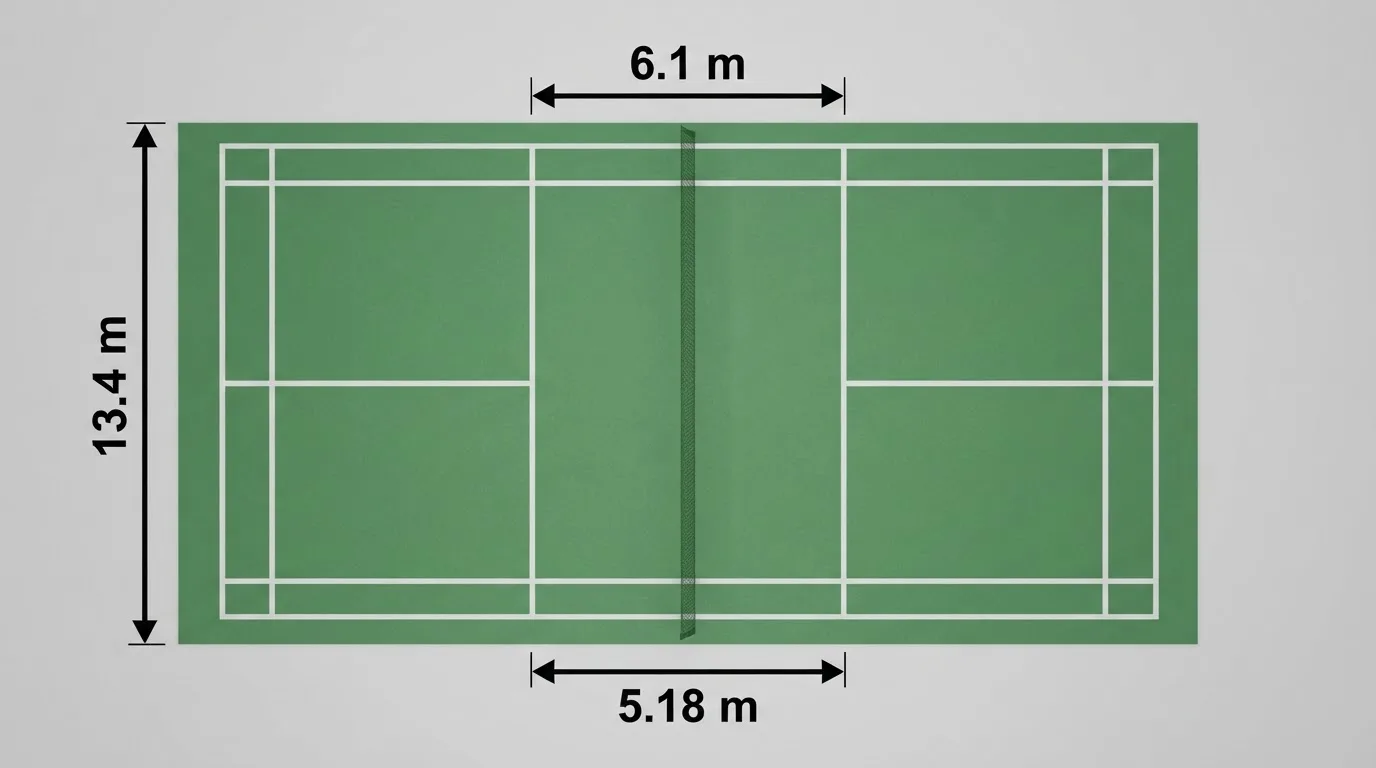
The court is 13.4 m long and 6.1 m wide for doubles, narrowing to 5.18 m wide for singles. The net sits 1.55 m high at the edges and 1.524 m at the centre — a small dip that matters only in the geometry of the game, not on the betting slip. The shuttle is the fastest object in racket sport, and the rallies are short; a long rally at the top of the men’s game runs to ten or twelve shots, a typical rally is six. Each game goes to 21 with the two-clear rule, and at 29-all the next point wins — the golden point.
For the punter, the practical consequence is that badminton in-play is faster than tennis in-play and the markets reprice more often. A bookmaker that prices a match at 100-1 ticks a minute will price badminton at 100-1 ticks a game. The price a punter sees is a snapshot of that stream.
How the ten reviewed bookmakers treat badminton
The ten operators below hold a Gambling Commission remote licence for Great Britain as of the snapshot date and have been checked against the Commission’s public register. Several run under a single licensee — Ladbrokes and Coral under LC International, Paddy Power and Betfair under Flutter — so the list is a list of brands rather than a list of independent companies, and a place in the comparison is not a recommendation. Each card carries the licence account number as it appears on the register, the licence holder as the register names it, and the operator’s own statement on the key terms.
| Brand | Licence number and holder | What the operator’s own terms state |
|---|---|---|
| Ladbrokes | 054743-R-330863-014 — LC International Limited | App rated 4.66 from 101,255 ratings in the GB App Store; full sportsbook with acca insurance, price boosts and a deep in-play feed |
| Bet Ahoy | 100094-R-341742-003 — Bet Ahoy Ltd | Welcome package “Bet £10 & Get £10 in Free Bets”, made up of a £5 sports bet and a £5 acca free bet, on the GB App Store listing |
| Fitzwilliam Sports | 048760-R-335434-009 — SBKI Limited | Describes itself as a Dublin bookmaker with capped membership; welcome is a “High Stakes Welcome” subject to compliance criteria |
| London Bet | 066162-R-340278-004 — Thistle Bet Limited | App combines sports betting across football, tennis, horse racing, greyhounds, darts, golf, cricket, NFL, NBA, MLB and snooker with Pragmatic Play casino slots and live in-play |
| Unibet | 045322-R-324275-019 — Platinum Gaming Limited | Has operated since 1999; UK sports welcome offer “Get £40 in Free Bets when you bet £20”: £20+ at minimum odds 2.0, free bets expiring within 7 days, new GB customers on debit card or instant bank transfer |
| Smarkets | 039173-R-319366-011 — Smarkets (Malta) Limited | Betting exchange: open-bank-transfer deposits instant from £10 to £10,000 and withdrawals processed within 6 hours from £10 to £100,000; UK debit card deposits instant from £10 to £15,000 |
| Fafabet | 057385-R-333191-006 — Taichi Tech Limited | Best Odds Guaranteed on UK and Irish horse racing win and each-way bets from 9am on race days; if the starting price is bigger than the original price, the bigger odds are paid |
| bet365 | 055148-R-331498-002 — Hillside (UK Sports) ENC | Official global betting partner of the UEFA Champions League; Bet Builder + combines markets from one event into a single bet pre-match and in-play; Super Boosts, Winnings Boosts on Bet Builders and selected singles, daily Bet Boosts; in-play betting and live streaming of events worldwide plus Bet Track, Match Live and a Live Golf Tracker |
| Hollywoodbets | 053028-R-330019-013 — Hollywoodbets International UK Limited | Sports welcome: new players who deposit £10+ by card get their stake back as a free bet of up to £30 on their first qualifying losing accumulator — stake £10+, 3+ legs, odds 4/1 or greater, settled within 7 days, one free bet per customer |
| Kalooki Sportsbook | 057730-R-333396-005 — Kalooki Sportsbook Limited | Operated by Kalooki Sports Book Ltd (company number 12938274); GAMSTOP member; full sportsbook with bet builder, acca insurance and live in-play |
Ladbrokes
Ladbrokes runs the largest of the GB-licensed sportsbooks under LC International Limited, and the GB App Store rating of 4.66 from 101,255 ratings is the public measure of how the existing customer base uses the app. The sportsbook carries the full set of features a punter on a smaller sport looks for: acca insurance, daily price boosts, in-play feed, partial and full cash out, and a bet builder on selected events. The depth of the badminton line at Ladbrokes is the depth the rest of the market follows — match winner, total games, handicap games, sometimes set winner — and the in-play feed reprices at change of ends and at game point. Ladbrokes suits the punter who wants the broadest line on the sport and the most familiar interface; the cost is the standard sportsbook margin on every market and the standard British welcome terms rather than anything badminton-specific. For a casual BWF World Tour punter who values a familiar app over the absolute tightest price, this is the natural starting point.
Bet Ahoy
Bet Ahoy’s licence sits with Bet Ahoy Ltd, and the GB App Store listing is the public-facing description of what the brand offers. The welcome package is the smaller of the two-tier kind: a £10 qualifying bet returns £10 in free bets, split £5 sports and £5 acca. That split is the offer’s centre of gravity — the £5 sports free bet can be staked on any single market, the £5 acca free bet has to go on an accumulator — and a punter who treats the two halves as interchangeable is reading past the small print. The brand is one of the newer GB-licensed sportsbooks, and the depth of its badminton line reflects that: the bigger BWF events are there, smaller tour events are not. Bet Ahoy caters to the player seeking a straightforward introductory offer, though the badminton line-depth is focused squarely on major BWF tournaments.
Fitzwilliam Sports
Fitzwilliam Sports describes itself as a Dublin bookmaker with capped membership, and the welcome is a “High Stakes Welcome” subject to compliance criteria — the offer sits behind a check on the customer rather than open to anyone with a debit card. The bookmaker carries the standard safer-gambling set: instant deposits, fast withdrawals, timeouts and deposit limits, with the help pointers to GamCare, GambleAware, GamStop and Gamblers Anonymous on the home page. The capped-membership model means a punter cannot simply sign up; the brand’s own compliance criteria decide. Fitzwilliam Sports fits a high-stakes player who prefers a more exclusive environment and accepts a comprehensive identity-verification process as a prerequisite to play.
London Bet
London Bet’s licence sits with Thistle Bet Limited, and the GB App Store listing combines sports betting across the standard British set — football, tennis, horse racing, greyhounds, darts, golf, cricket, NFL, NBA, MLB and snooker — with Pragmatic Play casino slots and live in-play. Badminton is not named in that list, which puts the brand in the “tennis or wider” basket rather than the dedicated badminton line. A punter who wants a single-app sports-and-casino product, plus a London-facing brand, gets that here; a punter who wants a deep badminton line gets a thinner one.
Unibet
Unibet has operated since 1999 and the UK site runs under Platinum Gaming Limited in Gibraltar. The sports welcome offer is “Get £40 in Free Bets when you bet £20”: deposit and bet £20 or more at minimum odds of 2.0 (1/1), free bets expiring within 7 days, new GB customers on debit card or instant bank transfer. The 2.0 minimum is the line that matters — a qualifying bet at shorter odds does not trigger the offer — and the 7-day expiry is the line that costs the most in practice, because a free bet forgotten on the fifth day is a free bet wasted. Unibet’s badminton line is one of the deeper ones in the market, on the bigger BWF events, with the same match-winner / total games / handicap set as the rest. Unibet attracts the player looking for a seasoned operator with a deeper-than-average badminton selection and is comfortable managing the tighter 7-day expiration window.
Smarkets
Smarkets is the only betting exchange on the list, sitting under a betting intermediary licence with Smarkets (Malta) Limited as the holder. The exchange model is different from the sportsbook model: the punter backs or lays selections against other punters rather than against the bookmaker, and the platform takes a commission on net winnings rather than baking a margin into every price. The payment side is the public statement of the model: open-bank-transfer deposits are instant from £10 up to £10,000 and withdrawals processed within 6 hours from £10 up to £100,000; UK debit card deposits instant from £10 up to £15,000. The exchange line on a badminton event, when it carries one, tends to be tighter than the sportsbook line because the platform does not embed a margin, and a punter who wants the best price on a BWF event will compare it against a sportsbook’s price before betting. Smarkets suits the punter who wants the tightest price and is comfortable with the back-and-lay model rather than the sportsbook slip.
Fafabet
Fafabet’s licence sits with Taichi Tech Limited. Best Odds Guaranteed on UK and Irish horse racing win and each-way bets from 9am on race days is the public statement on the GB App Store listing — the bigger SP is paid automatically if it beats the original price — and that offer is standard on the racing side of the British market. Badminton is not a sport on which BOG is standard, and a punter looking for a badminton-specific upgrade should not expect one. Fafabet suits the punter whose betting is weighted to horse racing and who wants a BOG guarantee on the racing side; the badminton side runs on the standard sportsbook margin without a BOG-style upgrade.
bet365
bet365’s licence sits with Hillside (UK Sports) ENC, and the brand carries the broadest feature set on the list. Bet Builder + combines markets from a single event into one bet, pre-match and in-play. Super Boosts, Winnings Boosts on Bet Builders and selected singles, and daily Bet Boosts run alongside. In-play betting and live streaming of events worldwide sit behind the same login, with Bet Track, Match Live and a Live Golf Tracker for following bets in play. The brand is the official global betting partner of the UEFA Champions League, and the GB App Store listing describes the app as the most downloaded sports betting app in the UK. The badminton line at bet365 is the broadest of the ten: the BWF World Tour, the Thomas and Uber Cups, the Sudirman Cup, the All England, the BWF World Championships, the Olympics in the Olympic year. A punter who wants the deepest badminton coverage, the most complete in-play and live-streaming product, and the most generous bet-builder on the sport gets that here. The cost is the standard sportsbook margin on every market and a feature set that rewards the punter who uses the bet builder rather than just the match-winner market.
Hollywoodbets
Hollywoodbets’ licence sits with Hollywoodbets International UK Limited. The sports welcome offer is stake-back rather than free-bet-up-front: new players who deposit £10 or more by card get their stake back as a free bet of up to £30 on their first qualifying losing accumulator, with stake £10+, three legs or more, odds of 4/1 or greater, settled within 7 days, one free bet per customer. The offer pays on a loss, not on a win, and a winning first acca returns nothing extra. Hollywoodbets suits the punter who is going to bet an accumulator anyway, wants the safety net on the first one, and is willing to accept that the safety net is a free bet rather than cash.
What the law actually says about betting on badminton from Great Britain
The Gambling Commission, a non-departmental public body sponsored by the Department for Culture, Media and Sport, licenses the whole commercial market under the Gambling Act 2005. The Act covers Great Britain — England, Scotland and Wales. Northern Ireland sits outside the Act under its own older law, so a “Great Britain licence” or “GB-licensed” is the right framing; the licence does not regulate Northern Ireland. Since the Gambling (Licensing and Advertising) Act 2014, an operator whose remote facilities are used in Great Britain needs a Commission licence wherever it is based — sections 33 and 36 of the 2005 Act as amended. A Curaçao, Maltese or Gibraltar licence is not a substitute. There is no state monopoly and no cap on the number of licences.
The relevant licence categories for a punter are remote general betting standard (real events), the standard sportsbook licence; remote general betting standard (virtual events), for computer-generated events; remote general betting limited, a thinner category for smaller operators; remote pool betting, for pool-style products; and remote betting intermediary, the licence for exchanges. The Commission’s public register, searchable by business name, trading name, domain or account number, is the whole test of who holds a licence. Quote no count of licensed operators without its access date.
The minimum age is 18, and since 7 May 2019 the operator verifies name, address and date of birth before any deposit or bet, including with a free bet or bonus. That means no anonymous play at a licensed site.
There is no statutory list of permitted sports or markets. An operator holds a licence for a category and offers markets under its own rules and the Licence Conditions and Codes of Practice (LCCP). In-play betting is offered by GB bookmakers and the controls are the operator’s licence conditions and the customer-protection duties. Esports are treated like any other event; virtual events are a separate licence category. There is no statutory cap on stakes in sports betting: operators set their own maximum stakes and may restrict customers. Betting exchanges run under a betting intermediary licence; the rates and rules specific to exchanges are stated only from each exchange’s own terms.
The advertising frame is the ASA’s CAP Code (non-broadcast) and BCAP Code (broadcast), alongside the LCCP marketing conditions. CAP Code section 16: marketing must be socially responsible, must not be of strong appeal to under-18s, and no one who is or seems to be under 25 may be featured gambling or play a significant role, with an exception for marketing placed where a bet can be made directly. That rule is about who may appear in the advertisement, not who may bet. The whistle-to-whistle ban — no betting advertisements on TV from five minutes before a live sporting event to five minutes after, before the 9pm watershed — is an industry code in force since 1 August 2019, with horse and greyhound racing excluded. The Premier League clubs’ withdrawal of gambling sponsorship from the front of matchday shirts from 2026/27 is voluntary rather than law.
The player pays no tax on betting winnings in Great Britain. General Betting Duty is the operator’s tax, currently 15 % of gross profits, with a new remote betting rate of 25 % applying from 1 April 2027 alongside the 15 % rate on UK horse racing, self-service betting terminals in licensed premises, pool betting and in-person betting. Until 1 April 2027 the remote rate stays at 15 %; whether operators pass the higher rate on through odds is not established. Spread betting has its own rates — 3 % financial, 10 % other — and is regulated for its financial form by the Financial Conduct Authority, not the Commission.
The payments frame is credit-card banned for gambling in Great Britain since 14 April 2020, including credit-card-funded e-wallet payments, with debit cards and bank-based payments not covered by the ban. The identity check before the first deposit means no anonymous play. A British named-account rule, a state list of permitted payment methods, and any rule for or against cryptocurrency deposits at licensed operators are not established in the published rules.
The offshore frame is a GB licence compulsory at the point of consumption. Providing gambling facilities in Great Britain without the licence the Act requires is an offence under section 33 of the Gambling Act 2005 — on summary conviction up to 51 weeks’ imprisonment, a fine up to level 5, or both, six months in Scotland — and the offence is aimed at the operator. No offence aimed at a customer who merely bets on an unlicensed site was found. The loss of protection is the cost: no GAMSTOP coverage, no Commission complaints route, no approved dispute-resolution body, no British consumer redress if funds are withheld, not bound by the 10x bonus cap, not bound by the £150 vulnerability check. Enforcement against unlicensed operators runs through cease-and-desist notices, search-engine referrals, work with registrars, hosts and payment providers, and court-order DNS blocking powers the Commission has been given or is about to receive — never through ISP blocking already in operation.
Frequently asked questions
How does a punter bet on badminton?
Pick a licensed bookmaker from the Gambling Commission’s public register, complete the name, address and date-of-birth verification before the first deposit, deposit by debit card or bank transfer (credit cards are banned for gambling in Great Britain), and stake on a market the bookmaker lists — match winner, total games, handicap games, occasionally set winner or total points. In-play markets are available on the bigger BWF events at the larger sportsbooks, with cash out on selected markets.
How can it be checked that a bookmaker holds a Gambling Commission licence?
Search the Commission’s public register by business name, trading name, domain or account number. The register is the whole test of who holds a licence and lists the licence category, the licence holder and the trading name. If a brand does not appear on the register against a remote betting category, it does not hold a GB licence, and the protections that licence brings — GAMSTOP, the 10x bonus cap, the financial vulnerability check — do not apply.
How is the return on a bet worked out from the stake and the odds?
Return equals stake multiplied by the decimal odds. A £10 stake at odds of 2.50 returns £25 in total — the £10 stake plus £15 of profit. Net profit equals stake multiplied by (odds minus 1), so £10 at 2.50 returns £15 of profit. For a combination bet the odds of the legs multiply into one price, and a £10 treble at 1.80, 1.95 and 2.10 carries combined odds of about 7.37, returning £73.70 if all three legs win.
What is the bookmaker’s margin and how can it be seen in the odds?
The margin is the slice of every pound bet on a market that the bookmaker keeps in the long run. On a two-way market priced 1.90 / 1.90 in decimal odds, the implied probabilities are 52.63 % and 52.63 %, summing to 105.26 %; the overround is 5.26 %, and the margin is about 5.0 %. The punter pays that margin on every bet, and the wider the margin, the more the bookmaker keeps. A market priced 1.85 / 1.95 sums to 105.33 %, the overround is 5.33 %, and the margin is 5.1 %; one priced 1.70 / 2.20 sums to 104.27 %, the overround is 4.27 %, and the margin is 4.1 %.
How do fractional odds such as 5/1 convert to decimal odds such as 6.00?
The conversion is a/b → a ÷ b + 1 in decimal form. Fractional odds of 5/1 give 5 ÷ 1 + 1 = 6.00 in decimal. Fractional odds of 9/10 give 9 ÷ 10 + 1 = 1.90. Fractional odds of 11/4 give 11 ÷ 4 + 1 = 3.75. Evens (1/1) is 2.00 in decimal. A £10 stake at 5/1 returns £60 in total — the £10 stake plus £50 of profit — for decimal odds of 6.00.
Which tools for controlling play does a licensed bookmaker have to offer?
Every GB-licensed remote operator takes part in GAMSTOP, the national multi-operator online self-exclusion scheme, with exclusion periods of six months, one year, five years, or five years with auto-renewal. On-site controls: deposit limits, stake limits where the operator offers them, timeouts, session reminders, reality checks. Help pointers to GamCare (which runs the National Gambling Helpline), GambleAware and Gamblers Anonymous. From 30 August 2024 a financial vulnerability check applies at a £150 deposits-minus-withdrawals threshold in a rolling 30 days.
Tennis, darts & cue sports – Best betting
Content created by the «Best betting» team
