
Online soccer betting in 2026: the market, the margin, and the brands on the register
 Available in US
As of 27 October 2026, the figures below were checked against the Gambling Commission’s public register and against each operator’s own published terms.

Football runs the betting calendar. The 2026–27 Premier League opened on 21 August 2026 and runs to 30 May 2027, with Arsenal defending and Coventry, Ipswich and Hull back among the twenty. Spain took the 2026 World Cup in July. A licensed bookmaker has to hold a Gambling Commission licence wherever it sits, and the season carries on regardless of which brand carries the slip. The shape of the market — who is licensed, what they can offer, what the price is built from, and what a welcome bundle really costs the person who claims it — is the subject of this page.
How football betting works at a licensed UK bookmaker
A bet is a contract between the customer and the operator. The punter stakes a sum; if the selection wins, the bookmaker pays the stake plus winnings at the agreed price. The price is shown in fractional form (6/5, evens, 11/4) or in decimal (2.20, 2.00, 3.75) — the same number said two ways. The decimal price is the cleaner of the two: a £10 stake at 2.60 returns £26, of which £16 is profit. Fractional 8/5 means profit of £8 for every £5 staked, so a £10 stake returns £26 in the same way.
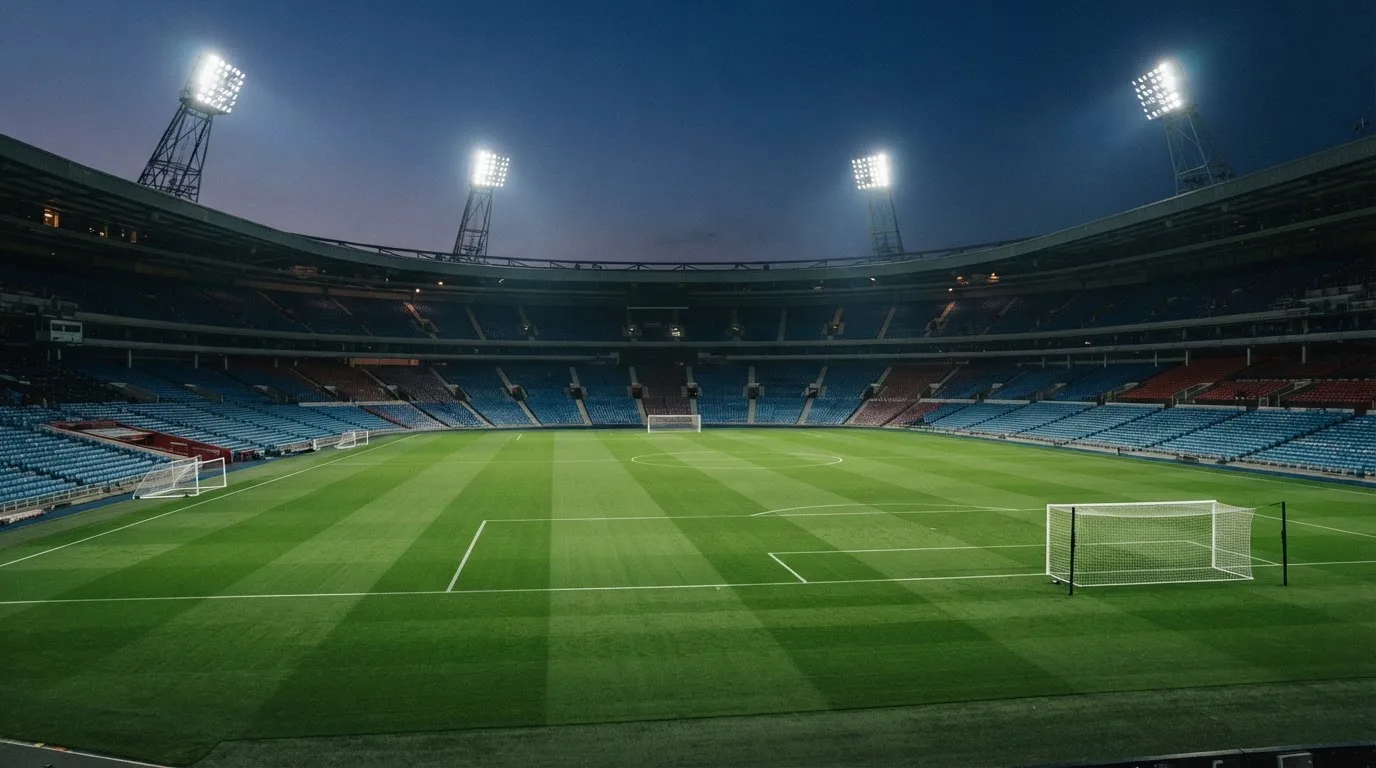
Three things decide whether a bet lands. First, the market — what the bet is actually about. The match result (home, draw, away) is the 1X2. Both teams to score, over/under a total, the Asian handicap, the double chance, the draw no bet, the first goalscorer, the correct score: each is its own market with its own price on the same fixture. Second, the price the bookmaker publishes. The bookmaker is free to set whatever price it likes; the bettor either takes it or goes elsewhere. Third, settlement. The bookmaker settles the bet using its own rules once the event finishes, paying the stake and winnings into the account or, for a free bet, the winnings only with the stake usually withheld.
Behind the price is the margin — the slice of every pound staked that the bookmaker expects to keep. It is hidden in the odds, and a lower margin means a fairer price for the bettor. The two ways of saying the same thing: a market that returns 95p in the long run for every £1 staked has a 5% margin. A market whose three prices are 2.10, 3.40 and 3.60 has a payout share of 1 ÷ (1/2.10 + 1/3.40 + 1/3.60) = 0.927, so a margin of about 7.3%. That is the band a 1X2 on a mid-week league game usually sits in at the bigger brands; a tight derby or a heavily bet Champions League night can come in nearer 5%, a peripheral cup tie or a small league can drift past 9%. The lower the band, the more of every stake the market pays back as winnings.
Football is unusual in that the draw is a real outcome, not a tiebreaker, so a 1X2 is a three-way market. The Asian handicap and the draw no bet remove the draw either by handing a head start to one side or by refunding the stake on a level match — both make the price a two-way market and tighten the margin. The double chance covers two of the three results in a single selection, and the price falls to match.
The licence question, and why a domain proves nothing
Every commercial bookmaker taking bets from customers in Great Britain needs an operating licence from the Gambling Commission, the regulator set up under the Gambling Act 2005. Northern Ireland sits outside the Act and runs on its own older law, so a “GB licence” means England, Scotland and Wales only. Since the Gambling (Licensing and Advertising) Act 2014 the licence is needed at the point of consumption — wherever the operator is based — so a Gibraltar or Malta registration is not a substitute. A Curaçao licence is not a substitute. The Commission’s public register is the only test of who holds one, and it is searchable by business name, trading name, domain or account number.

The licence categories matter. Remote general betting standard (real events) covers the licensed UK bookmakers reviewed below. Remote betting intermediary is the betting-exchange licence. A pool-betting licence covers the pools. A separate licence covers virtual events. The licence held decides what markets the brand can offer; the public register names the category next to the licence.
Two practical points the register does not say. A licensed operator may use a .com rather than a .co.uk domain, so the domain is no evidence at all. And a single licence can sit behind several brands — Ladbrokes and Coral share a parent, Paddy Power and Betfair share a parent — so the brand on the shirt and the licence holder on the register are not the same thing. Every brand reviewed here is the trading name of a Commission-licensed company, with the licence holder named on the register.
Offshore, the picture is different. A bookmaker that holds no Commission licence but accepts a GB customer is breaking section 33 of the Gambling Act 2005; the offence is the operator’s, not the customer’s. What the customer loses is the whole layer of protection the licence brings: no GAMSTOP coverage, no Commission complaints route, no approved dispute-resolution body, no British consumer redress if funds are withheld, and no cap on the bonus terms the brand can write. The Commission’s tools are cease-and-desist notices, search-engine referrals, registrar and payment-provider work, and the court-order DNS blocking powers it has been granted or is about to receive. Blocking is not in operation today.
Safer gambling in Great Britain: GAMSTOP, checks, and the support on offer
Every GB-licensed online operator is a member of GAMSTOP, the national self-exclusion scheme. A punter can register with GAMSTOP and exclude themselves from every online site and app the scheme covers; the periods are six months, one year, five years, or five years with auto-renewal, and after the minimum period the exclusion stays in force for a further seven years unless the customer asks GAMSTOP to remove it. Betting shops use a separate offline service. GAMSTOP is a layer of protection the offshore market does not offer.
The other layer is the identity and money check. Since 7 May 2019, name, address and date of birth are verified before a customer can deposit or gamble at a licensed site — including with a free bet or a bonus. Since 28 February 2025, a financial vulnerability check kicks in once deposits minus withdrawals exceed £150 in a rolling 30 days; the check is a public-record look (bankruptcy, county court judgments) and is not a credit reference or income check. A further “affordability” stage has been announced in stages with no start date, so the right phrase is “announced, staged, no start date”, not “in force”.
Deposit limits are the customer’s tool: under the Remote Technical Standards the operator must offer a gross deposit limit on a fixed time frame. A state-set ceiling for betting losses or stakes does not exist. The credit-card ban has been in force since 14 April 2020 — a credit card cannot be used to gamble in Great Britain, and a credit-card-funded e-wallet is covered too; debit cards and bank-based payments are not. The safer-gambling controls at a licensed site look like more friction than an anonymous offshore book, and that is the point of them.
Help lines and clinics sit alongside the operator’s own tools. GamCare runs the National Gambling Helpline. GambleAware funds treatment and education. The NHS runs gambling clinics across the regions. Gamblers Anonymous runs peer-support meetings. A licensed operator links to these in the safer-gambling section of its site; an unlicensed one does not have to.
Cryptocurrency, anonymity, and the licensed UK market
Bitcoin and other cryptocurrencies have no statutory standing in the licensed UK market. There is no Commission rule that bars a licensed operator from accepting a crypto deposit, and there is no rule that allows it; the position is set by each operator’s own payment-method list and by the credit-card ban, which by its terms covers the funding instrument rather than the asset. A licensed brand that does take crypto is rare; the typical licensed payment set is a debit card, a bank transfer, an e-wallet, and sometimes Apple Pay. Offshore, crypto is a standard rail. The trade-off is the one that runs through the whole licensed-versus-offshore question: an asset a GB operator does not have to take is also an asset a GB punter does not have to disclose. The licensed market does not offer anonymity; the verification before the first bet, and the vulnerability check above £150 net in 30 days, are precisely the protections an anonymous book does not give.
For the punter who wants a settled bet in pounds, the licensed route is the route. For the punter who wants a wallet-level pseudonym, the unlicensed route is what is left — and the price is no GAMSTOP, no British dispute body, and a real risk of funds being withheld. Either choice is the punter’s; the analysis here is the cost of each.
Welcome offers, free bets, and what the small print really says
A welcome offer is a marketing deal tied to a first deposit or a first bet. The headline figure is rarely the value. Three rules cover almost every offer on the licensed UK market, and each of them costs the punter something the marketing does not name.
A “free bet” is not a refund. When a free bet wins, the bookmaker pays the winnings only; the free-bet stake is usually not returned. A £10 free bet at 2.60 wins £16 of profit, not £26 of return. The headline of “£30 in free bets” is worth what those free bets return over the bets the punter places, which is closer to two-thirds of the headline if the prices are ordinary and the bets win. The “stake not returned” line is in the small print because the law requires it; the headline that does not name it is the marketing.
A wagering requirement is a turnover rule. A bonus of £10 with a 10x wagering requirement means the punter has to place £100 of qualifying bets before the bonus — and often the winnings from it — can be withdrawn. Under the rule in force since 19 January 2026, wagering requirements on bonuses at GB-licensed operators are capped at 10x, and mixed-product promotions — an offer that requires gambling on two or more product types, such as “bet on football to get free spins” — are banned. The 10x cap is a hard ceiling; the offer above it cannot be sold.
A minimum price is a price floor. Many free bets and bonuses only count when the qualifying bet is at or above a stated price — 1.50, 2.00, even-money, fractions in the operator’s own form. The price floor matters because lower-priced bets qualify more easily but pay less; higher-priced bets qualify fewer times but pay more. The floor is the place where the offer is won or lost.
Two further points are worth naming. The first is the deadline. A free bet that expires in seven days is a free bet that must be placed in seven days; an offer that expires in thirty is the same bet with more time. The second is the cap on free-bet winnings. Some offers cap the winnings a free bet can pay; the cap is in the small print and it is the real ceiling on value.
The mobile app and the betting slip in the pocket
The smartphone has become the betting slip. A licensed UK bookmaker’s app carries the same market depth as the desktop site, with the live in-play grid, the bet builder, the cash-out button, and the account tools in a touch interface. The bet is placed in three taps: pick the match, pick the market, type the stake. The bet settles in the app, and the winnings return to the account balance the same evening for a domestic game.
Three things are worth weighing before an app goes on the phone. The first is verification: the identity check that runs before a first bet is a document upload or a third-party check, and it is part of the licensed route. The second is the safer-gambling layer: deposit limits, time-outs, GAMSTOP, and the link to the help lines sit inside the account section, and an app without them is a warning sign about the licence. The third is the live in-play product. The big-brand apps carry ball-by-ball, second-half and minute-by-minute markets; the smaller-brand apps carry fewer. Where in-play is the main reason to bet, the app’s in-play grid is the deciding feature.
The browser version is not dead. A mobile browser on a phone can place a bet at most licensed brands, and the desktop browser carries the deeper market list, the live-streaming player, and the racing form. The app is the daily driver; the browser is the second screen. For a punter who bets on football only at the weekend, the browser is enough.
In-play betting, cash out, and the live market
In-play is the bet placed after the match has kicked off. The price moves with the score, the possession, the red card, the substitution, and the bets of other customers. A goal conceded at 0–0 turns the away win from outsider to favourite in a few seconds. The bookmaker manages the market by re-pricing continuously, and the punter manages the risk by laying off the bet or letting it ride.
Cash out is the bookmaker’s offer to settle the bet before the event finishes, at a price the bookmaker sets. The price is below the true value of the bet most of the time, because the bookmaker needs a margin on the cash-out line as well as on the original bet. Cash out is a useful tool for cutting a loss on a bet that has gone wrong, but it is not free — the difference between the cash-out price and the price the bet would settle at is the bookmaker’s slice. A punter who uses cash out on every bet leaves a steady percentage of expected value on the table.
Two market types deserve a word in the in-play section. The bet builder combines markets from the same match into a single price — home win, both teams to score, and over 2.5 goals, for example — and the price rises as the markets are added. The Asian handicap sits inside the in-play grid at most licensed brands, with quarter and half lines that handle the draw. The draw no bet refunds the stake on a level match, which is the cleanest way to back a side without taking the draw risk.
Predictions, form, and the limits of a “tip”
The licensed market is full of tipsters — paid and free — and of model-driven prediction feeds. The honest framing is that no one knows an outcome before it happens, and a tip is a view, not a forecast. The price the bookmaker offers is a consensus of bets and information; the tip is another input. A tip that disagrees with the price is a value bet only if the tip is right and the price is wrong, which is not knowable in advance.
What does help is a disciplined staking plan. A flat stake as a share of the bank — a half, a fifth, a tenth — survives losing runs in a way that chase staking does not. A betting record of stake, market, price, and outcome is the foundation of any review. A bookmaker that limits stakes on winners is the real ceiling on a serious punter, and a brand that does not limit is the one a long-term customer learns to value.
The model’s limit is the model’s limit. A tipster who picks 1,000 Premier League games at an average price of 2.50 needs an actual strike rate of about 41% to break even at a 5% margin, and the strike rate is the thing nobody knows until the bets are placed. A bookmaker’s margin is the hidden tax on every bet; it is the reason a punter who picks winners at 50% still loses in the long run if the prices are short.
The market types in more detail
The 1X2 is the basic market: home win, draw, away win. Three prices, one stake, one result. The double chance covers two of the three in a single selection — home win or draw, away win or draw, home or away — and the price is lower because the selection is more likely to land. The draw no bet refunds the stake on a draw, which is the same effect priced differently.
Both teams to score is a yes/no market on whether each side scores at least once. Over/under a total — 0.5, 1.5, 2.5, 3.5, 4.5 — is a yes/no on the number of goals. The half-goal lines (0.5, 1.5, 2.5) cannot be refunded; the whole lines (1, 2, 3) refund the stake on an exact match; the quarter lines (0.25, 1.25, 2.75) split the stake between the two adjacent whole-line markets. Asian handicap is the umbrella for the quarter, half and whole lines: a -1.5 handicap on the favourite means the favourite must win by two clear goals for the bet to land; a +0.25 on the underdog wins on a draw and refunds half the stake on a half-line draw.
The first goalscorer market names a player and pays on the first goal only. The correct-score market names an exact final score and pays a long price for the popular scores (1–0, 1–1, 2–1) and a much longer one for the rare ones (4–4, 5–0). The bet builder combines markets from the same match into a single price, and the price rises as the markets are added because the correlation between the legs makes the bet harder to win. The each-way bet is two equal stakes — one on the win, one on the place — and the place terms are set by the operator.
The fixtures the market runs on
A licensed UK bookmaker carries the Premier League and the English Football League in full, the Scottish Premiership, the Champions League, the Europa League, the Conference League, the FA Cup, the EFL Cup, the World Cup, the European Championship, the Copa América, and the African Cup of Nations. The lower English leagues (National League, National League North and South, the Isthmian and Northern Premier at step three) sit on the bigger-brand books. The women’s leagues — the Women’s Super League, the Championship, the Champions League — are a standard line at the bigger brands. The international fixtures and the European qualifiers run year-round.
The price depth varies by fixture. A Premier League match at a big-brand book carries 200+ markets, with player props, shot counts, corners, cards, and minute-by-minute in-play lines. A League One match at the same brand carries 60-80. A Conference North match at a smaller brand carries 30-40. The price depth is a fair proxy for the bookmaker’s confidence in the data and the punter’s choice. The bigger the brand, the deeper the line on the bigger the game; the smaller the brand, the shallower the line and the bigger the slice the book takes.
The 2026–27 Premier League is the headline league. Spain, France, Germany, Italy, the Netherlands and Portugal are the headline European leagues. The MLS runs from late February to early November, with the playoffs to mid-December. The Saudi Pro League has grown as a betting market with the player moves. The Japanese J1, the Korean K1 and the Australian A-League round out the year-round offering. The domestic cups and the European qualifiers are the autumn-through-spring spine of the calendar.
The ten licensed bookmakers in this comparison
The set below is a comparison of ten brands whose licences appear on the Commission’s public register under the remote general betting standard (real events) or remote betting intermediary categories. The order is not a ranking and not a recommendation; it is the order in which the cards sit in this comparison. Each card names the licence holder on the register, the account number a punter can search, and what the operator’s own terms say about the offers and features that matter to a football punter. The list closes with the column the table is built around: the headline spec that distinguishes each brand from the others in this set.
1. Fitzwilliam Sports — the Dublin bookmaker with a closed door
SBKI Limited is the licence holder on the Commission’s public register, and Fitzwilliam Sports describes itself as a Dublin bookmaker with capped membership. The welcome is named a “High Stakes Welcome”, which is a tell — this is a bookmaker aimed at customers who stake more than the everyday punter, and the offer is conditional on compliance criteria that the brand does not publish on the home page. The site carries the standard safer-gambling links to GambleAware, GamStop and Gamblers Anonymous, and the page names instant deposits, fast withdrawals, timeouts and deposit limits as standard.
A punter who wants a small-stake, low-friction account will not be the target here; a punter who wants a high-stake relationship with a small operator, who is willing to be vetted, and who is comfortable with a welcome whose value depends on the criteria, will. The rest of the comparison is what the operator’s own terms do not say on the home page, and that is where a serious punter reads before staking.
2. Betfred — the high-street name that bet 21 sports into an app
Petfre (Gibraltar) Limited is the licence holder, and the Betfred Sports, Casino & Games app is published by Done Brothers (Cash Betting) Ltd. The app covers 21 sports plus more than 2,000 casino-style games, which is the standard big-brand bundle. The shop-floor origin shows in the racing focus: Best Odds Guaranteed on UK and Irish racing is a long-standing feature, and the football product sits inside the wider book. The football product is the one the punter checks in the betting programme before staking.
A punter who wants a single app for racing, football and casino, who likes a brand with a UK shop presence, and who is comfortable with a long-established price-depth profile, will find Betfred fits. A punter who prefers a wider selection of niche sports markets over the standard app interface might find other bookmakers better suited to their betting style.
3. Dabble — the social-feed bookmaker with a £10 free bet on a first bet
Dabble Sports UK Ltd is the licence holder, and the welcome on the home page is “Bet £10, Get £10 in Free Bets” on a first deposit, with a minimum price on the qualifying bet, a 7-day free bet expiry, and the stake not returned with a win. The product is built around a social feed in which customers follow each other’s bets — a feature no other brand in this comparison runs at the same depth. The free bet is the headline; the social layer is the point of the product.
A punter who wants to follow other customers’ selections, who likes a short expiry on the free bet, and who is comfortable with the stake-not-returned line, will. A punter who wants a higher headline free-bet value or a longer expiry will compare.
4. William Hill — Best Odds Guaranteed from 8 AM, and the racing floor the football sits on
WHG (International) Limited is the licence holder, and William Hill pays Best Odds Guaranteed on UK and Irish horse racing from 8 AM on the day of the race, on both single and multiple bets. The BOG is the long-standing feature; the football product sits inside the racing-anchored book. The BOG does not apply to ante-post, tote or pari-mutuel bets, which is the standard exclusion list.
A punter who bets on both racing and football, who wants a brand with a long track record, and who is comfortable with a price-depth profile that has grown over decades, will. A punter who wants a BOG that extends further into the day, or a football-only product, will compare.
5. Unibet — the £40 free bets on a £20 first bet, the in-play grid that has been the brand’s calling card
Platinum Gaming Limited is the licence holder, and the brand has operated since 1999. The sports welcome on the UK site is “Get £40 in Free Bets when you bet £20”: a deposit and sports bet of £20 or more at minimum odds of 2.0 (1/1), with free bets expiring within 7 days of issue, for new GB customers using a debit card or instant bank transfer. The brand is named across the comparison for the in-play product and for the breadth of the football grid; the welcome is the headline the punter reads first.
A punter who wants a mid-sized free bet, who is comfortable with a 7-day expiry, and who likes a deep in-play grid, will. A punter who wants a longer expiry or a different funding instrument will compare.
6. BetVictor — Best Odds Guaranteed, enhanced live race streaming, and a Smart Stats panel for racing
BV Gaming Limited is the licence holder, and the app offers Best Odds Guaranteed on UK and Irish horse racing, enhanced live race streaming, a BetFinder feature for finding racing bets, and Smart Stats. The racing product is the headline; the football product sits underneath, with a similar in-play grid and bet-builder. The BetFinder is the feature that distinguishes this book from the others in the comparison for a racing-led punter; the football punter reads the betting programme before staking.
A punter who bets on both racing and football, who likes enhanced streaming, and who is comfortable with the BetFinder, will. A punter prioritizing a more expansive welcome package or a distinct mobile interface would be wise to weigh this option against others.
7. Bet600 — Best Odds Guaranteed on horse racing at the SP, and a book that opened to a specific kind of punter
Tyche Tech Limited is the licence holder, and the welcome on the app store description is Best Odds Guaranteed on horse racing: if the starting price is bigger than the early or show price taken, the bet is paid at the SP. The book opened as a sharper product than the high-street names and has stayed that way; the football product is built around the same price-focused approach. The BOG is paid at the SP rather than the bigger of two prices, which is a small but real difference to a punter who bets early.
A punter who likes a price-focused book, who is comfortable with the SP-paid BOG, and who is happy with a smaller welcome, will. A punter who wants a higher headline free bet or a deeper in-play grid will compare.
8. Kwiff — the supercharged-price book with a 17+ age rating on the app
Eaton Gate Gaming Limited is the licence holder, and the brand describes itself as a trademark operated by Spryme Ltd. The app carries a 17+ App Store age rating; the product is built around a “kwiff” mechanic that can supercharge a price on a bet. The football product is the same big-brand grid; the kwiff feature is the point of the brand. A punter who likes the surprise of a price jump will; a punter who wants a predictable price will compare.
A punter who wants the small chance of a supercharged price, who is comfortable with a smaller welcome, and who is happy with a 17+ app, will. A punter who wants a flat predictable price or a deeper in-play grid will compare.
9. DAZN Bet — the broadcaster’s book, with a £5 deposit floor and a media-shaped product
DZBT Limited is the licence holder, and the brand sits inside the DAZN media business. The deposit floor is £5 by debit card, Apple Pay, Paysafecard, Trustly and Skrill, and £20 by PayPal, with no processing fees. The football product is a standard big-brand grid; the media tie-in is the point. A punter who wants a low deposit floor, who is comfortable with the media-bundled product, and who is happy with a brand-new licence holder, will. A punter who wants a longer licence history will compare.
10. Smarkets — the betting exchange on a Commission intermediary licence
Smarkets (Malta) Limited is the licence holder, and the licence category is remote betting intermediary, which is the betting-exchange licence. The exchange is a different product from a bookmaker: customers back and lay against each other, and the platform takes a commission on net winnings. Deposits by open bank transfer are instant from £10 up to £10,000, and withdrawals are processed within 6 hours from £10 up to £100,000; UK debit card deposits are instant from £10 up to £15,000. The football product is the same fixtures on a different market structure: a back bet on the home win is matched against a lay bet on the same home win, and the price is the price at which the bet is matched.
A punter who wants to lay a selection as well as back it, who likes the exchange’s price depth on the bigger leagues, and who is comfortable with the commission model, will. A punter who wants a free bet welcome or a traditional bookmaker product will compare. The exchange is a different product, not a different price, and the comparison with a bookmaker is a comparison of two different markets.
| Brand | Licence number and licence holder | What the operator’s own terms state on the key’s subject |
|---|---|---|
| Fitzwilliam Sports | 48760 · SBKI Limited | Dublin bookmaker with capped membership; “High Stakes Welcome” subject to compliance criteria; instant deposits, fast withdrawals, timeouts, deposit limits; safer-gambling links to GambleAware, GamStop, Gamblers Anonymous |
| Betfred | 39544 · Petfre (Gibraltar) Limited | App covers 21 sports and over 2,000 casino-style games; published by Done Brothers (Cash Betting) Ltd; UK shop-floor brand |
| Dabble | 65677 · Dabble Sports UK Ltd | “Bet £10, Get £10 in Free Bets” on a first deposit, minimum price on qualifying bet, 7-day free bet expiry, stake not returned; social-feed product |
| William Hill | 39225 · WHG (International) Limited | Best Odds Guaranteed on UK and Irish horse racing from 8 AM on race day, single and multiple bets, no ante-post, tote or pari-mutuel |
| Unibet | 45322 · Platinum Gaming Limited | Operating since 1999; “Get £40 in Free Bets when you bet £20”, deposit and sports bet of £20+ at minimum odds of 2.0, 7-day expiry, debit card or instant bank transfer |
| BetVictor | 39576 · BV Gaming Limited | Best Odds Guaranteed on UK and Irish horse racing, enhanced live race streaming, BetFinder, Smart Stats |
| Bet600 | 44731 · Tyche Tech Limited | Best Odds Guaranteed on horse racing paid at the SP if bigger than the early or show price taken |
| Kwiff | 44448 · Eaton Gate Gaming Limited | UK-licensed trademark operated by Spryme Ltd; 17+ App Store age rating; supercharged-price feature |
| DAZN Bet | 48756 · DZBT Limited | Deposits from £5 by debit card, Apple Pay, Paysafecard, Trustly and Skrill, from £20 by PayPal, no processing fees |
| Smarkets | 39173 · Smarkets (Malta) Limited | Remote betting intermediary (exchange) licence; open bank transfer deposits instant from £10 to £10,000, withdrawals within 6 hours from £10 to £100,000; debit card deposits instant from £10 to £15,000 |
The marketing tax and how the price carries it
The book’s margin is the bookmaker’s slice of every pound staked. A market that pays back 95p in the long run keeps 5p. The same number from the other side is the payout share — 95% of stakes returned to customers as winnings. The margin is what the punter pays for the service, and the price carries it.
The arithmetic on the example: a 1X2 at decimal prices 2.10, 3.40 and 3.60 gives a payout share of 1 ÷ (1/2.10 + 1/3.40 + 1/3.60) = 0.927, so a margin of about 7.3%. That is the band a mid-week league game usually sits in at a bigger brand. A tight derby or a heavily bet Champions League night can come in nearer 5%, a peripheral cup tie or a small league can drift past 9%, and a one-off special such as a tournament outright at a small brand can run higher still. The lower the band, the more of every stake the market pays back as winnings.
Two prices on the same fixture at two different brands is the punter’s choice. A 0.10 difference on a 2.00 favourite is a 5% edge in the punter’s pocket, and a 0.20 difference on a 3.00 outsider is 6.7%. A punter who bets singles at bigger prices gets more from a small margin improvement than a punter who bets accumulators, because the accumulator multiplies the margin across the legs and the bookmaker’s slice compounds.
The offers, and what they cost the punter
A £10 free bet at 2.60 wins £16 of profit if it lands, not £26 of return; the headline is “£10 free bet” and the value is what the bet wins. A £40 free-bet bundle at an average qualifying price of 2.50 over the seven-day expiry is worth closer to £25 of expected value, with the gap between the headline and the value being the stake-not-returned line and the time decay. A welcome that asks for a £20 first bet at minimum odds of 2.0 turns £20 of stake into £40 of free bets, and the free bets expire in seven days.
The turnover cap in force since 19 January 2026 is the hard ceiling on the wagering multiple: 10x. A £10 bonus at 10x means £100 of qualifying bets before withdrawal. The mixed-product ban is the same rule’s other half: “bet on football to get free spins” is off the table. The credit-card ban removes the funding instrument that would have made the welcome easier to clear.
The cost of clearing a bonus is the cost of the qualifying bets. At a 7% margin, £100 of qualifying bets at an average price of 2.0 costs about £7 in expected value; the bonus is worth the headline minus the cost of clearing it, plus the time it takes. The cost is not the marketing. The arithmetic is.
What a winning bet pays
A £10 stake at 2.60 returns £26: the £10 stake plus £16 of profit. A £10 stake at 1.50 returns £15: the £10 stake plus £5 of profit. A combination bet multiplies the prices: a double at 2.00 and 3.00 has a combined price of 6.00, so a £10 stake returns £60 if both legs win. A treble at 2.00, 3.00 and 4.00 has a combined price of 24.00, so a £10 stake returns £240 if all three win. The combination’s price is the product of the legs, and the bookmaker’s margin compounds across them.
The same numbers in fractional form: 2.00 is evens (1/1); 3.00 is 2/1; 4.00 is 3/1. A 6/5 shot at 2.20 returns £22 on a £10 stake. A 5/2 shot at 3.50 returns £35. A 33/1 outsider at 34.00 returns £340.
The rule for converting a fractional price a/b to decimal: a ÷ b + 1. So 5/1 is 5 ÷ 1 + 1 = 6.00, 11/4 is 11 ÷ 4 + 1 = 3.75, and 4/6 is 4 ÷ 6 + 1 = 1.67 (rounded). A punter who reads a fractional price and wants the decimal works the conversion the same way each time.
The two kinds of book, and which is which
A bookmaker sets the price and takes the other side of the bet. A betting exchange matches customers against each other and takes a commission on net winnings. Smarkets, in this comparison, is the exchange. The rest are bookmakers.
The price on a bookmaker is the bookmaker’s view of the market plus the margin. The price on an exchange is the price at which customers are willing to back and lay. The two can drift apart on the same fixture: a bookmaker offers 2.60 on the home win, the exchange offers 2.58 to back and 2.62 to lay, and the punter can choose which side to take. The exchange’s “price” is two prices — the back and the lay — and the difference is the exchange’s spread.
A punter who wants to lay a selection (bet against it winning) needs an exchange. A punter who wants a free-bet welcome, a price boost, or a loyalty offer needs a bookmaker. The two products are different, and the comparison above names which is which.
Marketing, advertising, and the rule the bookmaker runs under
Advertising is not licensed by the Commission. The CAP Code (non-broadcast) and the BCAP Code (broadcast), enforced by the ASA, sit alongside the LCCP marketing conditions the Commission enforces. CAP Code section 16: marketing must be socially responsible, must not be of strong appeal to under-18s, and no one who is or seems to be under 25 may be featured gambling or play a significant role. The rule concerns who may appear in the advertisement, not who may bet.
The “whistle-to-whistle” rule is an industry code: since 1 August 2019, betting advertisements are not shown on TV from five minutes before a live sporting event to five minutes after it, before the 9pm watershed; horse and greyhound racing are excluded. The Premier League clubs’ withdrawal of gambling sponsorship from the front of matchday shirts (from 2026/27; sleeves and hoardings remain) is voluntary, not law.
The promotion rules in force since 19 January 2026 are the hard edges on the welcome. Wagering requirements capped at 10x. Mixed-product promotions banned. The cap on the money value of a bonus is not established. Whether the cap applies to free bets with no wagering condition is not established either; describe the offer in the operator’s own terms, not in a wrapper that flatters the headline.
The tax position
A punter in Great Britain pays no tax on betting winnings. General Betting Duty is the operator’s tax on gross profits, currently 15%; from 1 April 2027 a new remote betting rate of 25% applies within it, while remote bets on UK horse racing, bets on self-service betting terminals in licensed premises, pool betting and in-person betting stay at 15%. Spread betting has its own rates. Until 1 April 2027 the remote rate stays at 15%. Whether operators pass duty on through the odds is not established; the punter is not charged duty.
The Commission’s statutory levy is a separate charge on operators, not a tax on the punter. A professional gambler should ask HMRC or an adviser: this page is general information, not tax advice.
The decision the punter actually makes
A licensed UK bookmaker offers a bet, settles it under its own rules, and pays the winnings into the account. The punter’s choice is which brand to use, which market to back, and which offer to claim.
The brand is the one whose licence is on the Commission’s register, whose in-play grid carries the leagues the punter bets on, and whose welcome terms the punter can read in plain English before claiming. The market is the one whose price the punter has compared across at least two brands, and whose margin the punter has weighed against the alternative. The offer is the one whose headline the punter has discounted by the stake-not-returned line, the minimum price, the expiry, and the cost of clearing the wagering requirement.
Everything else — the safer-gambling tools, the help lines, the verification, the deposit limit — is the price of the licensed route. An unlicensed book is the route that skips them, at the cost of the protection the licence brings.
Frequently asked questions
What is draw no bet in soccer betting?
Draw no bet is a two-way market on the match result, with the draw refunded. The punter backs a side; if the side wins the bet lands at the price taken, and if the match finishes level the stake is returned. The price is lower than the equivalent 1X2 home or away price because the draw is removed from the selection. It is the cleanest way to back a side without taking the draw risk.
What is an Asian handicap in soccer betting?
An Asian handicap is a market in which one side is given a head start of a stated number of goals, with the line expressed as a whole, half or quarter goal. A -1.5 handicap on the favourite means the favourite must win by two clear goals for the bet to land. A +0.25 on the underdog wins on a draw and refunds half the stake on a half-line draw. The handicap removes the draw from the market and tightens the margin.
What is double chance in soccer betting?
Double chance is a market that covers two of the three 1X2 outcomes in a single selection: home win or draw, away win or draw, or home or away. The price is lower than the equivalent single selection because two outcomes are covered. It is the safer way to back a strong favourite against a draw, or a strong away side against the home win.
How can a punter check that a bookmaker holds a Gambling Commission licence?
The Commission’s public register is the only test of who holds a licence. It is searchable by business name, trading name, domain or account number; the licence number and the licence holder’s name are listed on the register entry. A licence for “remote general betting standard (real events)” is the standard licence for a UK bookmaker; a licence for “remote betting intermediary” is the exchange licence. The register is the only place the check is settled.
How is the return on a bet worked out from the stake and the odds?
The return is the stake multiplied by the decimal price. A £10 stake at 2.60 returns £26, of which £16 is profit. A £10 stake at 1.50 returns £15, of which £5 is profit. The fractional price a/b converts to decimal as a ÷ b + 1: 5/1 is 6.00, 11/4 is 3.75, 4/6 is 1.67. The combination bet’s price is the product of the legs: 2.00 and 3.00 is 6.00, and 2.00, 3.00 and 4.00 is 24.00.
What is the bookmaker’s margin, and how can it be seen in the odds?
The margin is the slice of every pound staked that the bookmaker expects to keep. A market that pays back 95p in the long run has a 5% margin. A 1X2 at decimal prices 2.10, 3.40 and 3.60 has a payout share of 1 ÷ (1/2.10 + 1/3.40 + 1/3.60) = 0.927, so a margin of about 7.3%. The margin is hidden in the prices, and a lower margin is a fairer price for the punter. The margin is the marketing tax in the price.
Football – Best betting
Content created by the «Best betting» team
