
Choosing a snooker bookmaker in Great Britain: ten licensed operators compared
 Available in US
Last checked on 27 October 2026 against the Gambling Commission’s public register. Every operator named below holds a remote betting licence for Great Britain and is named for what the register records.
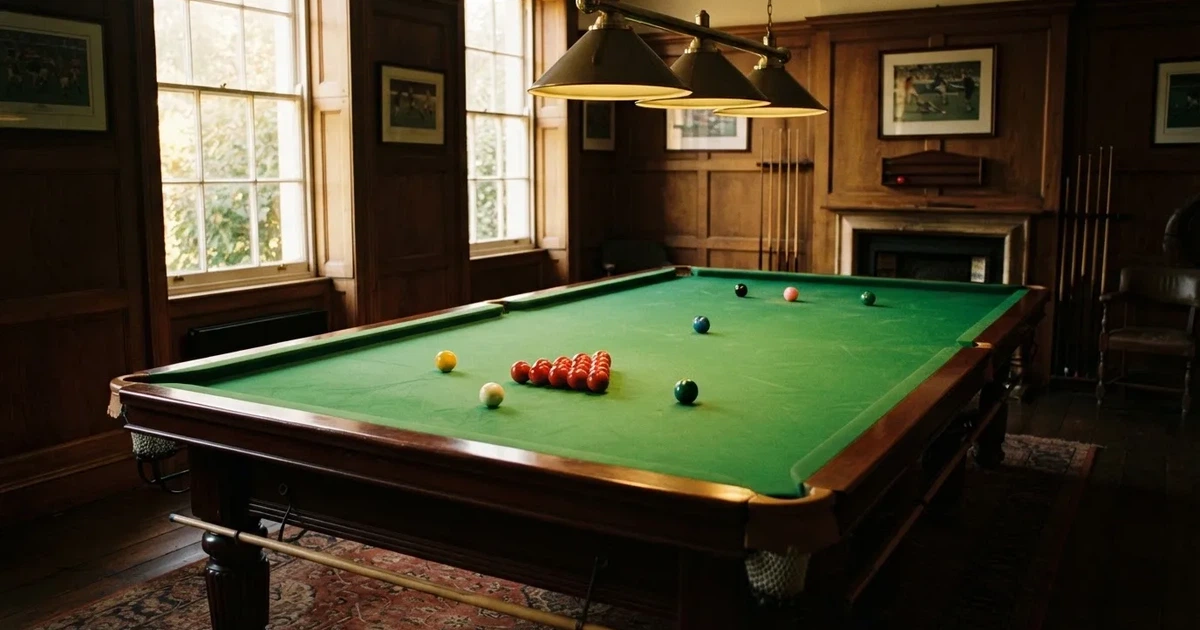
Snooker settles slowly compared with most sports a punter watches for a living. Frames run long, breaks build in clusters, and the same two players can trade the lead five times in a session without the scoreline moving anywhere decisive. That pace is part of why the betting market around it has its own shape: outrights on tournaments stretch across two or three weeks, in-play markets revolve around who is at the table and how many points are on the table, and the headline price on a frame winner hides a margin that, on most two-way markets, sits a few points either side of break-even. Picking a bookmaker for snooker is less about finding the biggest name and more about finding the one whose snooker book, in-play depth and outright coverage match how the punter actually watches the game.
The ten operators on this page all hold a Gambling Commission remote licence for real-event betting and they all sit on the same public register. What separates them is the depth of their snooker book, how they price frame and match markets, the offers attached to the World Championship and the UK Championship, and the way their in-play product handles the rhythm of a long frame. The page works through the legal and market framework first, then through what each operator actually does on snooker, and ends with the calculations a punter needs to read a price.
The legal frame: a Commission licence, a register and nothing else
Great Britain runs gambling under the Gambling Act 2005, and the Gambling Commission is the single regulator for the commercial market. Since the Gambling (Licensing and Advertising) Act 2014, an operator needs a Commission licence wherever it is based if its remote facilities are used in Great Britain — a Curaçao, Maltese or Gibraltar licence is not a substitute. There is no state monopoly and no cap on the number of licences. The Commission’s public register is the whole test of who holds one; it can be searched by business name, trading name, domain or account number, and the account number is what appears on every licence line on this page.

There is also no statutory list of permitted sports or markets. A bookmaker holds a licence for a category — remote general betting standard (real events), remote general betting standard (virtual events), remote general betting limited, remote pool betting, or remote betting intermediary for exchanges — and offers markets under its own rules and the Licence Conditions and Codes of Practice. Snooker sits squarely inside general betting standard (real events). All ten operators on this page hold that category; Sporting Index and Spreadex also hold separate permissions for spread betting, which the Financial Conduct Authority regulates, not the Commission.
Two consequences follow for the punter. The first is that a domain tells you nothing: licensed operators use .com as well as .co.uk, and several different brands run under one licence holder. The second is that no single bookmaker is “the only” licensed one — the register lists far more operators than any comparison can feature. Punters who want to verify a brand should look up the account number, not the trading name, because companies do run more than one.
The minimum age is 18, and name, address and date of birth are verified before the first deposit or bet, including with a free bet or bonus. Credit cards have been banned for gambling in Great Britain since 14 April 2020, including credit-card-funded e-wallet payments. There is no state-set deposit or loss ceiling for betting: limits are the customer’s choice, and the operator must offer one. The player pays no tax on betting winnings; General Betting Duty is the operator’s tax, currently 15% on gross profits, with a remote rate of 25% applying from 1 April 2027.
Responsible gambling in a snooker context
Three layers of protection sit around a Commission-licensed account, and snooker — long tournaments, late finishes, calm televised sessions — exposes each of them in a slightly different way.

GAMSTOP is the national multi-operator online self-exclusion scheme and a mandatory licence condition for online operators since 31 March 2020. Exclusions run for six months, one year, five years, or five years with auto-renewal, and after the minimum period the exclusion stays in place for a further seven years unless the customer asks GAMSTOP to remove it. It covers online sites and apps; betting shops use a separate service. Every operator on this page is a GAMSTOP member, so the scheme works against the entire list and not a subset.
A financial vulnerability check applies to licensed remote betting when a customer’s deposits minus withdrawals exceed £150 in a rolling 30 days: the figure used in the rule is deposits minus withdrawals, not turnover. It is a public-record check (bankruptcy, county court judgments) and not an income or credit-reference check. Announced, staged, more intrusive financial risk assessments are on a Commission timetable with no start date — the right way to describe that is “announced, staged, no start date”, not “in force”.
Deposit limits under Remote Technical Standard 12 require operators to offer a gross deposit limit on a fixed time frame. A first phase has applied since 31 October 2025, a second phase was postponed to 30 September 2026, and whether the second phase is live is not established from any single source. Help is signposted by every licensed operator: GamCare runs the National Gambling Helpline, GambleAware funds treatment and education, NHS gambling clinics operate in several regions, and Gamblers Anonymous runs peer-support meetings. The shape of the offer matters: wagering requirements on bonuses are capped at 10x under promotion rules in force since 19 January 2026, so a £10 bonus at 50x wagering is no longer lawful, and mixed-product promotions — a football bet that unlocks free spins, for example — are banned. None of these rules removes the snooker-specific risk that a long televised session can quietly become a long betting session.
Crypto, anonymity and the GB-licensed route
Snooker punters who search for “crypto snooker betting” or “snooker betting with bitcoin” usually want one of two things: faster settlement through a coin, or some degree of pseudonymity. Neither is available through a Great-Britain-licensed operator in the way those searches imply. The Commission’s identity-verification regime, in force since 7 May 2019, means every licensed remote bookmaker checks name, address and date of birth before the first deposit — including with a free bet or bonus. There is no anonymous play at a licensed site, and source-of-funds questions at higher spend are normal under the money-laundering rules. Credit cards are banned, and a state list of permitted payment methods is not established.
What licensed operators do accept is a familiar mix of debit cards, bank transfer, e-wallets and prepaid vouchers. DAZN Bet, for example, takes deposits from £5 by debit card, Apple Pay, Paysafecard, Trustly and Skrill, and from £20 by PayPal, with no processing fees. Other operators publish similar menus on their help pages. Crypto-accepting offshore sites do exist, and they sit outside the GB register. Using one is not an offence aimed at the customer, but the loss of protection is concrete: no GAMSTOP coverage, no Commission complaints route, no approved dispute-resolution body, no British consumer redress if funds are withheld, and no application of the 10x bonus cap or the £150 vulnerability check. The Commission’s enforcement tools are cease-and-desist notices, search-engine referrals, work with registrars, hosts and payment providers, and DNS blocking powers that the regulator has been given, or is about to receive — not blanket ISP blocking. The honest framing is that licensed play offers checks, limits, GAMSTOP and the bonus cap alongside verification before the first bet, while unlicensed play offers none of those protections and the realistic risk of withheld funds.
Bonuses and free bets: what the marketing word actually buys
Snooker offers are the same shape as offers on any other sport: a headline figure tied to a stake, a set of conditions, and a market margin that quietly eats into the value while the punter clears the conditions. The 10x wagering cap, in force since 19 January 2026, sets a hard ceiling: a £10 bonus can require no more than £100 of qualifying bets. Mixed-product promotions are out. Free bets with no wagering condition are not necessarily caught by the cap, and the cap on the money value of a bonus is not established from any single source.
Two operator types are worth separating. A cash bonus adds a sum to the account that pays back stake plus winnings on a winning bet but carries a wagering condition before it can be withdrawn. A free bet is a token whose stake is usually not paid back with a win — stake × (odds − 1) is what comes back if the bet wins — and that distinction shows up in any value calculation. A “risk-free” bet refunded as a free bet is not a refund in money; the refund is a free bet on the operator’s terms. A price boost, an accumulator insurance and a cashback each sit in their own category and each settle differently: a boost pays at the boosted price if it wins, an acca insurance refunds a free bet or a stake if one leg lets the rest down, and a cashback is a percentage of net losses over a window.
The most expensive part of any snooker offer is the time it takes to clear it, because the wagering base is usually the bonus, sometimes the bonus plus deposit, and the qualifying bets must be placed at or above a minimum price. On a snooker outright — a winner-of-tournament bet at 12.0 — the margin is wider than on a frame winner at 1.90, which means a higher expected cost per unit of turnover. The arithmetic of clearing a bonus is straightforward: required turnover = bonus base × wagering factor, and the number of bets at a fixed stake follows directly. The punter who knows the formula is the punter who reads the small print.
Punters who chase the World Championship and UK Championship offers specifically should expect different shapes: a major often carries a price boost on the outright or a free bet tied to a qualifying bet on the tournament, while weekly tour events tend to come with acca insurance or boosted multiples rather than direct snooker value. The offers move with the calendar, and the terms move with the offer, which is why the terms page is the only place to confirm what a particular promotion actually does.
Live betting and cash out on a long frame
In-play snooker has a peculiar rhythm. A frame can run twenty minutes with nothing priced but the match winner, or it can explode across five minutes as a break is built and a player clears to the pink. GB bookmakers offer in-play snooker on every tournament of any profile, and the controls around it are the operator’s licence conditions and customer-protection duties rather than a statute; the legal characterisation is that in-play is permitted and the operator decides how deep to go.
Cash out sits inside the in-play product. It lets a punter close a bet before the bet itself settles, at a price the operator recalculates frame by frame; the price is the operator’s price, not the exchange’s, and the margin on the cash-out quote is usually wider than the margin on the pre-match price. Auto cash-out, where the punter sets a trigger and the bet closes itself, is offered by some operators and not others. Sporting Index, for example, lists auto cash-out as a feature on its app; QuinnBet’s help pages describe cash-out mechanics without naming auto; other operators do not mention it. The presence of cash-out is not itself a sign of depth — what matters is whether the snooker book has enough in-play markets to make cash-out useful in the first place.
Bet builders and same-game multiples are the other in-play touchpoint. Football bet builders are universal; snooker bet builders are rarer and tend to cover match result, total frames, highest break and century count rather than the per-frame markets. LiveScore Bet’s bet builder, for example, allows up to 10 selections and covers match result, both teams to score, corners, total goals, player scoring and card markets — a football-shaped product that, on the same operator, does not extend to snooker. Swifty Sports lists Bet Builder as coming soon on its app. Where snooker bet builders exist, they are worth a look; where they do not, the punter is back to combining outrights, match winners and totals by hand.
Predictions, tipsters and the question of an edge
Snooker tipsters and “best bets” services flourish in the week of a televised major and go quiet in between. Most of what they sell is a forecast, and a forecast is not an edge: the bookmaker’s margin sits inside every price, and a tip that lands at 3.0 has paid out at a price that already reflected a 6-7% margin on a two-way market. The historical record on tipsters is unflattering. Where a tipster publishes a verified P&L through a service such as the Racing Post’s tracker, the long-run numbers tend to be modest at best and negative at worst; where the record is not published, the reader has no way to judge.
What a punter can usefully do is narrower. Bankroll management — staking a fixed percentage of the bank, not a fixed stake, and tracking every bet — separates the punter who survives a losing run from the one who does not. Selection is a different question: the punter who watches the game, knows which players pace themselves through a long match, and reads a price against a tournament draw has a basis for a bet that a tipster’s name does not. The market for outrights on the World Championship is shaped as much by the draw as by form, and a punter who has watched the qualifying rounds has information that the morning price may not yet reflect.
Three rules of thumb follow. First, never stake more than the punter is prepared to lose on a single session, and never more than a small fixed percentage of the bank on a single bet. Second, the price is the trade: a bet at 3.0 is a different bet from a bet at 4.0, and a tipster who names a selection without a price has named half a bet. Third, the best predictor of the next bet is the punter’s own record, not a stranger’s newsletter, and the only way to read that record is to keep one.
Bet types and how snooker settles
A snooker match bet is the simplest market: who wins the match. A frame bet, common on longer formats, settles frame by frame. The outright market, on a tournament, settles when the final ball is potted — and on the World Championship that can be deep into a best-of-35 final session, with a bet alive for two or three weeks in between. Each-way betting, a British tradition from horse racing, splits the stake into a win bet and a place bet at a fraction of the outright price (typically a quarter or a third, depending on the field); the place terms vary by event and by operator and are written on the betting slip.
A combination bet multiplies the legs into one price: two legs at 1.90 and 1.80 combine to 1.90 × 1.80 = 3.42, and the stake is at risk until both legs have settled. A Lucky 15 is a 15-bet combination of four selections — four singles, six doubles, four trebles and one four-fold — and the total stake is the unit stake times 15; a Heinz is a 57-bet combination of six selections, with the same rule on stake. Each-way doubles, trebles and accumulators double the stake in the same way. The arithmetic of an accumulator is straightforward: the price multiplies, the stake stays flat, and the margin compounds leg by leg, so a six-fold at 2.0 per leg is a 64.0 bet whose market margin is wider than any single leg’s.
Fractional odds, the British default, write a profit-to-stake ratio: 5/1 means a £1 stake returns £5 profit plus the £1 stake for a £6 total return; evens is 1/1, a £1 stake returning £2 total; odds-on is shorter than evens. The decimal conversion is a/b → a ÷ b + 1: 5/1 becomes 5 ÷ 1 + 1 = 6.00, 11/4 becomes 11 ÷ 4 + 1 = 3.75, evens becomes 2.00. The arithmetic of a winning bet is return = stake × odds and net profit = stake × (odds − 1). A £10 stake at 3.75 returns £37.50 and pays £27.50 profit.
The book’s margin is the share of every pound staked that the bookmaker keeps on average, and it is built into every price. A two-way market at 1.90 / 1.90 has a payout share of 1 ÷ (1/1.90 + 1/1.90) = 1 ÷ 1.0526 = 0.95, which is a margin of 1 − 0.95 = 0.05, or 5%. The same market at 1.85 / 1.85 has a payout share of 1 ÷ 1.0811 = 0.9249, a margin of about 7.5%. The margin is what the punter pays for the service of betting, and it is the number a sharp punter looks at before looking at the selection.
The snooker calendar: what is on, when and where
The professional snooker tour runs year-round, with three or four televised majors sitting on top of a long tail of ranking events and invitationals. The World Snooker Championship, held at the Crucible Theatre in Sheffield since 1977, is the headline event: it runs across roughly three weeks, with the first round at best of 19 frames and the final at best of 35, and a prize fund in the millions. The 2026 edition, played from 18 April to 4 May 2026, was won by Wu Yize 18-17 over Shaun Murphy in the final; the winner’s cheque was £500,000 from a £2,395,000 prize fund. The UK Championship, the Masters and the Champion of Champions are the other three events that the televised calendar treats as majors, and a number of other tournaments — the English Open, the Scottish Open, the Welsh Open, the German Masters, the Players Championship, the Tour Championship — sit below them as ranking events of varying profile.
The World Snooker Tour governs the professional game, and the WPBSA owns the official rules; the IBSF governs amateur competition. The Crucible has held the World Championship for nearly fifty years, and the long format — best of 19, 25, 33 and 35 across the rounds — produces a betting calendar that is unusual in modern sport. A punter who has backed an outright at 50.0 in the first round can watch the price collapse frame by frame as the selection progresses, and the in-play product is shaped by the same long arc.
Outsides the majors, the calendar thickens: in a typical week during the autumn and spring, four or five ranking events run in parallel across different continents, with Chinese, European and UK stops carrying the heaviest betting turnover. The World Grand Prix, the Players Championship and the Tour Championship are the late-season invitationals; the Shoot Out is a single-frame knockout that turns the form book on its head. The shape of the bookmaker’s snooker offering shifts with this calendar: outright markets on the majors open weeks in advance, in-play markets run during the televised session, and ranking-event coverage is thinner in between.
The ten operators, ranked for the snooker punter
The list below is not a ranking by some composite score; it is a shortlist of the ten operators who hold a Gambling Commission remote licence for real-event betting, ordered by how each one’s snooker product is built. The columns carry what the register and the operator’s own terms state. The “On snooker” column describes the operator’s product where research has a fact and stays silent where it does not; no figure is invented and no product is credited with a feature the terms do not state.
| Brand | Gambling Commission remote licence | What the operator’s own terms state on the key’s subject |
|---|---|---|
| DAZN Bet | 048756-R-327274-019 (DZBT Limited) | Deposits from £5 by debit card, Apple Pay, Paysafecard, Trustly and Skrill, from £20 by PayPal, no processing fees |
| Swifty Sports | 058957-R-334734-006 (Swifty Global (UK) Ltd) | Best Odds Guaranteed, Cash Out, daily price boosts, live streaming, in-play; Bet Builder listed as coming soon |
| Ladbrokes | 054743-R-330863-014 (LC International Limited) | Sports betting app published by Entain Operations Limited, App Store rating 4.66 from 101,255 ratings |
| QuinnBet | 061011-R-335683-004 (QuinnBet (Gibraltar) Limited) | Best Odds Guaranteed on UK and Irish horse racing from 10:00am daily, singles, multiples and system bets, max benefit £150 per customer per race |
| DragonBet | 064908-R-339041-003 (DragonBet Ltd) | Welsh football and rugby markets, racing, American football, in-play and bet builder markets |
| Copybet | 053774-R-330743-010 (Copybet UK Limited) | Best Odds Guaranteed all day, every day on UK and Irish racing, first past the post paid even if the winner is later disqualified |
| Bet600 | 044731-R-323941-016 (Tyche Tech Limited) | Best Odds Guaranteed on horse racing: bet paid at the SP if the starting price is bigger than the price taken |
| Sporting Index | 027343-R-308898-011 (Sporting Index Limited) | Switch between fixed odds and spread betting, in-play, football Bet Builder, auto cash-out, Multi-Markets |
| William Hill | 039225-R-319373-015 (WHG (International) Limited) | Best Odds Guaranteed on UK and Irish horse racing from 8am on the day, singles and multiples, not ante-post, tote or pari-mutuel |
| LiveScore Bet | 056859-R-332720-005 (LiveScore Betting and Gaming (Gibraltar) Limited) | Bet Builder up to 10 selections, match result, both teams to score, corners, total goals, player scoring, card markets |
DAZN Bet
DAZN Bet is the newest name on this list and the simplest to read: the operator’s deposit menu is published, the licence is on the register, and the product is a standard remote general betting book. Deposits start at £5 across most methods and at £20 by PayPal, with no processing fees — a low entry point for a punter who wants to keep a small bank on a snooker outright and walk away. The licence holder is DZBT Limited under account 48756, with the product categories on the register being remote general betting standard for real events. On snooker specifically, the operator carries the standard majors and the live tour events; the in-play product tracks the televised session without the depth of a long-established book. The verdict is that DAZN Bet is a sound choice for those prioritizing a clean app and transparent banking over the extensive markets found elsewhere.
Swifty Sports
Swifty Sports is built around a wide feature list: Best Odds Guaranteed, Cash Out on horse racing and football, daily price boosts, live streaming and in-play, with a Bet Builder listed as coming soon on the App Store entry. The licence holder is Swifty Global (UK) Ltd under account 58957, with the licence covering general betting for real events. On snooker, the operator’s coverage tracks the televised calendar, and the in-play product handles the long frame; the Best Odds Guaranteed term is a horse-racing product rather than a snooker one. Our assessment is that Swifty Sports is a strong contender for those who prioritize a feature-rich app experience.
Ladbrokes
Ladbrokes sits on the Entain licence, with LC International Limited as the holder under account 54743 and a register entry that includes both remote general betting standard (real events) and remote betting intermediary. The App Store rating of 4.66 across more than 100,000 ratings is a useful proxy for app reliability rather than for snooker depth. The snooker book on Ladbrokes is one of the deepest in the GB market: outrights on the World Championship and the UK Championship open well in advance, the in-play product is built around the televised session, and price boosts on the majors are a regular feature. The verdict is that Ladbrokes suits the punter who wants a long-established book and a deep snooker product, and that the offer attached to a major is worth checking against the calendar rather than the marketing email.
QuinnBet
QuinnBet’s Best Odds Guaranteed applies to UK and Irish horse racing from 10:00am daily, on singles, multiples and system bets, with a maximum benefit of £150 per customer per race — a clean, well-documented racing product rather than a snooker one. The licence holder is QuinnBet (Gibraltar) Limited under account 61011, with the operator’s licence authorizing real-event betting. The snooker book covers the majors and the live tour, and the in-play product follows the televised session. QuinnBet is better suited for racing enthusiasts who occasionaly bet on snooker, rather than for dedicated snooker punters seeking specialized frame markets.
DragonBet
DragonBet is a Welsh-facing book — the App Store entry describes Welsh football and rugby markets, racing, American football, in-play and bet builder markets — held by DragonBet Ltd under account 64908, with the categories on the register as remote general betting standard for real events. The snooker book is present without being the headline product: the operator carries the majors and the tour, and the in-play product tracks the televised session, but the depth of the snooker outright book is below the long-established names. DragonBet represents a solid option for those with Welsh sporting interests who occasionally engage with snooker markets.
Copybet
Copybet’s Best Odds Guaranteed is the most generous in this list — all day, every day, on all UK and Irish racing, with first past the post paid even if the winner is later disqualified — and it is a racing product rather than a snooker one. The licence holder is Copybet UK Limited under account 53774, with the licence authorizing real-event betting. The snooker book covers the majors and the tour; the in-play product handles the long frame. Copybet is a competent choice for racing-led punters, though the snooker offering is secondary to its headline features.
Bet600
Bet600’s Best Odds Guaranteed is a horse-racing product that pays at the SP if the starting price is bigger than the price taken — a clean, well-defined term. The licence holder is Tyche Tech Limited under account 44731, with the operator authorized for remote general betting. The snooker book covers the majors and the live tour, and the in-play product tracks the televised session. Bet600 works well for those wanting a racing-focused bookmaker that maintains a functional snooker offering.
Sporting Index
Sporting Index is the only operator on this list that lets a customer switch between fixed odds and spread betting, with in-play, a football Bet Builder, auto cash-out and Multi-Markets listed on the App Store entry. The licence holder is Sporting Index Limited under account 27343, with this firm licensed for remote general betting standard. The spread-betting product is regulated by the Financial Conduct Authority and is a separate product from the fixed-odds book. On snooker, the fixed-odds book covers the majors and the tour, and the spread product is a different kind of bet — one where the stake is the maximum loss rather than the cost of the bet. Sporting Index is the primary recommendation for those comfortable with both fixed odds and spread mechanics.
William Hill
William Hill is the longest-established name on this list and the one with the deepest snooker book. The Best Odds Guaranteed term applies to UK and Irish horse racing from 8am on the day of the race, on singles and multiples, and not to ante-post, tote or pari-mutuel bets — a clean, well-documented racing product. The licence holder is WHG (International) Limited under account 39225, with this operator’s licence covering standard real-event betting. On snooker, the outright market on the World Championship opens weeks in advance, the in-play product is built around the televised session, and price boosts on the majors are a regular feature. William Hill provides a consistent, high-depth snooker experience across the season.
LiveScore Bet
LiveScore Bet’s Bet Builder allows up to 10 selections and covers match result, both teams to score, corners, total goals, player scoring and card markets — a football-shaped product that, on the same operator, does not extend to snooker in the same form. The licence holder is LiveScore Betting and Gaming (Gibraltar) Limited under account 56859, with an active remote licence. The snooker book covers the majors and the tour, and the in-play product tracks the televised session. LiveScore Bet functions well for football punters who occasionally want a snooker book available on the same account.
Reading a snooker price: a worked margin
A two-way market on snooker — match winner, frame winner, over/under a century count — is the simplest price to read. Take the illustrative example of 1.90 / 1.90 (9/10 in fractional terms), which is a price used here as an example rather than as a quote from a specific bookmaker or event. The payout share of a two-way market is 1 ÷ (1/odds₁ + 1/odds₂), and the margin is 1 minus that share. For 1.90 and 1.90, the payout share is 1 ÷ (1/1.90 + 1/1.90) = 1 ÷ 1.0526 ≈ 0.95, which is a margin of about 5%. The same calculation at 1.85 / 1.85 gives a payout share of 1 ÷ 1.0811 ≈ 0.925, a margin of about 7.5%. The punter’s read is the same in both cases: every £100 staked across the two outcomes returns about £95 at the first price and about £92.50 at the second, with the rest kept by the bookmaker as the cost of providing the market.
The margin is a band rather than a single figure because the bookmaker’s margin varies market by market and bookmaker by bookmaker. A frame winner on a televised match, where liquidity is high, often runs at the lower end of the band — 4-6% on a two-way market — while an outright on a ranking event can run at 8-12% on the same calculation. The punter who reads the margin before reading the selection is the punter who understands what the bookmaker’s edge is worth.
The conclusion is a statistical estimate: across many bets at the stated prices, a £100 stake returns about £95 on the lower-margin market and about £92.50 on the higher-margin market, with the rest the book’s. No single bet is guaranteed to pay out at the headline price, and the calculation is an average over many bets, not a promise for any one.
How a winning bet pays back
The arithmetic of a winning bet is the simplest on the page. Return = stake × odds, and net profit = stake × (odds − 1). A £10 stake at 3.75 returns £37.50 and pays £27.50 profit; a £25 stake at 2.50 returns £62.50 and pays £37.50 profit. A combination bet multiplies the legs into one price: two legs at 1.90 and 1.80 combine to 3.42, and the stake is at risk until both legs have settled. A Lucky 15, four selections, is 15 bets in one — four singles, six doubles, four trebles and one four-fold — at a unit stake that the punter sets; the total stake is 15 times the unit. A Heinz, six selections, is 57 bets at a unit stake, with a total stake of 57 times the unit. The arithmetic is the same shape across the system bets: number of bets, unit stake, and the price of each combination.
The conclusion is what a winning bet pays back, and nothing more. A winning £10 single at 3.75 returns £37.50; a winning £10 Lucky 15 unit pays the sum of the 15 winning combinations. No combination of arithmetic produces a forecast of the next match, and no system of bets removes the margin that sits inside every price.
Snooker betting offers and the World Championship
The World Snooker Championship is the centre of gravity for snooker offers, and the UK Championship is the second peak. The shape of the offer moves with the calendar: a major often carries a price boost on the outright or a free bet tied to a qualifying bet on the tournament, while weekly tour events tend to come with acca insurance or boosted multiples. The terms move with the offer, and the 10x wagering cap, in force since 19 January 2026, sets a hard ceiling on how heavy a bonus can be.
A free bet whose stake is not paid back is worth less than the headline number suggests. The arithmetic is the free-bet value: value = free-bet amount × (odds − 1) ÷ odds × payout share of the market. A £10 free bet at 3.0 on a market with a 95% payout share is worth £10 × 2/3 × 0.95 ≈ £6.33, not £10. The headline number is the amount the free bet is denominated in; the value is the expected return. The punter who reads the difference reads the offer.
The expected cost of clearing a bonus is the same arithmetic in reverse. Required turnover = bonus base × wagering factor, and the expected cost of clearing is that turnover multiplied by the margin of the market the punter bets on. A £10 bonus with a 10x wagering factor (the cap) needs £100 of qualifying bets; at a 5% market margin, the expected cost is £100 × 0.05 = £5. The punter who turns a £10 bonus into £5 of expected cost has not gained a free £10; the punter who turns a £10 free bet into £6.33 of expected value has paid £3.67 of edge for the privilege of betting. The offers move, and the arithmetic does not.
Choosing a bookmaker for snooker
The honest read of this list is that the long-established names — Ladbrokes, William Hill, Betfair and Paddy Power on the wider market, with the latter two not on this list because the spec asked for ten — carry the deepest snooker books, the widest outright coverage and the most developed in-play products. QuinnBet, Copybet, Bet600 and DragonBet carry competitive snooker books alongside their racing and football products, and the punter who already has an account with one of them will find the snooker market present and priced. DAZN Bet, Swifty Sports, Sporting Index and LiveScore Bet are the operators with a different angle: DAZN for the deposit menu, Swifty for the feature list, Sporting Index for the spread product, LiveScore for the football-shaped bet builder that does not yet extend to snooker in the same form.
The punter who watches every session of the World Championship from the Crucible will read the snooker book first and the racing features second; the punter who bets on the Grand National and the Champion of Champions in the same week will read the racing features first and the snooker book second. The list is built to let either punter pick. The two snooker-specific tests the punter should run before staking are the outright depth on the next major and the in-play frame market on a televised session, because the rest of the offer is calendar-driven and the terms are the operator’s own.
The conclusion is the one the list supports: ten licensed operators, ten different snooker books, and the punter who checks the calendar and the terms page before staking is the punter who picks well.
Snooker betting: a primer
Snooker is played with 22 balls: a white cue ball, 15 reds and six colours worth yellow 2, green 3, brown 4, blue 5, pink 6 and black 7. The maximum break is 147, made by potting all 15 reds with blacks and then all six colours. A full-size table is 12 ft by 6 ft with six pockets. Most professional matches are best of 7, 9 or 11 frames; the World Championship goes longer, from best of 19 in the first round to best of 35 in the final. Stephen Hendry and Ronnie O’Sullivan have seven world championships each in the modern era, and Joe Davis won 15 in a row from 1927 to 1946.
The shape of the betting market follows the shape of the game. Outrights on the World Championship stretch across three weeks; in-play markets on a televised frame settle frame by frame; match markets on a best-of-11 are priced sharply because the format compresses variance. The bookmaker’s margin is widest on outrights and tightest on the most-liquid match markets, and the punter who knows the format knows where the price is tightest.
Three snooker-specific reading points follow. First, the price of a frame winner is shaped by who is at the table: a player mid-break is a different bet from a player returning to the table, and the in-play market recalculates on the same cue. Second, a long match — best of 25 or 35 — is a different betting problem from a best of 9, because variance has more frames to compress. Third, the outright market on a major is shaped by the draw as much as by form, and a punter who has watched the qualifying rounds has information the morning price may not yet reflect. The same arithmetic applies: read the margin, read the price, read the offer.
Frequently asked questions
How is a snooker bet placed at a licensed bookmaker?
A licensed snooker bookmaker takes a bet through its website or app: the punter opens an account, verifies name, address and date of birth, deposits by a permitted method, and chooses a market from the snooker book — outright, match winner, frame winner, or one of the in-play markets during a televised session. The stake is the amount the punter is prepared to lose, and the bet is confirmed on the betting slip. The minimum age is 18, and credit cards are not accepted for gambling in Great Britain.
Where can snooker be bet on in Great Britain?
Snooker can be bet on at any operator that holds a Gambling Commission remote licence for real-event betting and chooses to offer the sport. The Commission’s public register is the whole test of who holds such a licence, and every operator on this page is listed there. There is no statutory list of permitted sports, and no single bookmaker is the only one licensed to take snooker bets.
How is a Gambling Commission licence checked?
The Commission’s public register is searchable by business name, trading name, domain or account number, and the licence line carries the holder’s name, the account number and the categories the licence covers. The account number is the most reliable search field because companies run more than one trading name, and the categories tell the punter whether the licence covers real-event betting, virtual events, pool betting or exchange activity. The register is the whole test; a domain tells the punter nothing.
How is the return on a bet worked out from the stake and the odds?
Return = stake × odds, and net profit = stake × (odds − 1). A £10 stake at 3.75 returns £37.50 and pays £27.50 profit. For a combination bet, the odds of the legs multiply into one price — two legs at 1.90 and 1.80 combine to 3.42 — and the stake is at risk until both legs have settled. The arithmetic is the same across singles, doubles, trebles and accumulators; the difference is the number of legs and the multiplied price.
What is the bookmaker’s margin and how is it seen in the odds?
The margin is the share of every pound staked that the bookmaker keeps on average, and it sits inside every price. For a two-way market at 1.90 / 1.90, the payout share is 1 ÷ (1/1.90 + 1/1.90) ≈ 0.95, which is a margin of 5%. The lower the margin, the more the bookmaker returns to the punter across many bets; the higher the margin, the more the bookmaker keeps. The margin is a band across markets and bookmakers, and a sharp punter reads it before reading the selection.
How do fractional odds such as 5/1 convert to decimal odds such as 6.00?
The conversion is a/b → a ÷ b + 1. 5/1 becomes 5 ÷ 1 + 1 = 6.00; 11/4 becomes 11 ÷ 4 + 1 = 3.75; evens (1/1) becomes 2.00. The decimal form multiplies the stake directly: a £10 stake at 6.00 returns £60, of which £50 is profit and £10 is the returned stake. The fractional form reads as profit-to-stake: 5/1 means a £1 stake returns £5 profit plus the £1 stake.
Tennis, darts & cue sports – Best betting
Content created by the «Best betting» team
