
Where to bet on badminton online — markets, odds and the licensed bookmakers
 Available in US
Badminton has sat inside the British betting market for years, but it has rarely drawn the front of a betting programme. Football, horse racing and the larger US sports eat the headline space, and badminton sits one lane below alongside table tennis, futsal and beach volleyball. That positioning does not match the sport’s actual weight. Badminton has been an official Olympic event since 1992 (mixed doubles followed four years later), the BWF World Tour runs almost every week of the year, and the five disciplines — men’s singles, women’s singles, men’s doubles, women’s doubles and mixed doubles — offer more betting angles than the surface menu suggests. For a bettor willing to read past the football, that thinner menu is also a quieter one, where bookmakers compete less fiercely and where prices are worth a closer look.

This page is for anyone who wants to bet on badminton in Great Britain and wants to know what they are buying. It walks through the responsible-gambling ground the Gambling Commission makes compulsory for every licensed site, the bonuses and free bets each operator shapes around its sport offering, how live betting and cash out apply to a sport that finishes matches in around an hour, the predictions and stats tools that are worth their subscription fee, the bet types and odds formats used for badminton specifically, the tournaments and competitions that fill the calendar, and the ten bookmakers reviewed against their licences. A worked example then shows how the bookmaker’s margin hides inside a price, because on a thinner sport the margin is one of the few edges a bettor can see with their own eyes.
Current as of 27 October 2026 · the public register of the Gambling Commission and each operator’s own published terms.
Safer play at every licensed bookmaker — what is compulsory and what is voluntary
The Gambling Commission makes safer-gambling controls a condition of holding a licence, not a courtesy. Every bookmaker reviewed here — BetVictor, Sporting Index, Tote, BetMGM, Betboro, Betmaster, Betfred, William Hill, VBet, Sky Bet — sits inside the same set of duties, and a punter who understands them once understands them for all ten.
Identity comes first. Since 7 May 2019, a licensed operator has to verify a customer’s name, address and date of birth before the first deposit or first bet, including when the bet is funded by a free bet or bonus. The verification is a public-record check, not a credit reference. There is no anonymous play at a GB-licensed site, and the verification step is what blocks a self-excluded person from opening a new account under a different name.
Self-exclusion runs through GAMSTOP. Since 31 March 2020 every online operator licensed by the Commission has been a member of GAMSTOP, the national multi-operator self-exclusion scheme. Exclusions can be set for six months, one year, five years, or five years with auto-renewal, and after the minimum period the exclusion stays in place for a further seven years unless the customer asks for it to be removed. The block covers online sites and apps; betting shops run a separate scheme.
Spending controls come next. The Commission now applies a financial vulnerability check to every licensed remote betting site: when a customer’s deposits minus withdrawals exceed £150 in a rolling 30-day period, the operator carries out a check against public records (bankruptcy, county court judgments, similar entries) to flag financial distress. The check is not an income check and not a credit reference check. A second measure, the financial risk assessment — what the press tends to call an “affordability check” — has been announced in stages with no start date; operators are not yet bound to run it on a specific date. Deposit limits sit separately: operators must offer a gross deposit limit on a fixed time frame, and the customer sets the ceiling themselves; there is no state-set deposit or loss ceiling for betting, only the customer’s own choice.
Bonuses carry their own protection. Since 19 January 2026 the Gambling Commission has capped wagering requirements on bonuses at 10× — a £10 bonus can require at most £100 of qualifying bets. Mixed-product promotions, an offer that requires gambling on two or more product types such as betting plus casino, are banned outright. The cap is a real ceiling, and the rest of this page judges offers by how close they sit to it.
Help sits on every licensed site. GamCare runs the National Gambling Helpline, GambleAware funds treatment and research, the NHS runs gambling clinics across the regions, and Gamblers Anonymous runs support meetings. A licensed operator links to all of these from the safer-gambling area of the site, and that link is one of the small signs that the brand is licensed.
These are duties, not features. A punter shopping for a bookmaker is not choosing between “the safer one” and “the less safe one” — every brand in the comparison is bound by these controls. The choice is about which controls the punter wants to set themselves and which limits fit the size of the bank they keep for betting.
Bonuses, free bets and what they actually cost
The marketing of every sport offer runs through the same handful of shapes: a deposit match, a free bet on the first wager, acca insurance, an odds boost, a small cashback. Badminton offers exist inside that same vocabulary, and the difference is that fewer of them are shaped for the sport specifically. The BWF World Tour runs a calendar that bookmakers cover, but the headline offers on a Betvictor or a BetMGM front page tend to be built around football, horse racing and the bigger US sports; a badminton-specific promotion appears, when it does, as an enhanced price on a BWF final or a free-bet token for a tournament outright.

How to read a free-bet offer
A free bet is what the marketing calls a “free bet”: the customer stakes the operator’s money, not their own, and keeps any winnings. The stake is usually not returned with the win. Sky Bet states this in its terms: free bets do not return the stake with winnings. That single clause changes what the offer is worth. A £10 free bet at 3/1 (4.00 decimal) pays £30 profit if it wins — stake is on the operator — and £0 if it loses, because the stake was never the customer’s. The expected value is below the headline number because the stake is gone in any losing outcome and the winnings already carry the bookmaker’s margin.
How to read a matched-bet or “bet X get Y” offer
The matched-bet shape is the other common form. VBet’s sports welcome offer gives a £10 free bet if a new, verified customer stakes £10 or more on a first-ever wager that loses — a refund as a free bet on a losing opener. BetMGM’s sports welcome offer is four £10 free bets in exchange for a £10+ deposit and a sports bet within seven days. Betboro’s sports welcome offer matches 100% of the first qualifying wager up to £25, on a £10 minimum debit-card deposit and a first bet between £5 and £25 with at least three selections each at 3/5 (1.60) or higher. Each of these is a different shape, and the shape determines what the offer costs in turnover.
What the wagering cap means for a badminton punter
The 19 January 2026 cap on bonus wagering at 10× closes one of the worst offers the market used to carry: a £10 bonus that required £500 of qualifying bets. Under the cap, a £10 bonus needs at most £100 of qualifying bets, and a £25 bonus needs at most £250. None of the ten operators in this comparison currently publishes a bonus term that breaches the cap, and that itself is worth noting — the cap has pushed the worst cases off the shelf. A punter should still read the wagering multiple on any welcome page; a 1× rollover (the bonus turns to cash on the first settled bet) is the cheapest shape, anything above 5× starts to cost serious turnover, and anything at 10× is the ceiling.
The expiry and the eligible-market rules
Two clauses make or break a free bet: the expiry and the eligible markets. Sky Bet’s free bets expire 30 days after crediting and can be used on single or each-way markets only — not multiples, and excluding virtuals. A punter who lets a free bet sit past 30 days loses it; a punter who tries to use it on an acca at the weekend finds it does not settle. Badminton is usually eligible as a singles market, but a multi-leg acca is usually not — a feature that matters for an acca-heavy bettor and is irrelevant for a single-pick punter.
The honest read on offers: a free bet is worth less than its headline number because the stake is not returned; a matched bet costs the punter the qualifying wager before the free token appears; a wagering requirement on a cash bonus is real turnover that the punter has to fund. The 10× cap is the bright line, and the better offers sit well below it.
Live betting, cash out and how a 60-minute match fits the in-play screen
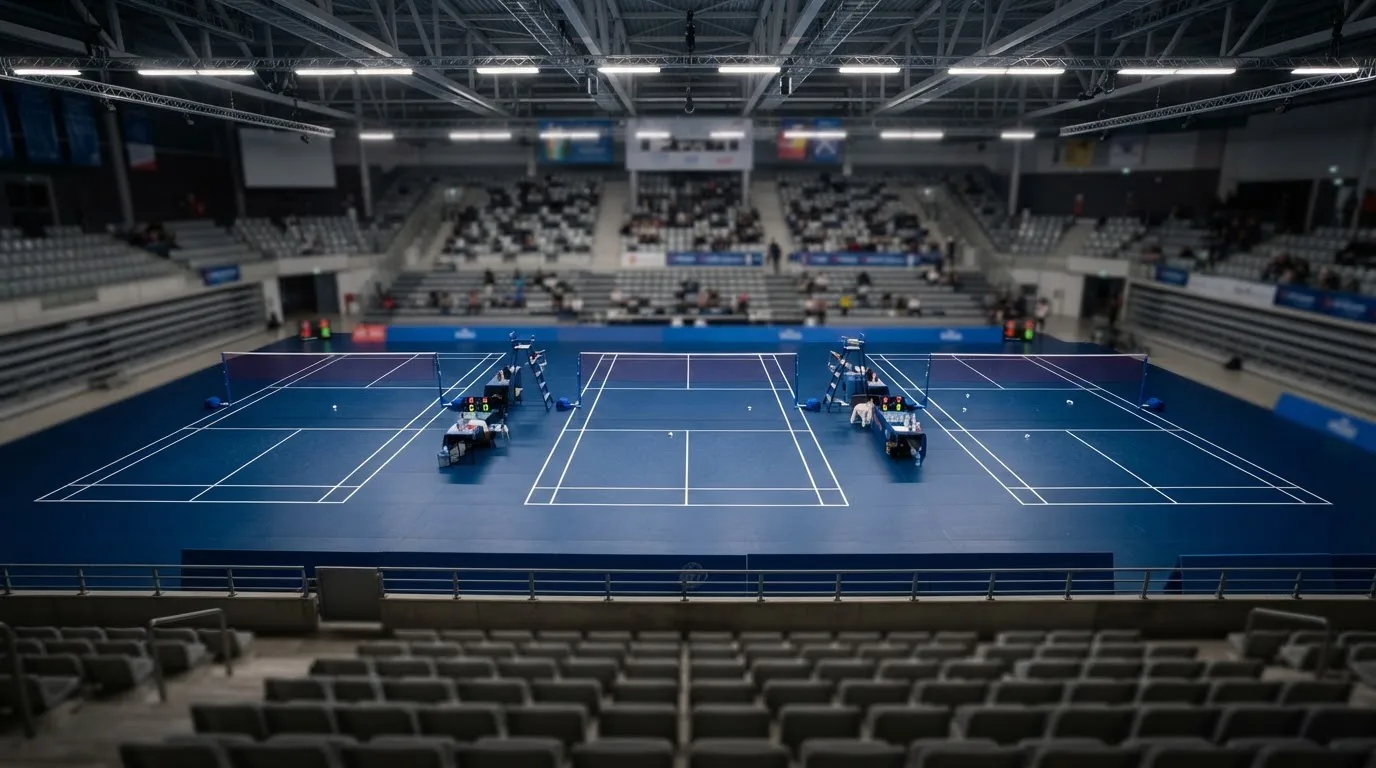
Badminton suits live betting well. A match is the best of three games, each game played to 21 points with rally scoring — every rally produces a point, no serves-only scoring — and the side that wins the rally wins the point. At 20–20 play continues until one side leads by two, and at 29–29 the next point wins. A game lasts roughly twenty minutes at top level, a match finishes inside an hour, and a half-time break between games gives the punter a natural pause to read the scoreboard.
What live badminton looks like on a bookmaker
Live betting on badminton runs through the same mechanics as any other in-play sport. The bookmaker prices the match winner, the next-game winner, the next-point leader, sometimes the total points and the handicap, and updates the price after every rally. Midnite’s site shows in-play events, an acca builder, popular accas and price boosts with maximum-stake limits. Sporting Index lets customers switch between fixed odds and spread betting, with in-play betting, auto cash-out and Multi-Markets. The mechanics are familiar; the data behind them is the question.
Badminton generates fewer in-play data points than football or tennis. There is no corner count, no yellow-card count, no serve-speed readout that fans track. The data feed that bookmakers price against is mostly the score, the serve, and occasionally rally length. That thinner data set is one reason the live menu on a badminton match is usually shorter than on a Premier League fixture, and one reason the live margin can be wider — fewer data points means the bookmaker’s price has more room to drift.
Cash out on a sport that finishes quickly
Cash out is a feature on most licensed bookmakers. The mechanics are the same on badminton as anywhere else: the operator offers to buy the bet back at a price derived from the current in-play price and the original odds, and the punter can lock in a profit or cut a loss before the bet settles. On a 60-minute sport the cash-out window is short, and the punter has to be ready to take the price when it appears. Sporting Index states it offers auto cash-out — a pre-set rule that closes the bet at a chosen price without the punter having to click — and that is the friendliest shape for a sport that finishes before the punter can decide.
Why live betting is worth a separate look on badminton
A live bet is a bet placed on information the pre-match price did not yet have. On badminton that information is usually the form of one player in the first few rallies — a serve that is landing short, a backhand that is going long — and the in-play price usually catches up inside a game. The edge, where one exists, is in the first three or four rallies of a game; after that the price has tightened and the margin is back to its standard width. Live badminton is a sport for the punter who can read the early game.
Predictions, strategy and the tools that are actually worth paying for
Badminton does not attract the same tipster industry that football does. There is no Predictor site for BWF World Tour events with paid picks and a leaderboard, and the bigger prediction services (FiveThirtyEight-style aggregators, betting tipsters with verified track records) barely cover badminton. The shape of the prediction market for the sport is smaller, less monetised, and harder to verify. That is the first thing to know about badminton predictions: the market is thin.
What a useful prediction tool looks like
A prediction tool earns its subscription by doing one of three jobs. It models the probability of an outcome from a feature set — serve percentage, rally length, head-to-head record on a specific court surface, recent form. It aggregates a market price across bookmakers to show where the line sits. It tracks closing-line value — the price at kick-off or first serve, against the price the punter took — over a tracked history, so the punter can see whether their own picks beat the market. A service that does none of these is just a tipster.
For badminton specifically, the BWF publishes player rankings, head-to-head records and recent results on its own site, and those pages are the cleanest free data source for the sport. A punter who reads the rankings, the recent results and the head-to-head has done most of the work that a paid model would do. The paid model adds value where the data set is large enough to model — tennis has decades of point-by-point data, badminton has a thinner archive — and on badminton the data set is the thin part.
Bankroll and staking as strategy
The strategy that travels best across sports is bankroll management. A punter who stakes a fixed percentage of bank (1% to 5% per pick, with 2% the most common figure) survives variance; a punter who stakes to win a target amount on each pick runs out of bank on the first losing streak. Badminton’s weekly calendar is forgiving — there is a tournament most weeks of the year — and a punter who bets a small percentage of bank on each pick can ride a long losing run without exhausting the bank. A punter who bets a large percentage will not.
The second piece of strategy is line shopping. Two bookmakers can price the same match at different odds, and the difference between 1.85 and 1.91 on the same outcome is the difference between a 1.7% margin and a 2.7% margin. On a sport with thinner price competition, the gap between bookmakers is wider than on football, and a punter who checks two or three books before placing the bet keeps a measurable edge. The comparison table below lists each bookmaker’s licence and its badminton-relevant terms, and the price comparison is the punter’s own job at the betting slip.
The thinner vocabulary that keeps a punter out of trouble. A “sure thing” on badminton does not exist; an outcome that looks obvious is usually a price that has already moved to reflect it. A tipster who claims a hit rate above 60% on a thin market is selling either cherry-picked results or luck. A punter who treats the sport as one to read rather than one to be told about keeps the edge that thin markets offer.
Bet types, odds formats and how a badminton price is built
The bet types used on badminton are the standard sports-betting shapes. Outrights (tournament winner), match winner, handicap per game, total points, correct score in games, set betting — these are the menu items on a BWF World Tour event. Some bookmakers price a wider set including next-game winner, race-to-X-points and individual player props; some price a narrower set, with just the match winner and a tournament outright.
Singles and accumulators
A single is one selection. A double is two. A treble is three. An accumulator — “acca” in British usage — is four or more. Each leg multiplies into one, so four legs at 2.00, 2.00, 2.00 and 2.00 produce one price of 16.00; a £10 stake returns £160 if all four win, £0 if any one loses. The acca insurance and acca boost offers on a bookmaker’s front page are built around this multiplication, and the wagering the offer requires is a count of the legs of the multiplied acca.
System bets cover more than one combination at once. A Trixie is three doubles and a treble from four selections — four bets at unit stake. A Patent is the same with three singles added — seven bets. A Lucky 15 is four singles, six doubles, four trebles and a four-fold — fifteen in total. A Yankee is six doubles, four trebles and a four-fold — eleven. A Canadian / Super Yankee is a Yankee plus five singles — twenty-six. A Heinz is a Yankee plus six singles — fifty-seven. A Goliath is the largest of the standard shapes — 247 bets. The unit stake is the per-bet stake, so a £1 Trixie costs £4 and a £1 Goliath costs £247. These shapes let the punter cover combinations without manually placing each one.
Each-way bets on tournament outrights
An each-way bet is two bets of equal stake — the “win” half and the “place” half. The place half pays a fraction of the win odds (1/2 or 1/3, sometimes 1/4, depending on the field size and the operator’s rules) if the selection places but does not win. On a tournament outright the place terms are a fraction of the field — usually 1/2 the win odds for the top two or three places. The stake doubles: a £10 each-way bet is £10 on the win and £10 on the place, so £20 in total. The market matters: an each-way bet is useful on a large field (a BWF World Tour event with 32 entrants) where the place terms are competitive, and less useful on a small field (a four-player playoff).
Odds formats — fractional and decimal
British bookmakers write fractional odds by default. 5/1 means £5 profit for every £1 staked, so a £10 stake at 5/1 returns £60 (£10 stake + £50 profit). 11/4 means £11 profit for every £4 staked. Evens (1/1) means £1 profit for every £1 staked. Odds-on prices are written below evens: 4/6, 1/2, 2/5 — a £10 stake at 4/6 returns about £16.70 (£10 stake + £6.67 profit). Decimal odds are the same prices written as a single number: 5/1 becomes 6.00, 11/4 becomes 3.75, 4/6 becomes 1.67, evens becomes 2.00. Conversion is a/b → a ÷ b + 1, so 5/1 = 5 ÷ 1 + 1 = 6.00 and 4/6 = 4 ÷ 6 + 1 = 1.67. The return at decimal odds is stake × odds, the profit is stake × (odds − 1).
How the margin hides inside the price
The bookmaker’s margin is the share of every pound bet that the bookmaker expects to keep. It is hidden inside the prices. The mechanic is easiest to see on a two-way market — a match winner with two outcomes, a yes/no on a particular game. Suppose the bookmaker prices both sides at 1.90 / 1.90 (9/10 in fractional form). The fair price for an even-money two-way market is 2.00 / 2.00 — anything that bets a uniform price above 2.00 prices the bookmaker in. At 1.90 / 1.90 the payout share is 1 ÷ (1/1.90 + 1/1.90) = 1 ÷ (0.526 + 0.526) = 1 ÷ 1.053 = 0.950, or 95.0%. The other 5.0% is the margin. A market at 1.85 / 1.85 has a payout share of 92.5% and a margin of 7.5%; a market at 1.95 / 1.95 has a payout share of 97.5% and a margin of 2.5%. The margin is a band, not a single figure, because it depends on the price level. A bookmaker quoting 2.10 / 1.80 on a match has set a margin of about 4.5% on that specific match — the calculation uses the actual prices, not a 50/50 example.
The 1.90 / 1.90 example above yields a margin of roughly 5%, a useful round number for an explanation. Real markets on badminton land anywhere between about 3% and 8% depending on the bookmaker, the tournament and how close to the off the price is taken. The margin is the one number a bettor can compute from the price alone, and it is the single most useful check on whether a bookmaker is worth using for a given sport on a given day. The closer the price sits to 2.00 / 2.00, the thinner the margin.
Tournaments, competitions and the calendar that fills the year
Badminton has one of the densest calendars in racket sport. The BWF World Tour runs a tournament almost every week of the year, with the Super 1000, Super 750, Super 500, Super 300 and Super 100 tiers feeding points into the season-ending BWF World Tour Finals. The All England Open, first held in 1900, sits near the top of the calendar and is treated as the sport’s de facto world championship in the public eye. The BWF World Championships, first staged in 1977, is the formal title. The Thomas Cup (men’s team) and Uber Cup (women’s team) are held every two years, and the Sudirman Cup (mixed team, begun in 1989) runs on the same cycle. The Olympic tournament has been part of the Summer Games since 1992, with mixed doubles added in 1996.
The five disciplines
Badminton has five disciplines: men’s singles, women’s singles, men’s doubles, women’s doubles and mixed doubles. Each discipline has its own BWF ranking, its own World Tour leaderboard, its own bookmaker outright market. A punter who knows one discipline — usually men’s singles, which carries the most coverage — has to know that the betting market on women’s doubles is a thinner one and the price competition is weaker. The thinner the market, the wider the margin and the more important the price comparison.
The courts and the scoring that shapes the bet
A badminton court is 13.4 m long, 6.1 m wide for doubles and 5.18 m wide for singles; the net is 1.55 m at the edges and 1.524 m at the centre. Each game is played to 21 points with rally scoring — every rally produces a point, no first-to-X serves-only scoring — and a match is the best of three games. At 20–20 play continues until one side leads by two; at 29–29 the next point wins. The format is fast: a game lasts roughly twenty minutes at elite level, a match under an hour, with a half-time break between games. The format shapes the betting menu — match winner, next-game winner, handicap per game, total points, correct score in games, set betting — and the betting tempo — a punter has to be ready to take a live price between games.
What the calendar means for the bettor
The dense calendar is a friendliness to the regular bettor. A tournament almost every week means a steady supply of matches, a steady supply of outright markets, and a steady supply of in-play events. The thinner menu in non-headline months (January and August tend to be quieter) is a length-shape opportunity — fewer matches means bookmakers compete less and prices drift wider, and a price-comparison punter keeps a wider edge.
The ten bookmakers — licences, badminton offer, and who each one suits
The ten brands reviewed below hold a Gambling Commission remote licence at the access date on this page. The licence is a precondition, not a recommendation: every brand on this list has been issued a licence and has been checked against the Commission’s public register. The differences between them are about the offer each bookmaker offers, the shape of the safer-gambling controls, and the badminton-specific features. A punter who reads all ten before depositing is doing the minimum the work permits.
| Bookmaker | Gambling Commission remote licence | What the operator’s own terms state |
|---|---|---|
| BetVictor | 39576 (BV Gaming Limited) | Best Odds Guaranteed on UK and Irish horse racing, enhanced live race streaming and BetFinder for racing bets, plus Smart Stats |
| Sporting Index | 27343 (Sporting Index Limited) | Lets customers switch between fixed odds and spread betting, with in-play, Bet Builder for football, auto cash-out and Multi-Markets |
| Tote | 54779 (TDCO Limited) | Tote pool betting on UK and Irish racing, with fixed-odds sports alongside |
| BetMGM | 39198 (LeoVegas Gaming PLC) | Sports welcome offer: four £10 free bets on a £10+ deposit and a sports wager, valid for 7 days with minimum odds and opt-in required |
| Betboro | 44181 (Webmedia Development N.V.) | 100% matched free bet up to £25 on the first qualifying wager, £10 minimum debit-card deposit, first bet £5–£25 with three+ selections each at 3/5 (1.60) or higher |
| Betmaster | 65699 (BM Solutions GB Ltd) | App covers football, cricket, horse racing, NFL and esports (League of Legends, Dota 2) |
| Betfred | 39544 (Petfre (Gibraltar) Limited) | App covers 21 sports plus over 2,000 casino-style games |
| William Hill | 39225 (WHG (International) Limited) | Best Odds Guaranteed on UK and Irish horse racing from 8 AM on race day, singles and multiples; not ante-post, tote or pari-mutuel |
| VBet | 44662 (SCGO Limited) | Sports welcome offer: £10 free bet if a new, verified customer stakes £10+ on a first-ever wager that loses |
| Sky Bet | 67370 (SBG Sports Limited) | Free bets expire 30 days after crediting, single or each-way markets only (no multiples, no virtuals), non-withdrawable, stake not returned |
BetVictor
BetVictor runs Best Odds Guaranteed on UK and Irish horse racing, enhanced live race streaming, a BetFinder feature for racing bets, and Smart Stats. The licence sits with BV Gaming Limited under Commission account 39576. Badminton sits inside the wider sports menu rather than as a featured sport — the headline offers, the live streaming and the BetFinder feature are built around horse racing, with badminton sharing the in-play menu rather than driving it. Smart Stats is the relevant feature for a data-led reader who wants a stats layer on top of the price.
A badminton punter using BetVictor is choosing the brand for its racing depth, its BOG policy and its stats layer, and accepting that the badminton-specific menu is the standard one. The price competition on badminton is competitive at the bigger tournaments and weaker off the headline events, which is a pattern across the licensed market rather than a BetVictor-specific weakness.
Sporting Index
Sporting Index is the spread-betting shop in the comparison and licensed under Commission account 27343. The unique feature is the switch between fixed odds and spread betting — a punter can place a fixed-odds bet on a match winner, a spread bet on total games, and an in-play wager inside the same app. The brand also runs a Bet Builder for football, auto cash-out and Multi-Markets.
A badminton punter using Sporting Index is choosing the brand for the fixed-odds / spread-betting switch, which no other brand in this comparison offers. The bettor who wants to back a match winner and lay a spread on total games in the same interface is not served by the rest of the comparison. The narrower concern is that spread betting on a fast sport (comish, on points) carries higher variance than a fixed-odds bet on the same match, and the brand’s own terms remind customers that spread betting losses can exceed the deposit. A punter who has never spread-bet before should read those terms in full.
Tote
Tote runs pool betting on UK and Irish racing, with fixed-odds sports alongside, under Commission account 54779. The brand is the pool-betting reference in Great Britain, and the pool-betting menu is the racing product, not the badminton product. A badminton punter using Tote is choosing the brand for the racing product, with badminton sitting alongside the wider sports menu as a fixed-odds book.
A Tote-specific caveat on badminton: the menu is the standard sportsbook menu rather than a badminton-led product, and the price competition is at the level of the wider sportsbook market rather than the badminton-specific market. The friend for a Tote customer is the racing product, and the badminton bet is an add-on.
BetMGM
BetMGM runs the Master of the Game welcome offer: four £10 free bets in exchange for a £10+ deposit and a sports wager within seven days, valid for 7 days with minimum odds and opt-in required, under Commission account 39198 (LeoVegas Gaming PLC). The welcome shape is generous on the count of tokens, and the seven-day window on each token is a working expiry rather than a tight one. The minimum odds clause on the free bets is the practical reading point: a token that requires minimum odds excludes the safest prices on the favourites.
A badminton punter using BetMGM is choosing the brand for the welcome shape and the wider sportsbook product, with badminton sitting inside the same menu. The four tokens are a friend for a multi-event weekend, and the seven-day expiry is a friend for a punter who plans a week ahead. The thinner point is the minimum odds clause, which is a ceiling rather than a hint: tokens used below the ceiling do not settle as qualifying bets.
Betboro
Betboro’s welcome offer is a 100% matched free bet up to £25 on the first qualifying wager, requiring a £10 minimum debit-card deposit and a first bet of £5 to £25 with at least three selections each at 3/5 (1.60) or higher, under Commission account 44181 (Webmedia Development N.V.). The minimum-debosit-card clause is the payment-method clause — deposits via e-wallet or prepaid voucher may not qualify. The three-selection minimum is the structural clause: a single or a double does not qualify, and the free bet only credits if the first wager — a treble or larger — loses.
A badminton punter using Betboro is choosing the brand for the matched welcome shape, with the caveat that the qualifying wager has to be a treble or larger and each leg has to be 1.60 or shorter in decimal terms (3/5 in fractional). A badminton outright is the natural qualifying wager, since it is a single market with a clear price above 1.60 across most of the field.
Betmaster
Betmaster’s app is published by BM Solutions GB Ltd under Commission account 65699. The coverage runs to football, cricket, horse racing, NFL and esports (League of Legends, Dota 2). Badminton sits inside the wider sports menu rather than as a featured sport, and the brand’s positioning is the multi-sport bookmaker with esports as a flagged vertical.
A badminton punter using Betmaster is choosing the brand for the wider sportsbook and accepting that badminton is one sport among many on the menu. The thinner concern is the depth of the badminton-specific market — fewer outrights, fewer in-play markets at the lower-tier tournaments — which is a pattern across smaller multi-sport brands rather than a Betmaster-specific weakness.
Betfred
Betfred’s app is published by Petfre (Gibraltar) Limited under Commission account 39544. The coverage runs to 21 sports plus over 2,000 casino-style games. The brand is one of the older high-street names, with a deep sportsbook and a strong racing product. Badminton sits inside the wider sports menu, and the in-play menu is built around football and the bigger US sports.
A badminton punter using Betfred is choosing the brand for the broader sportsbook and the racing product, with badminton sitting as one sport among many. The price competition on badminton is competitive at the headline events, and the friend is the depth of the racing product rather than the badminton product.
William Hill
William Hill runs Best Odds Guaranteed on UK and Irish horse racing from 8 AM on race day, on both single and multiple bets, with the policy excluding ante-post, tote and pari-mutuel bets, under Commission account 39225 (WHG (International) Limited). The BOG policy is one of the clearer BOG policies in the British market — single and multiple, from 8 AM, with the exclusions listed rather than implied. Badminton sits inside the wider sports menu, with the headline offers built around racing and football.
A badminton punter using William Hill is choosing the brand for the BOG policy on racing, the wider sportsbook product, and the brand’s reputation as a long-standing British bookmaker. The thinner concern is the badminton-specific menu: standard rather than deep, with the price competition at the standard level. The brand’s strength is its scale, not its badminton-specific product.
VBet
VBet’s sports welcome offer is a £10 free bet if a new, verified customer stakes £10 or more on a first-ever wager that loses, under Commission account 44662 (SCGO Limited). The refund-as-free-bet shape is one of the cleaner welcome shapes: the punter wagers their own money on the first bet, gets the stake back as a free bet if the wager loses, and keeps any winnings if the wager wins. The free bet, like every other free bet in this comparison, does not return the stake with the win.
A badminton punter using VBet is choosing the brand for the risk-mitigated welcome shape, with the caveat that the free bet is a refund on the first losing wager rather than a token credited on signup. The shape suits a punter who wants to back a BWF World Tour event on day one and have the safety net of a refund-as-free-bet if the pick misses.
Sky Bet
Sky Bet’s free bets expire 30 days after crediting, can be used on single or each-way markets only (not multiples, no virtuals), are non-withdrawable and do not return the stake with winnings, under Commission account 67370 (SBG Sports Limited). The 30-day expiry is a working expiry for a regular punter; the single / each-way clause is a clear clause — multiples are not eligible, and a free bet placed on an acca at the weekend does not settle. Badminton sits inside the wider sports menu, and the brand’s stronger vertical is football.
A badminton punter using Sky Bet is choosing the brand for the wider sportsbook, the clearer free-bet terms, and the 30-day expiry. The thinner point is the singles / each-way clause: a punter who would otherwise use the free bet on a tournament outright acca will find the token does not settle, and the bet has to be a single or an each-way wager.
The worked example — a margin on a 1.90 / 1.90 two-way market
A two-way market at decimal odds of 1.90 on each side (9/10 in fractional form) is the cleanest worked example for a margin calculation. The two outcomes are the two sides; the price is uniform; the calculation is a single line.
The payout share of a market with two outcomes priced at d₁ and d₂ is 1 ÷ (1/d₁ + 1/d₂). For 1.90 and 1.90 that is 1 ÷ (1/1.90 + 1/1.90) = 1 ÷ (0.5263 + 0.5263) = 1 ÷ 1.0526 = 0.9500, or 95.0%. The margin is the share the bookmaker keeps, which is 1 − payout share = 1 − 0.9500 = 0.0500, or 5.0%.
The same calculation at 1.85 / 1.85 gives a payout share of 92.5% and a margin of 7.5%. At 1.95 / 1.95 it gives a payout share of 97.5% and a margin of 2.5%. The 5% figure is one point on a band; the actual margin on a real badminton market is whatever the prices yield on the day, and the band on badminton tends to run from roughly 3% at the sharp end (close to the off, on a high-profile match) to 8% or more at the quieter end (early in the pricing cycle, on a lower-tier tournament).
The marginal conclusion: the margin is what the price actually costs the bettor, in expectation, on every pound staked. A 5% margin on a 1.90 / 1.90 market means a bettor staking £100 across both sides in proportion keeps £95 if the market settles at full stakes, and the £5 is the bookmaker’s take. A bettor staking £10 on a single side keeps the £9.50 in expectation that the price represents, and gives up the £0.5 that the margin hides.
That is the whole point of a margin calculation: the price is the surface, the margin is the substance, and the substance is the only number a bettor can compute without knowing who is going to win. On a thinner sport like badminton the substance is wider than on football, and the wider the substance, the more important the price comparison.
The legal frame — what a GB licence actually changes for the bettor
A GB licence from the Gambling Commission is the difference between a regulated market and an unregulated one. The two sides of the difference are the protections the licence brings and the limits it imposes, and a punter who understands both makes better choices.
The protections
A licensed bookmaker pays into GAMSTOP, runs the financial vulnerability check at the £150 deposit-minus-withdrawal threshold, offers deposit limits, links to GamCare, GambleAware, the NHS clinics and Gamblers Anonymous, complies with the 10× bonus wagering cap from 19 January 2026, complies with the mixed-product promotion ban, verifies identity before the first deposit, and submits to the Commission’s dispute-resolution process if a customer complaint cannot be resolved directly. Funds the operator holds for a customer are held in segregated accounts under the Commission’s rules, and a customer who disputes a settlement has a regulatory route.
The limits
A licensed bookmaker verifies identity before the first deposit — no anonymous play. A licensed bookmaker applies the financial vulnerability check at £150 in a rolling 30-day period, which means a bettor who runs heavy volume is asked public-record questions the bettor may not want to answer. A licensed bookmaker enforces GAMSTOP exclusions, which means a self-excluded customer cannot open a new account under a different name. A licensed bookmaker applies deposit limits on a fixed time frame, and the customer sets the ceiling rather than the state.
The offshore alternative and the cost of the cost saving
A bookmaker licensed outside Great Britain — Curaçao, Malta, Gibraltar — does not apply the British controls. There is no GAMSTOP membership, no Commission dispute route, no approved alternative-dispute-resolution body, no £150 vulnerability check, no 10× bonus cap, no British verification standard. A customer who uses an unlicensed brand has no British consumer redress if funds are withheld, and the brand is not bound by the Commission’s marketing or safer-gambling codes. Honest framing: the cost saving is real (looser verification, fewer affordability interruptions, sometimes a bigger bonus), and the protection gap is real (no GAMSTOP, no British dispute route, possible loss of funds).
The Commission’s enforcement against unlicensed operators is disruption rather than blocking: cease-and-desist notices, search-engine referrals, registrar and payment-provider work, and court-order DNS blocking powers that have been given or are about to be given. ISP-level blocking is not, on the current evidence, in operation. The legal position: providing gambling facilities in Great Britain without the licence the Act requires is an offence under section 33 of the Gambling Act 2005 (on summary conviction up to 51 weeks’ imprisonment, a fine up to level 5, or both; six months in Scotland), aimed at the operator. No offence aimed at a customer who merely bets on an unlicensed site was identified. The protection loss is the consequence, not a criminal record.
What the licence does not cover
The licence covers Great Britain (England, Scotland and Wales). Northern Ireland is outside the Gambling Act 2005 and runs its own older law, so a “GB-licensed” bookmaker is licensed for Great Britain and not for Northern Ireland. A customer in Northern Ireland should check the local position separately. The licence covers the gambling activity, not the tax treatment: the player pays no tax on betting winnings in Great Britain (general information, not tax advice; a professional gambler should ask HMRC or an adviser), and the operator pays General Betting Duty at 15% on gross profits (with a remote rate moving to 25% from 1 April 2027, while remote bets on UK horse racing, self-service betting terminal bets, pool betting and in-person betting stay at 15% — HM Government policy paper of 26 November 2025). Spread betting has its own rates (3% financial, 10% other).
A punter who bets at a licensed brand gets the protections and accepts the limits; a punter who bets at an unlicensed brand gives up the protections and keeps the looser verification. Both choices are available. Neither is “the safe choice” by default.
Frequently asked questions
How do you bet on badminton?
Pick a licensed bookmaker from the comparison above, complete the name / address / date-of-birth verification before the first deposit, browse the badminton menu for a BWF World Tour event or a tournament outright, and place a single wager on the price you want. In-play betting on badminton follows the same mechanics with a live menu on each match; cash-out closes the bet before the match settles at a price derived from the current live odds. Badminton markets include match winner, next-game winner, handicap per game, total points, correct score in games, set betting and tournament outright.
How can a punter check that a bookmaker holds a Gambling Commission licence?
The Commission’s public register can be searched by business name, trading name, domain or account number, and lists every operator that holds a licence. The register is the whole test of whether a brand holds a GB licence — quote no count without its access date. A punter who cannot find the brand in the register should treat the brand as unlicensed and assume none of the protections the licence brings.
How is the return on a bet worked out from the stake and the odds?
At decimal odds the return is stake × odds and the profit is stake × (odds − 1). At fractional odds a/b the return is stake + (stake × a ÷ b) and the profit is stake × a ÷ b. A £10 stake at 3/1 returns £40 (£10 stake + £30 profit); a £10 stake at 4/6 returns about £16.67 (£10 stake + £6.67 profit). For a combination bet the odds of the legs multiply into one price.
What is the bookmaker’s margin and how can it be seen in the odds?
The margin is the share of every pound bet that the bookmaker expects to keep. On a two-way market priced at d₁ and d₂ the payout share is 1 ÷ (1/d₁ + 1/d₂), and the margin is 1 minus the payout share. A market at 1.90 / 1.90 has a payout share of 95.0% and a margin of 5.0%; a market at 1.85 / 1.85 has a margin of 7.5%; a market at 1.95 / 1.95 has a margin of 2.5%. The margin is a band, not a single figure.
How do fractional odds such as 5/1 convert to decimal odds such as 6.00?
The conversion is a/b → a ÷ b + 1. So 5/1 becomes 5 ÷ 1 + 1 = 6.00, 11/4 becomes 11 ÷ 4 + 1 = 2.75 + 1 = 3.75, and 4/6 becomes 4 ÷ 6 + 1 = 0.667 + 1 = 1.67. Evens (1/1) becomes 1 ÷ 1 + 1 = 2.00. The conversion works both ways — a decimal price d converts to fractional as (d − 1) / 1, so 6.00 is 5/1, 3.75 is 11/4 and 1.67 is 4/6.
Which tools for controlling play does a licensed bookmaker have to offer?
A licensed bookmaker has to offer GAMSTOP self-exclusion (six months, one year, five years, or five years with auto-renewal plus seven further years), deposit limits on a fixed time frame, timeouts, the financial vulnerability check at the £150 rolling-30-day deposit-minus-withdrawal threshold, and links to GamCare, GambleAware, the NHS gambling clinics and Gamblers Anonymous. The 10× wagering cap on bonuses and the mixed-product promotion ban apply across the licensed market from 19 January 2026.
Tennis, darts & cue sports – Best betting
Content created by the «Best betting» team
