
In-play betting sites: what changes once the match starts
 Available in US
Data current as of 27 October 2026, checked against the Gambling Commission’s public register.
A bet struck before kick-off has settled into its shape by the time the whistle blows. The teams are known, the line-up is fixed, and the market has priced the next ninety minutes. In-play betting — placing a new bet while the event is in progress — is the same bet, rebuilt around odds that move second by second. Markets that did not exist before the match come alive as soon as it begins: the next goalscorer, the next corner, the total at the next break point in tennis. The punter who clicks “place bet” at 2-0 down is not a different punter from the one who clicked at 0-0, but the book behind the price has changed, and the speed at which it changes is what defines the experience.
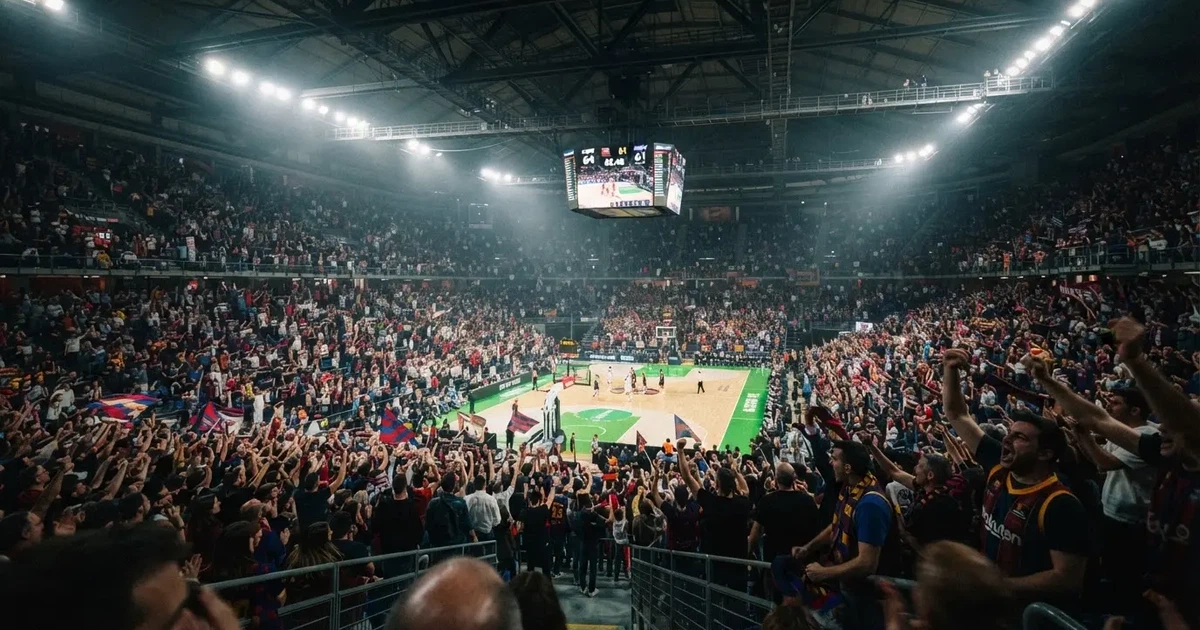
This page is about how that experience is built and what it costs. How in-play differs from a pre-match bet, how cash out slots onto an open position, how the Gambling Commission licences the operators who offer it, and what ten licensed bookmakers actually deliver when the clock is running.
The legal frame in Great Britain
In-play betting is not a separate licence category in Great Britain. The Gambling Commission, the non-departmental public body that regulates commercial gambling under the Gambling Act 2005, issues remote general betting standard (real events) licences for online sports betting. In-play markets sit inside that licence. No statutory rule on what may be offered in-play was found; the controls sit in each operator’s licence conditions and customer-protection duties, and in the Licence Conditions and Codes of Practice (LCCP) that apply to every holder. Writing that in-play is “unrestricted” would be the wrong framing: it is licensed, and it is governed, but the substantive rule is the operator’s, not the statute’s.
Since the Gambling (Licensing and Advertising) Act 2014 took effect, an operator needs a Commission licence whenever its remote facilities are used in Great Britain — sections 33 and 36 of the 2005 Act as amended. A Curaçao, Maltese or Gibraltar licence is not a substitute for one. There is no state monopoly on remote betting and no cap on the number of licences. The Commission’s public register, searchable by business name, trading name, domain or account number, is the only test of whether a brand holds a licence; licensed brands use .com as well as .co.uk, so the domain alone proves nothing.
The minimum age is 18, and identity is verified before a customer can deposit or gamble — since 7 May 2019 that verification covers free bets and bonuses too, not just real-money play. A punter who tries to skip the photo ID and address check finds the cashier closed.
Safer gambling at licensed operators
GAMSTOP is the national multi-operator online self-exclusion scheme and a mandatory licence condition for every online operator since 31 March 2020. Excluding yourself from one site no longer excludes you from the rest — the exclusion applies across the scheme. Periods are six months, one year, five years, or five years with auto-renewal; after the minimum period the exclusion stays in place for a further seven years unless the bettor asks GAMSTOP to remove it. It covers online sites and apps; the high-street bookmaker on the corner uses a separate service.

A financial vulnerability check (LCCP condition 3.4.4, in force since 30 August 2024) applies to licensed remote betting when a customer’s deposits minus withdrawals exceed £150 in a rolling 30 days (since 28 February 2025). It is a public-record check — bankruptcy registers, county court judgments — not an income check and not a credit reference check. Financial risk assessments, the deeper “affordability checks” that have appeared in the press, sit in an announced staged plan (Commission article of 7 July 2026) with no start date; writing them as “in force” would be wrong. They are announced, staged, no start date.
Deposit limits are the bettor’s own lever. RTS 12 requires operators to give customers a gross deposit limit on a fixed time frame; the first changes applied from 31 October 2025 and a second phase was postponed to 30 September 2026. There is no state-set ceiling for deposits or losses — operators set their own maximum stakes and may restrict individual customers.
Help is reachable through GamCare (the National Gambling Helpline), GambleAware, the NHS gambling clinics network and Gamblers Anonymous. Several of the brands on this page link to all four from their safer-gambling pages.
How in-play betting and cash out work
A pre-match bet is a fixed contract at a fixed price struck before the event. Once the event starts, the book holds the right to suspend the market at any moment — to pause a price after a goal, a red card, a break of serve, a wicket — and to resume it after a few seconds with new odds. In-play betting works inside that pause-and-resume cycle. The bettor’s screen shows a price ticking down or up; clicking “place bet” sends the request to the same engine that priced the original market, and the trade settles once the event resolves.
Cash out is the second piece of the puzzle. It lets a punter close an open bet before the event finishes — taking profit on a winner, or recovering part of the stake on a loser. The price offered is a function of the current in-play odds across every leg of the bet, plus the bookmaker’s own margin. On a five-leg acca at 75 minutes, the cash-out figure depends on how the five prices look now. The book does not have to offer it; one UK-facing sportsbook’s terms state that cash out is unavailable during market suspension and may fail if odds change or a market is suspended during the cash-out delay. Another large brand’s help pages say cash out is unavailable on each-way bets and is not always available on accumulators, and that availability is not guaranteed.
The two together — in-play betting and cash out — turn a static wager into something that can be managed in real time. They do not turn it into a guaranteed profit. Margin sits inside every price the book prints, and the cash-out price includes it twice: once in the original odds, once in the discount the book applies to settle the bet early. A book that “offers cash out on every market” is offering the right to take a price that already has the house edge baked through.
What a winning in-play bet pays back
The arithmetic is the same as for any other bet. Take an illustrative single of £10 at 5/2 — a decimal price of 3.50, used here as an example rather than a quoted price. The return on a winning bet is the stake multiplied by the odds: £10 × 3.50 = £35. Net profit, the figure that goes into the punter’s pocket above the stake returned, is £25. For a combination bet the legs multiply into one price, so a double at 3.00 and 4.00 pays as a stake × 12.00.
That is what a winning bet pays back. How likely it is to win is a separate question, and one that depends on the event itself — the margin in the price is one input into that, the form of the players is another, and neither the page nor the punter can answer it before the final whistle.
The top ten in-play betting sites in Great Britain
Every brand below holds a remote general betting standard (real events) licence from the Gambling Commission and takes part in GAMSTOP. The list is not a ranking of safety — every operator here meets the same licensing bar — and not a recommendation. It is the ten names whose licences are live on the Commission’s register and whose own terms describe an in-play offering with enough substance to compare.
| Brand | Licence | What the operator’s terms say about in-play |
|---|---|---|
| DAZN Bet | UKGC 48756, DZBT Limited | In-play betting, Cash Out, Bet Builder and daily boosts offered; cash out availability is not guaranteed and bets stand if it is unavailable |
| William Hill | UKGC 39225, WHG (International) Limited | Cash Out not available on each-way bets and not always on accumulators; availability not guaranteed |
| London Bet | UKGC 66162, Thistle Bet Limited | Combines football, tennis, racing, greyhounds, darts, golf, cricket, NFL, NBA, MLB, snooker with live in-play betting |
| Bet Ahoy | UKGC 100094, Bet Ahoy Ltd | Pre-match and in-play Bet Builder across 11 sports, Early, Partial and Auto Cash Out, up to 800 live markets on Premier League fixtures |
| Swifty Sports | UKGC 58957, Swifty Global (UK) Ltd | Best Odds Guaranteed, Cash Out across horse racing and football, daily boosts, live streaming and in-play betting |
| Spreadex | UKGC 8835, Spreadex Limited | Fixed-odds and spread betting in one app, one-click, auto and partial cash out, Bet Builder and live streaming of UK and Irish horse racing, greyhounds, tennis, NFL and selected football |
| Betboro | UKGC 44181, Webmedia Development N.V. | In-play markets and cash-out on football, racing and tennis, boosted odds on selected singles from £10 stakes |
| Fitzwilliam Sports | UKGC 48760, SBKI Limited | Phone and live chat with the office open 09:00 to 21:00, Monday to Sunday; messenger replies generally within 90 seconds |
| Unibet | UKGC 45322, Platinum Gaming Limited | Bet Builder, daily Uniboosts, Unibet TV streaming, in-play betting, Best Odds Guaranteed on horse racing and Cash Out on thousands of markets |
| Kalooki Sportsbook | UKGC 57730, Kalooki Sportsbook Limited | Instant withdrawals by bank transfer, Best Odds Guaranteed on UK and Irish horse racing, in-play betting, daily boosts and extra place races |
A line each, then.
DAZN Bet
DAZN Bet offers Cash Out, Bet Builder, daily bet boosts and in-play betting. The catch sits in the operator’s own help pages: cash out availability is not guaranteed, and a bet that is on the slip when cash out fails stands at the original odds. For a punter who builds a five-leg in-play acca and watches the cash-out button grey out at 2-1 up, the position is unsettled.
William Hill
One of the longest-established high-street names in British betting. William Hill’s Cash Out is unavailable on each-way bets and is not always available on accumulators, and William Hill does not guarantee its availability. Streaming through WHTV requires a funded account or a bet in the last 24 hours, and live racing needs a bet of £1 or more on a qualifying race. A punter who wants cash out on the Lucky 15 is using a service the bundle does not always reach.
London Bet
London Bet’s product is a compact app: sports betting on football, tennis, horse racing, greyhounds, darts, golf, cricket, NFL, NBA, MLB and snooker, with Pragmatic Play casino slots and live in-play betting alongside. The licence holder is Thistle Bet Limited. For a bettor who wants one app for racing, the NBA and a few dozen slot games at half-time, the bundle is in one place.
Bet Ahoy
The pitch is depth: pre-match and in-play Bet Builder across 11 sports, Early, Partial and Auto Cash Out, and up to 800 live markets on Premier League fixtures. The licence sits in the holder’s name (Bet Ahoy Ltd) and the app is the storefront. A bettor looking for an in-play Bet Builder with three variants of cash out has the breadth here.
Swifty Sports
Swifty Sports lists Best Odds Guaranteed, Cash Out on horse racing and football, daily price boosts, live streaming and in-play betting, with Bet Builder listed as coming soon. The promise of “coming soon” is worth noting: a feature in a roadmap is not the same as a feature on the betting slip.
Spreadex
Spreadex combines fixed-odds and spread betting in one app. Spread betting is regulated by the Financial Conduct Authority, not the Commission, and the operator’s own homepage states that spread betting losses can exceed deposits. The same app offers one-click, auto and partial cash out, Bet Builder across fixed odds or spreads, and live streaming of UK and Irish horse racing, greyhounds, tennis, NFL and selected football. The breadth is real, and so is the risk on the spread side.
Betboro
Betboro covers in-play markets and cash-out on football, racing and tennis, with boosted odds on selected singles from £10 stakes. The holder, Webmedia Development N.V., sits behind a UK-licensed remote book, and the safer-gambling tools — deposit limits, reality checks, self-exclusion — are listed on the site. A punter looking for boosted singles on football in-play has them.
Fitzwilliam Sports
A smaller brand, with phone and live chat during office hours (09:00 to 21:00, Monday to Sunday) and messenger replies generally within 90 seconds. The brand’s in-play product is described in the same factual sources as the rest of the field; the differentiator is the human contact. A punter who wants to talk to a person at half-time has a person.
Unibet
Unibet states it has operated since 1999. The UK site runs under Platinum Gaming Limited, Gibraltar, against Gambling Commission account 45322. The product includes Bet Builder, daily Uniboosts, Unibet TV live streaming, in-play betting, Best Odds Guaranteed on horse racing and Cash Out on thousands of markets. Safer-gambling tools — deposit limits, a Player Profile test, product restrictions and self-exclusion — sit next to live chat support and links to BeGambleAware, GamCare, GAMSTOP, Gambling Therapy and the BGC.
Kalooki Sportsbook
Kalooki Sportsbook is operated by Kalooki Sports Book Ltd (company number 12938274), licensed by the Commission under account 57730, and is a GAMSTOP member. The site advertises instant withdrawals by bank transfer within minutes, Best Odds Guaranteed on UK and Irish horse racing, in-play betting, daily boosts and extra place races. For a bettor who wants same-day withdrawals from an in-play win, the speed is the pitch.
What an in-play market looks like up close
Pick a Premier League match at 1-1, sixty minutes played. The pre-match bet is over: the only live position is the one the punter still holds, if any. The in-play menu at that moment might show the next goalscorer, the method of the next goal, total goals over 2.5, Asian handicap on the rest-of-match line, corners to come, shots on target, bookings. The bookmaker prints a price for each market, ticks the price as play resumes, and suspends the market the moment the ball goes out for a goal kick. A punter who clicks at the wrong second hits a suspended price; the bet does not go through.
Cash out on the original pre-match bet at that same minute depends on the live odds of the markets that bet touched. A pre-match bet on the home win at 2.10, with the match at 1-1 at 60 minutes, has a different cash-out value at 65 minutes (still 1-1, slightly different in-play shape) than at 89 minutes (still 1-1, the home team pressing for a winner). The cash-out button reflects that.
The two products feel like one product, and a lot of marketing tries to sell them that way. They are not the same product. In-play is a way to enter a new position at a new price. Cash out is a way to leave an existing position at a price defined by the current market. Both sit inside the bookmaker’s margin, both carry the same suspension risk, and both are governed by the operator’s terms, not by statute.
Bonuses, boosts and the 10x cap
The promotion rules in force since 19 January 2026 cap wagering requirements on bonuses at 10x — a £10 bonus at 50x would need £500 of bets, and under the cap no more than £100 may be required. The cap is not the only rule. Mixed-product promotions — an offer that requires gambling on two or more product types, such as “bet on football to get free spins” — are banned. Whether the cap applies to free bets with no wagering condition, and any cap on the money value of a bonus, are not established in the rules themselves. Operators describe their offers in their own terms; the reader checks those terms before claiming.
“Risk-free”, “free bet”, “boosted odds” — the marketing words — are best read with a figure beside them. A free bet whose stake is not returned with a win has a lower expected value than its face value; the formula, where research gives the inputs, is free bet amount × (odds − 1) ÷ odds × payout share of the market. The arithmetic works against the punter by design. A price boost that nudges the odds from 3.00 to 4.00 is a real edge when the boosted price is above the market; it is a marketing nudge when the original price was already at the back of the field. “Best odds guaranteed” on horse racing pays out at the starting price if that price is higher than the price taken — a real floor under a real product, not a marketing line.
The audit on a bonus is the audit on any offer: the requirement, the deadline, the cap on winnings, the markets it applies to. A bonus that asks for 10x turnover at minimum odds of 1.50 with a seven-day deadline is a different offer from one that asks for 5x turnover at minimum odds of 2.00 with a thirty-day deadline. The page does not have the figures; the operator’s terms do.
What it costs to play offshore
A GB licence is compulsory at the point of consumption. Providing gambling facilities in Great Britain without the licence the Act requires is an offence under section 33 of the Gambling Act 2005 — aimed at the operator. No offence aimed at a customer who bets on an unlicensed site was found. The loss is not a criminal one for the punter; it is a loss of protection.
An unlicensed site does not offer GAMSTOP coverage, does not sit inside the Commission’s complaints route, is not bound by an approved British dispute-resolution body, and offers no British consumer redress if funds are withheld. It is not bound by the 10x bonus cap. It does not run the £150 vulnerability check. Identity is not verified to the same standard. The “anonymity” of an unlicensed site is the absence of these checks, not a feature in itself.
Enforcement is disruption, not blocking: cease-and-desist notices, search-engine referrals, work with registrars, hosts and payment providers. The Commission has been given, or is about to receive, court-order DNS blocking powers. Writing that ISP blocking is “in operation” would be wrong; writing that the Commission cannot reach an unlicensed site would also be wrong. The honest framing: licensed = checks, limits, GAMSTOP, bonus cap, but also verification before the first bet; unlicensed = none of those protections and possible loss of funds. Neither is “the safe choice” by default. The licensed choice is the choice with the protections on; the unlicensed one is the choice with them off.
Tax, payments and the day-to-day mechanics
A British punter pays no tax on betting winnings. General Betting Duty is the operator’s tax on gross profits, currently 15%; from 1 April 2027 a new remote betting rate of 25% applies within it, while remote bets on UK horse racing, self-service betting terminals in licensed premises, pool betting and in-person betting stay at 15% (HM Government policy paper of 26 November 2025). Until that date the remote rate stays at 15%. Whether operators pass duty on through odds is not established in the public record; a punter should never read a margin story as a duty story. The Commission’s statutory levy is a separate charge, not a tax.
Credit cards have been banned for gambling in Great Britain since 14 April 2020 (LCCP condition 6.1.2), including credit-card-funded payments through an e-wallet. Debit cards and bank-based payments are not covered by that ban. A British named-account rule, a state list of permitted payment methods and any rule for or against cryptocurrency deposits at licensed operators are not established; describe payments qualitatively, only from each operator’s terms. Identity verification before the first deposit means no anonymous play at a licensed site, and source-of-funds questions at higher spend are normal under the money-laundering rules.
“Whistle-to-whistle” is an industry code, not law: since 1 August 2019 betting advertisements are not shown on TV from five minutes before a live sporting event to five minutes after it, before the 9pm watershed (horse and greyhound racing excluded). The Premier League clubs’ withdrawal of gambling sponsorship from the front of matchday shirts (from 2026/27; sleeves and hoardings remain) is voluntary, not law.
Reading the table
The comparison block above shows what each operator’s own terms say about the in-play product. Two brands stand out for breadth of in-play product (Bet Ahoy and Unibet), two for cash-out variants (Spreadex and Bet Ahoy), one for speed of withdrawals (Kalooki Sportsbook), and one for spread betting alongside fixed odds (Spreadex). The remainder sit inside the licensed set without a single differentiator that lifts them above the field — which is not the same as saying they do not work. A book that pays out on time, verifies identity cleanly and offers Cash Out on football is a complete in-play book for a punter who wants football.
A column with a missing figure is a column where the operator’s own terms do not state the figure in a way that can be transcribed. The audit there is the operator’s terms page itself, not the table.
Consequence: what this means for the punter
A punter who wants in-play markets on the Premier League has them at every name above. The decision is not which book has the markets — most do — but which book has the products around the markets that the punter actually uses. A punter who builds four-leg accas every Saturday cares about Cash Out reliability and minimum odds. A punter who bets on horse racing at 3pm cares about Best Odds Guaranteed and live streaming of UK and Irish tracks. A punter who lays bets through an exchange model wants a different product entirely — the betting exchange licence, which sits next to the sportsbook licence but is not the same thing.
The verification step that runs before the first deposit is the cost of a licensed account. The 10x bonus cap is the ceiling on how aggressive a welcome offer can be. The £150 vulnerability check, when deposits cross that threshold, is the price of playing above it. The GAMSTOP exclusion is the lever for a punter who wants to step away. None of these are optional for the operator, and none of these can be opted out of by the punter at a licensed site. That is the frame. Inside it, the ten names above are ten different ways of playing in the same frame.
Verdict on the shortlist
The shortlist is not a ranking, and a single line per brand has been kept deliberately short. The honest read is that every name above is licensed, every name offers in-play betting on the major UK sports, and the differentiators are around the edges: breadth of in-play markets, cash-out variants, live streaming, withdrawal speed and the rarer products (spread betting on Spreadex, Bet Builder across eleven sports on Bet Ahoy). For a punter who wants the standard product, three or four names do the job. For a punter who wants a specific feature, the table above shows which one.
Frequently asked questions
How do in-play betting and cash out differ from a pre-match bet?
A pre-match bet is struck at a fixed price before the event starts; in-play betting places a new bet at a price that moves second by second once the event is live, with markets that may not have existed before. Cash out closes an existing bet before the event ends, settling early at a price derived from current in-play odds. Both in-play and cash out are governed by the operator’s terms, not by statute.
How is the return on a bet worked out from the stake and the odds?
In decimal odds the return on a winning bet is stake multiplied by the odds: £10 at 3.50 returns £35, of which £25 is net profit above the £10 stake. For a combination bet the legs multiply into one price, so a double at 3.00 and 4.00 pays as stake × 12.00. The figure is what a winning bet pays back, not how likely it is to win.
How can it be checked that a bookmaker holds a Gambling Commission licence?
The Commission’s public register can be searched by business name, trading name, domain or account number; it is the only test of whether a brand holds a licence for Great Britain. Licensed brands use both .com and .co.uk domains, so the domain alone is not evidence. Every brand on this page has been checked against that register for the data current as of date at the top of the article.
Which tools for controlling play does a licensed bookmaker have to offer?
GAMSTOP for multi-operator online self-exclusion (six months, one year, five years, or five years with auto-renewal), deposit limits, reality checks, time-outs and self-exclusion through the operator itself, plus links to GamCare, GambleAware, the NHS gambling clinics and Gamblers Anonymous. A financial vulnerability check applies once deposits minus withdrawals exceed £150 in a rolling 30 days.
How do fractional odds such as 5/1 convert to decimal odds such as 6.00?
The conversion is fraction ÷ fraction + 1: 5/1 becomes 5 ÷ 1 + 1 = 6.00; 11/4 becomes 11 ÷ 4 + 1 = 3.75; evens (1/1) becomes 2.00. Shorter-than-evens prices are “odds-on”. British bookmakers display fractional odds by default and offer a decimal toggle.
Are betting winnings taxed in Great Britain, and who pays General Betting Duty?
Betting winnings are not taxed for the player in Great Britain. General Betting Duty is the operator’s tax on gross profits, currently 15%, rising to 25% for remote bets from 1 April 2027 on the lines the policy paper sets out; the player does not pay it. A professional gambler should ask HMRC or an adviser; the above is general information, not tax advice.
What about Northern Ireland?
The Gambling Act 2005 covers Great Britain — England, Scotland and Wales. Northern Ireland is outside it, governed by older legislation, and is not regulated by the same framework. A “GB licence” regulates GB customers; it does not reach a bettor in Belfast in the same way.
Bet types & in-play – Best betting
Content created by the «Best betting» team
