
Where the High-Stakes Punter Actually Bets in 2026
 Available in US
The real question a high-stakes punter asks is not who will take the bet. A £5,000 stake clears at any bookmaker in this comparison. The question is who will keep the price alive when the wager is large, settle the bet on the correct rule, pay without delay, and stay within the law while doing it. That question shapes this page from the first paragraph to the last.
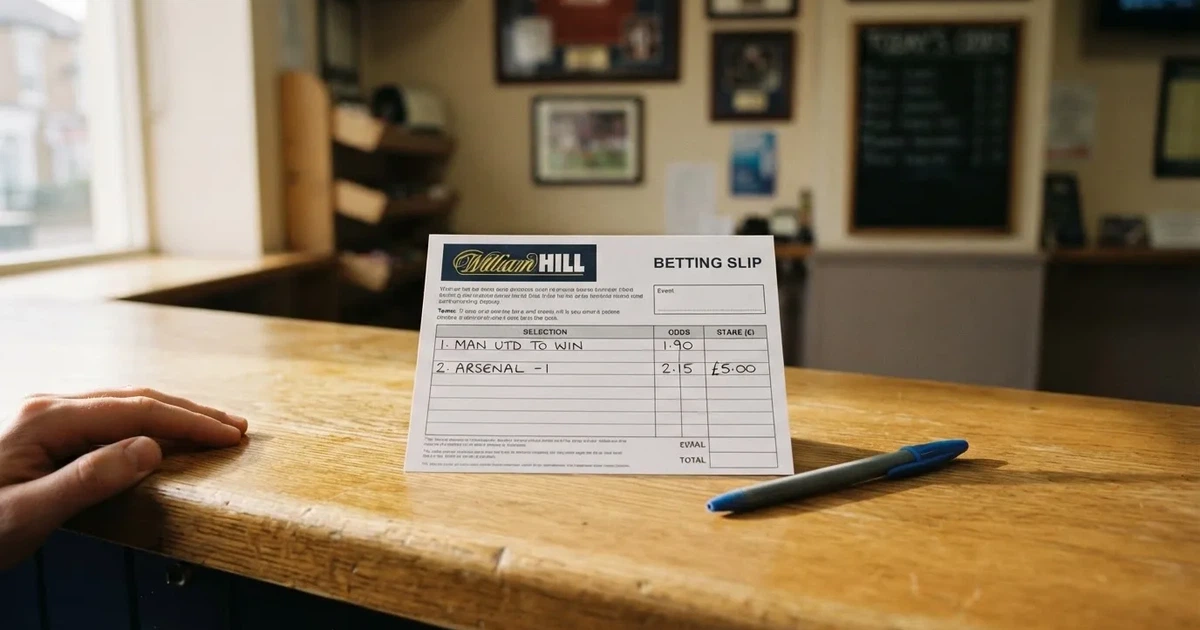
As of 27 October 2026, every review below was cross-checked against the register the Gambling Commission publishes, and against each operator’s own help pages as they appear on the public web. The frame matters more than the name on the shirt: a UK bookmaker’s betting duty, bonus rules, deposit limits and self-exclusion registers are written into law, and they sit on top of whatever the operator’s marketing chooses to say.
What “Licensed” Means in Great Britain — and Why the Register Decides Everything
A bookmaker serving customers in Great Britain needs an operating licence from the Gambling Commission. The test is binary: the brand sits on the Commission’s public register, or it does not. Since the Gambling (Licensing and Advertising) Act 2014 took effect, a remote bookmaker whose facilities are used in GB must hold the licence wherever it is actually based — a Curaçao or Malta registration is not enough. A GB licence is the consumer’s protection; it is also the operator’s permission to advertise, accept payment and pay out.

The register is searchable by business name, trading name, registered domain or account number. It is the only place a verification has to be made, and the proof has to be on the register itself — a footer claim on a betting site is not enough on its own, because the footers can lag the licence and small sites sometimes inherit licences from a parent that sold the brand. Where the betting is spread-betting on a financial instrument, the regulator is the Financial Conduct Authority rather than the Commission, and a separate check has to be made. Spreadex, for example, holds both: an FCA authorisation for spread betting, and a Commission licence for its fixed-odds book.
The Commission’s licence categories that touch this page are general betting standard (real events), general betting standard (virtual events), general betting limited, pool betting, and betting intermediary (the class exchanges sit under). Most of the brands below hold the real-events class; betfair additionally holds the intermediary licence, which is why it can run an exchange alongside a sportsbook. A licence for casino play is not a licence for sports betting, and a brand that holds only the casino class is not a betting operator at all.
The Player Protection Stack: Checks, Caps and Exclusions
A licensed bookmaker in Great Britain is required to put several controls in front of a customer, whether the customer wants them there or not.

Identity comes before the first deposit. A name, address and date of birth have to be verified before any money goes in or any bet goes down, and the rule has covered free bets and bonuses since 7 May 2019. Anonymous play at a licensed site does not exist. For higher-spending customers, source-of-funds questions are normal under the money-laundering rules — a payslip, a bank statement or evidence of where the deposit came from. This is not the operator being awkward; this is the licence’s anti-money-laundering schedule.
Self-exclusion runs through GAMSTOP, the national multi-operator online scheme that became a mandatory licence condition for remote operators on 31 March 2020. A customer can bar themselves from every participating site for six months, one year, five years, or five years with auto-renewal. After the chosen period ends, the exclusion stays in place for a further seven years unless the customer asks GAMSTOP to remove it. GAMSTOP covers online products only; betting shops use a separate in-shop self-exclusion, run by the bookmaker in person.
Spending limits are largely the customer’s choice — there is no statutory ceiling on deposits or losses set by Parliament. The operator is required to offer deposit-limit controls on a fixed time frame (daily, weekly, monthly) under the Commission’s Remote Technical Standards: the first changes applied from 31 October 2025, a second phase was set back to 30 September 2026, and which phase is actually live for an account depends on the operator and the date. On top of that, a financial vulnerability check applies to remote betting customers whose deposits minus withdrawals exceed £150 in a rolling 30 days (in force since 28 February 2025); it is a public-record check rather than a credit check. Stricter financial risk assessments — the so-called affordability checks — are announced in a staged Commission plan published on 7 July 2026, with no confirmed start date.
Help is funded through the levy and through GambleAware, and the front door for a customer is the National Gambling Helpline run by GamCare, alongside the NHS gambling clinics and Gamblers Anonymous.
What the Market Looks Like to a Serious Punter
The GB online betting market is competitive and, in headline terms, generous. Margins are tight on the top football leagues, more generous on smaller sports and on special markets, and the price on any individual match tells the punter very little on its own — it has to be set next to the margin of the market it sits in.
A price is what the punter gets back per unit staked, but it carries two pieces of information: the probability the bookmaker has assigned to the outcome, and the slice the bookmaker keeps for itself. That second number is the overround, expressed here as the margin. The lower the margin, the more of every pound staked is returned to customers on average. Margins on Premier League 1X2 hover between roughly 3% and 7% at the major books; on outright winner markets they run higher, often 20% to 35%; on smaller leagues they can clear 10%; on specials the spread is wider still.
For a serious punter, the rule of thumb is simple: shop the price across the books that will take the wager. Two percentage points of margin on a five-leg accumulator is a meaningful deduction, because each leg multiplies into the overall price.
How Selection, Staking and Settlement Actually Work
A bet is a contract on an outcome, the price at which it was struck, and the stake behind it. The basic settlement is stake multiplied by the price for a win, stake returned on a void, stake lost on a defeat. Dead-heat rules, Rule 4 deductions and non-runner rules are bookmaker-specific — each operator publishes them on its help pages and they have to be read before staking large. Spread betting is fundamentally different: a financial spread bet is on the size of the outcome, not the outcome itself, and losses can exceed the deposit.
Decimal prices are used throughout this page. The standard conversion from fractional odds (a/b) is decimal = a ÷ b + 1. Five-to-one is 6.00; eleven-to-four is 3.75; evens is 2.00. Fractional prices below evens (say 4/6) become decimal prices below 2.00, and these are written odds-on. The Commission accepts both formats in marketing, and the bet slip will take either.
Combination bets multiply leg prices into one. A treble at 2.00, 3.00 and 4.00 returns stake × 24.00 if all three legs win. Each-way bets are two equal-stake bets: one on the win, one on the place, so the stake doubles; the place terms vary by race type and by bookmaker. Accumulators — “accas” in the British trade — are the price-multiplied form; bookmakers offer insurance, boosts and bonuses tied to them, but those offers carry rules of their own. The Football Acca Boost at William Hill, for instance, covers accumulators of two or more legs with each selection at 1/5 or bigger, scaling from 3% on a double up to 200% on twenty or more legs, capped at £10,000 per online bet, running to 30 May 2027.
Cash out is the operator’s offer to buy the bet back before settlement. It is not always available — William Hill, for instance, does not offer cash out on each-way bets and does not guarantee it on accumulators — and the offered figure is the operator’s, not the market’s. A bettor treating cash out as a price-discovery tool is reading a quote, not the market.
Each of these mechanics sits inside a market — the 1X2, the total goals, the Asian handicap, the player-prop. Picking the right market comes first; choosing the right book comes second. A market that does not exist at one operator may be closed for new bets at another, and a bet that is dead at one book can move several points at the next.
Reading Margin the Way a Bookmaker Reads It
A market’s margin is calculated from the prices of every outcome. The payout share — the fraction of every unit staked that would be returned across all outcomes if each paid its quoted price — is 1 divided by the sum of 1/odds on each outcome. The margin is 1 minus that share.
A two-way market priced at 1.90 and 1.90 gives a payout share of 1 ÷ (1/1.90 + 1/1.90) = 0.95, or 95%. The margin is 5%. Drop both prices to 1.80 and the margin rises to 1 − 1 ÷ (1/1.80 + 1/1.80) = 1 − 0.90 = 10%. Stretch one side to 2.10 and the calculation shifts again: the 1.90/2.10 combination gives 1 ÷ (1/1.90 + 1/2.10) = 1 ÷ (0.5263 + 0.4762) = 1 ÷ 1.0025 = 0.9975, so the margin is just 0.25% — a publisher’s arbitrage indicator rather than a real head-to-head line. The point is that the punter reads the margin rather than the headline price, because the margin is constant across all stake sizes while the headline price moves with every line change.
For combination bets the legs multiply, and so do their margins. A four-leg accumulator at 4/1, 3/1, 5/1 and 6/1 carries four embedded margins in series, and the overall margin ends up wherever the implied probabilities and the size of each leg’s overround happen to fall — usually between 8% and 25%, and steeply above that for specials. An accumulator is rarely the worst-priced bet, but it is rarely the best either.
For free bets where the stake is not returned, the value of the offer is the free-bet amount multiplied by (odds − 1) divided by odds, scaled by the payout share of the market the bet is struck on. A £25 free bet at 6.00 on a market with a 95% payout share returns £25 × (5/6) × 0.95 = £19.79 on average. The free bet is worth that number to the bettor, not its nominal value, and the remainder is the take the operator has built into the structure.
A bonus that requires turnover — for example a 10x wagering condition on a £20 cash bonus — means £200 of qualifying bets before the bonus clears. The cost of clearing depends on the margin of the markets the bets are struck on: at a 5% margin the expected cost is £200 × 0.05 = £10 of stake lost on average per bonus. The bonus has a cap, set by law at 10x the bonus value since the January 2026 promotion-rule change, and mixed-product offers (bet on football, get free spins) are no longer permitted at all.
The Top 10 High-Stakes Betting Sites Reviewed
The ten operators below are presented in the order listed. Each operates under a Gambling Commission remote licence, each takes GB customers, each runs a sportsbook sufficient for a serious punter. The judging is mine, the figures are theirs, and the verdict at the foot of each section is mine too.
Betfred — the Long-Standing Layer with Heavy Racing Focus
Petfre (Gibraltar) Limited operates Betfred under Gambling Commission account 39544 (remote general betting standard, real events). The app exposes Bet Builder, Sub Switch on football, Racing Post form data, Extra Places on racing, an in-house live-casino vertical and a bingo room, all on top of the sportsbook.
The Sub Switch product is unusual: it lets the bettor move the bet onto a substituting player if a selected footballer is taken off before kick-off, and that is a feature most rivals reserve for outright markets. The Racing Post integration puts form and tipping in front of the bettor inside the betting app, and the Extra Places promo is a regular offer on the racing schedule.
For high-stakes racing the offering is thick: Best Odds Guaranteed, ante-post markets, place terms set at the firm’s discretion on handicap and non-handicap races. Football coverage is broad without being the thinnest in the comparison.
Where it falls short: in-play is conventional rather than the deepest, and the Sub Switch feature depends on the footballer’s substitution time and on bookmaker discretion. A punter who treats Sub Switch as a guaranteed hedge is reading a marketing line, not a contract.
Verdict. A serious racing-led punter’s home bookmaker, with football coverage that is broad rather than best-in-class. The Sub Switch product is worth pointing at.
Midnite — Sports-First with Esports Breadth
Midnite Limited operates Midnite under Gambling Commission account 101839 (remote general betting standard, real events). The site shows in-play events, an acca builder, popular accumulators, and price boosts with stated maximum-stake limits.
The acca builder is the centre of gravity for footbal punters, with the popular-accas feed giving ready-formed selections on the day’s biggest matches. Price boosts tend to carry explicit stake caps, which means a high-stakes punter will see the cap and either trim the bet to the cap or move on. That visibility is itself a feature — the punters know what they can stake before they click.
The welcome offer attached to new customers — bet £5 at EVS (2.0) or greater, pre-match, within 14 days — returns £25 in free bets plus 50 free spins valid for 7 days. The £5 stake is the qualifier; the £25 in free bets is the headline. The £25 is described as a free bet, so the stake does not return with a win.
Where it falls short: maximum-stake rules on boosted prices hit the high-stakes punter harder than the £5 casual. A £500 stake on a 50/1 boost is rarely possible at any book; at Midnite the cap is visible on the boost card and the punters adjust accordingly.
Verdict. A useful second bookmaker for accumulator work, and a credible fourth or fifth football line. Worth opening alongside a primary.
Sky Bet — Football-Heavy with Sharp Mobile App
SBG Sports Limited operates Sky Bet under Gambling Commission account 67370 (remote general betting standard, real events). The Sky Bet welcome offer is £30 in free bets — three £10 tokens — after a £5 deposit and a first single or each-way bet of 5p at 1/1 or greater.
The £5 deposit and 5p qualifier are unusually low for a welcome offer and let a punter activate the offer with very small carry, but the £30 settles in three £10 tokens rather than one, and each token carries its own expiry and minimum-odds rule. Reading the break-down is part of the offer.
What the brand does well is the football market: Premier League and EFL coverage with a deep set of player markets, request-a-bet visible on the in-app markets, and in-play that is consistent through the day. The £30 in free bets, divided into three £10 tokens, gives the bettor three chances to pick the moment rather than one large bet.
Where it falls short: free bets tend to come with minimum-odds restrictions on the three tokens, and token expiry rules are common across this comparison but vary between books.
Verdict. Good fourth book for football, productive in-play, welcome offer generous enough to be worth activating with a small qualifier.
Kwiff — Accidental-Boost Brand with Stake Rules Written on the Card
Eaton Gate Gaming Limited operates Kwiff under Gambling Commission account 44448 (remote general betting standard, real events). Kwiff is rated 17+ on the App Store; the brand describes itself as operating under Spryme Ltd on the listing.
The headline feature is Supercharge: odds on a placed bet can be boosted after the bet is struck, in some cases from 2/1 up to 20/1, on singles and multi bets across any sport. The mechanism is randomised rather than earned, and a high-stakes punter is just as likely to land a small improvement as a headline one.
Supercharge is a fun feature; it is not the same as an odds boost a punter prices in advance. For accumulator fans it can punch a £5 acca past 1,000/1 — and then the £5 acca pays out under the standard rules.
Where it falls short: free-bet terms at this brand tend to be tighter than at the racing-led books, and Supercharge is not a substitute for either Best Odds Guaranteed or a serious acca-insurance product. The 17+ App Store rating is a hard age gate from registration — younger accounts are excluded.
Verdict. A fifth or sixth book for variety; the Supercharge feature is genuinely different from anything else in this comparison.
Ladbrokes — Exchange-Adjacent Giant with Best Odds Guaranteed
LC International Limited operates Ladbrokes under Gambling Commission account 54743, with two parallel licence classes: remote general betting standard (real events) and remote betting intermediary. The intermediary class is the technical reason Ladbrokes can sit alongside the Coral and Paddy Power betting products under one corporate licence.
The product set covers odds boosts on horse and greyhound bets, Best Odds Guaranteed on UK and Irish horse racing, in-play betting, and Acca Boosts. The Paddy Power and Coral feeds come under the same parent group and share product investment without being identical.
A serious punter who runs a racing portfolio will lean on Ladbrokes for BOG and the strong in-play product, with the betting-intermediary licence a quiet indicator of the firm’s reach across the market structure. The Acca Boost is a steady feature, scaled across the legs of the bet.
Where it falls short: the group structure means some promotional offers differ slightly between the Ladbrokes product and the related Paddy Power and Coral feeds, and a punter hunting the maximum figure has to compare within the group, not outside it.
Verdict. A primary book for racing and a strong in-play book for football. Worth opening as one of the first three.
William Hill — Best Odds Guaranteed with Football Acca Boost
WHG (International) Limited operates William Hill under Gambling Commission account 39225 (remote general betting standard, real events). The Football Acca Boost covers accumulators of two or more legs with each leg at 1/5 or bigger, scaling from 3% on a double up to 200% on twenty or more legs, capped at £10,000 per online bet, and is running until 30 May 2027.
Best Odds Guaranteed on UK and Irish horse racing from 8 AM on the day covers single and multiple bets, and excludes ante-post, tote and pari-mutuel bets. The day-of-race price is the published price or the SP, whichever is higher.
The Cash Out feature is available on most singles but is not offered on each-way bets and is not always available on accumulators; William Hill says so explicitly and does not guarantee availability. A punter treating Cash Out as a structural price-discovery tool is reading the wrong instrument.
The football coverage is broad: Acca Boost and the standard markets sit alongside the racing-led book, and the firm is among the longer-running on the high street.
Verdict. A primary for football accumulators and a primary for racing. The Acca Boost cap of £10,000 per online bet is generous against the comparison.
BetGoodwin — Race-Led Independent with Focused Welcome Offer
Goodwin Racing Limited operates BetGoodwin under Gambling Commission account 2927 (remote general betting standard, real events). The brand is small and racing-leaning, and the welcome offer is the focused “Bet £10, Get £15 in Free Bets” split into three £5 tokens — a £5 sports bet, a £5 acca and a £5 Sub-Cover bet.
The Sub-Cover element ties the third £5 token to football substitutions, which is unusual. The acca token is a market-specific free bet, and the £5 sports token is a general sports token. Each carries its own expiry.
For high-stakes racing, the BOG and market depth are competent without being the widest in the comparison; the racing markets are deep enough for the day’s main meetings and the place terms are set at the firm’s discretion.
Where it falls short: a smaller catalogue than the major books, and the brand’s three-token welcome offer splits the £15 into three pieces — a punter who uses all three trips over three different markets.
Verdict. A useful first or second book for racing. The welcome offer is generous by structure but divided by design, and the racing markets are competitive without being record-wide.
BetVictor — Deep Racing with Smart Stats
BV Gaming Limited operates BetVictor under Gambling Commission account 39576 (remote general betting standard, real events). The firm’s product set covers Best Odds Guaranteed on UK and Irish horse racing, enhanced live race streaming and a BetFinder feature for finding racing bets, alongside Smart Stats.
Smart Stats is the brand’s in-house form product, showing course-and-distance data, sectional times where available, and head-to-heads, mostly racing-led and increasingly cross-applied to football. The BetFinder tool is a smart-aleck name for what is, in practice, a faster way of getting to the day’s racing cards.
High-stakes football is serviceable through the standard Bet Builder; high-stakes racing is the centre of gravity. Enhanced live race streaming is a feature the racing-led books all run, and BetVictor’s is competitive without being unique.
Where it falls short: the football product is competent rather than differential, and the firm’s deep integrations are racing-led; a pure-football punter would still keep the football-led books as primaries.
Verdict. A useful primary for racing. The Smart Stats and BetFinder tools are substantive differentiators, and the football market is serviceable for the betting portfolio rather than the centre of the book.
QuinnBet — 7-Day Free Bets with Strict Format Limits
QuinnBet (Gibraltar) Limited operates QuinnBet under Gambling Commission account 61011 (remote general betting standard, real events). Free bets are valid for 7 days from credit and can be used on any market at odds of 1/2 (1.5) or greater, with maximum odds of 50/1; straight accumulators are allowed but Trixies, Patents and Yankees are not.
The exclusion of multi-leg combinations other than a straight accumulator is an unusual one — it cuts the offer out of common multibets while leaving simple multiples intact. The 7-day expiry is short, and the maximum-odds of 50/1 (51.00 decimal) caps any strike on a long-odds offer.
For a high-stakes punter with a settled multi-line strategy this is a feature-by-feature book rather than a primary. The 7-day window and the 50/1 maximum offer a clean framework for free-bet staking without much wiggle room.
Where it falls short: free-bet terms are tight, and the format exclusions exclude a chunk of betting patterns. The brand’s welcome offer and ongoing promos are competitive when fitted inside the rules.
Verdict. A useful fifth or sixth book for punters who like a clear rule on the free bets. The format exclusions are a real constraint.
Swifty Sports — Best Odds Guaranteed, Cash Out and in-Play with Bet Builder Coming
Swifty Global (UK) Ltd operates Swifty Sports under Gambling Commission account 58957 (remote general betting standard, real events). The brand offers Best Odds Guaranteed, Cash Out on horse racing and football markets, daily price boosts, live streaming and in-play betting, and a Bet Builder listed as coming soon on the App Store listing.
The product set is broad against the licence category and the brand’s small footprint; the Bet Builder is the gap, and the App Store listing describes it as coming soon rather than available. A punter opening a Swifty Sports account now gets Best Odds Guaranteed, Cash Out, daily price boosts, live streaming and in-play — five of the standard features — with the sixth listed.
Cash Out on horse racing during races is the practical version of the feature, and the daily price boosts sit on top of the ordinary market. The brand licences in the standard remote general betting class.
Verdict. A useful secondary or tertiary book, with a competitive product set against a smaller footprint. The Bet Builder is the obvious gap; once it ships, the brand reads differently.
Comparison: Licences and the High-Stakes Line
The table below sets out the ten bookmakers against the licensing detail that matters. A licence number is not a brand endorsement — it is a proof that the operator sits on the Commission’s public register against the stated account. The right-hand column quotes how each operator’s own terms state the key subject.
| Brand | Gambling Commission account number and remote licence class | Licence holder | Operator terms on the key’s subject |
|---|---|---|---|
| Betfred | 39544 · remote general betting standard (real events) | Petfre (Gibraltar) Limited | Bet Builder, Sub Switch, Racing Post form data, Extra Places, live casino, bingo |
| Midnite | 101839 · remote general betting standard (real events) | Midnite Limited | In-play events, acca builder, popular accas, price boosts with stated maximum-stake limits |
| Sky Bet | 67370 · remote general betting standard (real events) | SBG Sports Limited | Welcome offer £30 in free bets (three £10 tokens) after £5 deposit and a 5p qualifier at 1/1 or greater |
| Kwiff | 44448 · remote general betting standard (real events) | Eaton Gate Gaming Limited | Supercharge can boost placed-bet odds to as much as 20/1 across single and multi bets |
| Ladbrokes | 54743 · remote general betting standard (real events) and remote betting intermediary | LC International Limited | Odds boosts on horse and greyhound bets, Best Odds Guaranteed on UK and Irish racing, Acca Boosts, in-play |
| William Hill | 39225 · remote general betting standard (real events) | WHG (International) Limited | Best Odds Guaranteed on UK and Irish racing from 8 AM (single and multiple; ante-post, tote, pari-mutuel excluded); Football Acca Boost to 200% on 20+ legs, capped at £10,000, running to 30 May 2027 |
| BetGoodwin | 2927 · remote general betting standard (real events) | Goodwin Racing Limited | “Bet £10, Get £15 in Free Bets” split into £5 sports, £5 acca and £5 Sub-Cover tokens |
| BetVictor | 39576 · remote general betting standard (real events) | BV Gaming Limited | Best Odds Guaranteed on UK and Irish racing, enhanced live streaming, BetFinder tool, Smart Stats |
| QuinnBet | 61011 · remote general betting standard (real events) | QuinnBet (Gibraltar) Limited | Free bets valid 7 days; min odds 1/2 (1.5), max odds 50/1; straight accumulators allowed; Trixies, Patents and Yankees excluded |
| Swifty Sports | 58957 · remote general betting standard (real events) | Swifty Global (UK) Ltd | Best Odds Guaranteed, Cash Out on horse racing and football, daily price boosts, live streaming, in-play; Bet Builder coming soon |
The column of licence classes is not a competitive column — it is the Commission’s categorisation. What it does tell a high-stakes punter is which operator is permitted to run which product: only Ladbrokes in this comparison holds the betting-intermediary class needed to run an exchange, the rest are real-events sportsbooks. Reading the account number against the register’s record is the only way to confirm it.
Sizing the Edge: Margin in a 1.90 / 1.90 Market
A two-way market priced at 1.90 / 1.90 — fractional 9/10 on each side — gives a payout share of 1 ÷ (1/1.90 + 1/1.90) = 0.95, or 95%. The margin on the market is the remainder: 1 − 0.95 = 5%. Five per cent is the slice the bookmaker keeps of every pound staked across the two outcomes of this market, averaged over all settlements.
That number moves with the prices. Pull both sides to 1.80 and the margin rises to 1 − 1 ÷ (1/1.80 + 1/1.90) = 1 − 0.9464 = 5.36% — a 1.80 / 1.90 book gives 5.36%, a 1.90 / 1.90 book gives 5%. Stretch one side further and the book edges back toward break-even on that two-way line, which is exactly when the disbalanced book publishes the strong overround on the favourite and the soft underround on the outsider.
Reporting a single margin figure for “the betting market” hides the variation. Margins on Premier League 1X2 sit between roughly 3% and 7% at the major books on the day of writing; margins on outright markets run 20% to 35%; margins on smaller leagues and on specials run wider. A serious punter reads the margin of the specific market on the specific day rather than the headline of “the spread”, and that is what the table above cannot show.
What a Bonus Actually Costs
A £20 cash bonus with a 10x wagering requirement means £200 of qualifying bets. At a 5% market margin, that £200 of bets costs £10 of stake lost on average to settle the bonus — the bonus’s expected cost is £10, so the net value of the £20 bonus is roughly £10 before any other constraints. Mixed-product offers (bet on football, get casino free spins) are no longer permitted in this market, and the 10x cap is on the bonus value, not on a deposit match. A 100% deposit-match bonus at the cap is a £10 bonus on a £10 deposit with the same £100 of turnover.
Free bets, where the stake is not returned, are worth free-bet × (odds − 1) ÷ odds × payout share on the market the bet is struck on. A £25 free bet at 6.00 on a 95% market returns £25 × (5/6) × 0.95 = £19.79 on average. The £25 nominal and the £19.79 expected value are different numbers; the difference is what the operator has built into the structure.
Welcome offers on this comparison split into two camps: those with low qualifiers (£5 deposit, 5p bet at Sky Bet; £5 bet at Midnite) and those with a meaningful stake qualifier (£20 bet at Coral). A punter activating several of these offers in sequence keeps the qualifier small and treats the eventual free bets as a structured staking plan rather than as cash-equivalent.
The Bonus Rule That Just Changed — and What It Costs
The Commission’s promotion rules since 19 January 2026 cap wagering requirements at 10x the bonus value and ban mixed-product bonuses. The change is enforced at the licensed operator, not at the customer — a bookmaker offering “10x turnover and a free spins bundle on the casino side” is non-compliant on the casino half at least. Whether the cap applies to free bets with no wagering condition and whether any cap applies to the money value of the bonus itself are open questions the rules do not close; they apply to wagering conditions on cash bonuses and to multi-product promotions.
The 10x cap resets the comparison. A book that had previously offered 50x turnover on a £10 cash bonus (£500 of bets) is now capped at 10x the bonus value, so on a £10 bonus no more than £100 of bets. That is the meaningful change for a high-stakes punter who clears several welcome offers a year: the worst-case bonus is better, the best-case bonus is unchanged, and the multi-product offer structure that stitched the casino to the sportsbook is gone.
Choosing Between the Bookmakers — What the Decision Really Hangs On
The decision between these ten brands is not a contest. It is a portfolio question.
A racing-led punter’s primary book is one of William Hill, Ladbrokes, BetVictor, BetGoodwin or Betfred, with BOG and the racing market depth taking the day. A football-led punter’s primary is one of Sky Bet, bet365 (outside this list and named here only as the comparator any punter benchmarks against), William Hill or Coral, with the Acca Boost and in-play markets the deciding factors. The punter running both portfolios keeps two or three primaries and three or four secondaries, and uses the secondaries to chase the price-and-edge combinations that the primaries do not.
For a high-stakes Welsh, Scottish or English punter, the constraints are the same as for a London punter: the licence applies across Great Britain, the verification happens once, the GAMSTOP register follows the customer wherever they sit. For a punter in Northern Ireland, the betting market sits outside the Gambling Act 2005 and a separate licence is required; most of the brands here do not hold one.
How to Read Welcome Offers Without Getting Caught
A welcome offer that returns £30 in free bets, requires a £5 deposit and a 5p bet at 1/1 or greater is not a £30 bonus — it is a free-bet pipeline with three £10 tokens. Each token carries a minimum-odds rule, an expiry, and a market restriction. Reading the offer before activating it is part of taking it.
The key rules are: minimum odds on the qualifier, minimum odds on the free bet, expiry, market restrictions, and any token-by-token breakdown. A welcome offer is not a cash gift; the headline number is nominal, and the realised value depends on the operator’s own terms.
For high-stakes punters the welcome offer is a one-time feature, not a strategy. The strategy is the BOG, the in-play product, the cash-out mechanism, the acca boost and the bet builder across several books over months of staking. A punter who migrates from book to book chasing free bets loses the compounding edge.
The Offshore Question
An unlicensed brand — one not on the Commission’s public register — is prohibited from serving customers in Great Britain at the point of consumption. The offence sits with the operator, not the customer. What the customer loses by going offshore is: the GAMSTOP self-exclusion cover, the Commission’s complaints route, the approved dispute-resolution body, the British consumer-protection framework if funds are withheld, the 10x bonus cap, and the £150 financial-vulnerability check threshold. These protections sit on the licence; they are not in the betting.
The Commission enforces by disruption: cease-and-desist notices, search-engine referrals, work with registrars, hosts and payment providers. Court-order DNS blocking powers have been given, or are about to be given, to the Commission — ISP blocking is not, on the date of writing, in operation across the consumer internet. A punter relying on “blocked” websites in this jurisdiction is reading the wrong regulation.
An honest framing is: licensed = checks, limits, GAMSTOP, bonus cap, but also verification before the first bet; unlicensed = none of those protections, possible loss of funds, no recourse to the British dispute-resolution body. Neither side is “the safe choice” by default. The punter’s job is to look at the Commission register before signing up, and to compare the licence number the operator publishes against the record the register carries.
Settlement, Payment and the Tax Question
Payouts are stake × price for a win, stake on a void, stake lost on a defeat. Identity is verified before the first deposit, and high-stakes payouts are the most common point at which source-of-funds questions are asked; a payslip or bank statement is normal under the anti-money-laundering framework. The operator does not withhold tax on player winnings in Great Britain; General Betting Duty is the operator’s tax on its gross profits, currently 15% with a 25% remote rate from 1 April 2027. Until that date the remote rate stays at 15%, and whether operators pass duty on through odds is not established.
Winnings are not taxed at the player level under the general framework. A professional gambler — someone whose betting is a trade, not an occasional punter’s — has different tax treatment and should ask HMRC or a tax adviser. This page is general information, not tax advice.
The customer does not pay General Betting Duty. The customer does not pay tax on winnings in the general case. The customer does pay the margin built into every price; that margin is the cost, and it is the only cost the punter sees directly.
The Reading List: What Punters Verify Before Staking Large
The Commission’s public register is the only place a licence has to be checked. The operator’s help pages are the only place a bet type has to be checked. The bettor’s own limit-setting is the only place a stake ceiling has to be set. The verification and the limit are the punter’s two tools.
For a high-stakes punter the practical sequence is: open two or three primaries from this comparison under the GB register, set a deposit limit at each on the longest available time frame, verify the welcome offer’s terms before the first deposit, and keep a price-comparison checklist across the books you have open. The checklist is the edge. The licence is the protection.
Frequently Asked Questions
How can it be confirmed that a bookmaker holds a Gambling Commission licence?
A licence is verified against the Gambling Commission’s public register, which is searchable by business name, trading name, registered domain, or account number. The register’s record is the only authoritative test — a footer claim on the bookmaker’s own site is necessary but never sufficient on its own. Betting brands often sit under holding companies, so the account number on the register is what makes the verification.
How is the return on a bet worked out from the stake and the odds?
The return on a winning bet is stake × odds, which gives back the stake plus winnings; profit alone is stake × (odds − 1). For a combination bet the leg prices multiply into one strike price, so a treble at 2.00, 3.00 and 4.00 returns stake × 24.00 if all three legs win.
What is the bookmaker’s margin and how does it show up in the odds?
A market’s margin is the slice the bookmaker keeps of every unit staked across all outcomes; the rest, the payout share, would be returned across all outcomes if each paid its quoted price. The payout share is 1 ÷ sum of 1/odds across outcomes, and the margin is 1 minus that share. In a two-way market at 1.90 / 1.90 the payout share is 95%, so the margin is 5%.
How do fractional odds such as 5/1 convert to decimal odds such as 6.00?
The conversion is decimal = numerator ÷ denominator + 1, so 5/1 becomes 5 + 1 = 6.00, and 11/4 becomes 11 ÷ 4 + 1 = 3.75. Evens (1/1) becomes 2.00. Fractional odds-on prices below evens, like 4/6, become 4 ÷ 6 + 1 = 1.67 in decimal.
Which tools for controlling play does a licensed bookmaker have to offer?
A licensed bookmaker offers deposit limits on a fixed time frame, GAMSTOP self-exclusion cover, time-out breaks, reality checks, and a financial-vulnerability check at the £150 net-deposit threshold. Most carry account-level tools (deposit caps, session timers, time-out, self-exclusion) alongside the multi-operator GAMSTOP register, which is a separate consumer-facing cover. The Commission’s tools and the operator’s own tools stack rather than substitute.
Are betting winnings taxed in Great Britain, and who pays General Betting Duty?
The player does not pay tax on betting winnings in the general case in Great Britain. General Betting Duty is the bookmaker’s tax on its gross profits, currently 15% on the standard element and moving to 25% on the remote element from 1 April 2027. A professional gambler should ask HMRC or a tax adviser; this page is general information, not tax advice.
Betting sites & exchanges – Best betting
Content created by the «Best betting» team
