
Darts Betting Tips 2026: How to Read a Tip, Find Value and Choose a UK Bookmaker
 Available in US
Darts betting tips 2026 is the search behind most of what fills the next nine sections: how a tip is actually built, why no prediction is certain, which markets a UK bookmaker offers, what the margin is doing to those prices, and which of the ten operators reviewed here suit a particular kind of punter. The page is a guide, not a tip sheet. Nothing in it picks winners. What it does is name the moving parts of a darts bet — form, the odds, the bookmaker’s edge, the offer’s small print — so that a reader can decide for themselves which path is worth taking.

Last reviewed against the Gambling Commission’s public register on 27 October 2026.
Staying in control while you bet
Betting is entertainment with a price tag, and on darts the price tag is unusually easy to miss. A £5 pre-match punt on the World Championship becomes a £20 accumulator before the first set throws, then a £50 in-play stab when your selection misses a double. None of those bets is a mistake on its own. What turns a hobby into harm is the absence of a ceiling.
The first ceiling is one a punter sets themselves: a deposit limit, a session reminder, a stake cap per bet. A GB-licensed remote bookmaker must offer at least one deposit-limit control, and most of the operators reviewed below carry the wider safer-gambling kit — deposit limits, product restrictions, time-outs and self-exclusion alongside GAMSTOP, GamCare, the National Gambling Helpline, the BGC’s signposts and so on. The cap belongs to the punter, not the regulator.
GAMSTOP is the second ceiling, and it sits above the punter rather than at their shoulder. Self-exclusion through GAMSTOP blocks every GB-licensed remote site and app at once for six months, one year, five years, or five years with auto-renewal; once the minimum period ends the exclusion remains in place for another seven years unless GAMSTOP is asked to remove it. The system covers online only — betting shops run their own multi-channel self-exclusion. It is a serious tool, and it is free.
Two other controls sit inside a bookmaker’s own product. A time-out takes the account offline for a chosen window, from a day to several weeks. A product block removes a vertical — sports, casino, slots — from the same account. Neither is a substitute for GAMSTOP; both are useful when one product is the problem and the rest of the account is fine.
A financial vulnerability check has applied since 28 February 2025 to licensed remote betting once a customer’s deposits minus withdrawals cross £150 in a rolling 30 days. It is a public-record check — bankruptcy and county court judgments are the public-record examples — and is not an income or credit reference check. A second control, the financial risk assessment, has been announced by the Commission in a staged plan of 7 July 2026 with no start date. Affordability questions at higher spend are normal under the money-laundering rules and are not, on their own, a sign that the customer is in trouble.
The help lines are open. GamCare runs the National Gambling Helpline, with a live chat and a text channel. GambleAware funds treatment and the NHS gambling clinics. Gamblers Anonymous runs meetings. A punter who finds themselves chasing losses, betting money earmarked for rent, or hiding bets from family or partners has crossed from entertainment into something else, and the right next step is a call rather than another deposit.
A short closing note for the section: the leave the bank cannot be overstated. A betting tip — any tip, including the ones reviewed later in this article — is an opinion about a probability, not a forecast of an outcome. The price the bookmaker offers already contains the firm’s margin, so even a tip that is “right” more often than the average reader pays the bookmaker for the privilege of being told so.
Bonuses and free bets on darts
A bonus or free bet on darts looks like a gift and behaves like a discount coupon with terms. The headline is what the punter receives; the small print is what it costs. This section reads the offer as the offer reads the punter.
The first thing to read is the type. A cash bonus returns the bonus itself, the winnings and the stake together, with a turnover condition to clear before withdrawal. A free bet pays the winnings only — the free-bet stake is not returned, and a £10 free bet at 4/1 returns £40 in cash, not £50. A price boost is a one-off enhanced price on a chosen selection; the stake is real money and the winnings are paid in cash. An accumulator insurance refunds a stake (usually as a free bet) if one leg of an accumulator lets the punter down. A cashback returns a slice of net losses over a window. The labels are not interchangeable: a “free bet” whose stake is not returned is not a cash bonus, a “boost” whose stake is the punter’s cash is not a free bet.
The second thing to read is the wagering requirement. A £10 bonus at 50x means £500 of qualifying bets before the bonus balance becomes withdrawable; since 19 January 2026 the Gambling Commission’s promotion rules cap wagering on bonuses at 10x — no more than £100 of qualifying bets for a £10 bonus. Mixed-product promotions — “bet on football to get free spins”, say — are banned outright under the same rules. Whether the cap applies to free bets with no wagering condition and whether there is a cap on the money value of a bonus itself are not established in the rules; the honest framing is that wagering is now limited and the older heavy multiples are no longer on the table.
The third thing to read is the minimum price. A £10 free bet that only counts at evens (2.0) or longer is a different proposition from one that counts at any price; settling on a heavy favourite below the minimum forfeits the free bet. A £5 qualifying bet that demands 2.0 or greater is a thin choice for a punter who would otherwise back the 4/6 favourite.
The fourth thing to read is the deadline. A free bet valid for 7 days expires; a bonus balance with 14 days to clear expires. The clock starts at sign-up, not at first use. Punters who deposit and forget lose the offer.
The fifth thing to read is what happens to winnings. A free bet on a winning 4/1 selection returns the winnings in the main balance; some promotions credit them as bonus funds with their own wagering. A cash bonus cleared at the minimum turnover moves to withdrawable cash; failing the turnover forfeits the bonus and often the winnings it produced.
What is the offer actually worth, in cash terms? A free bet whose stake is not returned is worth roughly free-bet amount × (odds − 1) ÷ odds × payout share of the market it is placed on. A £10 free bet at 4/1 (5.00) on a market paying 95% back is worth around £10 × 4/5 × 0.95 = £7.60 on average. That is the average over many bets, not what this particular free bet wins. The headline “£10 free bet” is the stake, not the expected value.
Mixed promotions and the 10x cap: an offer that asks the punter to wager a sports bonus on casino games, or vice versa, is no longer available from a GB-licensed operator; an offer with a 50x wagering is no longer available either. The cap has reshaped the UK promotion market, and the older offers on comparison pages and affiliate sites are increasingly a record of what used to be allowed.
A closing word on offers: the best offer is the one the punter would have taken at the full price. A price boost on a real favourite they would have backed anyway is the cheapest flat bet the punter will ever place. A free bet on a market the punter would never have entered is the most expensive free bet on the page.
Live betting and cash out on darts
Live darts betting, also called in-play, is the form of betting in which the odds move as the leg unfolds. The 180 in the third visit, the missed double at the bull for the match, the run of three successive legs by the underdog — each is a price event the bookmaker reprices and the punter can take or leave. In-play on darts is offered by every major GB-licensed bookmaker and it is the most popular form of darts betting by stake.
What makes in-play on darts different from in-play on football is the speed. A leg of 501 takes between roughly three and six minutes; a set of legs takes fifteen to thirty; a match takes the rest of the evening. The market moves in step with the leg. The punter is not betting on a half-time scoreline but on a player five darts from the finish.
The odds move because of the bookmaker’s model and the bookmaker’s margin. The model reprices on every score; the margin stays built into the new price. A leg that “looks” obvious to the eye can carry a margin that eats the edge before the leg sets. A punter who bets the obvious at the obvious price pays for the obvious twice.
Cash out is the bookmaker’s offer to settle the bet early, at a price the bookmaker itself sets. It is a feature on most of the operators reviewed below. Two things matter. First, the cash-out price is the bookmaker’s price — it embeds the firm’s margin and it moves against the punter. A bet that looks “in profit” by £40 may cash out at £30. Second, cash out is unavailable in some markets and is restricted or suspended during the most volatile moments — the deciding leg of a deciding set, the moment the favourite misses for the match. A punter relying on cash out to lock a profit is relying on a feature the bookmaker controls.
A short digression on what “live” means in darts: most in-play markets at GB bookmakers are settled on the official PDC or WDF feed, with a slight delay of a few seconds to handle the broadcast lag. Bets placed inside the delay window are usually voided or settled at the price at the time the bet was struck. The delay is short and it is the bookmaker’s protection against latency arbitrage; the punter’s protection is the void rule.
What is the right way to use in-play? Three observations, none of them a tip. First, the margin eats a smaller share of value when the price is long — a 4/1 in-play shot costs less in margin per unit staked than an odds-on punt does, even though the bettor is paid more for winning. Second, the most volatile moments are the worst moments to bet — the bookmaker widens its margin into volatility and the punter pays for it. Third, in-play is not a substitute for pre-match analysis. The same form and head-to-head reading that drives a pre-match bet drives a good in-play bet; the only thing in-play adds is the live picture, and the picture changes.
A closing note on momentum: darts has visible momentum — a run of legs, a hot hand at the doubles — but the market is faster than the eye. By the time the live picture confirms what the eye suspects, the price has already moved. The punter who bets the eye is betting the price, and the price is the bookmaker’s, not theirs.
How a darts betting tip is built
A darts betting tip is a written opinion about which outcome is more likely than the price suggests. The opinion can be a one-liner on X, a paid subscription newsletter, a friend’s text or a tipster’s column in a newspaper. The shape is the same: a punter is told “Player A is value at 1.95 against Player B”, and the punter is left to decide whether to back it.
The first thing a tip has to clear is the bookmaker’s margin. The bookmaker’s price already contains the firm’s edge, so a tip that says “Player A is value at 1.95” has to mean “Player A’s true probability is greater than 1 ÷ 1.95 = 51.3% before margin” — which is to say, the punter has to believe Player A wins the match more than 53% of the time on a market whose margin is around 5%, just to break even. The arithmetic is unforgiving: a tip on a price shorter than 2.0 has to be more accurate than the tipster thinks.
The second thing a tip has to clear is form. Form on the PDC tour is a noisy record: matches played across a calendar year, opponents of varying quality, conditions that change by venue, recent legs carrying more weight than distant ones. The tipster who quotes “form” is usually quoting a run of legs in the last few months, adjusted for opponent quality; the run is what the model sees and the price has already seen it too. A tip that beats the price has to find an edge the model has missed.
The third thing a tip has to clear is the head-to-head. Two players meet many times across a season; the record between them is a small but real signal. A player who has won the last five meetings against a particular opponent may have a tactical edge or a mental edge the price has not fully priced. The same is true of venue — the Ally Pally stage rewards a different game than the circuit’s smaller halls.
The fourth thing a tip has to clear is the line-up. A player withdrawing through injury, a fatigue call after a long Premier League run, a debutant in the World Championship field — each is a piece of news the model ingests and the price reprices. The tipster who calls the price “value” is calling the price after the news is in; calling it before is guessing.
The fifth thing a tip has to clear is the punter’s own record. A punter who follows a tipster’s tips for a year and is behind is paying for the privilege. The honest test is whether the tipster’s record at the prices they quote is profitable after margin. A tipster who quotes no record, who quotes a record at shorter prices than they actually took, or who quotes a record before the bookmaker’s cut has been taken is selling confidence, not tips.
Staking and bankroll discipline is the framework around the tip. A punter who stakes a fixed percentage of bank on every tip — 1% to 2% is the conventional range — survives a losing run. A punter who doubles up to recover losses, who tips a larger stake on a “certainty”, or who bets the rent is funding the bookmaker’s streak, not their own. Bankroll discipline is the part the tipster’s copy rarely covers, and it is the part that decides whether a year of tips makes money or loses it.
A closing word: no tip is certain. A tip is an opinion about a probability, and a probability is a number that says what would happen across many bets. A punter who acts on a single tip is acting on one observation of a process that needs thousands of observations to settle. The arithmetic is the patient one; the punter does not have to be.
Bet types and odds on darts
Darts has fewer markets than football but more than the casual punter expects. The most common markets, with the way each settles and the way each price is built, are the subject of this section.
Match winner. Two players, two outcomes, the simplest market on the page. The bookmaker offers prices on each player, with the underdog longer and the favourite shorter. The market settles on the official result of the match. On a balanced match the prices sit near 1.90 / 1.90; on a one-sided match the favourite can be as short as 1.20 or shorter, and the outsider can drift past 5.0.
Set betting. Correct score in sets — 4-2, 5-3, 6-4 and so on depending on the format. The market settles on the official scoreline. The prices are longer than the match-winner market because there are more outcomes and the margin is wider.
Leg betting on the set. Who will win the next leg, the next set, or the match. Leg markets are the in-play staple; set markets settle at the end of each set. The margin on leg markets is wider than on match markets because the inputs are noisier and the bookmaker hedges less.
Most 180s. Which player will hit more maximums in the match. Settles on the official count. The market is settled on the broadcast count where the operator uses it; bookmakers differ on whether 180s scored in a tie-break count.
First 180. Which player will hit the first maximum. Settles on the broadcast feed. The market is essentially a coin flip with skill: a player who throws first has a small edge.
Handicap. A head-start in legs to the outsider — Player A −1.5 legs, Player B +1.5 legs. The handicap makes a short-priced favourite a longer price and an outsider more competitive. The market settles on the official result adjusted by the handicap.
Total legs. Over or under a stated number of legs in the match or set. Settles on the official count. The market is the darts equivalent of an over/under.
Correct score in legs (within a set). Which player will reach the winning total first, often with the format stated — first to three, first to four, first to five and so on.
Outright tournament winner. Who will win the tournament at the end of the run. The market is open through the early rounds and tightens as the field narrows; the price on the eventual winner starts long and shortens across the event.
Bet builder / same-game multi. A combined bet on several selections from the same match — Player A to win, over 5.5 legs in the first set, Player A to hit the most 180s. The combined price is the multiplication of each leg’s price; the bookmaker applies its margin to the combination, often at a higher rate than on each individual leg.
How the prices are built: the bookmaker sets a “true” probability for each outcome, applies a margin (overround) across the market so the probabilities sum to more than 100%, and offers the implied decimal price. A market at 1.90 / 1.90 has a margin of approximately 1 − (1 ÷ (1/1.90 + 1/1.90)) = 1 − 0.975 = 2.5% on each side, or roughly 5% across the market. A wider market — most 180s, correct score — carries a wider margin, sometimes 8% or more.
What is a “value” price? A price is value when the punter’s own estimate of the probability is greater than the price’s implied probability, after the margin has been taken out. A 1.95 price implies a 51.3% chance; if the punter’s model says 55%, the price is value. If the punter’s model says 50%, the price is not value — the punter is paying the bookmaker for the privilege of being told what they already knew.
How the return on a single bet is worked out: return = stake × odds; net profit = stake × (odds − 1). A £10 bet at 4/1 (5.00 decimal) returns £50 — £10 stake plus £40 winnings. A combination bet multiplies the odds of each leg into one price; a three-leg accumulator at 3/5, 6/4 and evens is priced at 1.60 × 2.50 × 2.00 = 8.00, and a £10 stake returns £80. The accumulator’s margin is the combined margin of the three legs, and it is rarely smaller than any one of them.
The bet types covered above are not the whole market. Set handicap, race-to-X legs, double-out from a stated score, highest checkout, total 180s in the tournament — every operator offers its own range. The punter who wants a market not listed here should look at the bookmaker’s outright page for the event and read the available tabs.
Sports, tournaments and the darts calendar
Darts as a betting sport is built around two governing bodies. The Professional Darts Corporation (PDC) runs the biggest televised events: the World Championship at Alexandra Palace, the Premier League, the World Grand Prix, the Grand Slam, the Players Championship Finals, the World Matchplay and the World Cup, alongside a tour of Players Championship events through the year. The World Darts Federation (WDF) runs its own circuit of events, including the WDF World Championship. Both bodies produce events open to professional and amateur players, with the PDC the larger by prize money, broadcast reach and betting handle.
The 2026 PDC World Darts Championship ran from 11 December 2025 to 3 January 2026 at Alexandra Palace, London. The field grew to 128 players from the previous 96. The format stepped up by round: rounds 1 and 2 were first to 3 sets, rounds 3 and 4 first to 4, quarter-finals first to 5, semi-finals first to 6 and the final first to 7. The prize fund was £5,000,000, with £1,000,000 to the winner. Luke Littler beat Gian van Veen 7–1 in the final. The “next” edition is the 2027 PDC World Championship, which the page writes about under its own year.
The Premier League Darts runs across the spring, a weekly Thursday night event in arenas around the UK and Europe. The field is the top of the PDC tour plus a handful of invited players; the format is a round-robin followed by play-offs. The Premier League is the second-biggest televised event after the Worlds by betting handle.
The World Grand Prix, the Grand Slam of Darts and the World Matchplay round out the majors. The Grand Slam uses both legs and sets across the early rounds; the World Matchplay is a one-match stage at the Winter Gardens in Blackpool; the World Grand Prix is a double-start format unique to the event. Each has a distinct character and a distinct set of markets.
The Players Championship tour runs most weeks through the calendar, with a one-day ranking event at a venue and a streamed broadcast. The Players Championship Finals at the end of the year is the tour’s climax. The tour is the proving ground for the next generation and the betting handle is smaller than the televised majors.
The BDO, the British Darts Organisation, ran a parallel circuit of events until its 2020 restructuring; the WDF now holds the amateur and semi-professional game. WDF events are open to GB-licensed bookmakers and the betting handle is modest. The Lakeside World Championship is the WDF’s televised annual.
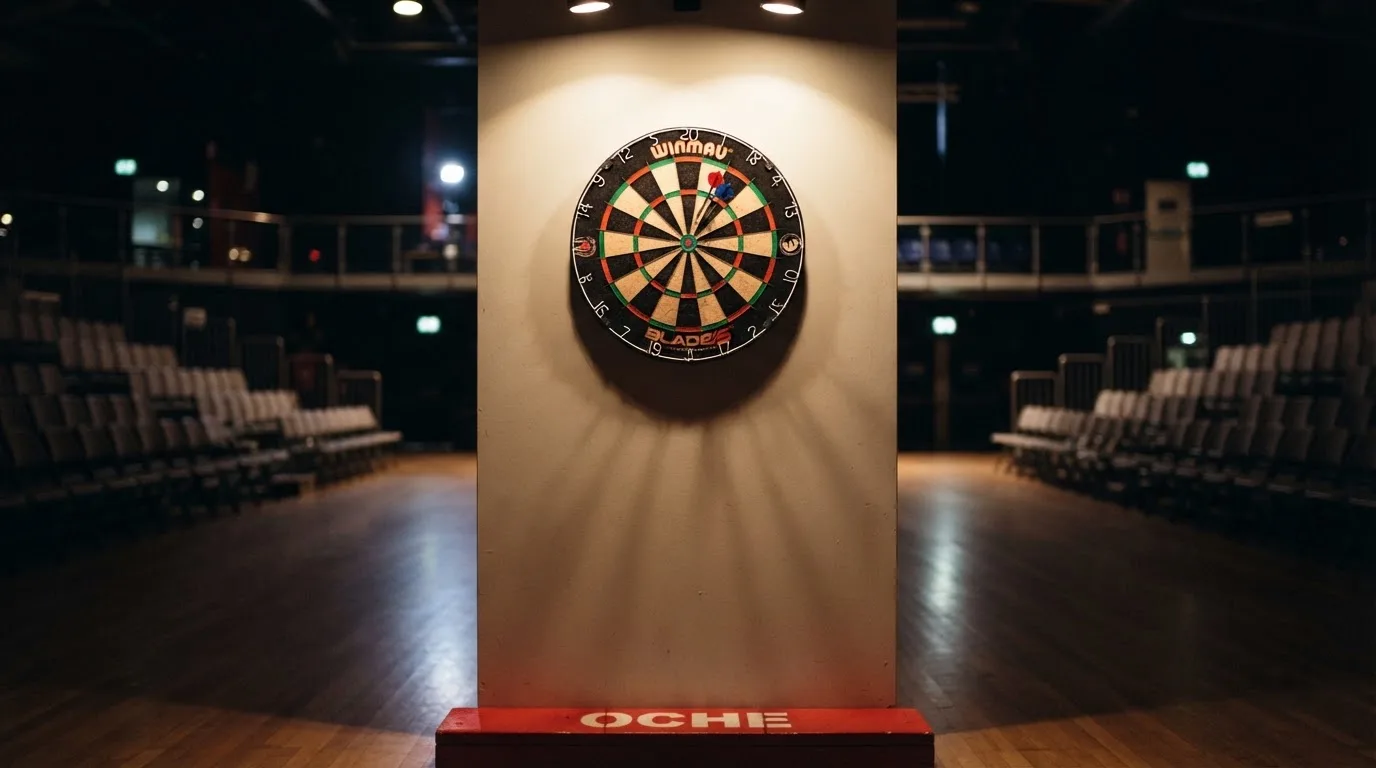
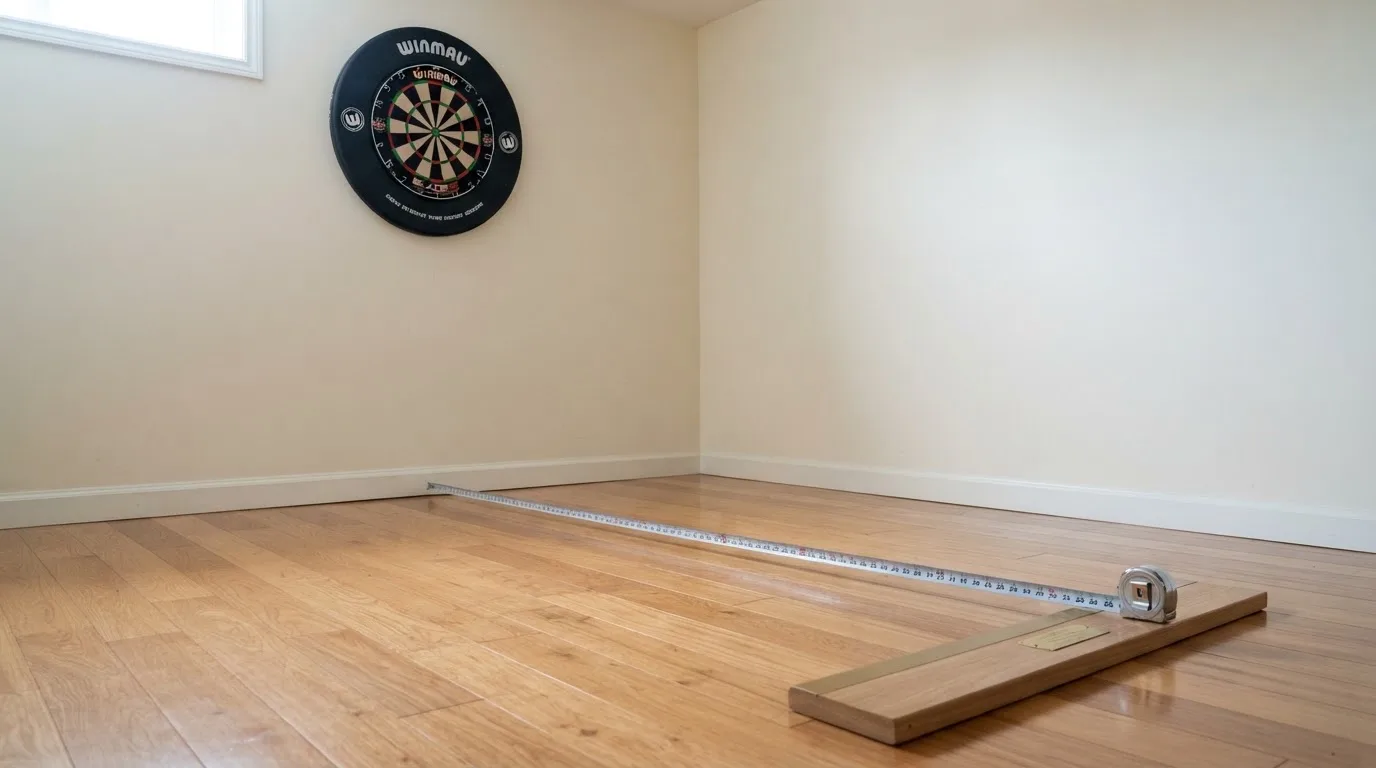
The standard dartboard has 20 numbered segments, each with single, double and treble areas; the bullseye is worth 50 and the outer bull 25. In 501 darts players start at 501 and must finish on a double or the bullseye; the highest possible three-dart finish is 170 (treble 20, treble 20, bullseye) and the minimum possible leg is nine darts. The standard throw distance is 2.37 m (7 ft 9 in) and the bullseye is 1.73 m above the floor. The numbers shape the betting: a player who is strong on the doubles is a player who closes out legs and wins matches; a player who is heavy on the trebles hits 180s but can leak legs to the throw.
What does the calendar mean for the punter? The televised majors are the bulk of the handle and the place where bookmakers run their widest markets. The Players Championship events are the place where form is set; a punter who follows the Players Championship tour through the year reads the form for the televised events better than a punter who watches only the majors. The Premier League is the longest televised run of the year and the place where in-play liquidity is highest.
The ten bookmakers, head to head
The table below compares the ten operators reviewed in this article on two matters: the Gambling Commission licence that lets them operate in Great Britain, and what the operator’s own terms state on the subject of darts betting offers. A column that research could not fill for most rows is dropped — a column of em dashes carries no information a reader can use.
| Brand | Gambling Commission remote licence | What the operator’s own terms state on darts offers |
|---|---|---|
| Paddy Power | Account 39439, held by PPB Counterparty Services Limited | Bets features and remote general betting standard (real events); Super Sub type offers roll over if a player is substituted; Popular Bet Builders and an acca builder sit on the app |
| Betmaster | Account 65699, held by BM Solutions GB Ltd | Remote general betting standard (real events); runs a sportsbook covering major darts tournaments |
| BetGoodwin | Account 2927, held by Goodwin Racing Limited | Remote general betting standard (real events); Best Odds Guaranteed applies to UK and Irish horse and greyhound racing, up to £1,000 |
| Sporting Index | Account 27343, held by Sporting Index Limited | Remote general betting standard (real events); a £10 fixed-odds bet at minimum odds of 1/2 unlocks a bundle of fixed-odds and spread-bet free bets |
| LiveScore Bet | Account 56859, held by LiveScore Betting and Gaming (Gibraltar) Limited | Remote general betting standard (real events); in-play on major darts events; deposits by debit card, Apple Pay, PayPal, Open Banking and Revolut Pay |
| Midnite | Account 101839, held by Midnite Limited | Remote general betting standard (real events); in-play and price boosts with maximum-stake limits; a £5+ pre-match bet at EVS (2.0) or greater within 14 days unlocks £25 in free bets and 50 free spins, valid 7 days |
| DAZN Bet | Account 48756, held by DZBT Limited | Remote general betting standard (real events); deposits start at £5 by debit card, Apple Pay, Paysafecard, Trustly and Skrill, £20 by PayPal, no processing fees |
| Lottoland | Account 38991, held by EU Lotto Limited | Remote general betting standard (real events); combines casino, lottery betting, sports betting and scratchcards in one app |
| Fitzwilliam Sports | Account 48760, held by SBKI Limited | Remote general betting standard (real events); phone and live chat, office open 09:00 to 21:00 Monday to Sunday, replies generally within 90 seconds |
| William Hill | Account 39225, held by WHG (International) Limited | Remote general betting standard (real events); Best Odds Guaranteed on UK and Irish horse racing from 8 AM on the day, not on ante-post, tote or pari-mutuel bets |
The licence numbers are the Commission’s account numbers; the full licence reference carries a longer remote-operations identifier on the register. A punter who wants to verify a brand against the public register searches by trading name, business name or domain; the register is the whole test of who holds a GB licence.
Paddy Power — a familiar app with the full Premier League range
PPD is one of the two brands under Flutter’s UK arm, the other being Betfair. The app carries a deep in-play product, Bet Builder+, an acca builder, Popular Bet Builders, expanded Win More markets and player and ACCA stats, plus Super Sub, the feature that rolls a bet over to a substitute player when the chosen selection is pulled. For darts that is less of a draw than it is for football — the Super Sub event on a darts card is the late withdrawal of a player through injury — but the rest of the kit is genuinely useful. The brand runs price boosts on the televised majors and outright markets on the season’s events. Verdict: the app to keep on the phone for the televised Premier League run and the World Championship, with the Bet Builder+ carrying the evening’s multis.
Betmaster — a sportsbook covering the majors
Betmaster is operated by BM Solutions GB Ltd, registered in Malta, and runs a sportsbook covering the televised darts majors and the Players Championship tour. The product is conventional: pre-match and in-play, bet builder on the televised events, accumulators across the day, cash out on the in-play markets. Verdict: a quieter alternative to the bigger brands for a punter who wants the major markets without the marketing push.
BetGoodwin — a horse-racing-led bookie with BOG
BetGoodwin is a horse-racing-led operator that pays Best Odds Guaranteed on all UK and Irish horse and greyhound racing, up to £1,000. The darts product is smaller than the racing product, but the in-play markets on the televised majors are present. Verdict: a punters who follow racing more than darts will find a familiar BOG product and a workable darts book behind it.
Sporting Index — the spread-betting alternative
Sporting Index runs both fixed-odds and spread betting. The fixed-odds product covers darts outright and match markets; the spread-betting product carries Total Goals, Winning Favourites and Race Index markets on football and racing, with a smaller presence on darts. The new-customer offer is a £10 fixed-odds bet at minimum odds of 1/2 unlocking three £10 fixed-odds free bets, three £5 Total Goals spread bets, three £5 Winning Favourites spread bets and a £1 Race Index spread bet, with the qualifying bet excluded from in-play and cash out. Verdict: a brand for the punter who wants fixed-odds and spread under one roof, and who is comfortable that spread-betting losses can exceed deposits.
LiveScore Bet — score, then bet
LiveScore Bet is the bookmaking arm of the LiveScore score service. The product is built around the live picture: scores alongside markets, in-play on the televised events, cash out on the in-play markets, a payment-method app covering debit cards, Apple Pay, PayPal, Open Banking and Revolut Pay. Verdict: a solid choice for the punter who tracks scores on LiveScore and wants to place a bet without switching apps.
Midnite — the in-play and price-boost brand
Midnite is operated by Midnite Limited under account 101839. The product carries in-play events, an acca builder, popular accas and price boosts with maximum-stake limits. The welcome is a £5+ pre-match bet at EVS (2.0) or greater within 14 days unlocking £25 in free bets and 50 free spins, valid 7 days. Verdict: an ideal platform for the punter who regularly uses the price-boost and in-play tabs.
DAZN Bet — the broadcaster built by a clear payments policy
DAZN Bet is the bookmaking arm of the DAZN sports broadcaster. Deposits start at £5 by debit card, Apple Pay, Paysafecard, Trustly and Skrill and £20 by PayPal, with no processing fees. The product carries the televised majors and a workable in-play on the Premier League run. Verdict: a streamlined option for the DAZN subscriber who values a tidy payments process while they watch.
Lottoland — lottery, casino and sport in one app
Lottoland is best known for lottery betting — betting on the outcomes of foreign and domestic draws — and the GB app combines casino, lottery betting, sports betting and scratchcards. The sports product covers the televised darts majors. Verdict: a convenient hub for the punter who prefers to keep their lottery, casino and sports betting in one place.
Fitzwilliam Sports — the phone-and-live-chat bookie
Fitzwilliam Sports runs a UK-licensed sportsbook with phone and live chat support; the office is open 09:00 to 21:00, Monday to Sunday, with messenger replies generally within 90 seconds. The darts product is smaller than the bigger brands, but the human contact is the differentiator. Verdict: a brand for the punter who values a person at the end of the chat and is happy to take a smaller product in return.
William Hill — the high-street name with BOG on racing
William Hill is one of the high-street names of UK betting, and the online product carries Best Odds Guaranteed on UK and Irish horse racing from 8 AM on the day of the race, on both single and multiple bets; the rule excludes ante-post, tote and pari-mutuel bets. The darts product is broad: outrights, match markets, in-play and a long-standing bet builder on the televised events. Verdict: a brand for the punter who wants the high-street name behind the app, with a long-standing racing product and a fully-featured darts book.
How darts betting sits with the regulator
The framework for betting in Great Britain is the Gambling Act 2005, the Gambling (Licensing and Advertising) Act 2014 and the Licence Conditions and Codes of Practice (LCCP). The regulator is the Gambling Commission, a non-departmental public body sponsored by the Department for Culture, Media and Sport. The framework covers England, Scotland and Wales; Northern Ireland sits outside the Act under its own older law. A GB licence regulates GB customers, not Northern Irish ones.
Since 13 May 2014 an operator whose remote facilities are used in Great Britain needs a Commission licence wherever it is based. A Curaçao, Maltese or Gibraltar business registration is not a substitute. The licence types cover remote general betting standard (real events), remote general betting standard (virtual events), remote general betting limited, remote pool betting and remote betting intermediary (the licence for betting exchanges). Every operator reviewed in this article holds a remote general betting standard (real events) licence; one of them — Sporting Index — also offers spread betting on certain markets, and the financial-spread-betting side is regulated by the Financial Conduct Authority rather than the Commission.
Identity verification applies before a customer can deposit or gamble, since 7 May 2019. The check covers name, address and date of birth, and it applies to free bets and bonuses as much as to cash deposits. There is no GB-licensed route to anonymous play.
The age threshold is 18. Operators are required to verify age at sign-up and at any point a customer’s identity is in question; the LCCP and the ASA’s CAP Code govern marketing alongside. CAP Code section 16 sets the marketing rules: socially responsible, not of strong appeal to under-18s, and no one who is or seems to be under 25 in a significant role in the advertisement, with an exception for marketing placed where a bet can be made directly. The rule concerns who may appear, not who may bet.
What may be bet on: there is no statutory list. The Commission licenses categories and the LCCP controls the operation; the markets themselves are the operator’s call. In-play betting on real events is offered and is controlled by the operator’s licence conditions. Esports are treated as real events under the same licence; virtual events are a separate category. Politics, TV and novelty markets are offered by GB bookmakers and no statutory prohibition was found. Spread betting on financial instruments is regulated by the FCA; spread betting on non-financial products is inside the General Betting Duty.
Betting exchanges run under a betting intermediary licence and the rates and rules specific to exchanges are stated from each exchange’s terms. No statutory cap on stakes in sports betting was found: operators set their own maximum stakes and may restrict customers, often silently. The punter who sees a stake limit on a market is seeing the bookmaker’s policy, not the regulator’s ceiling.
The framework’s player-protection layer sits across four controls: GAMSTOP, the financial vulnerability check, the financial risk assessment and the deposit limit. GAMSTOP is the national multi-operator self-exclusion scheme and is a mandatory licence condition for online operators; since 31 March 2020 every GB-licensed remote bookmaker has been part of GAMSTOP. The financial vulnerability check applies once deposits minus withdrawals cross £150 in a rolling 30 days (since 28 February 2025) and is a public-record check rather than an income or credit check. The financial risk assessment has been announced in a Commission policy paper of 7 July 2026 in a staged plan, with no start date — write “announced, staged, no start date”, never “in force”. The deposit limit (RTS 12) has applied since 31 October 2025 in its first phase, with a second phase postponed to 30 September 2026; whether it is live in the second phase is not established.
Payments: credit cards have been banned for gambling in Great Britain since 14 April 2020 under LCCP condition 6.1.2, and the ban covers credit-card-funded payments through an e-wallet. Debit cards and bank-based payments are not covered. No state list of permitted payment methods exists; identity verification before the first deposit means no anonymous play at a licensed site, and source-of-funds questions at higher spend are normal under the money-laundering rules. A state rule on cryptocurrency deposits at licensed operators is not established.
Advertising sits outside the Commission’s direct remit and is governed by the CAP Code (non-broadcast) and BCAP Code (broadcast), enforced by the ASA, alongside the LCCP’s marketing conditions. “Whistle-to-whistle” — no betting ads on TV from five minutes before a live event to five minutes after, before the 9pm watershed — has applied since 1 August 2019 and is an industry code rather than statute; horse and greyhound racing are excluded. The Premier League clubs’ voluntary withdrawal of gambling sponsorship from the front of matchday shirts from 2026/27 is voluntary, not law. Operators are responsible for marketing by their affiliates.
The tax side: the player pays no tax on betting winnings in Great Britain. General Betting Duty is the operator’s tax on gross profits, currently 15%; from 1 April 2027 a new remote betting rate of 25% applies within it, while remote bets on UK horse racing, bets on self-self-service betting terminals in licensed premises, pool betting and in-person betting stay at 15%. Spread betting has its own rates (3% financial, 10% other). The Commission’s statutory levy is a separate charge, not a tax. Whether operators pass duty on through odds is not established.
Offshore is the seam where the framework stops. A GB licence is compulsory at the point of consumption, and providing gambling facilities in Great Britain without the licence the Act requires is an offence under section 33 of the Gambling Act 2005 — aimed at the operator. No offence aimed at a customer who merely bets on an unlicensed site was found. The honest framing is that an unlicensed site offers no GAMSTOP coverage, no Commission complaints route, no approved dispute-resolution body, no British consumer redress if funds are withheld, and is not bound by the 10x bonus cap or the £150 vulnerability check. Enforcement is disruption rather than blocking: cease-and-desist notices, search-engine referrals, work with registrars, hosts and payment providers. The Commission has been given, or is about to receive, court-order DNS blocking powers — never write that ISP blocking is in operation.
A closing note: licensed is not automatically the safe choice. A licensed site verifies before the first deposit, applies the £150 vulnerability check at the threshold, and runs the GAMSTOP self-exclusion. An unlicensed site does none of those things. Neither is a safe choice on its own; both put the responsibility on the punter to set the limits and watch the spend.
The bookmaker’s margin and how it sits inside the odds
The bookmaker’s margin is the cut the bookmaker takes on every market. It is built into the price the punter sees, and the punter pays it on every bet placed. This section reads the margin and shows how it sits in the odds.
Consider an illustrative two-way market priced at 1.90 / 1.90 — a balanced match with the favourite and the outsider each at 1.90 (9/10). The implied probabilities sum to 1 ÷ 1.90 + 1 ÷ 1.90 = 0.5263 + 0.5263 = 1.0526, or 105.26%. The “true” probabilities, before the bookmaker’s margin, would sum to 100%. The extra 5.26% is the bookmaker’s edge across the market, distributed across the two outcomes — roughly 2.63% on each side.
The margin is expressed in two ways. As a payout share, the market at 1.90 / 1.90 pays back 95% of every unit staked across the long run — 1 ÷ 1.0526 = 0.95. As a margin, the market keeps 5% of every unit staked. The two numbers are the same market seen from two sides: 95% back to the punter, 5% kept by the bookmaker.
A wider market carries a wider margin. A most-180s market priced at 1.80 / 1.80 sums to 1 ÷ 1.80 + 1 ÷ 1.80 = 1.1111, or 111.11%, and the margin is 11.11%, or about 11% kept. The bookmaker is paid more for the harder-to-price market because the bookmaker’s risk on a wider market is greater. A bet-builder market, which combines several legs, carries a still wider margin because the bookmaker’s price and the punter’s selection are not the same object.
The margin is not constant across the operators. The headline price on the televised majors is usually tighter than the headline price on the Players Championship tour because the majors carry more liquidity. The price on the outright winner market at the start of a major is usually tighter than the price on a single match because the outright carries more liquidity over a longer window. A punter who wants the smallest margin per unit staked bets on the most popular match of the evening on the most liquid market.
What is the margin in real cash terms? A punter who stakes £10 on each of ten bets at 1.90 has staked £100. If each bet wins at the price offered, the punter is paid £10 × 1.90 = £19 on the winning bet, with the stake returned. Across many bets at this margin, the punter pays the bookmaker around 5% of total stake — £5 on the £100 across the long run. The £5 is what the bookmaker keeps of every unit bet on this market. The punter who is profitable to the bookmaker’s cut is paying the bookmaker for the privilege of being right more often than the average reader.
A small calculation, illustrative only. A combination bet at decimal odds 1.60 × 2.50 × 2.00 = 8.00 multiplies the three legs into one price. The implied probability is 1 ÷ 8.00 = 12.5%. The “true” probability, before the bookmaker’s margin, is the product of the three legs’ true probabilities — and the combined margin is roughly the sum of the three legs’ margin, which is wider than any one of them. The combined bet pays back less of stake across the long run than the three singles would.
The “value” framing: a price is value when the punter’s own estimate of the probability is greater than the price’s implied probability after the margin is taken out. A 1.95 price on a balanced match implies 51.3% before margin and around 50.5% after a 5% margin; if the punter’s model says 55%, the price is value. If the punter’s model says 50%, the price is not value. The framing is unforgiving: the punter has to beat the bookmaker’s model by a margin larger than the bookmaker’s own.
A closing note: the margin is not the bookmaker’s profit. The bookmaker pays its staff, its technology, its licence fees and its marketing from the margin, and it keeps what is left as profit. The punter pays the margin as the cost of the bookmaker’s service; the punter who understands the margin is the punter who treats the price as the price and the tip as the tip, separately.
The picture in one pass
The picture so far: darts is a televised sport with a wide betting product at GB-licensed operators, a calendar dominated by the PDC’s televised majors and the Premier League run, a margin that sits inside every price, and an offer market reshaped by the 10x wagering cap and the ban on mixed-product promotions. The punter’s edge comes from finding a price the model has not yet priced, and the punter’s discipline is the bankroll that lets the edge play out.
The ten operators reviewed here are ten ways into the same product. The differences are in the apps, the offers, the in-play depth and the support. A punter who lives in the price-boost tab and the in-play tab finds Midnite and Paddy Power the most natural homes. A punter who wants the high-street name finds William Hill. A punter who wants fixed-odds and spread under one roof finds Sporting Index. A punter who values a person at the end of a chat finds Fitzwilliam Sports. Each operator has its own profile and the table earlier in this article sets them side by side.
The regulation sits underneath the whole product. A GB licence means a regulated operator, an identity check, a vulnerability check at £150 in 30 days, a GAMSTOP membership, a 10x wagering cap on bonuses, and a banned credit-card deposit. None of those rules is decorative; each one is a piece of the customer-protection layer the framework is built around.
The punter who reads the framework and the operator before placing the bet is the punter who pays the smallest price for the privilege of betting. The punter who reads only the headline price is the punter who pays the bookmaker’s margin as well as their own.
Frequently asked questions
How do you bet on darts?
Pick a licensed GB bookmaker and open an account; verify your name, address and date of birth before the first deposit (a Commission rule since 7 May 2019). Pick a market — match winner, set betting, most 180s, outright tournament winner — choose a stake and confirm the bet on the betting slip. The bet settles on the official result of the match or tournament. In-play markets let you bet on a leg or a set as it unfolds.
What is darts betting?
Darts betting is wagering on the outcome of a darts match or tournament. The most common market is match winner (which of two players wins the match), with set betting, correct score in legs, handicap, most 180s, total legs, outright tournament winner and bet builders rounding out the range. Markets are offered by GB-licensed bookmakers under remote general betting standard (real events) licences.
How does darts handicap betting work?
A handicap gives one player a head-start in legs to balance a mismatched match. Player A −1.5 legs means Player A must win by two legs or more for the bet to win; Player B +1.5 legs means Player B can lose by one leg and still win the bet. The handicap turns a short-priced favourite into a longer price and gives the outsider a more competitive line. The market settles on the official result adjusted by the handicap.
What is a value bet, and why is no tip ever certain?
A value bet is a price at which the punter’s own estimate of the probability is greater than the price’s implied probability, after the bookmaker’s margin has been taken out. A tip is an opinion about a probability; an opinion about a probability is not a forecast of an outcome. Across many bets a value-priced tip produces a profit; on any single bet it is just as likely to lose. No tip is certain because the bookmaker’s price already contains the firm’s margin and the firm’s model already contains the public information; a tip that beats the price has to find an edge the model has missed.
What is the bookmaker’s margin, and how can it be seen in the odds?
The bookmaker’s margin is the cut the firm keeps of every market. On a two-way market priced at 1.90 / 1.90 the implied probabilities sum to 105.26% — the extra 5.26% is the margin across the market, distributed across both outcomes. The same market pays back 95% of stake to the punter across the long run; the bookmaker keeps the remaining 5%. The wider the market — most 180s, correct score, bet builder — the wider the bookmaker’s margin.
How is the return on a bet worked out from the stake and the odds?
Return = stake × odds. Net profit = stake × (odds − 1). A £10 bet at 4/1 (5.00 decimal) returns £50 — £10 stake plus £40 winnings. A combination bet multiplies the odds of each leg into one price: three legs at 1.60, 2.50 and 2.00 combine to 8.00, and a £10 stake returns £80. The return is what a winning bet pays back; it is not a forecast of how likely the bet is to win.
Tennis, darts & cue sports – Best betting
Content created by the «Best betting» team
