
Curling betting odds: a practical read on what the price is and what it costs
 Available in US
Curling is a small sport on the British sportsbook, and most of the work for the bettor is in two places: finding a bookmaker that prices it at all, and reading the price that does come back. The markets exist for the season’s two anchoring events (the World Championships and the World Curling Tour season), thin out around them, and get picked up again when the Winter Olympics come round. A bettor weighing curling odds is weighing three things at once: how thin the offered market is, how wide the bookmaker’s margin sits inside it, and which side of the deep “house edge” the promoted price ends up on. This read walks through how curling markets are built, where the licensed British bookmakers stand on offering them, and what a curling odds line says once the margin has been stripped out.

The figures and licence details on this page were verified on 27 October 2026 against the Gambling Commission’s public register and the terms each operator publishes on its own site.
The legal frame for curling bets in Great Britain
There is no British shortlist of sports that may be bet on. A bookmaker licensed by the Gambling Commission for remote general betting standard (real events) may offer markets on real sporting events under its own house rules, and curling falls inside “real events” by that definition. The Commission does not approve markets one by one; it licenses categories of activity and the operator decides which events to price.
For the bettor, the practical test is one: is the brand you are about to deposit with on the Commission’s public register? That register is searchable by business name, trading name, domain or account number, and a brand named in this comparison is on it as listed in the licence details below. Names such as Betfair, BetMGM and BetGoodwin cover many sites under one licence holder, which is why the licence line names the operating company (PPB Counterparty Services Limited for Betfair, LeoVegas Gaming PLC for BetMGM, Goodwin Racing Limited for BetGoodwin) rather than the brand alone.
A licensed British brand comes with a defined package of player protections. The player’s age is checked before the first deposit, along with name, address and date of birth. Credit cards were banned for gambling in Great Britain in April 2020; debit cards and bank payments are not covered by that ban. The licensed brand takes part in GAMSTOP, the national self-exclusion scheme, and offers deposit limits at the customer’s request. A licensed operator is also bound by the social responsibility and anti-money-laundering parts of the Licence Conditions and Codes of Practice. None of those protections apply to an unlicensed brand: a brand based offshore and serving British customers without a Commission licence is breaking section 33 of the Gambling Act 2005, but there is no offence aimed at the customer who simply uses such a site, and the practical loss falls on the bettor if funds are withheld, no British dispute-resolution body will hear the case, and GAMSTOP does not cover the site.
The Commission has signalled a staged tightening of customer checks. Since the autumn of 2024 a light-touch financial vulnerability check has applied once a customer has deposited net of withdrawals more than £150 in a rolling 30-day window; the check reads public records such as the bankruptcy register or county-court judgments, not payslips. A heavier “financial risk assessment”, the kind of affordability review the press has been reporting on, was announced with a staged plan and no start date at the time of writing. Curling bettors on small stakes will never meet either threshold on a casual weekend.
The headline point is simple: in Great Britain the legal frame protects the bettor through the operator’s licence, and the bettor’s job is to confirm the operator holds one. The frame does not stop a licensed brand from restricting any customer’s account, which it does routinely on niche markets and rare winners. That asymmetry is part of the price.
Staying in control while betting on curling
Curling concentrates stake on a handful of fixtures each weekend, and the gaps between events make impulsive returns easier to manage than in sports with midweek slates. That is the same reason the harm picture is different from the harm picture in football: a curling bettor spends less session-time per pound than a football bettor does. The protections in place are the British ones, the same protections any licensed brand carries.

GamCare runs the National Gambling Helpline (0808 8020 133, 24 hours). It offers live chat, telephone and email advice, and routes callers into structured counselling where the picture calls for it. The line is free and confidential, and it is the first stop most British bettors make when spending or chasing has slipped out of their own control.
GambleAware funds much of that treatment. The charity’s site carries self-help tools, a directory of local services, and the same helpline number. Several of the brands listed below, including Fitzwilliam Sports, link directly to GambleAware alongside GamStop and Gamblers Anonymous from a footer on the home page — the kind of detail worth checking before depositing anywhere.
GAMSTOP is the British multi-operator online self-exclusion scheme, a mandatory licence condition for online operators since the end of March 2020. Excluding yourself through GAMSTOP closes online accounts with every participating operator at once, including those reviewed below. Excluded periods run six months, one year, five years, or five years with auto-renewal; once the minimum period ends, the exclusion sits for a further seven years unless the customer asks GAMSTOP to lift it. The scheme covers online sites and apps but not high-street betting shops, which use a separate service.
Gamblers Anonymous runs peer-led meetings across the United Kingdom. The charity has no paid staff and no clinical function; its strength is the regularity of the meetings and the experience of the people who run them.
A small budget on curling does not insulate anyone from the way variable-prize betting changes mood. The tools above exist because the British frame decided they should, and a curling bettor with a clean record is still a curling bettor who can use them.
What a curling game actually looks like, and why it matters for the odds
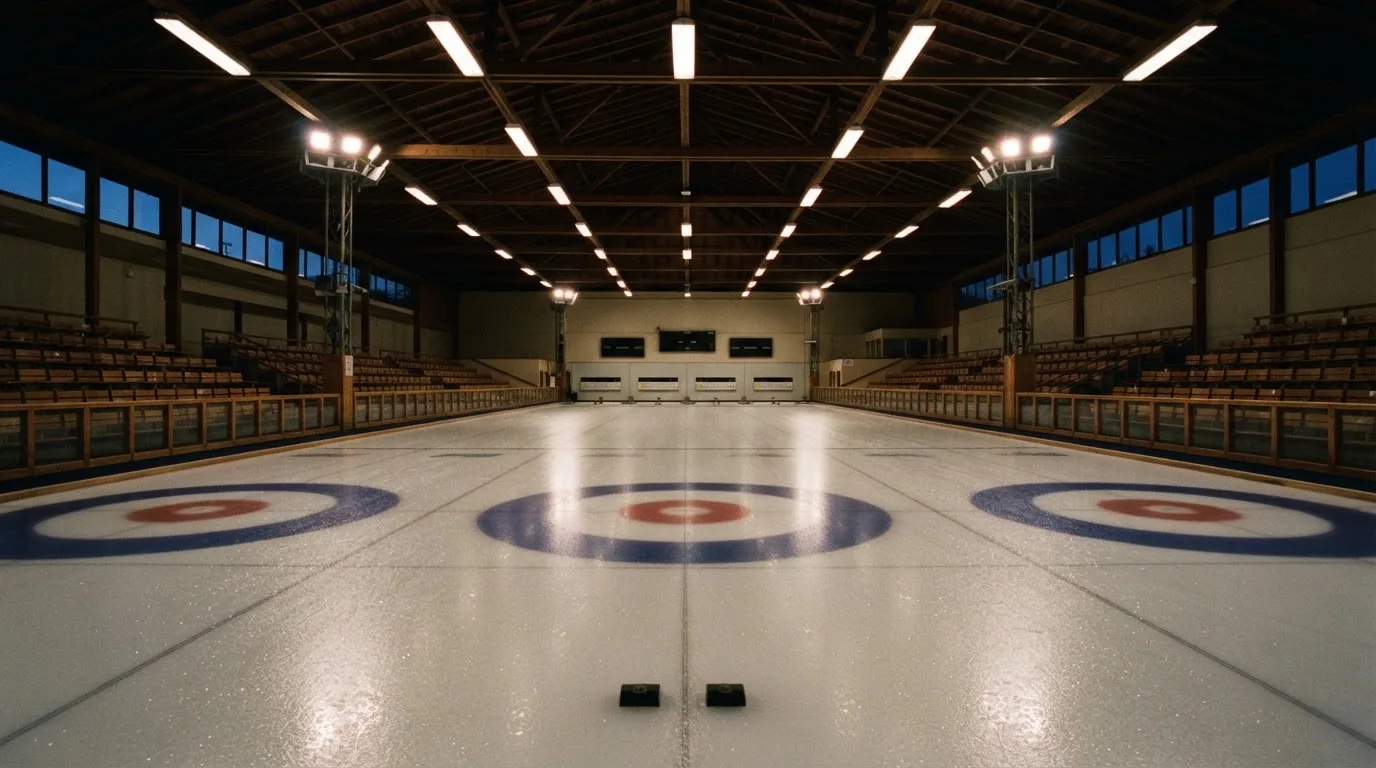
Curling is short on rules and long on geometry, which is the bit that turns the betting picture strange. Once the shapes involved are second nature, the markets offered on a curling match fall into place.
A curling team has four players (two in doubles), and each player throws two of the team’s eight stones per end. That rule alone narrows the field. The four players rotate through lead, second, vice and skip in fixed order, and the skip is the strategist who calls line and weight for the team. The two skips face each other across the ice for most of the end; the other six stones are setting or sweeping work.
A curling game usually lasts eight or ten ends. International competitive games are generally played over ten ends. An end ends when all sixteen stones (eight a side) have been thrown. After all sixteen stones are thrown, the team whose stone sits closest to the button (the small concentric target at the house’s centre) scores one point for each of its stones that lies closer to the button than the opponent’s closest stone. Only stones in the house count. A blanked end scores nothing; the hammer, the last stone of an end, goes to the team that did not score in the previous end, and if an end is blanked the hammer stays with the same team. Tied games go to extra ends.
Two mechanics in that rulebook shape the betting picture more than any others. First, an end is binary in score: one team scores one point or more, or the end is blanked and the score stays at zero. There is no one-point-each end, so a curling match’s score-line runs in whole-number steps that are multiples of the team that has the hammer. Second, the hammer is worth approximately one point on average across a match, which is one reason match-handicap lines are tight and why a pre-match favourite trading at 1.55 is short.
Curling stones weigh between 17.24 and 19.96 kilograms (38 to 44 pounds) under World Curling Federation rules. That weight is one of the physical constraints that makes sweeping relevant: a stone’s curl and run are brushed hard to change its path and distance, and the sweeping on a 19-kilogram stone is one of the louder signals on television. It is also one of the harder pieces of the game to read from a betting app, which is part of why live in-play pricing on curling tends to move more on hammer change than on what the sweepers are doing.
Curling became an official Olympic medal sport at the 1998 Winter Olympics; mixed doubles was first held at the Olympics in 2018. The Winter Olympic cycle is the second-largest pricing event for the sport, after the men’s and women’s World Championships. The British Curling squad competes in both, and British bettors with a settled interest tend to follow the Olympic team from season to season.
How curling betting markets are built
The base product is the match winner market, sometimes labelled “winner” or “to win”. For a one-off game it is a two-way line. For a round-robin stage it is a per-game outcome; for a knockout stage, it is a single game. Match-winner odds are the ones bookmakers price most aggressively and the ones price-comparison sites quote for the World Championships and the Winter Olympics.
The second-largest market is handicap: a -1.5 ends line on the favourite (the favourite must win by two or more ends) and +1.5 on the underdog (the underdog may lose by one end and still win the handicap bet). The handicap sits at one and a half because a curling match cannot finish level: the extra-end rule means the deadlocks get broken, and the half-end head start takes account of that. Handicap betting is the form most curling bettors use, since match-winner lines on a sport with a hammer worth one end tend to be short and the price carries little return for the risk.
The third large market is total ends, the over/under on the number of ends in a game. A standard ten-end game goes about nine ends on average before the concession, and totals prices swing from the late ends onward as blanked ends pile up. The market is offered less often than match-winner or handicap, and not every bookmaker carries it.
A handful of bookmakers offer outright markets on World Championship and Olympic gold, and prices settle when the tournament does. The market is small and thin, and outright lines on curling tend to be wider on the favourites and shorter on the longshots than football outrights are, because the bookmaker knows the field fairly well.
Some bookmakers offer frame props on individual ends: which team wins the end, whether the end is blanked, and so on. These markets are thinly traded and tend to move quickly when the hammer changes mid-end.
In-play markets on curling exist at the major bookmakers. They are twitchy — the line price can move on a hammer change alone — and they are the markets most often restricted by bookmakers when a successful bettor is in play. In-play markets are not legally restricted in Great Britain; the offer is the operator’s choice, and the choice is narrower at the back end of the event calendar.
Reading the odds: decimal, fractional and what they hide
British bookmakers quote odds in either decimal (6.00, 3.75) or fractional (5/1, 11/4, evens) form, with decimal settled into the bookmaker app by default and fractional carried by sportsbook culture. Conversion is mechanical: a fractional price of *a/b* becomes a decimal price of *a ÷ b + 1*. A 5/1 shot becomes 6.00 decimal, an 11/4 shot becomes 3.75 decimal, a 4/6 shot becomes 1.67 decimal. Evens, the British shorthand for a one-for-one price, is 2.00 decimal. “Odds-on” describes anything shorter than evens, where the profit on a winning bet is smaller than the stake.
A decimal price returns the original stake plus profit for every £1 staked. A £10 bet at 3.75 returns £37.50 (£25 profit plus the £10 stake), a £10 bet at 2.00 returns £20 (£10 profit plus stake), and a £10 bet at 1.40 returns £14 (£4 profit plus stake). The return is the stake plus the profit, the profit is what the bettor keeps above the stake. British bookmakers render this on the bet slip as “Return” and “Profit” rather than “Payout” — a small distinction, but the one to look for when reading a bet confirmation.
The price itself does not say what the bettor’s chance of winning is. A 1.50 shot implies, on a fair market with no margin, a 66.7% chance of winning — but the actual bookmaker’s margin pushes that implied probability down. A 1.50 shot at a margin of 5% implies 63.3% rather than 66.7%, and the difference is the overround or margin, the cut of every unit bet on the market the bookmaker keeps. Margin is the number to watch on a curling line, because curling lines are priced with more margin than football lines at most British bookmakers, and the difference compounds across the season.
The margin inside a curling market: a worked example
Take an illustrative two-way match-winner market at 1.90 / 1.90, decimal odds. That is a pure even-money line for the purposes of an example, not a quoted price. The two outcomes of the market sum to 1 ÷ 1.90 + 1 ÷ 1.90, which is roughly 1.0526. The sum of reciprocals is the payout share of the market on a unit stake at fair value (where every unit bet on either side would return one unit if it won). A payout share of 1.0526 means that for every £1.05 staked across both sides, exactly £1.00 is returned to winning bettors on average. The overround of the market is 5.26% here, and the margin is 5.0%. Five pence in every pound staked stays with the bookmaker across a large sample of bets at that price.
Football match-winner markets at major British bookmakers typically price around a 2–6% margin, with the smaller books and in-play markets running higher. Curling match-winner markets run wider than that at most operators during the World Championships and Olympic windows and considerably wider outside those windows, when a bookmaker’s pricing team has thinner information and prices more conservatively. The price a bettor sees on a curling line is therefore less generous than the equivalent football price at the same bookmaker, and the gap is widest when the bookmaker prices only a handful of curling fixtures a week.
The condition that comes with any “5%” framing is worth keeping in mind: the margin is an average over the whole market across many bets, not the percentage of any single stake the bookmaker keeps. A £10 bet at 1.90 returns £19 gross on a winning outcome and loses the full £10 on a losing outcome. The 5.26% is the rate at which the line generates profit for the bookmaker across a representative sample of bets, assuming bets are split in proportion to the implied probabilities. A sample weighted heavily to one side will return less or more to the bettor, which is the basic reason bookmakers restrict winning accounts.
The ten licensed UK bookmakers reviewed here, and where they stand on curling
Ten bookmakers with a Gambling Commission remote licence, in the order set by the comparison. The set is large enough to give the bettor a real spread of products and small enough that each brand gets its own read. A brand that is named below but does not, on the day you check, price curling is not the place to go for curling odds — that is a check worth running on the bookmaker’s site before depositing anywhere new.
BetMGM covers British football, tennis and several niche winter markets through its sportsbook. The sports welcome offer for new UK customers is four £10 free bets (two football accumulators of four or more selections and two sports multiples of two or more selections), valid for seven days, with minimum odds and opt-in required. Free bets are settled as stake-not-returned on most British bookmakers, including BetMGM, which is one of the two most important terms to read before placing the qualifying bet. BetMGM is on the Commission’s register under LeoVegas Gaming PLC, remote general betting standard (real events). Curling coverage sits behind the sport filter and is season-led; the brand is the kind of bookmaker to check first on World Championship weeks.
Star Sports is a smaller British bookmaker with a strong telephone-trading tradition. Customers can speak to a trader directly on 08000 521 321 to open an account, place bets or ask customer queries, with email support at [email protected]. The telephone line is one of the brand’s distinguishing features and is worth keeping in mind for staking plans that involve anything out of the ordinary. Star Sports holds its remote general betting standard (real events) licence under Star Racing Limited. Curling coverage leans towards the World Championships and British qualifiers; customers with a phone-only banking preference will find this is one of the brands that still supports them.
BetTom runs a sportsbook and casino under one welcome package, and the structure is unusual: 50% back as a free bet of up to £50 alongside a matching 50% back as free slot funds for casino play, with the published terms applying to both. A bettor whose interest is curling-only should weigh the casino side as a smaller benefit and weigh the bonus terms on the sports side alone. BetTom holds a remote general betting standard (real events) licence as Bet Tom Limited. Curling coverage is event-led and the brand is the kind to check on World Championship weeks rather than off-season.
Betboro’s sports welcome offer is a 100% matched free bet of up to £25 on the first qualifying wager, requiring a debit card deposit of at least £10 and a first bet of £5 to £25 with at least three selections each at 3/5 (1.60) decimal or higher. The qualifying bet carries a minimum price, three selections and a fairly tight minimum — points worth checking before depositing anywhere. Betboro is operated by Webmedia Development N.V. and licensed as remote general betting standard (real events). Curling coverage is light, and a customer whose interest is curling-only is best served by reading the sport filter before staking on any welcome offer.
Lottoland is best known for lottery and scratchcards but its UK app combines casino, lottery betting, sports betting and scratchcards under one roof. The brand operates under EU Lotto Limited with a remote general betting standard (real events) licence. Curling coverage sits inside the sportsbook and is event-led; bettors with an existing Lottoland lottery account will find the sportsbook is a smaller addition than at a pure-sports brand.
BetGoodwin is a British racing-led bookmaker with a small but well-priced sportsbook. The sports welcome offer is “Bet £10 & Get £15 in Free Bets”, made up of a £5 sports bet, a £5 acca and a £5 Sub-Cover bet. The structure is unusual: the £15 is split across three free bets rather than paid as one. Goodwin Racing Limited holds the remote general betting standard (real events) licence, and curling coverage is small and event-led.
Betfair’s sportsbook combines a traditional bookmaker site with the Betfair Exchange, the betting-exchange arm, under one brand. The sportsbook offers in-play betting, Bet Builder, free live streaming of events such as UK and Irish horse racing and football within the app, and a 90 Minute Payout market. The exchange is a separate licence (betting intermediary). PPB Counterparty Services Limited is the licence holder. Curling coverage is event-led and the exchange tends to be quieter on curling than on football; a bettor hunting wide prices on the sport is well-served starting at the sportsbook because the sport is rarely priced elsewhere at all.
Fitzdares is a premium British bookmaker. The Fitzdares app offers cash out, accumulators, Lucky 15s, specials and antepost markets on horse racing, football, tennis, rugby, cricket, golf and American football, with in-play live odds. Curling is not on that published list of sports, and a bettor coming to Fitzdares for curling is best served checking the sport filter on the day; the brand’s strength is horse racing and the major ball sports, and curling coverage may sit in the winter sports section during a World Championship or Olympic window. Fitzdares Limited holds the remote general betting standard (real events) licence.
QuinnBet is a Gibraltar-based brand with a British licence. The brand’s Best Odds Guaranteed promotion applies to Irish and UK horse racing bets from 10:00am daily on singles, multiples and system bets, with a maximum benefit of £150 per customer per race. Best Odds Guaranteed is a horse-racing promotion, not a curling one. QuinnBet (Gibraltar) Limited holds a remote general betting standard (real events) licence. Curling coverage is event-led and the brand is one to check during World Championship and Olympic windows.
Bet Ahoy is a smaller British sportsbook. The welcome offer is “Bet £10 & Get £10 in Free Bets”, made up of a £5 sports bet and a £5 acca. The structure splits a smaller free bet bundle across two formats. Bet Ahoy Ltd holds a remote general betting standard (real events) licence, and curling coverage is event-led and most active in the World Championship and Olympic windows. Bet Ahoy’s entry on Wikipedia lists curling as a sport covered by the brand, in the listings-only sense research carries that phrase to mean: the listing exists on Wikipedia and not as a price-confirmation by the operator.
The licence and terms table at a glance
The table below pulls the two facts that decide whether a brand is worth a serious look: the Commission’s remote licence (the legal permission for the brand to take bets online from customers in Great Britain) and the operator’s own statement on the subject the page is about — curling markets in this case. Curling coverage is event-led at almost every British bookmaker, so an empty cell on curling odds is the regular pattern rather than a sign of a missing licence.
The Gambling Commission account number on each line is the search key for the Commission’s public register. A bettor can paste the number into the register’s search box and see the categories, the trading names under the licence, the licence holder’s registered name and any licence conditions. Reading the register entry takes about a minute and is the clearest way to confirm a brand is licensed for the activity it is offering.
| Brand | Licence | What the operator’s terms state |
|---|---|---|
| BetMGM | Gambling Commission account 039198-R-319450-029 (LeoVegas Gaming PLC) | Sports welcome offer of four £10 free bets for new UK customers depositing £10+ and placing a sports bet within 7 days; minimum odds and opt-in required |
| Star Sports | Gambling Commission account 009177-R-104555-019 (Star Racing Limited) | Telephone trading on 08000 521 321; terms and event coverage as published |
| BetTom | Gambling Commission account 064959-R-339314-003 (Bet Tom Limited) | Sports welcome offer: 50% back as a free bet up to £50 and 50% back as free slot funds up to £50 |
| Betboro | Gambling Commission account 044181-R-324363-007 (Webmedia Development N.V.) | Sports welcome offer: 100% matched free bet up to £25 on the first qualifying wager; debit card deposit £10+; first bet £5–£25 with three selections at 3/5 (1.60) or higher |
| Lottoland | Gambling Commission account 038991-R-319408-020 (EU Lotto Limited) | Casino, lottery betting, sports betting and scratchcards under one app |
| BetGoodwin | Gambling Commission account 002927-R-327985-008 (Goodwin Racing Limited) | Sports welcome offer: “Bet £10 & Get £15 in Free Bets” split £5 sports, £5 acca, £5 Sub-Cover |
| Betfair | Gambling Commission account 039439-R-319330-013 (PPB Counterparty Services Limited) | In-play betting, Bet Builder, free live streaming on UK and Irish racing and football, 90 Minute Payout market |
| Fitzdares | Gambling Commission account 000400-R-103839-030 (Fitzdares Limited) | Cash out, accumulators, Lucky 15s, specials, antepost on horse racing and ball sports, in-play live odds |
| QuinnBet | Gambling Commission account 061011-R-335683-004 (QuinnBet (Gibraltar) Limited) | Best Odds Guaranteed on Irish and UK horse racing from 10:00am daily; max £150 per customer per race |
| Bet Ahoy | Gambling Commission account 100094-R-341742-003 (Bet Ahoy Ltd) | Sports welcome offer: “Bet £10 & Get £10 in Free Bets” split £5 sports, £5 acca |
Curling coverage at every one of these brands is season-led rather than year-round. The cleanest test for the bettor is the bookmaker’s sport filter on the day: if curling is not on the menu when an event is live, it is not on the price the bettor can lock in.
Currencies, prices and the limits the bettor feels
Promotional headlines are easy to read past and the curling-specific terms to scan for are tighter than the headlines suggest. Three clauses are worth reading before any first bet on a new operator.
Minimum odds. A “free bet” tied to a qualifying-bet condition almost always demands a minimum price for that bet. Betboro’s terms require each of the three selections on the qualifying wager to settle at 3/5 (1.60) decimal or higher. A curling line at shorter than 1.60 — and World Championship favourites regularly do — does not qualify. Reading the minimum-odds clause before depositing keeps the welcome bundle from slipping through.
Wagering requirements. Promotion rules in force since 19 January 2026 cap wagering requirements on bonuses at 10x. A £10 bonus at 50x would have required £500 of bets before withdrawal; under the cap, no more than £100 of bets needs to be turned over. The cap is published in the Commission’s bonus rules and applies to all licensed brands. The terms of each promotion in the table above sit inside that ceiling.
Time limits and stake caps. BetMGM’s welcome bundle is split into four free bets, each valid for seven days from the date they are issued. The seven-day clock starts the day the free bet is credited, not the day the bettor deposits, and the four clocks run separately. A curling bettor whose interest is week-to-week can keep a small bundle running; a bettor who deposited at the end of a World Championship may find the free bets expire before the next event.
Stake limits. Several of the brands above publish maximum stake limits on price-boosted markets; Midnite’s site, for instance, publishes maximum-stake limits on price-boosted bets alongside the boost itself. The British legal frame does not cap stakes at sportsbook level; the limits are the operator’s choice. Curling bettors with any notion of staking big should check the per-market cap on the price-boosted line on the day of the bet, not the day before.
Tax, currency and the per-pound cost
British bettors pay no tax on sportsbook winnings. The duty is the operator’s, calculated as a percentage of gross profit from British customers under General Betting Duty; the rate is 15% on most betting activity for the current financial year, with a new remote rate of 25% due to come into force on 1 April 2027 within that duty class. Whether operators pass duty on through shorter prices is not established; betting odds are quoted at the operator’s discretion, and a tighter market is hard to distinguish from a duty-driven shift in pricing.
A £10 win on curling at 3.75 returns £37.50 in the bettor’s pocket, with no further tax owed. A £10 win on curling at 1.40 returns £14. The bettor’s effective rate on each bet is the price minus one — 275 pence per pound at 3.75, 40 pence per pound at 1.40 — and that effective rate is what carries the bettor’s account forward, before the margin has taken its cut.
A licensed betting brand pays its duty to HMRC directly, and the bettor sees no deduction on the bet slip. This is one of the cleanest parts of the British frame: there is no line on the slip for “tax” on a winning bet, and no Inland Revenue letter at the end of the year for the casual bettor.
Limits, account restrictions and the bettor-side response
A licensed British bookmaker may restrict a customer’s stake on any market, on any sport, at any time. The LCCP and the operator’s own terms make that clear, and curling is one of the sports where restriction happens fastest because the small field makes it easier to spot consistent winners. Restriction does not cancel a winning bet; it caps future stakes on the brand, often to a token level that prevents most betting strategies from running.
The bettor’s response is to spread activity across more than one licensed brand, to use price-comparison sites to find the widest price on each bet, and to withdraw balances that will not be staked again. None of that requires the bettor to bet more — restriction is an operator’s lever, not a bettor’s problem to solve by staking harder.
A matched-bet or arbitrage-bet strategy at a single British brand is unsustainable. The operator flags consistent winners quickly, and matched-betting services often run under their own rules that the licensed operator is entitled to enforce. A bettor whose interest is curling-only is best served by a small number of licensed brands, reasonable stakes, and a habit of withdrawing winnings to a bank account rather than leaving them in the betting wallet.
A short read on which bookmaker fits which bettor
The bettor with a strong curling interest and a small budget is best served starting at one of the British-licence bookmakers that price the World Championships and Olympic windows every season and ignore curling between them. Betfair’s sportsbook is one of the better-resourced sportsbooks in the set and tends to offer match-winner on the bigger events. BetMGM covers winter sports more broadly. Fitzdares is the premium option in the set and one to check on the major windows; the published sports list on the Fitzdares app does not name curling, so a check on the sport filter on the day is the right test.
The bettor who wants to make the most of a curling week from a welcome offer is well-served weighing the welcome terms on the page above: minimum odds, qualifying selections, time limits, and the cap on free-bet winnings. None of these welcome offers publishes a bonus code to a customer, and any code-bearing message in a non-operator’s voice is third-party marketing the Commission has not approved.
The bettor already betting on football or racing and adding curling as a side interest is best served staying with whichever brand from the set they already use and adding curling into that account, rather than opening a new one. The bonuses are useful only at one brand per customer, and a curling bet on a familiar app is also a curling bet on a known-withdrawal route.
How to bet on curling in seven practical steps
For the bettor who has decided to take a curling position for the first time, the order below keeps the bet inside the licensed frame.
- Open the bookmaker app from the set above. Each brand is on the Commission’s public register under the account numbers in the table; the register is the licence confirmation.
- Deposit with a debit card or bank payment. Credit cards are banned for gambling in Great Britain, and credit-card-funded e-wallet deposits are not exempt.
- Open the sport filter and select curling. If curling is not on the menu on the day of an event, it is not on the price the bettor can lock in.
- Pick the market. Match-winner at 1.90 / 1.90 on a balanced game is a wide price for a curling match, where match-winner lines often run shorter. Handicap at -1.5 ends on the favourite is a tighter read on a sport where the hammer is worth approximately one end.
- Read the bet-slip line. Watch for minimum-odds clauses, qualifying-selection rules, and the free-bet-credit-not-returned footnote on free-bet offers.
- Place the stake and confirm the return value on the slip before submitting. Decimal odds are the default render in the apps; a 3.75 price on a £10 stake returns £37.50.
- Cash out before the match settles only if the price is right. Cash-out markets are the operator’s market, set with the operator’s margin inside it; the price offered is rarely as good as holding the position.
How to confirm a bookmaker is licensed
The Commission’s public register is the whole test of who holds a licence to take bets from customers in Great Britain. The register is searchable by business name, trading name, domain or account number.
Open the register, paste the account number from the table above into the search box, and confirm three things: the licence status is “active”; the trading names listed include the brand as it appears on the betting app; and the licence categories include “remote general betting standard (real events)”. The licence-holder name and the brand name are often different — BetMGM’s brand sits under LeoVegas Gaming PLC, Betfair’s sits under PPB Counterparty Services Limited — and that is the normal pattern at large corporate bookmakers.
A brand that prints no account number on its home page and refuses the bettor a register entry on request is one the bettor should not deposit with. The same is true of any brand that publishes a different regulator (a Curaçao, Maltese or Gibraltar licence alone is not a substitute for the British one), and any brand offering licensed markets in Great Britain without being on the register at all.
The shape of the season and the best windows for curling odds
The World Curling Tour runs across the autumn and winter, with the men’s and women’s World Championships the headline events of the season. The European Curling Championships sit earlier in the same winter and form a build-up. The World Mixed Doubles and World Senior Championships run in parallel seasons.
The Winter Olympics sit every four years on the curling calendar. Mixed doubles was first held at the Olympics in 2018, so the Winter Olympic cycle includes both the men’s and women’s disciplines and the mixed doubles. The Olympic window is the year British sportsbooks are widest on curling prices.
The Continental Cup and the World Junior Championships sit alongside the senior circuit and price at a narrower set of bookmakers. None of the British brands above publishes the full junior calendar, so most curling bettors looking at the wider calendar default to the senior events.
What the page does not cover
Two things are out of scope, and worth naming so the bettor does not look for them here.
First, this page does not publish a tip for an outcome of a curling match. The bookmaker margin sits inside every quoted price, and no system at that margin can predict the sport with the consistency the marketing departments of some third-party tipsters imply. The arithmetic the page offers tells the bettor what the price costs; it does not tell the bettor which side to back.
Second, this page does not list a working bonus code, a working promo code, or a working voucher code. Promotion rules in force since 19 January 2026 cap wagering requirements on bonuses at 10x and ban mixed-product promotions that bundle sportsbook and casino together, and the welcome terms in the table above are stated from each brand’s own terms page without a code attached. A bettor who clicks through to a bookmaker should reach the brand’s own promotion page rather than a third-party site carrying a code-shaped string.
Where the bettor goes next
For more on the licensed British frame, the Gambling Commission’s public register is the first stop; the register is the licence confirmation. For more on self-exclusion, GAMSTOP is the national scheme and the place to apply for a six-month, one-year, five-year or five-year-renewing block. For help on a harm concern, GamCare runs the National Gambling Helpline; the line is free and confidential, and the same helpline number is published by every licensed brand. For more on the sport itself, the World Curling Federation is the governing body and the source for rules, calendars and qualification paths.
The set of bookmakers above is one the page has read in detail; the comparison is the kind of read the bettor can repeat on a single event before placing a single bet. The arithmetic sits inside every quoted price, and a single take on the arithmetic before the bet slip is the closest thing the British frame has to an edge for the casual curling bettor.
Frequently asked questions
How to bet on curling in Great Britain?
Open an account with a bookmaker licensed by the Gambling Commission (the Commission’s public register confirms a brand’s status), deposit with a debit card, open the sport filter and pick curling, choose the market and confirm the price on the bet-slip line before placing the bet. In-play betting and Bet Builder products are available at most of the brands reviewed here, and curling prices sit inside the same slip structure as any other sport.
Can you bet on curling at UK bookmakers?
Yes, at the major British bookmakers during the World Championships, European Championships and Winter Olympics, and at the smaller brands during the same windows. Match-winner, handicap and total-ends are the standard markets. Off-season coverage is thin; betting on curling between the major events is harder than inside them.
How is a bookmaker’s Gambling Commission licence verified?
Open the Commission’s public register and search by business name, trading name, domain or account number. Confirm the licence is active, the trading names include the brand as it appears on the betting app, and the licence categories include remote general betting standard (real events). Each brand reviewed here sits under the licence holder named in the table above; the licence holder name is different from the brand name and that is the normal pattern.
How is the return on a bet worked out from the stake and the odds?
The return is the stake multiplied by the decimal odds. A £10 bet at 3.75 returns £37.50, made up of the £10 stake plus £27.50 profit. The profit alone is the stake multiplied by (decimal odds minus 1), which is the same calculation with the stake removed. A bet loses the full stake on a losing outcome.
What is a bookmaker’s margin and how does it appear in the odds?
The margin is the percentage of every unit bet on the market the bookmaker keeps across a representative sample of bets. It is calculated as 1 minus the payout share, where the payout share is the sum of the reciprocals of every decimal odds on every outcome of the market. On a 1.90 / 1.90 market the payout share is 1.0526, the overround is 5.26% and the margin is 5.0% — the closer to 100% the payout share is, the lower the margin.
How do fractional odds such as 5/1 convert to decimal odds such as 6.00?
A fractional price of a/b becomes a decimal price of (a ÷ b) + 1. A 5/1 shot becomes 6.00, an 11/4 shot becomes 3.75, evens (1/1) becomes 2.00. The rule is the same at any British bookmaker; decimal odds are what the betting app shows by default and fractional odds are the price printed on the betting slip for racing and a few other sports.
Tennis, darts & cue sports – Best betting
Content created by the «Best betting» team
