
Best Betting Sites with Mastercard 2026
 Available in US
*Data checked as of 27 October 2026 against the Gambling Commission’s public register and each operator’s own terms.*
Credit cards have been banned for gambling in Great Britain since 14 April 2020. That single rule decides more about this topic than any welcome offer, loyalty scheme or app design. A punter landing on a UK-facing site expecting to type in a card number and gamble may find that the only “card” the cashier will accept is a debit one. The card networks accept those happily; the Commission does not, and the licensed brand is the one that has to refuse credit.
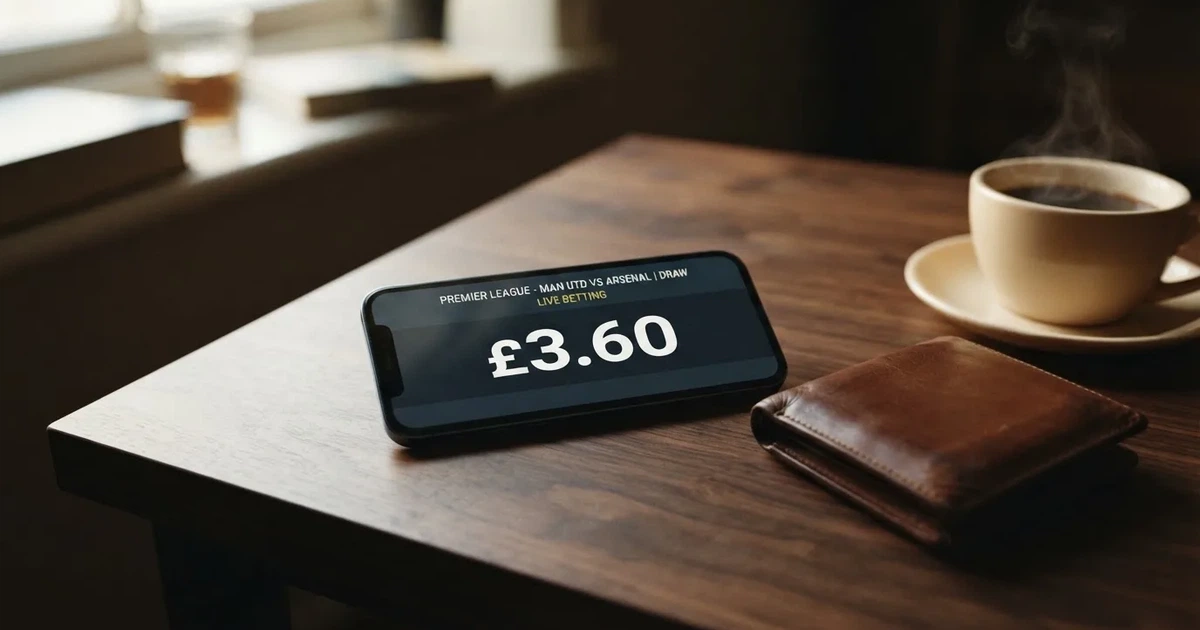
This page is for the punter who already knows that and is now trying to choose: which GB-licensed brand takes a Mastercard debit cleanly, what minimum deposit is realistic, how fast the money comes back, and which offer wastes the least of its headline value in rollover. Nine operators are reviewed in detail. The licence register is checked against each. Offers are described in plain terms, never as pitches.
What “Mastercard at UK Betting Sites” Now Means
The phrase once covered two ideas at once: a card you can deposit with, and a card you can withdraw to. After April 2020 the deposit side cut in half. A UK-licensed online bookmaker may accept only debit cards — Mastercard *Debit*, Maestro, Visa Debit, Visa Electron — and the network is the same one that prints “Mastercard” on the front. The network does not distinguish; the cashier does.

What the cashier is doing is enforcing the Commission’s social responsibility code, which lists credit cards among the methods gambling businesses must not accept in Great Britain. E-wallets that funded themselves from a credit card are caught by the same rule. Debit cards, bank transfers and a handful of Open Banking products are not. That is why almost every cashier at a licensed brand shows the same handful of logos: a debit card, an e-wallet such as PayPal or Skrill, sometimes Apple Pay or Google Pay, and a bank transfer option that usually routes through Trustly or similar instant-payment rails.
The next thing to know is that the cards themselves are ordinary consumer products. Mastercard Incorporated, headquartered in Purchase, New York, processes payments between the banks of merchants and the issuing banks of purchasers. It began in 1966 when an executive at Marine Midland Bank invited other banks to Buffalo, New York, to set up a shared network; merged with Europay International in 2002; listed on the New York Stock Exchange in 2006. None of that is betting-specific — but the card most punters carry in their wallet was issued under that licence, and any dispute a customer has with the issuing bank is governed by the network’s general rules, not by the bookmaker’s.
The numbers stay modest at the level this punter cares about. Mastercard reported revenue of around US$28 billion for 2024 and US$32.8 billion for 2025, with operating income of US$15.6 billion and US$18.9 billion respectively. That scale is why every UK cashier has a Mastercard slot in the first place — the network is everywhere — and why the only conversation worth having about it is which kind of card the law allows.
Credit Cards, Debit Cards and the Cashier in Front of You
The practical picture at a GB-licensed site:

| Card type | Accepted for deposit? | Accepted for withdrawal? |
|---|---|---|
| Mastercard credit | No | No |
| Mastercard debit (including Maestro) | Yes | Yes |
| Visa credit | No | No |
| Visa Debit / Visa Electron | Yes | Yes |
A Mastercard debit works because the funding source is the cardholder’s current account, not a credit line. The cashier does not ask which kind the card is at the moment of deposit — the issuing bank classifies it, and the prohibition lives at the merchant category code level. A punter trying to deposit with a credit Mastercard finds the transaction declined, sometimes without a specific reason given. The cashier may then offer an alternative.
The same brands almost universally accept the alternatives. Among the nine reviewed operators, only Betmaster adds Visa, Mastercard, Maestro and V PAY as its full list; Fit zdares accepts Mastercard alongside Apple Pay and Visa. Unibet lists Maestro and Mastercard as card options. The rest mix in Apple Pay, Google Pay, Trustly, PayPal and Pay by Bank App in different combinations.
Bonuses and Free Bets on Mastercard Deposits
The welcome offer headlines on UK-licensed sites look very similar: “Get £40 in free bets when you bet £20.” Coral and Unibet both publish that exact phrasing on their UK homepages. Betboro runs a 100% matched free bet of up to £25. Sky Bet hands out £30 in free bets as three £10 tokens after a minimum £5 qualifying bet. The numbers change; the structure rarely does.
Two things make that structure less generous than it reads. Free bets, when they win, return only the profit — the stake is not paid back. A £10 free bet at odds of 4/1 wins £40 in cash, not £50. The headline “free bet” is therefore free of the stake, not free of the risk, and the customer still loses the £10 if the selection loses. The second thing is the wagering multiplier. From 19 January 2026 the Commission’s promotion rules cap bonus wagering at 10x the bonus amount. A £10 bonus at 50x — the older standard — would have meant £500 of qualifying bets before withdrawal; under the cap a bonus cannot ask for more than £100 of clearing bets.
Most welcome offers on the reviewed set are now structured as simple free bet tokens rather than bonus cash. Coral’s £40 in free bets, Unibet’s £40, Sky Bet’s £30 and Betboro’s matched free bet are all stake-not-returned tokens that expire seven days after issue. The “free” in the marketing copy refers to the wagering requirement, not to the stake.
Minimum qualifying odds for the qualifying bet sit between 1.5 and 2.0 decimal. Coral’s £20 qualifying bet needs minimum odds of 2.0 (1/1). Sky Bet’s 5p minimum bet needs odds of 1/1 or greater. Betboro’s first bet of £5 to £25 asks for three selections, each at minimum 3/5 (1.60). Below the threshold the bonus does not trigger; above it does.
The Mastercard angle on bonuses is short. Almost every welcome offer accepts a debit card deposit as a qualifying method. None of the reviewed nine brands restricts bonuses to non-card methods. What does not work is using a credit card to qualify — not because the bookmaker refuses, but because the cashier will not accept a credit Mastercard in the first place.
Deposits, Withdrawals and the Speed of Money
| Method | Typical minimum deposit | Typical deposit speed | Typical withdrawal speed |
|---|---|---|---|
| Mastercard debit | £5–£10 | Instant | Up to 48 hours (often same-day) |
| Visa debit | £5–£10 | Instant | Up to 48 hours (often same-day) |
| Apple Pay | £5 | Instant | Up to 24 hours |
| PayPal | £5–£10 | Instant | Within 24 hours |
| Bank transfer / Trustly | £5–£10 | Instant or next banking day | Same-day to two banking days |
Fitzdares gives its Mastercard withdrawal a “up to 48 hours” line in its app description; Visa at the same brand is usually same-day. Coral and the other long-established brands keep the same boundary in their help pages. The pattern is consistent: cards clear the issuing bank on day one, internal processing happens on day two, and the funds land between half an hour and 48 hours after a withdrawal is requested. None of that is fast by e-wallet standards — PayPal is normally under four hours, sometimes within minutes — but cards beat bank transfers when the punter needs money to be spending-money-now rather than waiting-for-the-clear.
Mastercard debit does not charge a fee at any of the nine reviewed brands. The Commission’s rules treat payment surcharges as a consumer-protection issue, and the long-established policy has been that bookmakers must not pass on processing costs to customers for deposits or withdrawals. A punter who sees a fee on a card withdrawal should check the operator’s banking page; more often than not the fee line belongs to an instant-bank-withdrawal premium tier, not the debit card route.
The cashier also imposes its own verification. A punter’s first withdrawal triggers a standard identity check regardless of method. After that, withdrawals on the same card to the same account normally go through without interruption. Switching cards mid-account is a common reason for an extra check.
Top Nine UK Bookmakers That Take Mastercard Debit
Each brand below holds a remote operating licence from the Gambling Commission and accepts Mastercard debit for deposits and withdrawals. Offers are described in plain terms — the value, the trigger, the conditions — and the licence line is checked against the Commission’s public register. Where the licence holder is different from the brand owner — LC International Limited for Coral, Platinum Gaming Limited for Unibet, for example — both are noted.
| Brand | Gambling Commission remote licence | Licence holder | Operator’s own position on Mastercard |
|---|---|---|---|
| Sky Bet | 067370-R-341330-005 | SBG Sports Limited | Debit cards accepted; welcome offer in free bet tokens |
| Coral | 054743-R-330863-014 | LC International Limited | Mastercard debit taken; £40 free bet for new GB customers |
| Betmaster | 065699-R-339929-002 | BM Solutions GB Ltd | Visa, Mastercard, Maestro and V PAY listed |
| Betboro | 044181-R-324363-007 | Webmedia Development N.V. | Debit card qualifying deposit for matched free bet |
| Fitzdares | 000400-R-103839-030 | Fitzdares Limited | Mastercard taken alongside Apple Pay and Visa |
| Unibet | 045322-R-324275-019 | Platinum Gaming Limited | Debit cards accepted; £40 free bet for new GB customers |
| LiveScore Bet | 056859-R-332720-005 | LiveScore Betting and Gaming (Gibraltar) Ltd | Debit cards accepted; deposit also via Apple Pay, PayPal, Open Banking, Revolut Pay |
| Midnite | 101839-R-342850-001 | Midnite Limited | Visa, Mastercard, Apple Pay, Google Pay, Trustly |
| Bet Ahoy | 100094-R-341742-003 | Bet Ahoy Ltd | Debit cards accepted; 10% Acca Bonus up to £1,000 |
Sky Bet
Sky Bet and Gaming, trading as Sky Bet, is operated by SBG Sports Limited under remote operating licence 067370-R-341330-005 from the Gambling Commission. The new-customer offer is £30 in free bets, issued as three £10 free bet tokens after a deposit of at least £5 and a first single or each-way bet of at least 5p at minimum odds of 1/1 (2.0 decimal).
The headline lands awkwardly. A 5p qualifying bet is the floor the system allows, not a recommendation — it is exactly the minimum that triggers the bonus. The value is in the £30 of free bet tokens, which all expire seven days after issue and return only the profit on a win. A punter weighing the offer against Coral or Unibet is really choosing between three £10 tokens and four £10 tokens, since Sky Bet’s qualifying bet is smaller and the free bet total is smaller in proportion.
Mastercard debit sits among Sky Bet’s accepted payment methods along with Visa debit, Apple Pay and PayPal. The licence is clean. For a Sky Sports customer who already has a Sky account the friction is minimal; for someone picking on price alone, the offer is close to market without standing out.
Coral
Coral is one of the older high-street names in British betting, and its online operation runs under LC International Limited, a multi-brand licensee holding remote licence 054743-R-330863-014 with the Commission. The licence covers both remote general betting and the betting intermediary role that powers the Coral Exchange.
The new-customer offer is “Get £40 in Free Bets when you bet £20”: a deposit and sports bet of £20 or more at minimum odds of 2.0 (1/1), with £40 in free bets issued within seven days and expiring seven days after issue. The structure is identical to Unibet’s, down to the headline wording, because the licence holder is shared through Kindred group ownership and the marketing is aligned. A punter who already has a Coral account from the high street will find that the same wallet carries the online balance; for the newcomer, the offer is generous in absolute terms without being unique.
Mastercard debit is accepted for deposits and withdrawals. The card route takes up to 48 hours on a withdrawal; the bank transfer and PayPal routes are usually faster. Coral’s safer gambling tools are the standard set, with the same deposit limit and GAMSTOP integrations as every other licence-holder.
Betmaster
Betmaster runs under BM Solutions GB Ltd, holding remote licence 065699-R-339929-002. The card range is wider than average: the operator’s homepage lists Visa, Mastercard, Maestro and V PAY as the deposit methods. Maestro in particular is the European debit brand Mastercard absorbed, and it covers the lower end of the current-account card market.
The welcome offer is described on Betmaster’s own pages in plain language rather than the “Get £X in free bets” headline that the bigger brands use. Safer gambling tools — deposit and session limits, time-outs and self-exclusion — are present, and the site links out to GambleAware, GAMSTOP, BetBlocker and GamCare in the footer. That is the expected set under the licence, no more.
For a punter who has a Maestro card in the wallet rather than a Visa or Mastercard debit, Betmaster is one of the few places where the cashier will not need to be tried first.
Betboro
Betboro’s UK-facing site runs under Webmedia Development N.V., holding remote licence 044181-R-324363-007. The new-customer offer is a 100% matched free bet of up to £25 on the first qualifying wager: a debit card deposit of at least £10 and a first bet of £5 to £25 with at least three selections, each at minimum 3/5 (1.60).
Three selections at minimum 1.60 is a real accumulator requirement, not a single, and the qualifying bet structure costs more to clear than the equivalent Coral or Unibet offer. The matched free bet itself is stake-not-returned and expires on the operator’s standard seven-day cycle. Mastercard debit qualifies as a deposit method.
For a punter who plans to bet accumulators anyway, Betboro’s qualifying structure is closer to the way that punter plays; for a singles-only punter the offer is harder to clear.
Fitzdares
Fitzdares has been around since the 1940s as a private bookmaking name; its online operation sits under Fitzdares Limited, holding one of the older remote licences on the register at 000400-R-103839-030. The brand positions itself as a premium service rather than a high-volume site.
The cashier takes Mastercard debit, Visa and Apple Pay. The app description names “up to 48 hours” as the Mastercard withdrawal time and “usually same-day” as the Visa withdrawal time. The asymmetry is unusual — same network family, same operator, different speeds — because the internal processing route differs between Visa’s and Mastercard’s issuing-bank systems. A punter who wants fast withdrawals picks Visa; a punter whose only debit card is Mastercard accepts the slower lane.
No welcome offer headline is published in the same “Get £X in free bets” shape as the high-street brands. Fitzdares markets itself on personalised service rather than free bet volume.
Unibet
Unibet began operations in 1999 and the UK-facing site runs under Platinum Gaming Limited, Gibraltar, holding remote licence 045322-R-324275-019. The new-customer offer mirrors Coral’s headline-for-headline: “Get £40 in Free Bets when you bet £20”, with the same minimum deposit and qualifying bet at minimum odds of 2.0 (1/1), the same seven-day expiry, and the same stake-not-returned structure on the free bets.
The shared wording is not coincidence. Unibet is part of the Kindred group, whose other UK-facing brand is Coral under LC International Limited; the marketing team places both offers in concert. The two brands feel different because Unibet’s product leans towards European sports and Coral’s leans towards British racing, but on payment method and bonus terms the punter sees the same thing on both.
Mastercard debit is accepted; the safety tools include deposit limits, a player profile test, product restrictions and self-exclusion, with links to BeGambleAware, GamCare, GAMSTOP, Gambling Therapy and the BGC in the footer.
LiveScore Bet
LiveScore Bet is run by LiveScore Betting and Gaming (Gibraltar) Limited under remote licence 056859-R-332720-005. The brand is built around the live scores product of the same name, and the sportsbook sits alongside it.
The cashier’s full deposit list is longer than most: debit cards (Visa and Mastercard), Apple Pay, PayPal, Pay by Bank App (Open Banking) and Revolut Pay. That is one of the longer mixes in the licensed set. The withdrawal methods match.
No headline welcome offer of the £40-in-free-bets shape is featured; the operator’s marketing pages lead with the live scores integration rather than a single offer. For a punter who values Open Banking or Revolut Pay at the cashier, LiveScore Bet is one of the most accommodating GB-licensed brands.
Midnite
Midnite runs under Midnite Limited, holding the newer remote licence 101839-R-342850-001 on the Commission’s register. The homepage names Visa, Mastercard, Apple Pay, Google Pay and Trustly as deposit methods, with the same safer gambling link set as the rest of the licensed set.
The product page carries in-play events, an accumulator builder, popular accumulators, and price boosts with maximum-stake limits printed alongside the boosted price. That front-end pattern — fixed-stake boosts rather than open-ended price ladders — is a Midnite-specific choice. The weekly rewards club and rapid payouts are flagged in the app description.
For a punter whose betting week looks like a few accas at boosted odds, Midnite is a clean fit. The Master card slot at the cashier is the only visible difference from a Visa debit punter.
Bet Ahoy
Bet Ahoy is operated by Bet Ahoy Ltd under remote licence 100094-R-341742-003. The offer list is the broadest outside the main high-street names: a 10% Acca Bonus up to £1,000, Sub-Cover (a refund on player substitutions), Best Odds Guaranteed on UK and Irish horse and greyhound racing up to £100, and Double Result payout on UK and Irish racing. None of that is unique in the licensed market individually, but the bundle is dense.
The Mastercard debit slot is standard. For a racing-focused punter the BOG offer is the headline — Best Odds Guaranteed pays the starting price if it is higher than the price taken at bet placement, and that has real value on horses that drift in the market. For an acca punter the 10% bonus stacks across the legs.
Legality, Regulation and the Credit-Card Rule
The Gambling Commission is the regulator. It is a non-departmental public body sponsored by the Department for Culture, Media and Sport. The legal base is the Gambling Act 2005, which covers Great Britain — England, Scotland and Wales. Northern Ireland runs on different, older law, and a GB-licensed brand does not automatically cover bets struck from a Northern Ireland address.
Since the Gambling (Licensing and Advertising) Act 2014 an operator whose remote facilities are used in Great Britain needs a Commission licence wherever it is based. A Curaçao or Malta licence does not substitute. Several brands can run under one licensee — Ladbrokes and Coral both sit under LC International Limited, Paddy Power and Betfair under the same Flutter umbrella. The nine brands reviewed above all hold their own licences directly, with one exception: Coral and Unibet share ownership but each retains its own licence holder.
The credit-card rule sits in the LCCP. Since 14 April 2020 every remote betting operator licensed in Great Britain has been required to refuse credit card deposits, including those routed through e-wallets funded by credit cards. The rule was a Commission policy decision under section 79 of the Gambling Act 2005; the Commission’s public register, the LCCP and the social responsibility code are the sources a punter can check themselves.
The minimum age is 18 across Great Britain, and identity verification has been compulsory before the first deposit since 7 May 2019. That last point is the operational reason no GB-licensed brand offers anonymous play. A deposit under any name other than the verified one is not possible, and free bets and bonuses sit under the same verification gate.
Other rule shapes a punter meets in passing:
- GAMSTOP is the national multi-operator online self-exclusion scheme and has been a mandatory licence condition since 31 March 2020. Periods run six months, one year, five years, or five years with auto-renewal. After the minimum period the exclusion stays in place for another seven years unless the customer asks GAMSTOP to remove it. Online sites and apps are covered; betting shops use a separate service.
- Financial vulnerability check — a public-record check (bankruptcy, county court judgments) rather than an income or credit check — applies to licensed remote betting when deposits minus withdrawals exceed £150 in a rolling 30 days, in force since 28 February 2025.
- Financial risk assessments — the affordability checks that the press calls “affordability checks” — were announced by the Commission in a staged plan published on 7 July 2026. No start date has been published.
- Deposit limits sit in the Commission’s Remote Technical Standards; phased changes applied from 31 October 2025, a second phase was postponed to 30 September 2026, and whether that second phase is live is not established.
- General Betting Duty is the operator’s tax on gross profits, currently 15%. From 1 April 2027 a new remote betting rate of 25% applies within the duty; in-person betting, pool betting and remote bets on UK horse racing stay at 15%. Spread betting has its own rates — 3% on financial spread bets, 10% on other spread bets.
- Advertising sits under the CAP Code (non-broadcast) and BCAP Code (broadcast), enforced by the ASA, with the LCCP marketing conditions on top. Section 16 of the CAP Code bars marketing that is of strong appeal to under-18s and stops anyone under 25 from featuring in gambling ads (with an exception for in-betting-shop marketing). The wagering multiplier is capped at 10x the bonus amount from 19 January 2026, and mixed-product offers are banned.
- Betting tax on the punter is zero. The player keeps winnings without a tax bill in Great Britain. A professional gambler should ask HMRC or a tax adviser.
The offshore boundary is the same one as in 2014. A brand without a GB licence that accepts British customers is breaking section 33 of the Gambling Act 2005. No offence aimed at the customer who merely bets on an unlicensed site was found — the section is aimed at the operator. The loss for the punter is the loss of protection: no GAMSTOP coverage, no Commission complaints route, no approved dispute-resolution body, no British consumer redress if funds are withheld, and no application of the 10x bonus cap or the £150 vulnerability check. Enforcement on the operator side is disruption rather than blocking: cease-and-desist notices, search-engine referrals, work with registrars, hosts and payment providers, and court-order DNS blocking powers. None of that is on the punter.
Responsible Gambling at Licensed Operators
Every brand in this guide offers the same baseline set of safer gambling tools because the licence conditions require them. Deposit limits are the customer’s choice — a £10 daily ceiling, a £50 weekly ceiling, a £200 monthly ceiling, or any amount the customer sets. Time-outs suspend the account for 24 hours to six weeks. Self-exclusion, normally for six months to five years, is on top of the GAMSTOP registration.
GAMSTOP itself is the multi-operator safety net. Once registered, the punter is blocked from opening new accounts at every GB-licensed online operator for the period selected, and the exclusion extends for seven years after the minimum period unless the punter applies to remove it. A punter who has self-excluded from one site and wants to extend the protection to the rest of the licensed set does not need to contact ten brands in turn — GAMSTOP does it across the whole market.
Beyond the operator’s own tools, the help organisations are:
- GamCare runs the National Gambling Helpline, free and confidential, 24 hours a day.
- GambleAware funds treatment and education.
- NHS gambling clinics offer specialist support in regions of England.
- Gamblers Anonymous runs peer-support meetings across the UK.
The financial vulnerability check that applies on rolling-30-day deposits above £150 is a public-record check. It is not an income check and not a credit reference check. A punter whose deposit pattern crosses the threshold is asked for confirmation of name, address and date of birth against public records; a county court judgment or an active bankruptcy will prompt further questions. The check is a backstop, not a tax, and applies at every licensed operator in the same shape.
The financial risk assessment (the press’s “affordability check”) has been announced and staged but not brought into force. The Commission’s article of 7 July 2026 sets the policy direction; no start date has been published. When the assessment does come in, it will sit alongside the public-record check, not replace it.
Crypto, E-Wallets and “No KYC” Routes
The “no KYC” angle in the search-language research is one the GB-licensed set does not satisfy. Since 7 May 2019 licensed online bookmakers have verified the customer’s name, address and date of birth before the first deposit, and the verification has to clear before a free bet or bonus can be claimed. That is identity verification at the level the customer experiences it, not the headline “KYC” the unregulated market uses to sell itself.
The crypto route is the same answer in different words. None of the nine reviewed operators accepts cryptocurrency deposits. The Commission’s public register does not list any GB-licensed remote betting brand that takes Bitcoin or stablecoin deposits, and the LCCP does not require them to accept any particular method. The crypto-friendly sites a search may surface run on Curaçao or other offshore licences. Those brands are outside this page’s scope, and a punt er opening an account at one gives up the protection set out in the legality section above.
The e-wallet route is more nuanced. PayPal at a GB-licensed cashier is fully verified; the Commission’s rules treat e-wallet deposits as cash-equivalent and require the same identity checks. Apple Pay and Google Pay pass straight to the underlying card, and the card’s issuing bank does the same KYC the bank does for any other transaction. Revolut Pay and Trustly move through bank rails. None of them is anonymous, and none of them is outside the licence conditions.
The marketing claim “anonymous betting with Mastercard” survives because a customer reading “Mastercard” thinks of debit-only spending without realising that the cashier has already verified the cardholder. The verification sits upstream of any specific transaction. By the time a deposit is placed, the card has already been linked to a verified identity through the issuing bank’s onboarding — sometimes months or years earlier — and the bookmaker’s own check sits on top of that.
A punter who wants the lowest possible data footprint at a UK bookmaker is looking at the wrong market. The product on offer is the regulated one. The unregulated one trades the data protection for the identity check, and the offer on the unregulated side is rarely more generous once the rollover, minimum odds and withdrawal friction are read.
How to Pick a Bookmaker on This List
A sensible order, given what the nine brands actually offer:
- Decide whether the welcome offer matters. Four of the nine (Sky Bet, Coral, Unibet, Betboro) publish a free-bet-token welcome. If the offer is the deciding factor, Coral and Unibet are tied at £40 in tokens for a £20 qualifying bet; Sky Bet’s £30 takes a smaller qualifying wager; Betboro’s matched free bet needs an accumulator to clear.
- Decide whether the cashier mix matters. If Apple Pay and Open Banking are needed alongside debit cards, LiveScore Bet has the longest list. For Maestro support specifically, Betmaster is the only one named in the reviewed set.
- Decide whether the racing product matters. Bet Ahoy’s Best Odds Guaranteed on UK and Irish racing up to £100 is the standout for a horse-racing focus. Coral’s racing integration sits at the other end of the listed cards.
- Decide whether the in-play product matters. Midnite’s fixed-stake boosts and acca builder lean into the in-play format. LiveScore Bet sits beside the live scores product. The rest of the set is more pre-match weighted.
- Check the licence yourself. Every brand on this page is in the Commission’s register. The fastest check is the operator name or domain on the register’s search page; the licence number is at the bottom of every operator’s own terms page.
Two settings the page does not yet rank on but the punter may want to weigh:
- Stakes limits at bonuses. Each operator can restrict maximum bets during bonus clearing. Coral’s general limit and the minimum odds threshold are on its terms page; the others publish equivalent limits. The pattern is similar across the licensed set: maximum stake during bonus play sits around the £100 mark at most.
- Withdrawal speed on cards. Fitzdares’ “up to 48 hours” on Mastercard is the worst of the nine, Coral and the long-established brands run the same boundary, PayPal is faster at the cashier.
A punter who reads only one paragraph before opening an account should know: deposit with a Mastercard debit and the cashier behaves the same way as at every other licensed operator’s cashier; the credit-card ban is invisible because the cashier refuses it for you; and the bonus headline is the smallest part of the offer’s value.
Calculation: How Much a Welcome Free Bet Is Worth
A welcome free bet has a value that is not the headline number. A £10 free bet on a 5/1 shot returns £50 in profit — the £10 stake is not given back. The expected value depends on the market’s margin and on the implied probability of the selection winning.
Take Coral’s £40 free bet offer. The £40 lands as four £10 tokens stake-not-returned, expiring seven days after issue. A punter places each token at odds picked from the bookmaker’s market — for argument’s sake, an evens shot (2.00 decimal). At 2.00 the implied probability is 50%, before any margin, and a bookmaker market with a 5% margin lands at a payout share of 95% on a two-outcome event. The expected profit per £10 token is:
£10 × (2.00 − 1) ÷ 2.00 × 95% = £4.75
Four tokens deliver an expected profit of £19 before considering the qualifying bet. The qualifying £20 bet at minimum odds of 2.00 costs the same expected value to clear — expected loss equals stake times market margin, or £1 in expectation on a 5% margin. Net expected value of the Coral offer under these assumptions is roughly £18.
Place the same £40 in tokens at odds of 5/1 (6.00 decimal) and the expected profit rises sharply:
£10 × (6.00 − 1) ÷ 6.00 × 95% = £7.92 per token
That is £31.67 across the four tokens, less the qualifying stake loss, or about £30 in expected value. The trade-off is that 5/1 shots win one in six times in a fair market, so the realistic distribution of outcomes is heavy in the zero column with a few large wins. The expected value is the right number to compare offers on; the variance is the punter’s experience.
The marketed headline (£40 of free bets) is the maximum payout if every token wins at high odds. It is not the expected payout, and it is not a guaranteed payout. The right comparison to make between two offers is the expected value, not the headline, and an offer at smaller headline and lower rollover can outrank a higher headline at tighter terms.
The qualification is general, not specific to Coral: any free bet whose stake is not returned is worth less than its face value on average; the gap is set by the odds selected and the market’s margin.
The Three Common Pitfalls
Three things go wrong for a punter on these brands and they are not what most “betting reviews” warn about.
Rollover on the bonus, when it exists. Most of the welcome offers on this list are free bet tokens without a wagering requirement. A punter who accepts a bonus-cash offer elsewhere and finds a 10x cap is the lucky one; the older norm was 50x, and the audit committees of older offshore brands still use multipliers in that region. Read the wagering requirement before the headline.
Minimum odds at the qualifying bet. Coral’s qualifying bet at minimum odds of 2.0 means a 50/50 shot is the lowest that triggers the bonus. A punter who treats the qualifying bet as a cheap single — an odds-on acca leg, for example — finds the bonus does not trigger. The £20 lost on the qualifier is then £20 of pure cost rather than qualifying spend.
Expiry on the free bets. The free bet tokens at Coral, Unibet, Sky Bet and Betboro all expire seven days after issue. A punter who does not check the date places the token on day nine and finds the bet rejected. The token still happens at the cashier but the system declines the wager.
Mastercard debit interacts with none of those three pitfalls. The card slot behaves the same way as a Visa debit slot at every GB-licensed cashier.
Frequently Asked Questions
Can you bet against Mastercard?
Betting against Mastercard means betting on outcomes the bettor expects to lose — a lay bet. Lay betting is offered through betting exchanges licensed by the Commission under a betting intermediary licence, not through the standard online bookmakers reviewed on this page. The card a punter uses to fund the exchange wallet is still subject to the credit-card ban: a credit Mastercard is refused, a debit Mastercard is processed. Coral’s site is one of the GB-licensed operators that runs an exchange (Coral Exchange) under the same LC International Limited licence.
Can you lose on mastercard betting?
Yes. The card a punter deposits with has no bearing on the outcome of the bet. A losing wager at any GB-licensed brand loses the stake whether the stake came from a Mastercard debit, a PayPal balance or a bank transfer. Where Mastercard matters is in the after-market: a debit-card deposit that loses is gone, and the cardholder should not treat the wallet as a credit line in the hope that a refund will materialise.
Can you use mastercard in betting shops?
Betting shops in Great Britain are cash-counter businesses in most cases. The high-street chains — William Hill, Ladbrokes, Coral — accept cash over the counter. A few branches accept debit cards at the counter through card-present terminals, and a debit Mastercard is the more common network for those terminals than a Visa debit. The credit-card ban applies on the high street the same way it does online; credit cards are refused at every betting-shop counter.
Which payment methods do GB-licensed bookmakers accept, and are credit cards allowed?
GB-licensed online bookmakers accept debit cards (Mastercard debit, Visa Debit, Visa Electron, Maestro), bank transfers, instant bank payments through Open Banking rails such as Trustly, e-wallets including PayPal and Skrill, and mobile wallets (Apple Pay, Google Pay). Some operators also accept prepaid cards such as Revolut Pay. Credit cards are not accepted for gambling, in store or online, anywhere in Great Britain — the rule has been in force since 14 April 2020 and covers e-wallets funded by a credit card too.
From what age can bets be placed in Great Britain, and when is identity verified?
The minimum age for betting in Great Britain is 18. Identity verification — name, address and date of birth — has been a licence condition since 7 May 2019 and happens before a customer can deposit at a licensed online bookmaker. The same check covers free bet and bonus claims, so a punter cannot claim a welcome offer without being verified.
How can it be checked that a bookmaker holds a Gambling Commission licence?
The Commission’s public register lists every licensed operator by business name, trading name, domain and licence account number. The search is on the Commission’s own website. The licence number is also printed on every operator’s own terms page, normally at the bottom, and is the same number that appears in the table earlier on this page. A punter who cannot find the licence number on the operator’s homepage should treat that absence as a red flag.
Payments & apps – Best betting
Content created by the «Best betting» team
