
A Super Heinz Bet, From Build to Payout
 Available in US
A Super Heinz is a single ticket at a bookmaker’s site that, behind a tap of the “place bet” button, fans out into 120 separate bets across seven selections. Twenty-one of those bets are doubles, thirty-five are trebles, thirty-five are four-folds, twenty-one are five-folds, seven are six-folds, and the last is the seven-fold that ties every leg together. There is no single-leg wager on the slip, only multiples from two picks upward. That number, 120, is the practical fact to keep in mind: it is the cost of the ticket, not just its shape, and a unit stake of £2 turns into a £240 outlay before the first selection kicks off.
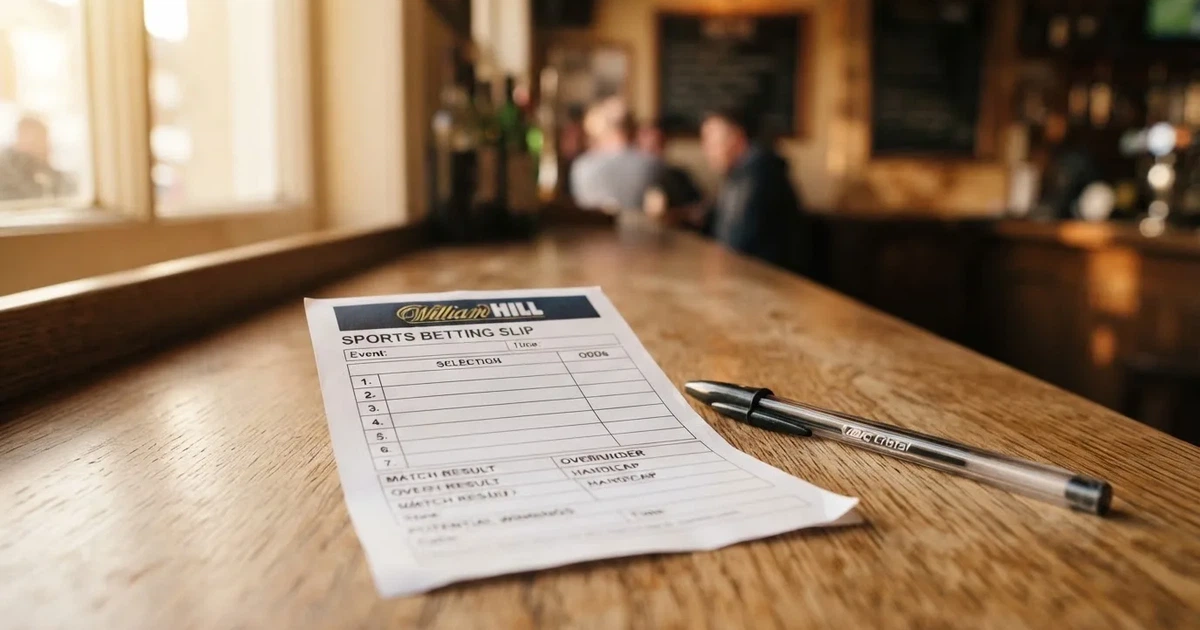
For punters browsing a betting app’s “Bet Builder” or “Multiples” tab, the Super Heinz sits in a family of full-cover bets — a series that grows one selection and a great many lines at a time. A Heinz, the ticket one rung below, runs on six selections and lays 57 bets. A Goliath, the one above, takes eight selections to 247 bets. The Super Heinz is the middle of that ladder, and it is the smallest ticket on which a seven-fold accumulator — the all-or-nothing long shot — appears. That single line is the reason most of the wagering interest in a Super Heinz lives downstream of a single winning selection: the bettor needs at least two of the seven picks to land for the ticket to return anything at all.
*Odds and licence data checked on 27 October 2026 against the Gambling Commission’s public register.*
Why a Punter Would Pick 120 Bets Instead of One Accumulator
The starting point is a question of variance. A seven-fold accumulator at odds of, say, 2.00, 1.50 and 2.50 across each pair of legs would only need one combination of seven correct outcomes to pay; a Super Heinz on the same seven picks pays out across dozens of combinations. If five of the seven selections win and two lose, the accumulator is dead on arrival; the Super Heinz still settles its trebles, four-folds and five-folds on the winners. The cost for that resilience is exposure: the same £2 unit stake across 120 lines is a £240 outlay, against a £2 stake on the single accumulator.

That is the unspoken trade-off in every multiple bet, and a reader comparing the options should weigh it on three points. First, the share of lines that “matter” — on a Super Heinz, 99 of the 120 lines depend on every leg winning, so the long-shot payout is the dream and the bulk of the stake is the price of being able to dream it. Second, the volatility each line adds; even when six of seven selections win, the seven-fold pays by far the most, the six-folds next, and so on down a steeply diminishing ladder. Third, the place in a betting bank where a long losing streak on six-pick combinations hurts less than a single missed accumulator at the bottom of it. A Super Heinz is not a bet someone places because it favours them; it is one they place because the shape of the seven selections makes a long-shot outcome feel worthwhile and the smaller combinations justify the outlay for what they themselves expect from the ticket.
The deeper a read on a betting bank goes, the more a punter chooses the bet that fits the bank — and that is the lens the rest of this page takes.
Picking the Seven: Strategy Before the Slip
A Super Heinz hangs on which seven selections sit on the slip. The arithmetic below the betting screen treats them as interchangeable parts of one hundred and twenty combinations; the punter’s judgement has to run in front of that and treat them as seven reads, each one defensible on its own. Two frames tend to drive the choice in practice, and they suit different bettors.

The first frame treats the seven picks as seven independent bets and asks how often each one wins. That favours short-priced favourites — prices where the implied probability of winning is high and any single leg of the seven-fold is unlikely to spoil the ticket. A treble of three banker’s favourites within the seven slips into most combinations without breaking the bank; a long-priced outsider complicates the higher multiples. Bookmakers’ own bet builders and stats panels are useful here: a price close to 1/2 (1.50 decimal) suggests a market consensus in the punter’s favour, and prices closer to 4/1 (5.00 decimal) suggest a market that disagrees with the pick.
The second frame treats the seven as a portfolio. The combinations the bettor most wants are the seven-fold — the rare, all-sevens-wins line — and the price, not the probability, is what makes that line worth holding onto. That view pushes the picks toward more ambitious prices, accepts that some legs will fall short, and counts on the smaller combinations to pay a meaningful return on the outlay when four or five of them come in. A £2 unit stake returning £7 on a treble at 2.00, 2.50 and 3.00 pays £7 for the £2 line; with 35 trebles in the ticket, the multi-line income builds up.
The two frames are not the same bet. A bettor whose bank prefers consistency takes the first; a bettor whose bank can absorb a few near-misses in pursuit of a high-end payout takes the second. Each strategy also leaves the punter with a different practical question to answer: with the first, which selection am I most willing to leave out; with the second, which leg is least likely to deliver the long-shot price I have priced in.
The same logic extends to how a bettor handles results during a day. If four of seven are already winners going into the last three fixtures, the seven-fold is alive and three of the six-folds are alive too; if two of seven fail in mid-afternoon, the seven-fold and most six-folds are dead, but the four-folds and trebles still settle on the survivors. Void selections — a non-runner, a postponed match — drop the lines containing them to the next lower multiple, so a void leg in a five-fold turns it into a four-fold on the surviving six picks. Most bookmakers’ bet calculators expose that settlement, and a punter checking the slip mid-afternoon can see which combinations still have a stake.
That margin-of-safety idea is also why a Super Heinz is unlikely to be a bettor’s first multiple. A Trixie, on three selections, or a Lucky 15, on four, give a feel for how the combinations pay under different outcomes at a smaller cost; the Super Heinz is the same shape taken further, with seven lines of stake added at a time. A bettor who has settled to their own satisfaction on smaller full-cover bets has a read on the variance, which is what the Super Heinz actually prices in.
How 120 Bets Actually Settle
A bettor who has never placed a full-cover bet tends to picture the seven-fold as the bet — it is the headline, the longest-priced line, the one the marketing screens a punt for. The 119 lines behind it are where most of the settlement happens, because the seven-fold is the rare outlier and the smaller combinations stack up across the kinds of outcomes a betting slip produces most often.
Take seven picks priced at around 1/2 (1.50), evens (2.00) and 6/4 (2.50), a sample mix that mirrors a realistic bookmaker’s board across favourites and short-priced outsiders. The exact same selections at, say, two favourites, three at evens and two at 6/4 would settle differently from the all-favourites mix above it: more treble lines paying modestly, fewer six- and seven-fold lines paying the long price. What matters for the slip is the same under both — the settlement pattern of the 120 lines, which the bookmaker’s bet calculator lays out before the wager is placed. The slip’s payout for each realised outcome is the unit stake times the winning lines’ combined odds, summed line by line.
On the partial-settlement outcomes the Super Heinz is built for, the returns compound in a way that surprises new bettors. Six of seven selections correct settles all six-folds (7 lines), the five-folds and the four-folds and trebles among the winning combinations. Five of seven correct settles all five-folds (21 lines) and below. Four of seven correct settles the four-folds (35 lines) and below. Each additional correct selection brings more combinations alive and the partial return grows non-linearly as the higher multiples come back into scope.
That structure gives a useful rule for any punter eyeing a Super Heinz slip: count the live combinations at each stage of the day, not the live selections. A six-of-seven mid-afternoon outcome is far more valuable on the slip than a six-of-seven morning outcome, because by evening the seven-fold has had the time to actually realise.
What a Winning Bet Pays Out
The arithmetic on a Super Heinz is straightforward at each line and punishing as a whole. On every multiple a wager wins, the decimal odds of the legs multiply together: a treble of three legs at odds of 2.00, 3.00 and 4.00 decimal returns 24.00, and a £10 stake on that treble returns £240. On a Super Heinz ticket the same multiplication runs across all 21 trebles, 35 four-folds and so on up to the seven-fold.
For a sample calculation, take three illustrative picks at decimal odds of 1.50, 2.00 and 2.50. A £10 accumulator across all three at those prices returns £75 — stake £10 × odds 7.50 — and the net profit is £65. A full Super Heinz on seven picks using a £2 unit stake on every one of the 120 lines would outlay £240 up front, and the partial payouts would depend on which combinations land. The band this lands in is wide: a betting slip can return between a few pounds on a heavily partial outcome and a five-figure sum on a clean seven-of-seven. The wagering decision the rest of this page looks at is what the outlay actually buys.
There is no honest single figure for “what a Super Heinz pays” because that is the wrong question. The right question — what does it pay across the outcomes a punter should expect on a seven-pick slip — is what the table on a betting site shows before the wager is placed, and what an experienced punter reads with their own view of each leg. The numbers on this page are illustrative; a punt on the actual seven selections, at the prices those selections actually carry on the day, is the one that matters. The arithmetic for every multiple returns stake × odds, and a punt on the slip settles as that arithmetic plays out across 120 lines.
Where a Super Heinz Sits in the Full-Cover Family
Full-cover bets come in named tiers, and the Super Heinz is not a one-off — it is the seventh of a series that runs from a four-pick Lucky 15 (15 bets) through a Canadian or Super Yankee on five selections (26 bets), a Heinz on six selections (57 bets), the Super Heinz itself (120 bets), and on to the Goliath at eight selections (247 bets). Each tier is one more selection and roughly double the lines again, which means the slope in stake cost is steep.
For a punter comparing their options on the same seven selections, the headline is that no other full-cover wager offers the seven-fold. The accumulator does — seven single selections into one long-shot line — but on its own a seven-fold accumulator pays nothing if any one leg loses, and the Super Heinz’s smaller combinations keep some return alive. A Yankee on those same four selections runs 11 lines and reaches the four-fold; a Lucky 15 adds each-way singles to the Yankee, but only across four picks. The Super Heinz is the entry point for a seven-line portfolio.
A glimpse of the higher tier is useful for the same reason — a Goliath at eight picks runs 247 lines and outlays four times as much per unit stake for a similar structure. A punter who can name eight confident picks is best advised to think about whether four of them are stronger than the others; a Goliath on eight picks, two of which are dubious, sets the seven-fold up to fail on legs the punter had already discounted.
The 120 Bets Behind a Super Heinz Slip
The composition is fixed. A Super Heinz contains exactly twenty-one doubles, thirty-five trebles, thirty-five four-folds, twenty-one five-folds, seven six-folds and one seven-fold, and nothing else. There are no single bets in the structure; the smallest unit of stake is on a double. Read that way, the ticket is a doubles-and-up strategy with a giant seven-fold at the top of the ladder.
Each tier’s frequency in the ticket follows a combinatorial pattern. From seven picks, the number of ways to choose two is 21, three is 35, four is 35, five is 21, six is 7 and seven is 1 — the symmetric distribution of combinations is what gives a Super Heinz its character. The lower tiers are frequent in the ticket but low-priced per line, and the higher tiers are rare but expensive per line. A betting calculator shows the structure before stake is committed.
The slip is most often settled on the lower tiers in practice. Most betting slips on a Super Heinz see three to five of seven selections land, and the payout comes almost entirely from the trebles and four-folds among those combinations. The seven-fold rarely settles; when it does, it dominates the ticket’s total return. That is the wagering shape of a Super Heinz, and a punter planning the outlay should set expectations accordingly.
How a Super Heinz Differs From a Heinz
A Heinz, on six picks, runs 57 bets: 15 doubles, 20 trebles, 15 four-folds, 6 five-folds and 1 six-fold. A Super Heinz takes the seventh pick and fans out into the seven-fold plus another 63 combinations downstream. The structure is the same shape with an extra selection, and the outlay more than doubles from a given unit stake.
For a bettor whose slip is heavy on long-priced picks, the difference is more than arithmetic. The seventh pick adds the seven-fold to the combinations set, and that single line is what most bettors mean by “I went for it” on a multiple. A punter comparing the two needs to ask whether the seventh pick is strong enough to justify the outlay; the seventh pick at odds of 6/4 (2.50 decimal) is one whose win frequency can be priced in, but a seventh pick at 10/1 (11.00 decimal) is a leg the punter has to believe in before they double the size of the ticket.
The Heinz’s outlay is half-again smaller, and a punt that surprises on six picks pays out across more combinations per pound than the same outcome on a Super Heinz would. That is the wagering choice the punter makes: a Heinz on six well-priced picks, or a Super Heinz on seven with the longer tail.
The Selection Choices That Move a Super Heinz Slip
A Super Heinz slip carries the same seven selections across 120 lines, which means each pick is on the ticket more than twenty times. A pick that wins moves almost every line on the slip; a pick that loses takes most of them down. The market selection the punter actually makes is the seven-pick portfolio that the slip turns into a single wager.
A typical Super Heinz is built across one day’s fixtures. Football matches at three or four different kick-off times are the most common form — each pick resolves at its own time, and the slip’s settlement finishes only with the evening kick-off. Horse racing variants work across non-runner markets, ante-post positions, and meetings where several winners are expected. Some bettors spread the picks across sports: a football treble, two tennis matches, a horse race and a cricket game, say, with the seven-fold price reflecting the joint probability of all of them winning. The structure works the same regardless of the underlying sports.
The size of stake on a Super Heinz is typically small. A £2 unit stake on a £240 total outlay is meaningful but not bank-breaking for most recreational bettors, and a £1 stake across the 120 lines keeps the outlay to £120. Bookmakers’ minimum stakes on multiples vary; most operators in Great Britain set the minimum on a multiple at £1 or £2 per line. The punter who prices in a high-end payout is well served by a small unit stake, because the seven-fold scales with the line stake more than the line count.
The same selection logic applies to partial outcomes. If five of seven selections win by the mid-afternoon, the slip has 21 five-folds and 35 four-folds and 35 trebles and 21 doubles still alive — and the question is whether the punter wants to cash out at the bookmaker’s offered figure or let the slip ride. Some operators settle cash-out offers in mid-event when the partial value is high; the slip’s payout is higher without cash-out if the surviving legs all win, and lower if any one of them fails. That choice sits with the punter before kick-off.
Where These Bets Stand in Great Britain
A Super Heinz is a betting structure, not a separate licence category. Bookmakers licensed by the Gambling Commission for general sports betting can offer it as one of many multiples within their sportsbook product, and none of the Commission’s licence categories is restricted from this kind of bet. The Commission’s public register lists every licensed brand and the categories each holds, and the relevant category for a Super Heinz is the remote general betting standard (real events) licence.
The Commission does not list specific bet types in its rules, and it does not pre-approve wagers such as the Super Heinz. The structure is one of the multiples operators offer under their own product terms, and each operator sets its own rules on minimum stake, void-leg settlement and any settlement caps. A punter’s exposure sits with the operator: the limits and conditions in the bookmaker’s own terms apply to the slip.
That dynamic puts a bettor’s protection on the bet, not the bet type. A licensed operator settles a winning Super Heinz under its advertised terms; an unlicensed one has no comparable obligation, and the punter has no recourse to British dispute-resolution channels. The Commission’s public register is the only test of who holds the licence; a brand claiming a Gambling Commission account number carries it on the register, and a brand whose name does not appear there has no Great Britain licence.
What “Risk-Free” and “Free Bet” Actually Cost
Bookmaker bonuses across Great Britain are advertised in two phrases that look generous and read punishing in the small print. The first is “risk-free” — a phrase used on first bets that lose, where the operator refunds the stake as a free bet or bet credit, not as cash. The second is “free bet” — a stake the operator credits to the account, on which the stake is not returned with the winnings.
Either of those products reaches a Super Heinz differently. A “risk-free” first bet does not apply to a Super Heinz at all if the Super Heinz is the qualifying bet: a Super Heinz at a £2 unit stake on the slip is a £240 qualifying bet, and a losing ticket at that size is a £240 refund — as a free bet, not as cash, and on the bookmaker’s own terms. A “free bet” token issued as the welcome offer is a stake the punter can place on a Super Heinz, but only the winnings settle back to the punter’s cash balance: a winning Super Heinz at odds of 7.50 across seven lines and a £10 free bet returns the stake times the winnings, not the £75 a £10 cash stake would return.
The Promotion rules effective 19 January 2026 cap any wagering requirement on a bonus at 10x — no £10 bonus can require more than £100 of qualifying bets — and ban mixed-product promotions, where an offer on betting requires action on casino, bingo, lottery or another product type. Free bets that carry no wagering condition are not necessarily inside that cap, but the rule shapes how the heavy-played welcome offers are written. None of this alters the underlying arithmetic of a Super Heinz: the wagering structure is the same, the size of the stake is what changes, and the punter who accepts a bonus is paying for it in compliance with the bookmaker’s terms.
What the 10x Bonus Cap Looks Like
A bookmaker offering a £30 welcome bonus with a 6x wagering requirement asks the punter to place bets worth £180 of qualifying stakes before the bonus converts to withdrawable cash. A 6x requirement is well within the 10x cap, but the qualifying bets are typically restricted to minimum odds — a market at 1/2 (1.50 decimal) or greater, say — and may exclude certain bet types. A Super Heinz in qualifying stake is rarely the route that converts a welcome offer, because the slip’s lower-tier multiples are at low prices, and only the seven-fold on most slips crosses the minimum-odds threshold.
A punter weighing a bonus offer against a Super Heinz slip is weighing two different products. The bonus is a marketing incentive whose conversion depends on the bookmaker’s terms, and the Super Heinz is a wagering structure whose settlement depends on the seven selections. The bookmaker’s terms for the welcome offer typically list which bet types count toward wagering, and a Super Heinz slip usually counts only its minimum-odds lines. That is a structural reason bonuses and full-cover bets rarely meet on the same ticket.
Picking a Bookmaker for a Super Heinz
A Super Heinz is offered by every mainstream sportsbook in the Commission register, but the experience of placing one varies by bookmaker. A few factors determine the practical difference.
The minimum line stake is the first. Most operators set it at £1 or £2 per line. A £1 minimum turns the slip into a £120 outlay; a £2 minimum makes it £240. A punter whose bank prefers smaller outlays looks for the bookmaker with the lower minimum; a punter who wants a higher-end payout looks for the bookmaker with the higher maximum payout, which is set per ticket or per day.
The settlement of void legs is the second. Some operators treat a void leg in a multiple as a non-runner, dropping the line to the next lower combination; others handle each void differently. A punter whose portfolio is heavy on ante-post horse racing wants the bookmaker that settles void legs most cleanly, because ante-post betting includes more non-runners than day-of-race cards.
Cash-out is the third. A bookmaker’s cash-out feature lets the punter settle a slip during a day of fixtures at a price the operator offers. A partial outcome on a Super Heinz can be worth cashing out: four of seven correct mid-afternoon often offers a meaningful partial value, and a punter weighing a £60 cash-out against the running slip’s potential is weighing the bookmaker’s spread against the live risk.
The structural features of each bookmaker are below in the comparison table, and each write-up closes on a verdict for the punter weighing the field.
The Ten Operators Reviewed
The brands listed below are bookmakers licensed by the Gambling Commission for general betting in Great Britain. Each is named for what it offers in the Super Heinz comparison — by the features beyond the multiple itself that the punter actually reads at the slip.
The brands listed below are bookmakers licensed by the Gambling Commission for remote general betting in Great Britain. Each is named for what it offers in the Super Heinz comparison — by the features beyond the multiple itself that the punter reads at the slip.
| Brand | Gambling Commission remote licence | What the operator’s own terms state on the Super Heinz subject |
|---|---|---|
| Ladbrokes | 054743-R-330863-014 (LC International Limited) | Acca Boosts on qualifying accumulators; Best Odds Guaranteed on UK and Irish horse racing; in-play markets |
| BetMGM | 039198-R-319450-029 (LeoVegas Gaming PLC) | App-published welcome offer listing acca and multiple free bets with a 7-day validity |
| NetBet | 039170-R-319343-032 (Netbet Enterprises Limited) | Daily Boosts, Profit Boosts and free bet offers; Bet Builder with dynamic odds |
| Fitzwilliam Sports | 048760-R-335434-009 (SBKI Limited) | Prices based on Oddschecker average per selection; Apple and Google mobile apps |
| Fitzdares | 000400-R-103839-030 (Fitzdares Limited) | Cash out, accumulators, antepost markets, in-play live odds across horse racing, football, tennis, rugby, cricket, golf, American football |
| Kwiff | 044448-R-323408-017 (Eaton Gate Gaming Limited) | Supercharge feature that can boost a bet from 2/1 to 20/1 on any sport, single or multi |
| Octobet | 062545-R-337248-006 (Octopus Game Limited) | Best Odds Guaranteed on UK and Irish horse racing, up to £150 per customer per race |
| Matchbook | 039504-R-319407-024 (Triplebet Limited) | Betting exchange with Bet Builder, multiples, in-play and live streaming on horse racing and greyhounds |
| Betfred | 039544-R-319290-010 (Petfre (Gibraltar) Limited) | Bet Builder, Sub Switch on player-specific markets, Racing Post data, Extra Places on horse racing |
| QuinnBet | 061011-R-335683-004 (QuinnBet (Gibraltar) Limited) | Free bets valid 7 days from credit, on any market at 1/2 (1.50) or greater, max odds 50/1; multiples only — Trixies, Patents and Yankees excluded |
The pricing or settlement structure on a Super Heinz is the licensed bookmaker’s own terms across every operator in this comparison — there is no statutory Super Heinz rate, and the Commission’s role is the licence, not the wagering product. The detail in this table is what each operator’s published product pages state; a punter placing a Super Heinz on any brand listed here settles the slip on that brand’s own rules.
What Each Operator Puts on the Table
A licensed bookmaker offers a Super Heinz slip in the same essential shape across the field. What sets one operator apart from another is the rest of the product, and the punter weighing the field looks there.
Ladbrokes — Best Odds Guaranteed for the Horse-Racing Backbone
Ladbrokes is one of two flagships under LC International Limited at the Commission, and the slip it offers a Super Heinz punter is built around its horse-racing depth. Best Odds Guaranteed applies to UK and Irish racing and pays out at the SP if the starting price beats the price taken — a structural edge on the long-priced picks a Super Heinz often takes. Acca Boosts apply to qualifying accumulators, and in-play markets supplement the live betting across sports. For a Super Heinz built across a Saturday card, the BOG protection on the racing legs is what most changes the bottom line.
BetMGM — Welcome Offer Built Around Accumulators
BetMGM is published by LeoVegas Gaming under Commission account 39198 and its UK app store description sets out a welcome offer that turns on four £10 free bets — two football accumulators of 4+ selections and two sports multiples of 2+. The structure aligns with a Super Heinz punter’s habit of thinking in multiples. The free-bet validity sits at 7 days from credit and minimum-odds and opt-in conditions apply, and the punter weighing the offer is weighing a foot in the door rather than a long-running promotional mechanic. The underlying sportsbook is licensed and the multiple pricing follows the same Commission-supervised framework as the rest of the field.
NetBet — Boosts and Bet Builder for the Slip Builder
NetBet’s product is the slip builder’s product. Daily Boosts and Profit Boosts run on the app’s main screen, and the Bet Builder with instant dynamic odds is what a Super Heinz punter uses for same-game-combination plays. The free-bet offers across major sports are the kind of recurring marketing a frequent-slip bettor uses without much fanfare. NetBet is licensed under Netbet Enterprises Limited, and the multiple structure on a Super Heinz is the Commission’s standard remote general betting framework.
Fitzwilliam Sports — Oddschecker Average Pricing
Fitzwilliam Sports is one of the more interesting choices on the field. The brand’s pricing model is built on the Oddschecker average per selection, which means the price a Super Heinz punt locks in is, on average, in the middle of the market. For a Super Heinz ticket where the punter wants the bookmaker’s price close to a true average, that is the model that delivers. The Apple and Google apps carry the full product, and the Commission’s licence register shows SBKI Limited as the licence holder. For a bettor who values market-average pricing on a long-tail combination ticket, the structure fits.
Fitzdares — Premium Product, Antepost Depth
Fitzdares is positioned in the Commission’s register as a smaller-field bookmaker with a premium customer base. The app supports cash out, accumulators, antepost markets and in-play odds across horse racing, football, tennis, rugby, cricket, golf and American football. The antepost offering is the depth that matters for Super Heinz tickets built around long-term outright positions in horse racing and football. The licence is held by Fitzdares Limited under Commission account 400. For a bettor building a Super Heinz around antepost legs, Fitzdares’ product depth is the reason it sits in the list.
Kwiff — Supercharge Random Boost
Kwiff is the brand on the field with a structural wagering gimmick: Supercharge, the feature that can boost the odds of a placed bet — for example from 2/1 to 20/1 — across any sport, on single or multi bets. For a Super Heinz slip, a random Supercharge event on the seven-fold is the kind of upside the punter pricing in a long-shot will be looking for. The licence is held by Eaton Gate Gaming Limited under Commission account 44448, and the product applies as published. For a punt on a Super Heinz where the punter is willing to leave something to the operator’s promotional randomness, Kwiff’s product is the wagering edge the rest of the field does not offer.
Octobet — Best Odds Guaranteed on Racing
Octobet is a newer brand on the Commission’s register under Octopus Game Limited, and the structural offering is Best Odds Guaranteed on UK and Irish horse racing, capped at £150 per customer per race. The cap is a feature, not a bug — a Super Heinz ticket where one racing leg pays out on the SP rather than the taken price can return a meaningful sum, and the £150 ceiling per race stops a runaway payout if the SP clears significantly. For a Super Heinz punt on a Saturday card with two or three racing legs, the BOG protection is the structural feature that moves the calculation.
Matchbook — Exchange Pricing
Matchbook is the betting exchange on the Commission register under Triplebet Limited. Pricing works on the back-and-lay model: the punter backs selections against other users and lays them against other users, with the operator taking a commission on net winnings. Bet Builder, multiples, in-play betting and live streaming on horse racing and greyhounds are part of the offering. For a Super Heinz punter who prefers the exchange price to the bookmaker’s price, Matchbook is the structural answer; for a punter whose slip is built on accumulators and the seven-fold, the conventional bookmaker pricing is often a better value. The choice runs along the punter’s read on the market.
Betfred — Racing-Data-Heavy Product
Betfred is the established bookmaker on the Commission’s register under Petfre (Gibraltar) Limited, and the product depth is racing-led. Racing Post data and Extra Places are two features a Super Heinz punt on a horse-racing card uses without thinking; Bet Builder and Sub Switch on player-specific markets add depth on football and cricket slips. The multiple structure on a Super Heinz is the Commission’s standard framework, and the app’s Bet Builder handles same-game combinations. For a Super Heinz bettor whose tickets lean on racing, the racing product is the reason Betfred is on the list.
QuinnBet — Free Bets With Tight Multiple Rules
QuinnBet’s free-bet terms are a clear contrast to the rest of the field. Free bets are valid for 7 days from credit, usable on any market at odds of 1/2 (1.50) or greater and capped at 50/1; straight accumulators count, but Trixies, Patents and Yankees do not. A Super Heinz slip is technically a multiple, but QuinnBet’s exclusion list names full-cover bets by tier: Trixies, Patents and Yankees are out, and Super Heinz is in the wider list of full-cover wagers. The bettor placing a Super Heinz on QuinnBet’s app should check the brand’s terms on multiples before relying on a free-bet token — the structure of the bet and the structure of the bonus are not the same product, and the wagering restrictions sit between them. The licence is held by QuinnBet (Gibraltar) Limited under Commission account 61011.
The Framework for Picking the Right Bookmaker
A punter at the slip on a Super Heinz is choosing between licensed operators whose product varies on minimum stake, void-leg handling and cash-out, not on the Super Heinz structure itself. The structural factors for the punt are below.
The minimum-line stake is the budget-shaping factor. A punter whose bank prefers a tight ticket looks for a £1 minimum and a clean interface; a punter whose slip is a Saturday-card commitment looks for the £2 minimum and the higher overall ceiling.
The void-leg settlement is the antepost-affecting factor. A bookmaker that treats a void leg as a non-runner and drops the line to the next lower combination saves the punter money when one selection fails to run; a bookmaker that voids the entire leg’s stake keeps the slip intact on the surviving legs but costs the punter that contribution. The wagering difference matters most when the slip has more than one antepost leg.
The cash-out price is the partial-payout factor. A bookmaker whose cash-out is generous on partial outcomes turns a four-of-seven mid-afternoon slip into a useful partial return; a bookmaker whose cash-out is tight effectively reduces the slip’s expected payout across the day. A punter who expects to need cash-out at some point in the day should check the brand’s payout during a fixture, not just the live price.
The maximum payout is the headline feature. A bookmaker offering £100,000 maximum on a multiple ticket is not the same as one offering £10,000 — a Super Heinz ticket at 50/1 on the seven-fold has a long upper tail, and a punter pricing in a high-end payout wants the brand with the higher ceiling. Commission-licensed bookmakers publish these limits in their terms, and the audit is on the punter’s reading.
That framework is the read a punter should take into the bookmaker’s product. The brand list above shows what each operator brings; the punter’s choice runs from there.
The Regulatory Frame Around a Super Heinz
A licensed bookmaker in Great Britain operates under the Gambling Act 2005 and the Gambling Commission’s licence conditions and codes of practice. The Commission’s licence categories relevant to a Super Heinz are the remote general betting standard (real events) licence — the same licence that covers a single, a double or an accumulator — and no separate authorisation is needed for full-cover wagers.
Several rules shape how the wager works in practice. The credit-card ban, in force since 14 April 2020, prevents punting on credit at any licensed operator. The identity check before the first deposit, in force since 7 May 2019, requires name, address and date of birth verification before the first wager, including on free bets. The financial vulnerability check, in force on a £150 deposit-minus-withdrawal rolling 30-day basis since 28 February 2025, is a public-record check — for example on bankruptcy or county court judgments — and is not a credit reference check. GAMSTOP is the national self-exclusion scheme and a mandatory licence condition for online operators, with minimum exclusion periods of six months, one year or five years. None of these rules target the Super Heinz in particular; they apply to all betting by the licensed operator, and the wager falls under the same framework as every other multiple.
The promotion rules effective 19 January 2026 cap any wagering requirement on a bonus at 10x and ban mixed-product promotions. A Super Heinz slip can be a qualifying bet for a bonus, but its lower-tier multiples are usually at odds below the typical minimum-odds threshold for bonus conversion; only the higher-tier lines (four-folds, five-folds, six-folds, the seven-fold) typically clear minimum-odds conditions. The cap and the restriction on mixed-product offers run together: a bettor cannot earn a betting bonus that conditions on casino play.
A Super Heinz wager settles under the bookmaker’s own terms. The Commission’s role is the licence and the licence conditions, not the wagering product, and the punter’s recourse on a settled slip is the operator’s complaints procedure and, failing that, an approved dispute-resolution service. An unlicensed brand offers none of these protections — no GAMSTOP coverage, no Commission complaints route, no approved dispute-resolution body, no British consumer redress on withheld funds. The line between licensed and unlicensed is operational, not promotional, and the punter’s protection sits on one side of it.
What Responsible Gambling Looks Like on a Super Heinz Slip
A Super Heinz is a high-line-count wager — 120 bets on a single slip at any unit stake — and the same mechanics that make it attractive to a recreational bettor make it risky for a problem gambler. The same holds for any multiple wager, and the responsible-gambling framework around betting applies to Super Heinz the same as to any other ticket.
GAMSTOP is the main tool. A bettor who registers with GAMSTOP excludes themselves from every Commission-licensed online operator for a chosen period — six months, one year, five years, or five years with auto-renewal. Once registered, the bettor cannot place a Super Heinz slip at any licensed UK operator, and the exclusion applies across sports betting, casino, bingo and lottery on those sites. After the minimum period, the exclusion stays in place for a further seven years unless GAMSTOP removes it at the bettor’s request. The exclusion covers the bettor’s account activity online; betting shops use a separate service.
Beyond GAMSTOP, every Commission-licensed operator must offer a deposit limit on a fixed time frame, and the punter can set this on the brand’s site. The deposit limit sits at the customer level — the punter sets the cap, the operator enforces it, and the limit applies across all the products on the punter’s account. The first changes to deposit limits under the Commission’s technical standards took effect on 31 October 2025; a second phase was postponed to 30 September 2026, and whether the second phase is now in force is not established for the writer. The bettor’s read on the brand’s deposit-limit feature is the practical first step.
Support services line up across the framework. GamCare, including the National Gambling Helpline, is the main counselling line. GambleAware funds treatment across Great Britain. The NHS operates gambling clinics in several regions. Gamblers Anonymous runs peer-support groups. None of these services charges the bettor; all are reachable online or by phone, and GamCare’s helpline is the first call for most people seeking help on gambling issues. That structure is the same behind every multiple bet, and a Super Heinz punter’s read on the responsible-gambling framework is the same as a single’s.
The Bottom Line
A Super Heinz is a 120-line full-cover wager on seven selections, and the wagering shape is set. The arithmetic on any line is stake times odds; on the slip as a whole, the settlement is the sum across all winning combinations.
What the punter choosing a Super Heinz is choosing is the seven-pick portfolio that the slip turns into one wager. The bookmaker’s terms shape the structure — the minimum stake, the void-leg settlement, the cash-out option, the maximum payout — and the licensed field carries these in their product pages. The responsible-gambling framework sits on top of every wagering decision. And the Commission’s public register is the test of who holds a Great Britain licence, on either side of the wagering decision.
A punter ready to place a Super Heinz slip picks the licensed bookmaker whose product best fits the seven picks, lays the slip, and lets the seven-fold run on its own terms. That is the wagering decision, end to end.
Frequently Asked Questions
What is a Super Heinz bet?
A Super Heinz is a full-cover bet on seven selections made up of 120 separate bets: 21 doubles, 35 trebles, 35 four-folds, 21 five-folds, 7 six-folds and 1 seven-fold. There are no singles on the slip. Every wagering decision runs at the slip level, and a unit stake times 120 is the total outlay.
What is a Heinz bet?
A Heinz is the same kind of full-cover bet but on six selections, with 57 bets (15 doubles, 20 trebles, 15 four-folds, 6 five-folds and 1 six-fold). The Super Heinz is the next tier up, with one more selection and roughly double the lines. The wagering cost scales accordingly.
How many bets are in a Super Heinz?
A Super Heinz contains exactly 120 bets: 21 doubles, 35 trebles, 35 four-folds, 21 five-folds, 7 six-folds and 1 seven-fold. The seven-fold is the long-shot line that runs across all seven selections. The other 119 lines settle on smaller combinations.
How can a punt be checked that a bookmaker holds a Gambling Commission licence?
The Gambling Commission’s public register lists every licensed operator and can be searched by business name, trading name, domain or account number. The licence number on the register is the test. A brand whose name does not appear, or whose licence number does not match the register entry, has no Great Britain licence for that activity.
How is the return on a bet worked out from the stake and the odds?
Return = stake × odds on a single bet, and net profit = stake × (odds − 1). On a multiple, the decimal odds of the legs multiply into one price before the stake is applied. The exact same formula applies to each line of a Super Heinz, and the slip’s payout is the sum of every winning line.
What is a bookmaker’s margin and how does it show up in the odds?
A bookmaker’s margin is the share of every unit staked on a market that the bookmaker keeps on average — the difference between 100% and the payout share summed across all outcomes. Where the market’s true probabilities sum to 100%, the bookmaker’s probabilities sum to more than 100%, and the gap is the margin. On a 1X2 football match priced at 2.10, 3.40 and 3.60, the payout share works out to roughly 95% and the margin to about 5%; on a more competitive market the margin shrinks. The margin is what makes the bookmaker a long-term winner on the wagering side.
Bet types & in-play – Best betting
Content created by the «Best betting» team
